

Fertility Red Flags You Should Never Ignore
Are you planning to start a family but wondering if everything is fine with your fertility health? Many people assume that fertility problems always show obvious symptoms, but that is not true. Some fertility red flags appear quietly and are often ignored until pregnancy becomes difficult. Understanding these fertility warning signs early can help you seek timely medical advice and improve your chances of a healthy pregnancy.
Knowing the fertility red flags that should never be ignored is important for both women and men. Paying attention to infertility symptoms, menstrual changes, hormonal issues, or problems with reproductive health can lead to early diagnosis and effective treatment. At Continental Fertility Center, our experienced fertility specialists use advanced diagnostic technology and personalized treatment plans to help couples achieve their dream of parenthood.
What Are Fertility Red Flags?
Fertility red flags are warning signs that may indicate an underlying fertility problem. These signs do not always mean infertility, but they should never be ignored. Early evaluation can identify conditions affecting reproductive health and help doctors recommend the most suitable treatment.
If you notice any of these fertility red flags, it is wise to consult a fertility specialist rather than waiting for the problem to worsen.
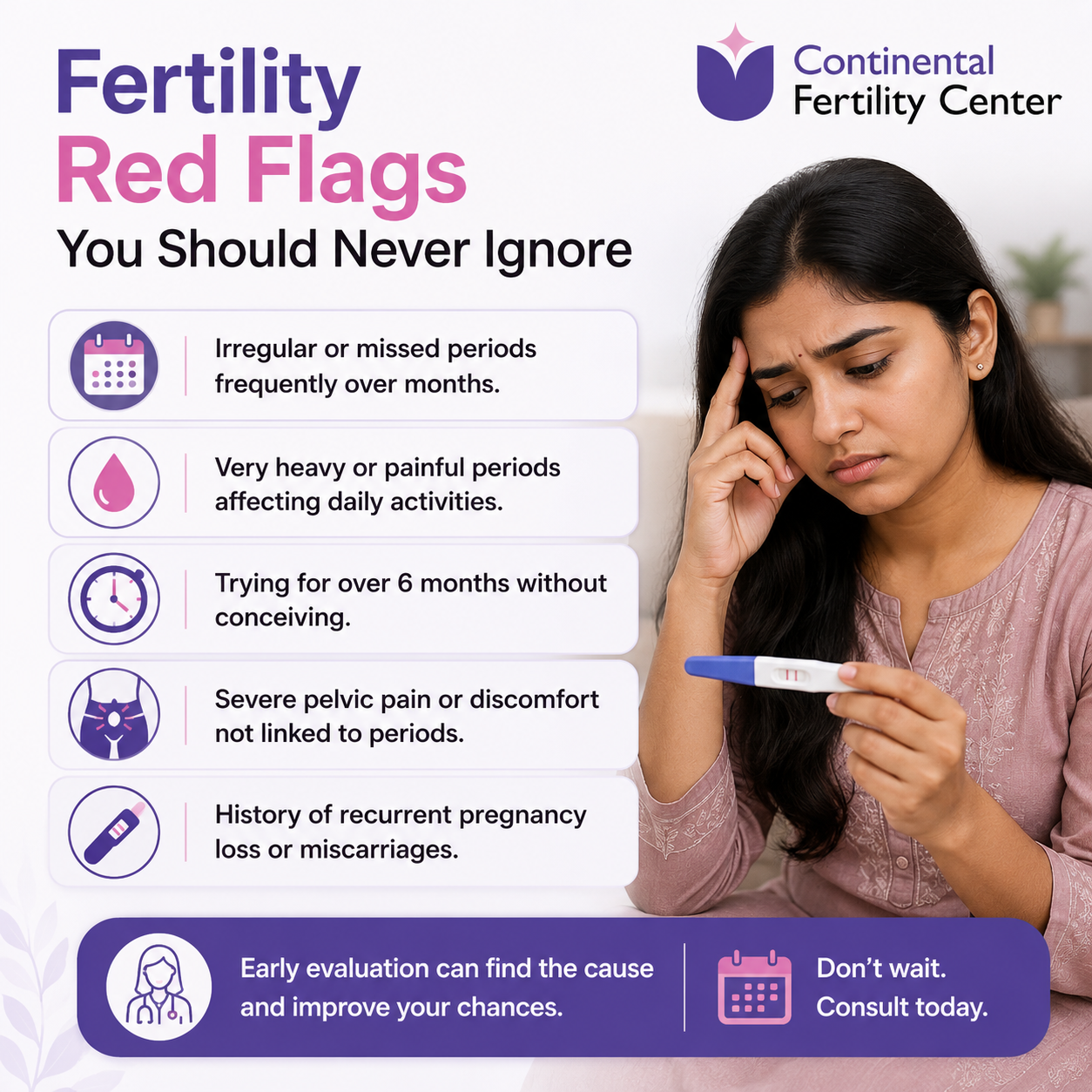
Which Fertility Red Flags Should Women Never Ignore?
Women may experience several fertility warning signs that indicate the need for medical evaluation.
Irregular or Missed Periods
A healthy menstrual cycle usually follows a regular pattern. Frequent missed periods, unpredictable cycles, or very long gaps between periods may indicate hormonal imbalance, polycystic ovary syndrome (PCOS), thyroid disorders, or ovulation problems.
Very Painful Periods
Severe menstrual pain that affects daily activities is not normal. It may be a sign of endometriosis, a condition that can impact fertility health if left untreated.
Heavy or Extremely Light Bleeding
Changes in menstrual flow may point toward hormonal disorders, uterine fibroids, polyps, or other reproductive health conditions requiring medical attention.
Difficulty Getting Pregnant
If you are under 35 years of age and have been trying to conceive for one year without success, or if you are above 35 and have been trying for six months, this is one of the most important fertility red flags that requires evaluation.
What Fertility Warning Signs Should Men Watch For?
Fertility problems are not limited to women. Men also experience infertility symptoms that deserve medical attention.
Some common signs of infertility in men include:
- Low sexual desire
- Erectile or ejaculation problems
- Pain or swelling in the testicles
- Small or shrinking testicles
- History of undescended testicles
- Previous infections affecting reproductive organs
- Low sperm count or poor sperm quality
Early diagnosis can significantly improve treatment outcomes.
Can Lifestyle Affect Fertility Health?
Yes. Lifestyle choices play an important role in reproductive health. While they may not directly cause infertility in every case, unhealthy habits can increase fertility risks.
Some important factors include:
- Smoking and tobacco use
- Excessive alcohol consumption
- Obesity or being underweight
- Poor nutrition
- Lack of physical activity
- Chronic stress
- Poor sleep quality
- Exposure to environmental toxins
Making healthy lifestyle changes can support fertility health and improve the chances of conception.
Which Medical Conditions Can Affect Fertility?
Several medical conditions are linked with fertility red flags.
These include:
- Polycystic Ovary Syndrome (PCOS)
- Endometriosis
- Thyroid disorders
- Diabetes
- Pelvic inflammatory disease
- Uterine fibroids
- Premature ovarian insufficiency
- Low ovarian reserve
- Varicocele in men
- Hormonal imbalances
Early diagnosis allows doctors to begin treatment before these conditions significantly affect reproductive health.
When Should You Visit a Fertility Specialist?
Many couples delay seeking medical help because they believe fertility problems will resolve naturally. However, early consultation often improves treatment success.
You should consult a fertility expert if you experience:
- Irregular menstrual cycles
- Repeated miscarriages
- Severe menstrual pain
- Known hormonal disorders
- Difficulty conceiving
- Low sperm count
- Previous pelvic surgery
- Family history of infertility
- History of cancer treatment affecting fertility
Recognizing these fertility red flags early allows doctors to identify the underlying cause and recommend appropriate treatment.
How Are Fertility Problems Diagnosed?
Modern fertility care includes comprehensive evaluation for both partners.
Diagnostic tests may include:
- Hormone blood tests
- Ovulation assessment
- Ultrasound scans
- Ovarian reserve testing
- Semen analysis
- Tubal patency tests
- Genetic screening when required
These investigations help fertility specialists understand the exact cause of infertility symptoms and create a personalized treatment plan.
Why Choose Continental Fertility Center?
Continental Fertility Center is recognized as one of the best fertility centers and part of the best hospital in Hyderabad, offering comprehensive fertility care for couples seeking expert guidance. Backed by experienced fertility specialists, advanced reproductive technology, modern laboratories, and personalized treatment plans, we focus on delivering compassionate and evidence-based care.
As part of Continental Hospitals, a healthcare institution accredited by JCI, NABH, and QAI, we maintain the highest standards of patient safety, clinical excellence, quality care, and advanced medical practices. From fertility evaluation and reproductive health assessment to assisted reproductive treatments, every patient receives individualized attention throughout their fertility journey.
Conclusion
Ignoring fertility red flags can delay diagnosis and reduce the opportunity for timely treatment. Whether you notice irregular periods, infertility symptoms, hormonal changes, or other fertility warning signs, seeking expert medical advice early can make a significant difference. Paying attention to your fertility health today can improve your chances of building a healthy family tomorrow.
Are you experiencing fertility red flags, infertility symptoms, or concerns about your reproductive health? Do not wait for the problem to become more challenging. Consult the best fertility specialists in Hyderabad at Continental Fertility Center for a comprehensive fertility evaluation, advanced diagnostic testing, and personalized treatment designed to help you achieve your dream of parenthood. Early consultation can make all the difference in protecting your fertility health.
Frequently Asked Questions
Several warning signs may indicate an underlying fertility problem that requires medical attention. These include difficulty conceiving after trying for one year if you are under 35, or after six months if you are 35 or older. Irregular or absent menstrual periods, severe menstrual pain, recurrent miscarriages, and a history of pelvic infections are also important red flags. Men may notice low libido, erectile dysfunction, reduced facial hair, or changes in semen quality. Previous surgeries involving the reproductive organs, chemotherapy, or radiation therapy can also affect fertility. Conditions such as PCOS, endometriosis, thyroid disorders, and diabetes may interfere with conception if left untreated. Ignoring these symptoms can delay diagnosis and reduce treatment success. Early fertility evaluation helps identify the root cause and allows timely intervention. Modern fertility treatments are highly effective when problems are detected early. Consulting a fertility specialist can provide clarity, personalized testing, and the best possible treatment options.
Couples should seek professional fertility advice if pregnancy has not occurred after 12 months of regular, unprotected intercourse when the woman is younger than 35 years. Women aged 35 years or older should consult a fertility specialist after six months of trying. Immediate evaluation is recommended if either partner has known reproductive health conditions, irregular menstrual cycles, recurrent pregnancy loss, or a history of pelvic infections or reproductive surgeries. Men with abnormal semen analysis, hormonal disorders, or sexual dysfunction should also be evaluated without delay. Waiting too long may reduce the chances of successful treatment, particularly as fertility naturally declines with age. A fertility specialist will recommend appropriate investigations for both partners to identify any underlying issues. Early diagnosis often leads to simpler and more successful treatment options. Timely consultation also helps couples understand their reproductive health and plan the most suitable path toward parenthood.
Yes, irregular menstrual cycles can be an important indicator of fertility problems. A healthy menstrual cycle generally reflects regular ovulation, which is essential for natural conception. If periods are very infrequent, absent, unusually heavy, or highly unpredictable, ovulation may not be occurring consistently. Conditions such as polycystic ovary syndrome (PCOS), thyroid disorders, hormonal imbalances, premature ovarian insufficiency, and excessive stress can contribute to irregular cycles. Ignoring these symptoms may delay the diagnosis of an underlying condition affecting fertility. A fertility specialist may recommend hormone testing, ultrasound scans, and ovulation monitoring to determine the cause. Many hormonal conditions can be effectively treated with medication and lifestyle changes. Early medical evaluation improves the chances of restoring regular ovulation and achieving pregnancy. Women experiencing persistent menstrual irregularities should not delay seeking expert medical advice.
Experiencing two or more consecutive miscarriages may indicate an underlying medical issue that requires detailed evaluation. Possible causes include chromosomal abnormalities, hormonal disorders, uterine abnormalities, autoimmune conditions, thyroid disease, blood clotting disorders, or poor egg quality. While a single miscarriage is relatively common, repeated pregnancy loss deserves comprehensive medical assessment. Identifying the underlying cause helps fertility specialists recommend targeted treatments that improve future pregnancy outcomes. Modern diagnostic tests can evaluate both partners for genetic, hormonal, and anatomical factors contributing to miscarriage. Lifestyle factors such as smoking, obesity, and uncontrolled diabetes may also increase miscarriage risk. Early investigation provides valuable information that can improve the chances of a healthy pregnancy. Many couples with recurrent miscarriages go on to have successful pregnancies after receiving appropriate treatment. Prompt consultation with a fertility specialist is essential for personalized care and reassurance.
Yes, male infertility often presents with symptoms that should not be overlooked, although some men may have no obvious signs. Warning signs include erectile dysfunction, reduced sexual desire, pain or swelling in the testicles, difficulty with ejaculation, and a history of undescended testicles or reproductive surgeries. Hormonal imbalances may lead to reduced facial or body hair and decreased muscle mass. Lifestyle factors such as smoking, excessive alcohol use, obesity, exposure to heat, and certain medications can also affect sperm production and quality. A semen analysis is one of the most important tests to evaluate male fertility. Additional hormone tests and imaging studies may be recommended if necessary. Early diagnosis allows appropriate treatment and improves the chances of successful conception. Since male factors contribute to nearly half of infertility cases, both partners should undergo evaluation together.
Yes, age significantly influences fertility in both women and men, although the effect is more pronounced in women. Female fertility gradually declines after age 30 and decreases more rapidly after 35 due to reduced egg quantity and quality. This can increase the risk of infertility, miscarriage, and chromosomal abnormalities. Male fertility also declines with age, affecting sperm count, motility, DNA quality, and overall reproductive potential. Older paternal age has been associated with certain pregnancy and developmental risks. While many individuals conceive naturally later in life, age-related fertility decline should not be ignored when planning a family. Fertility assessment can provide valuable information about reproductive health and help couples make informed decisions. Early planning and timely consultation with a fertility specialist may improve the chances of successful conception. Modern fertility treatments can offer effective options based on individual circumstances.
Yes, daily lifestyle habits play a significant role in reproductive health for both men and women. Smoking damages eggs and sperm while reducing overall fertility. Excessive alcohol intake, obesity, poor nutrition, chronic stress, lack of sleep, and physical inactivity can disrupt hormone balance and ovulation. In men, prolonged heat exposure, anabolic steroid use, smoking, and certain environmental toxins may reduce sperm quality. Maintaining a healthy body weight, eating a balanced diet, exercising regularly, managing stress, and avoiding tobacco can improve fertility outcomes. While healthy habits cannot treat all fertility conditions, they support better reproductive function and may enhance the success of fertility treatments. Couples planning pregnancy should adopt healthy lifestyle practices well before trying to conceive. Discussing lifestyle modifications with a fertility specialist can further improve the chances of achieving a healthy pregnancy.
Continental Fertility Centre offers comprehensive fertility evaluation and personalized treatment plans for couples experiencing infertility. Our experienced fertility specialists use advanced diagnostic technologies to identify the underlying causes affecting conception. We provide a full range of fertility services, including fertility assessments, ovulation monitoring, IUI, IVF, ICSI, fertility preservation, and genetic testing when appropriate. Every treatment plan is customized based on each couple's medical history, age, and reproductive goals. Our multidisciplinary team focuses on evidence-based care while providing compassionate emotional support throughout the fertility journey. Modern laboratories, advanced reproductive technology, and patient-centered care help maximize treatment success. We believe in transparent communication and individualized guidance at every stage. Early evaluation and expert care can significantly improve the chances of achieving a healthy pregnancy. Continental Fertility Centre is committed to helping couples realize their dream of parenthood with safe, ethical, and advanced fertility care.