

Why More Couples Are Choosing Fertility Treatments
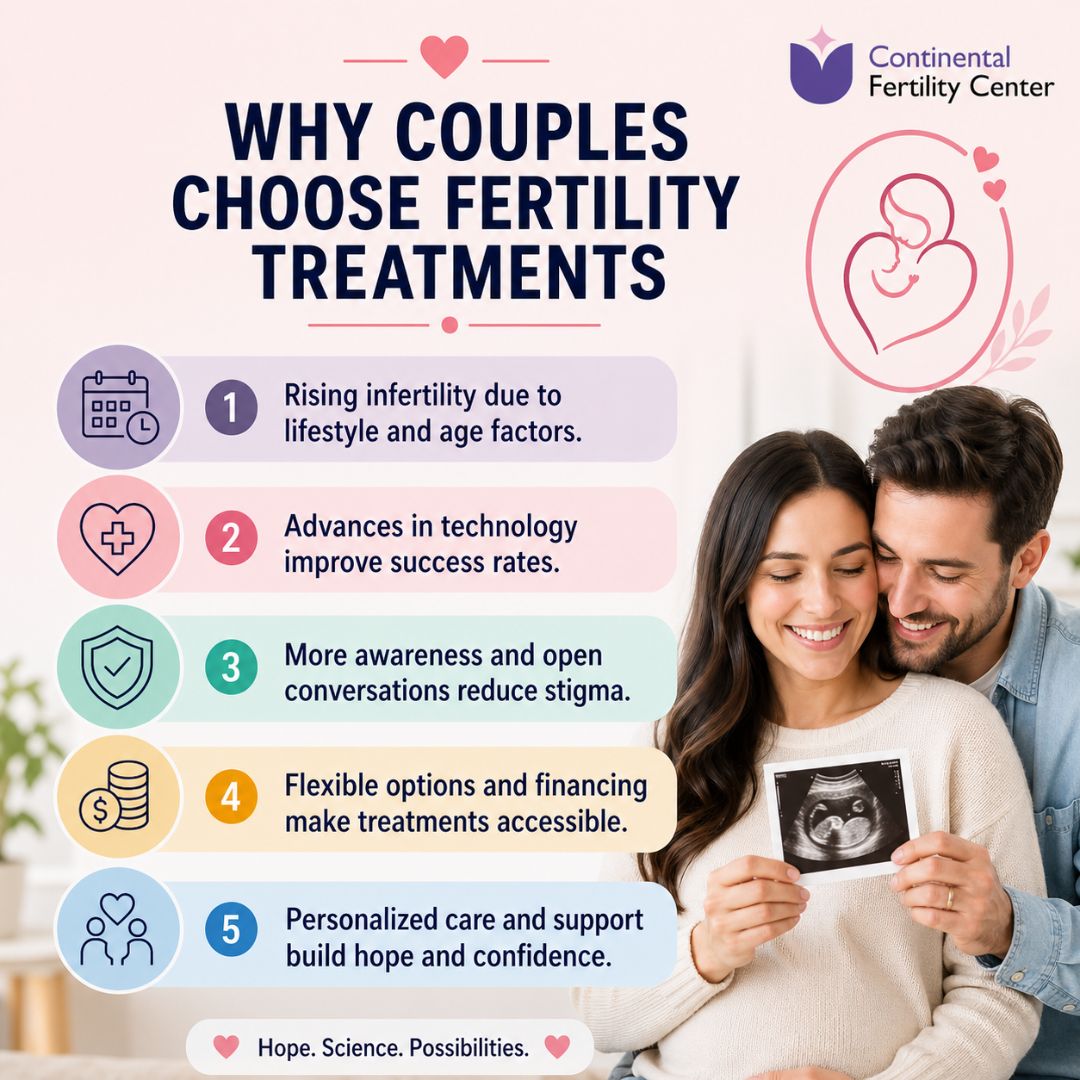
The journey toward parenthood is a significant milestone for many. However, the path is not always linear. In recent years, there has been a noticeable shift in how society views and accesses reproductive healthcare. A growing number of couples and individuals are now seeking a fertility treatment to help build their families. This shift is driven by a combination of medical advancement, changing lifestyle priorities, and a deeper understanding of reproductive health.
Understanding the reasons behind this trend helps demystify the process and provides clarity for those currently trying to conceive.
Why the Demand for Fertility Treatment is Rising
Several factors contribute to the increasing reliance on medical intervention for conception.
1. Planning Families Later in Life
Modern career goals and personal milestones often lead couples to start their families in their 30s or early 40s. While this allows for financial and emotional stability, biological factors come into play. As age increases, the natural reserve and quality of eggs and sperm can decline. This makes a fertility treatment a practical and effective solution for those who have waited for the right time to welcome a child.
2. Breakthroughs in IVF Treatment
The science behind ivf treatment has evolved remarkably. Early versions of assisted reproduction had limited success, but today, advanced laboratory techniques like ICSI (Intracytoplasmic Sperm Injection) and PGT (Preimplantation Genetic Testing) have significantly improved the ivf success rate. Couples are more likely to choose these paths because the technology is now more reliable and predictable than ever before.
3. Increased Awareness and Education
In the past, reproductive challenges were often misunderstood or kept private. Today, open conversations about fertility are more common. People are better educated about their bodies and are proactive about seeking help from a fertility doctor early on, rather than waiting for years of unsuccessful attempts.
4. Environmental and Lifestyle Factors
Changes in diet, sedentary routines, and environmental stressors can impact reproductive health in both men and women. When natural conception becomes difficult, medical intervention provides a structured and scientific way to overcome these hurdles.
Navigating the Path: Trying to Conceive
For many, the phase of trying to conceive is filled with both hope and anxiety. It is essential to recognize when it is time to move from natural methods to professional assistance. Most specialists recommend a consultation if a couple has been unsuccessful after one year of regular, unprotected intercourse or six months if the female partner is over the age of 35.
Seeking a fertility treatment is not a sign of failure but a proactive step toward achieving a dream. Modern medicine offers various levels of support, ranging from simple lifestyle adjustments and ovulation induction to more complex procedures like ivf.
Why Choose Continental Fertility Centre?
When searching for the best fertility center in Hyderabad, Continental Fertility Centre stands out as a beacon of hope and excellence. We combine world-class infrastructure with a deeply compassionate approach to patient care.
Comprehensive Clinical Excellence
Continental Fertility Centre is a specialized unit within Continental Hospitals, a facility renowned for its global standards. Our approach to fertility treatment is holistic. We do not just treat the condition; we support the individual. Our team of experts conducts thorough diagnostic evaluations to identify the root cause of infertility before suggesting a customized treatment plan.
Advanced Infrastructure and Accreditations
Quality and safety are the pillars of our practice. Continental Hospitals is proud to be accredited by the Joint Commission International (JCI) and the National Accreditation Board for Hospitals & Healthcare Providers (NABH). These accreditations are a testament to our commitment to maintaining the highest safety protocols and clinical outcomes. Our state-of-the-art embryology labs are equipped with the latest technology to ensure that every IVF treatment is performed under optimal conditions.
High Success Rates
We understand that for our patients, results matter most. Our focus on precision and personalized protocols has allowed us to maintain a high ivf success rate. By utilizing the latest advancements in reproductive science, we provide our patients with the best possible chance of a successful pregnancy.
Key Benefits of Choosing Continental Fertility Centre
Multidisciplinary Team: Access to top-tier gynecologists, embryologists, urologists, and counselors all under one roof.
Cutting-edge Technology: Usage of high-end diagnostic tools and advanced ART (Assisted Reproductive Technology) labs.
Safety Protocols: Strict adherence to international standards to ensure patient safety and ethical treatment.
Global Recognition: As a JCI-accredited hospital, we follow the same quality standards as the world’s leading medical institutions.
Transparent Care: Our doctors provide clear explanations of every procedure, ensuring you are an active participant in your journey.
Common Fertility Treatment Options
Depending on the specific needs of the couple, several options are available at our center.
IUI (Intrauterine Insemination): A less invasive procedure where processed sperm is placed directly into the uterus.
IVF (In Vitro Fertilization): A process where eggs are fertilized by sperm in a lab setting, and the resulting embryo is transferred to the uterus.
ICSI: A specialized form of IVF used primarily for male factor infertility.
Egg and Sperm Freezing: Options for those looking to preserve their fertility for the future.
Laparoscopic Surgery: Minimally invasive procedures to correct physical barriers such as fibroids or endometriosis.
Understanding the IVF Success Rate
It is important for couples to have realistic expectations. The success of an IVF treatment depends on various factors.
- The age of the partners.
- The underlying cause of infertility.
- The quality of the embryos produced.
- The health of the uterine lining.
At Continental Fertility Centre, we optimize each of these factors through meticulous preparation and expert execution. Our goal is to make your dream of parenthood a reality through the most efficient and safe methods available.
Conclusion
Choosing to start a fertility treatment is a courageous and life-changing decision. With the right medical partner, the complexities of infertility can be managed effectively. Continental Fertility Centre in Hyderabad is dedicated to providing you with the clinical expertise and emotional support required to navigate this journey. By combining JCI-accredited safety standards with advanced reproductive technology, we ensure that you receive the best care possible.
If you suffer from irregular cycles or known reproductive conditions or have been unsuccessfully trying to conceive for over a year, it is time to seek professional guidance. Early intervention often leads to better outcomes. Contact Continental Fertility Center today to book the best fertility specialist at Continental Fertility Center.
Frequently Asked Questions
More couples are choosing fertility treatments due to delayed marriages, lifestyle changes, stress, hormonal imbalances, and increased awareness about assisted reproductive technologies.
Couples under 35 should consider treatment after one year of trying without success, while those above 35 should seek help after six months.
Common fertility treatments include ovulation induction, intrauterine insemination (IUI), in vitro fertilization (IVF), and advanced procedures like ICSI.
Unhealthy lifestyle habits such as smoking, alcohol consumption, poor diet, lack of exercise, and high stress levels can negatively impact fertility in both men and women.
Yes, fertility treatments are generally safe when performed by qualified specialists, though minor side effects may occur depending on the procedure.
Success rates vary depending on age, health conditions, and type of treatment, but IVF success rates typically range between 30% to 50% per cycle.
Couples should consult a fertility specialist if they have been trying to conceive without success, have irregular cycles, known medical conditions, or previous pregnancy complications.
Yes, chronic stress can affect hormone levels, ovulation, and sperm quality, which may reduce the chances of conception.