
Why Timing Matters When Trying to Conceive
Trying to have a baby is an exciting journey, but for many couples, knowing the best time to conceive can make a significant difference. While good health, nutrition, and lifestyle are important, understanding your body's natural fertility cycle is one of the most effective ways to improve your chances of pregnancy. Many couples try for months without realizing they may not be timing intercourse during their most fertile days.
Knowing the best time to conceive helps you identify the days when pregnancy is most likely to happen. By understanding ovulation, your fertility window, and the signs your body gives, you can increase your chances of getting pregnant naturally. If pregnancy does not happen despite regular attempts, early guidance from fertility experts can help identify and address any underlying concerns.
Why Does Timing Matter When Trying to Conceive?
Pregnancy occurs when a healthy sperm fertilizes a healthy egg. However, this can only happen during a limited period in each menstrual cycle.
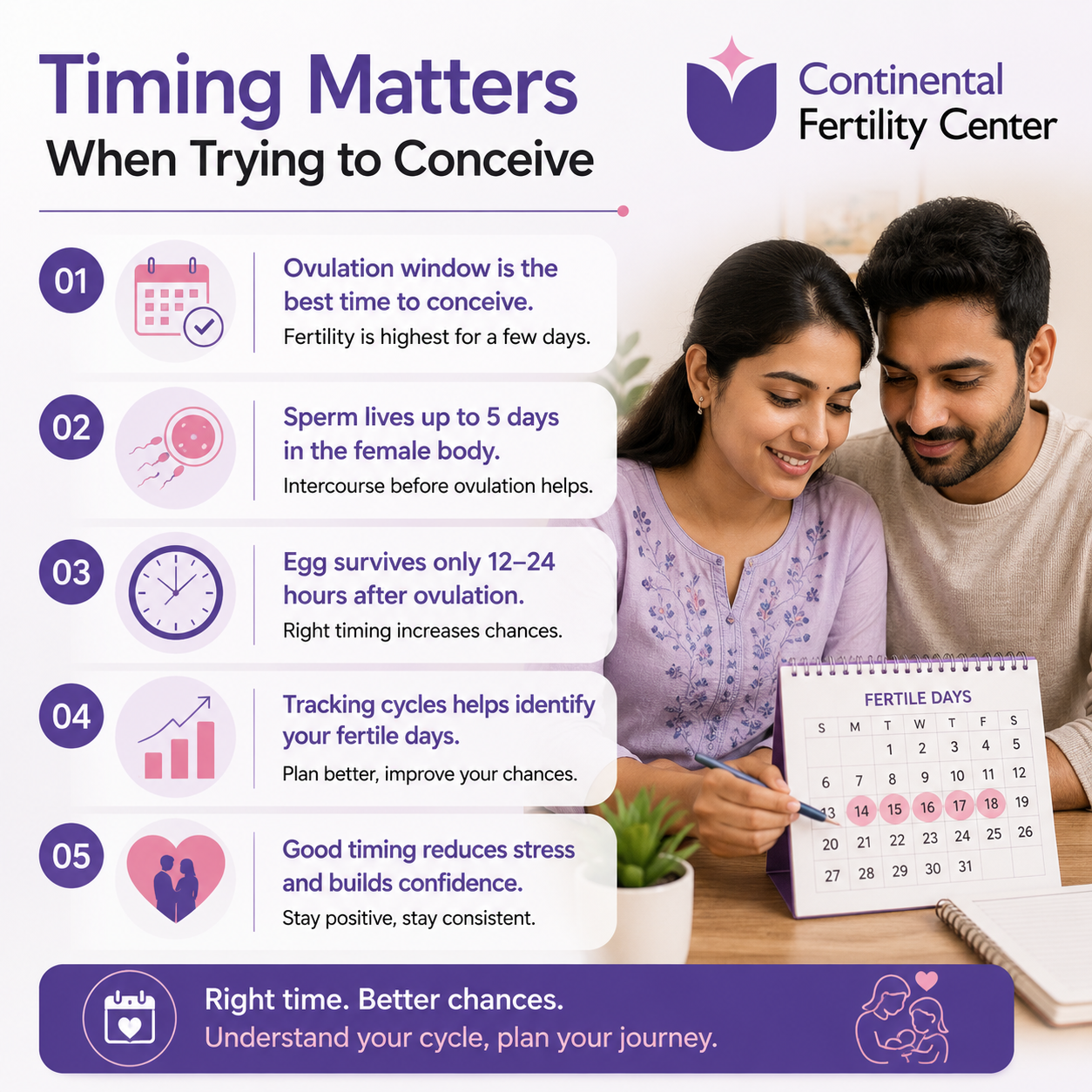
The egg survives for only about 12 to 24 hours after ovulation. Sperm can survive inside the female reproductive tract for up to five days. This means there is only a short fertility window each month when conception is most likely.
Understanding the best time to conceive allows couples to plan intercourse during this fertile period, improving the likelihood of pregnancy without unnecessary stress.
What Is the Best Time to Conceive?
The best time to conceive is during the fertile window, which usually includes the five days before ovulation and the day of ovulation itself.
For women with a regular 28-day menstrual cycle:
- Ovulation usually occurs around Day 14.
- The fertile window is generally from Day 10 to Day 15.
- The highest chance of pregnancy is one to two days before ovulation and on the day of ovulation.
Since every woman has a unique cycle, tracking ovulation is more effective than relying only on calendar dates.
What Is Ovulation?
Ovulation is the process where one mature egg is released from the ovary. This egg travels through the fallopian tube, where it can be fertilized by sperm.
Ovulation and pregnancy are closely connected because pregnancy cannot occur without the release of an egg. Understanding ovulation is one of the most important steps for couples who are trying to conceive.
How Can You Identify Your Fertility Window?
Recognizing your fertility window helps you understand the best time to conceive. Several natural signs can help.
Common signs of ovulation include:
- Clear, stretchy cervical mucus similar to egg white
- Mild pain or discomfort on one side of the lower abdomen
- Increased sexual desire
- Slight rise in basal body temperature after ovulation
- Positive ovulation predictor kit result
Tracking these signs over several months can help predict your most fertile days more accurately.
Tips to Improve Fertility Timing
Following healthy habits while understanding fertility timing can improve your chances of pregnancy.
Helpful tips include:
- Track your menstrual cycle every month.
- Use ovulation prediction kits if needed.
- Have intercourse every one to two days during the fertile window.
- Maintain a healthy body weight.
- Eat a balanced diet rich in fruits, vegetables, whole grains, and protein.
- Exercise regularly without overtraining.
- Get adequate sleep every night.
- Manage stress through relaxation techniques.
- Avoid smoking and excessive alcohol consumption.
- Schedule regular health checkups before planning pregnancy.
Common Mistakes Couples Make
Many couples unintentionally reduce their chances of pregnancy because of common misconceptions.
These include:
- Waiting until the exact day of ovulation
- Not tracking menstrual cycles
- Believing pregnancy can happen equally on any day
- Ignoring irregular menstrual cycles
- Delaying fertility evaluation despite prolonged difficulty conceiving
Understanding the best time to conceive can help avoid these common mistakes.
When Should You Consult a Fertility Specialist?
Sometimes pregnancy does not happen despite proper fertility timing. Medical evaluation may be recommended if:
- You are under 35 years of age and have been trying to conceive for one year.
- You are above 35 years of age and have been trying for six months.
- You have irregular or absent periods.
- You have a history of miscarriage.
- You have known reproductive health conditions.
- The male partner has fertility concerns.
Early consultation helps identify problems before they become more challenging to treat.
Why Choose Continental Fertility Center?
Choosing the right fertility center is an important step in your parenthood journey.
At Continental Fertility Center, couples receive comprehensive fertility evaluation, advanced diagnostic services, and personalized treatment plans designed around their individual needs. Our experienced fertility specialists combine evidence-based medical care with compassionate support throughout every stage of your journey.
As part of Continental Hospitals, one of the best hospitals in Hyderabad, we provide world-class fertility care supported by internationally recognized standards. Continental Hospitals is accredited by JCI, NABH, and NABL, reflecting our commitment to patient safety, clinical excellence, quality healthcare, and advanced reproductive medicine. Our multidisciplinary team works together to deliver accurate diagnoses, advanced fertility treatments, and complete reproductive care under one roof.
Conclusion
Understanding the best time to conceive is one of the simplest and most effective ways to improve your chances of pregnancy. Knowing your ovulation cycle, identifying your fertility window, and maintaining a healthy lifestyle can make a meaningful difference for couples who are trying to conceive. If pregnancy does not happen despite proper fertility timing, professional medical guidance can help identify the cause and recommend the most suitable treatment options.
If you are trying to conceive, experiencing irregular ovulation, or have concerns about ovulation and pregnancy, consult a fertility specialist in Hyderabad at Continental Fertility Center is here to help. Our experienced reproductive medicine specialists provide personalized fertility assessments, advanced investigations, and evidence-based treatments to support your journey toward parenthood. Schedule your consultation today and take the next step toward achieving a healthy pregnancy.
Related Blogs:
Frequently Asked Questions
Timing plays a major role because pregnancy can only occur when sperm meets a healthy egg during the fertile window. A woman is most fertile for about five to six days during each menstrual cycle, including the day of ovulation. Having intercourse during this period significantly increases the chances of conception. Outside this window, the egg is no longer available for fertilization. Understanding your cycle helps couples plan intercourse more effectively rather than relying on chance. Proper timing also reduces unnecessary stress and confusion during the conception journey. While timing alone cannot guarantee pregnancy, it greatly improves the likelihood of success, especially for couples with no underlying fertility problems.
The fertile window refers to the six-day period leading up to and including the day of ovulation. Since sperm can survive inside the female reproductive tract for up to five days and the egg survives for about 24 hours after ovulation, this period offers the highest chance of conception. Women can estimate their fertile window by tracking menstrual cycles, monitoring cervical mucus changes, recording basal body temperature, or using ovulation predictor kits. Smartphone fertility tracking apps may also help estimate ovulation. Knowing your fertile window allows couples to time intercourse more accurately and maximize their chances of achieving pregnancy naturally.
For most healthy couples, having intercourse every one to two days during the fertile window provides the best opportunity for pregnancy. Frequent intercourse ensures that healthy sperm are available when ovulation occurs. There is usually no need to save sperm by avoiding intercourse for several days, as regular ejaculation generally maintains sperm quality in healthy men. Couples should focus on maintaining intimacy without making conception feel like a stressful task. Consistency during the fertile period is more important than having intercourse multiple times in a single day. A relaxed and supportive approach can improve the overall experience.
Yes, irregular menstrual cycles can make it more challenging to predict ovulation accurately. Women with irregular periods may ovulate earlier, later, or not at all during some cycles. Conditions such as polycystic ovary syndrome (PCOS), thyroid disorders, hormonal imbalances, excessive stress, or significant weight changes can contribute to irregular cycles. Tracking ovulation signs or using ovulation predictor kits may help identify fertile days. If irregular periods continue for several months or are accompanied by other symptoms, consulting a fertility specialist is recommended. Identifying and treating the underlying cause can improve fertility and increase the chances of conception.
Age is one of the most important factors influencing fertility. Women's fertility gradually declines after the age of 30 and decreases more rapidly after 35 because both the number and quality of eggs reduce over time. Men may also experience age-related changes in sperm quality, although these usually occur more gradually. Understanding fertile timing becomes even more important as couples grow older because each cycle offers fewer opportunities for successful conception. Couples over 35 who have been trying for six months without success should seek fertility evaluation, while younger couples are generally advised to seek help after one year of trying.
Healthy lifestyle choices support reproductive health and improve fertility for both partners. Maintaining a healthy weight, eating a balanced diet, exercising regularly, getting enough sleep, and managing stress all contribute to hormonal balance. Avoiding smoking, excessive alcohol, and recreational drugs is equally important because these habits can reduce fertility. Taking folic acid before pregnancy supports healthy fetal development and is recommended for women trying to conceive. Men should also maintain healthy habits to support sperm quality. While lifestyle changes may not solve every fertility problem, they create a healthier environment for conception and pregnancy.
Couples should consult a fertility specialist if pregnancy has not occurred after one year of regular, unprotected intercourse when the woman is under 35 years of age. Women aged 35 or older should seek evaluation after six months of trying. Earlier assessment is recommended for women with irregular periods, known reproductive disorders, previous pelvic surgery, endometriosis, or recurrent pregnancy loss. Men with a history of low sperm count, testicular injury, or other reproductive concerns should also be evaluated. Early diagnosis allows doctors to identify underlying issues and recommend appropriate treatment options before valuable reproductive time is lost.
Continental Fertility Centre provides comprehensive fertility evaluation, advanced diagnostic testing, personalized treatment plans, and compassionate care for couples facing conception challenges. The experienced fertility specialists assess both male and female reproductive health to identify the cause of infertility. Services include ovulation monitoring, fertility counseling, intrauterine insemination (IUI), in vitro fertilization (IVF), fertility preservation, and advanced reproductive technologies. Every treatment plan is customized based on the couple's medical history and fertility goals. With modern facilities, experienced specialists, and patient-centered care, Continental Fertility Centre supports couples at every stage of their journey toward parenthood.