
Early Pregnancy After IVF: What to Expect
The journey to pregnancy after IVF is filled with hope, excitement, and many questions. After completing an IVF cycle and receiving a positive pregnancy test, it is natural to wonder what happens next. Many women experience different physical and emotional changes during the first few weeks and may not know which symptoms are normal. Understanding what to expect during pregnancy after IVF can help you feel more confident and prepared for this important stage.
Unlike natural conception, an IVF pregnancy is closely monitored during the early weeks to ensure healthy development of both the mother and the baby. Regular blood tests, ultrasound scans, and follow-up appointments help your fertility specialist track the progress of the pregnancy. While every pregnancy is unique, knowing the common signs, symptoms, and milestones of pregnancy after IVF can reduce anxiety and help you enjoy this special journey.
What Is Pregnancy After IVF?
Pregnancy after IVF begins when a fertilized embryo created in the laboratory successfully implants into the lining of the uterus. Once implantation occurs, the body starts producing the pregnancy hormone called human chorionic gonadotropin (hCG). This hormone confirms pregnancy and supports the early growth of the embryo.
Although the beginning of an IVF pregnancy is similar to a naturally conceived pregnancy, fertility specialists provide closer monitoring during the first trimester because these early weeks are critical for healthy fetal development.
What Are the Early Pregnancy Symptoms After IVF?
Many women notice signs similar to those experienced during a natural pregnancy. Some symptoms may also result from fertility medications, making it difficult to distinguish between medication effects and actual pregnancy.
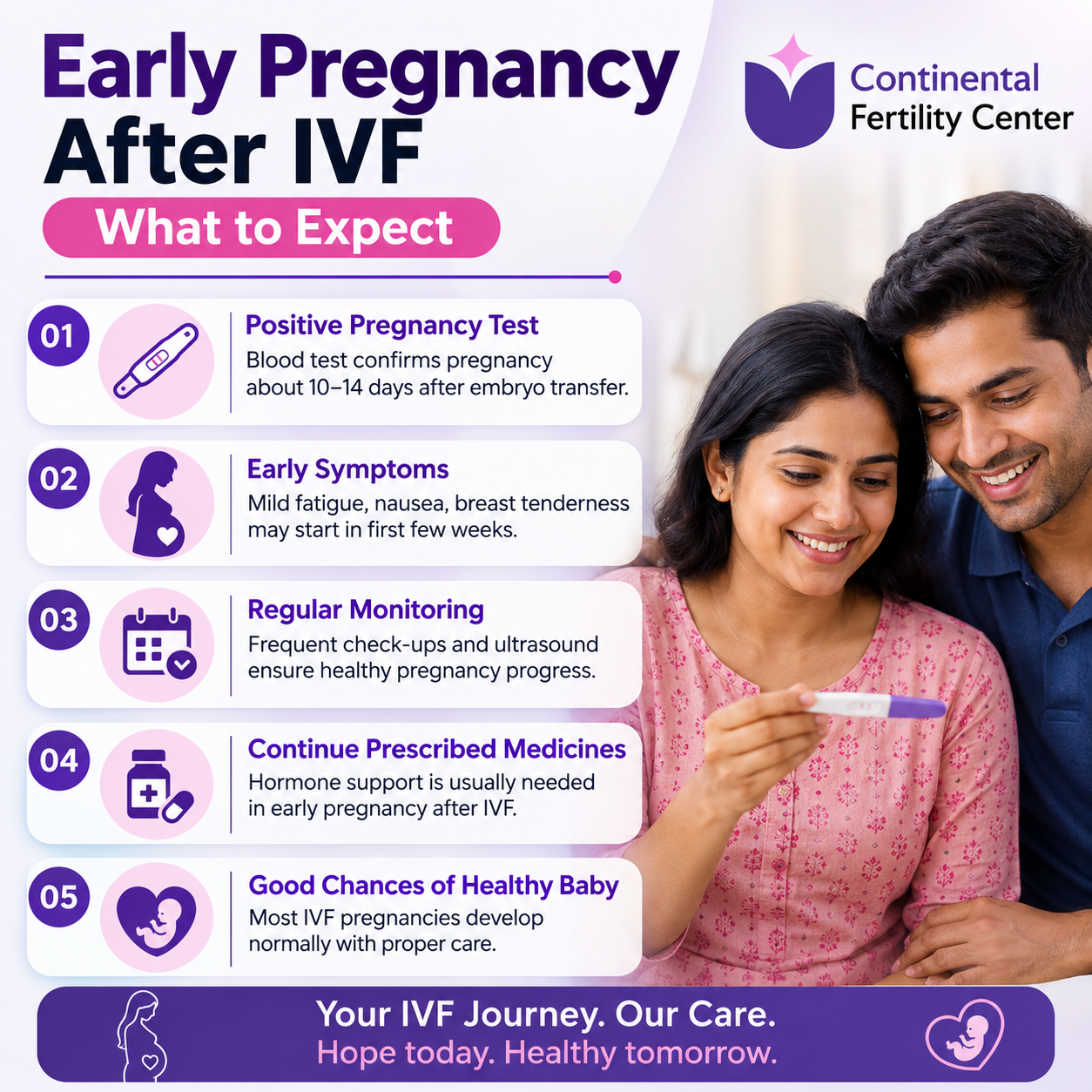
Common IVF pregnancy symptoms include:
- Missed menstrual period
- Mild abdominal cramping
- Light spotting during implantation
- Breast tenderness
- Fatigue and tiredness
- Nausea or morning sickness
- Frequent urination
- Mood changes
- Increased sensitivity to smells
- Mild bloating
Every woman experiences early pregnancy symptoms differently. Some may notice several symptoms, while others may have very few.
What Happens During the First Few Weeks?
The first few weeks of pregnancy after IVF involve careful monitoring to confirm that the pregnancy is progressing normally.
Your fertility specialist may recommend:
- Blood tests to monitor HCG levels
- Progesterone level monitoring
- Early ultrasound scan
- Regular follow-up appointments
- Medication adjustments if necessary
The first ultrasound is usually performed after the pregnancy hormone reaches appropriate levels to confirm the baby's heartbeat and ensure the pregnancy is developing inside the uterus.
Is Mild Cramping or Spotting Normal?
Yes. Mild cramping and light spotting can occur during IVF early pregnancy and are often related to embryo implantation or changes occurring within the uterus.
However, contact your fertility specialist immediately if you experience:
- Heavy bleeding
- Severe abdominal pain
- Persistent dizziness
- Fever
- Passing large blood clots
Prompt medical evaluation helps identify and treat any complications early.
How Can You Support a Healthy Pregnancy After IVF?
Taking good care of your health is essential during pregnancy after IVF.
Follow these healthy habits:
- Continue prescribed medications exactly as instructed.
- Attend every scheduled appointment.
- Eat a balanced, nutritious diet.
- Stay well hydrated.
- Get enough sleep every night.
- Avoid smoking and alcohol.
- Perform only doctor-approved physical activity.
- Manage stress through relaxation techniques.
- Take prenatal vitamins regularly.
Following your doctor's advice helps support healthy fetal growth throughout the pregnancy.
Why Is Early Monitoring Important?
Early monitoring provides reassurance and allows fertility specialists to detect any concerns as soon as possible.
Benefits include:
- Confirmation of successful implantation
- Monitoring healthy hormone levels
- Confirmation of fetal heartbeat
- Early detection of multiple pregnancy
- Identification of ectopic pregnancy
- Adjustment of medications when required
- Continuous support throughout the first trimester
Regular follow-up care plays a significant role in improving pregnancy outcomes.
When Should You Contact Your Doctor?
Although many symptoms are completely normal, certain warning signs require immediate medical attention.
Seek medical care if you notice:
- Heavy vaginal bleeding
- Severe pelvic pain
- Persistent vomiting
- High fever
- Difficulty breathing
- Severe swelling
- Sudden vision changes
Early medical care can protect both mother and baby.
Why Choose Continental Fertility Center?
Choosing the right fertility center can make a significant difference throughout your fertility and pregnancy journey. Continental Fertility Center at Continental Hospitals is committed to providing compassionate, evidence-based fertility care supported by advanced reproductive technology and experienced specialists.
Patients benefit from:
- Experienced fertility specialists
- Personalized IVF treatment plans
- Advanced fertility laboratories
- Comprehensive pregnancy monitoring
- Modern diagnostic facilities
- Multidisciplinary maternal care
- Patient-centered support at every stage
Continental Hospitals is one of the best hospitals in Hyderabad, known for delivering world-class healthcare with internationally recognized standards. The hospital is accredited by JCI, NABH, and NABL, reflecting its commitment to patient safety, clinical excellence, and quality healthcare. These accreditations provide patients with confidence that they are receiving care that meets globally accepted healthcare standards.
Conclusion
A successful pregnancy after IVF marks the beginning of a beautiful new chapter. While the early weeks may bring excitement along with understandable concerns, regular medical care, healthy lifestyle choices, and close monitoring help ensure the best possible outcome. Understanding common IVF pregnancy symptoms, attending scheduled appointments, and staying connected with your fertility team can make your pregnancy journey smoother and more reassuring.
If you are planning an IVF pregnancy, experiencing early pregnancy symptoms, or have concerns about pregnancy after IVF, consult the fertility specialists in Hyderabad at Continental Fertility Center, Continental Hospitals. Our experienced fertility experts provide personalized care, advanced reproductive treatments, and comprehensive pregnancy monitoring to support you from conception through a healthy pregnancy.
Related Blogs:
Frequently Asked Questions
Early pregnancy after IVF can feel exciting and emotional because every milestone is closely monitored. Most women experience symptoms similar to a natural pregnancy, including fatigue, breast tenderness, mild cramping, nausea, and frequent urination. Your fertility specialist will schedule blood tests to monitor hCG levels and confirm that the pregnancy is progressing normally. Around 6 to 7 weeks, an ultrasound is usually performed to detect the gestational sac, yolk sac, fetal pole, and heartbeat. Mild spotting or light cramping may occur and is often harmless, but heavy bleeding or severe pain requires immediate medical attention. Continue taking prescribed medications, especially progesterone, until your doctor advises otherwise. Eat a balanced diet, stay hydrated, avoid smoking and alcohol, and attend all follow-up appointments. Every pregnancy progresses differently, so regular medical supervision is the best way to ensure a healthy pregnancy.
Yes, light spotting can be normal during early pregnancy after IVF and does not always indicate a problem. Some women experience implantation bleeding or light spotting due to hormonal changes or cervical sensitivity after fertility treatments. The spotting is usually light pink or brown and lasts for a short period. However, heavy bleeding, bright red blood, passing clots, severe abdominal pain, dizziness, or fever should never be ignored. These symptoms require immediate evaluation by your fertility specialist or obstetrician. Continue taking all prescribed medications unless your doctor instructs otherwise. Avoid self-medicating or assuming the cause without medical advice. Regular blood tests and ultrasound scans help determine whether the pregnancy is progressing normally and provide reassurance during the early weeks.
The baby's heartbeat is usually detected during a transvaginal ultrasound between 6 and 7 weeks of pregnancy after IVF. Since IVF provides an exact conception timeline, your doctor can accurately schedule this important scan. Hearing or seeing the heartbeat is an encouraging milestone that indicates normal early fetal development. In some cases, the heartbeat may not be visible if the scan is performed too early, and a repeat ultrasound may be recommended after a few days. Delayed detection does not always mean something is wrong. Your doctor will also evaluate the gestational sac, yolk sac, fetal pole, and overall growth. Continue taking all prescribed medications and attend scheduled appointments to ensure appropriate monitoring throughout the first trimester.
A healthy and balanced diet is essential during early pregnancy after IVF. Include fresh fruits, vegetables, whole grains, lean proteins, dairy products, nuts, seeds, and healthy fats in your daily meals. Foods rich in folic acid, iron, calcium, vitamin D, and omega-3 fatty acids support your baby's growth and reduce the risk of nutritional deficiencies. Drink plenty of water to stay hydrated and maintain healthy digestion. Limit caffeine intake according to your doctor's recommendations and completely avoid alcohol, smoking, and recreational drugs. Avoid raw seafood, undercooked meat, unpasteurized dairy products, and foods with a high risk of bacterial contamination. Your fertility specialist may also prescribe prenatal vitamins to support a healthy pregnancy.
Yes, mild cramping is common during early pregnancy after IVF and is often caused by the uterus expanding, implantation, or hormonal changes. These cramps are usually mild, intermittent, and not associated with heavy bleeding. Many women describe the sensation as similar to menstrual cramps. Staying hydrated, getting adequate rest, and avoiding strenuous activities may help relieve discomfort. However, severe abdominal pain, persistent cramping, shoulder pain, heavy bleeding, or fainting should be evaluated immediately because they may indicate a medical emergency such as an ectopic pregnancy. Always report unusual symptoms to your fertility specialist instead of ignoring them. Regular follow-up visits help ensure that both you and your baby remain healthy throughout the pregnancy.
Yes, most women are advised to continue IVF medications, particularly progesterone and sometimes estrogen supplements, during the early weeks of pregnancy. These medications help support the uterine lining until the placenta develops enough to produce the required hormones naturally. The duration varies depending on your medical history and fertility treatment plan. Never stop or change your medications without consulting your fertility specialist. Missing doses or discontinuing treatment prematurely may affect pregnancy support in some cases. Your doctor will gradually advise when it is safe to reduce or stop these medications based on blood test results and ultrasound findings. Always follow your prescribed medication schedule carefully and attend every follow-up appointment.
Although many IVF pregnancies progress normally, certain symptoms require immediate medical attention. Heavy vaginal bleeding, severe abdominal or pelvic pain, dizziness, fainting, fever, chills, shoulder pain, or leaking fluid should never be ignored. These symptoms could indicate miscarriage, ectopic pregnancy, infection, or another complication that requires urgent evaluation. Contact your fertility specialist or visit the nearest emergency department immediately if you experience any of these warning signs. Do not wait for symptoms to improve on their own or stop prescribed medications without medical advice. Prompt diagnosis and treatment can improve outcomes for both mother and baby. Regular prenatal care helps identify and manage potential complications early.
Continental Fertility Centre offers comprehensive fertility treatment and expert pregnancy monitoring under one roof. Our experienced fertility specialists provide personalized care from embryo transfer through early pregnancy and beyond. We use advanced diagnostic technology, regular hormone monitoring, high-quality ultrasound imaging, and evidence-based treatment protocols to ensure the best possible outcomes. Patients receive compassionate guidance, timely follow-up appointments, and individualized treatment plans tailored to their medical needs. Our multidisciplinary team works closely with obstetricians and maternal-fetal medicine specialists whenever required. We are committed to patient safety, transparent communication, and clinical excellence throughout your fertility journey. Choosing Continental Fertility Centre means receiving trusted, comprehensive, and patient-centered care every step of the way.