
How Often Should You Try to Conceive
Planning a pregnancy is an exciting adventure for the couples that are trying to conceive. Many may ask, “How often should we try to conceive to increase our chances of getting pregnant?” Fertility timing and ovulation, as well as healthy habits, can increase the chances of getting pregnant naturally.
Some couples think it’s necessary to try to conceive every day for pregnancy to happen, but fertility experts say trying to conceive consistently, when timing isn’t off-kilter, is way more important than stress or pressure in trying to get pregnant.
The Continental Fertility Centre (Atlantic and Continental) has fertility specialists to help couples with advanced reproductive care, fertility assessment, and the creation of personalized treatment plans toward successful conception.
What is the fertile window?
The period during a female’s menstrual cycle when a pregnancy is most likely to occur. Ovulation typically occurs roughly 14 days before your next period. Ovulation occurs when your ovaries release an egg that can survive anywhere from 12–24 hours.
Sperm can survive in the female reproductive tract up to five days. So for couples trying to conceive, focus on having intercourse during the few days leading up to ovulation and the day of ovulation itself.
Fertility timing influences pregnancy chances for couples trying to conceive.
When to Try to Conceive
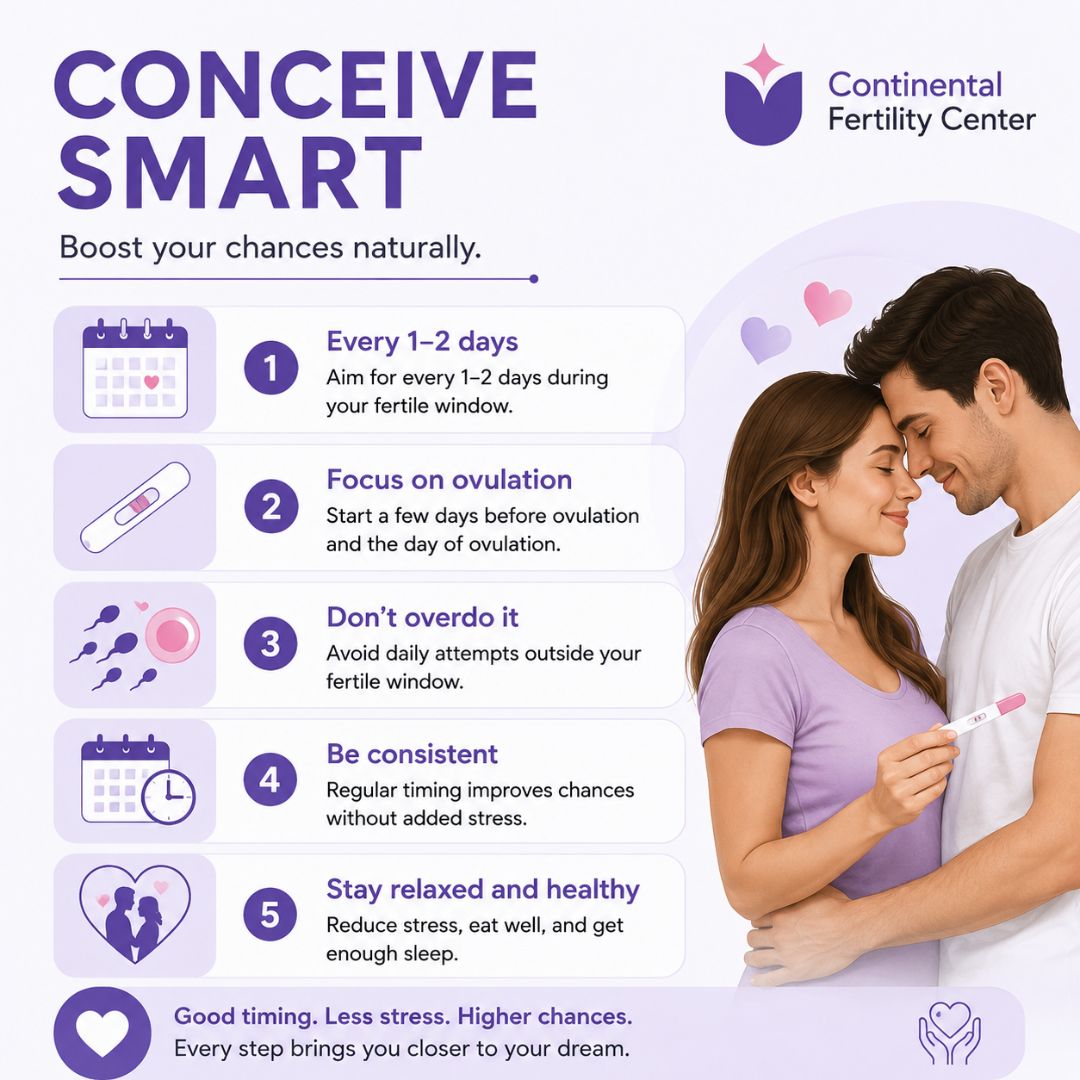
Doctors generally advise having sex every two to three days during the menstrual cycle to keep the sperm healthy and provide the best chance for fertilization.
You can also try to conceive during the fertile window. The best times to have sex during this period are once per day or every other day.
Best Frequency
• Every two to three days throughout the cycle
• Once a day or alternate days during ovulation
• No long gaps between attempts
• Keep it relaxed and stress-free
• Keep up your regular pregnancy-planning routine
Trying too often can sometimes lead to emotional pressure, and trying too rarely means you are missing chances during ovulation.
What to Know about Ovulation Symptoms
The signs of ovulation can help couples learn the optimal fertility timing to conceive naturally.
Most ovulation signs
• Clear, stretchy cervical mucus
• Mild pelvic discomfort or ovulation pain
• Heightened sex drive
• Slight increase in body temperature
• Tender breasts
• Positive ovulation predictor kit results
Tracking the ovulation signs can help with better tips to try to conceive and better success with pregnancy planning.
Can You Get Pregnant Naturally Every Month?
Sometimes, healthy couples trying for a baby may not get pregnant right away. Fertility specialists say that several factors can affect pregnancy, such as the reproductive health of the individuals; timing; age; as well as egg and sperm quality.
For healthy couples under the age of 35, the average chance of becoming pregnant each month is about 15 to 25 percent if trying to conceive regularly.
You have to be patient and consistent.
Conception Advice for Couples
You can adopt a healthy lifestyle to boost fertility and increase the chances of getting pregnant without having to take any medication.
How to Get Pregnant
• Reach a healthy weight
• Consume a healthy fertility diet
• Get regular, moderate exercise
• Sleep enough each night
• Reduce stress
• Do not smoke and avoid alcohol
• Avoid consuming too much caffeine
• Stay hydrated every day
• Consume folic acid after consulting your doctor
Emotional well-being is critical for those couples looking to get pregnant, as stress and anxiety can indirectly influence hormone levels and the timing of conception.
Is Age a Problem?
Age is an important factor for fertility in men and women. Fertility decreases gradually in women after early thirties, especially after the baby aisle. The quantity and quality of the eggs degrade over time.
Male fertility may also decrease over time due to changes in the speed and quality of sperm.
If you have been trying to conceive for several months without having any success, it may be a good idea to undergo a fertility test, as it may identify any underlying problems early on.
When to Seek Fertility Care
Many couples ask when medical assistance should be sought. Fertility specialists recommend consulting one if you:
Should Consult a Fertility Doctor If
- Under 35 and being without pregnancy after one year of trying
- Over 35 and being without pregnancy after six months of trying
- Irregular or absent menstruation
- A history of abortion
- Any signs of male fertility
Early diagnosis and assistance in fertility time can greatly increase the chances of successful treatment
Timing: The Key to Fertility
Fertility time is one of the most important aspects of time to conceive. Knowing when regular ovulation occurs, allows couples to maximize the chances of getting pregnant without unnecessary stress.
Many couples who try to get pregnant only think of frequency but forget timing. Accurate ovulation tracking coupled with regular intercourse during the fertile period gives the best chance of pregnancy by natural method.
Drives that are good for your health
Simple daily drives can have impacts on your reproductive health
Lifestyle Habits That Promote Fertility
- Include fruits and vegetables.
- Consume protein-rich foods.
- Avoid processed foods and sugar.
- Relax.
- Regular health check-up.
- Maintain existing medical conditions.
- Avoid any harmful chemicals and toxins.
Why Choose the Continental Fertility Centre?
Continental Hospitals stands out as one of the finest hospitals in Hyderabad for leading fertility care and reproductive medicine. The Continental Fertility Centre offers couples a complete fertility evaluation and support throughout fertility treatment.
What Makes Couples Choose Continental Fertility Centre?
• Experienced fertility specialists and reproductive experts
• Cutting-edge diagnostic and fertility treatment facilities
• Individualized care for each couple
• State-of-the-art fertility technology and laboratory support
• Complete women’s and men’s fertility evaluation
• Ethical and patient-centered treatment approach
• World-class healthcare standards and high-quality infrastructure
Continental Hospitals is a JCI-accredited healthcare facility that upholds world-class care standards in patient safety, quality healthcare, and advanced medical skills. The hospital also follows the standards of NABH accreditation, providing patients with world-class fertility and reproductive care.
The highly competent fertility team at Continental Fertility Centre is dedicated to offering compassionate care and science-based fertility treatment to couples looking to conceive.
Emotional Health While Planning a Pregnancy
Planning a pregnancy can be an emotionally tough process. Couples ever attempting to conceive may feel disappointed, stressed, or worried. During this process, it is important to communicate and support each other. It is best to avoid any comparisons of one’s journey with others.
Seeking timely medical consultation coupled with maintaining a neutral attitude towards problems can help couples feel more secure and well-informed about their fertility journey.
Conclusion
Trying to conceive is a personal and emotional experience and requires patience, healthy living, and ideal fertility timing. Usually, experts suggest intercourse regularly every two to three days throughout the cycle and more often during ovulation for the best chance of natural conception.
Knowing ovulation signs, healthy living, and seeking timely fertility assistance may help many couples achieve pregnancy. If you feel the pregnancy has taken longer than what is expected, an early professional fertility evaluation can help most couples find the right solution promptly.
At Continental Hospitals, Continental Fertility Centre offers advanced fertility care, experienced reproductive experts, and compassionate support for couples who want to conceive and plan to be parents.
If you are experiencing issues of infertility, irregular periods, delayed conception, or pregnancy planning, contact fertility specialists at Continental Fertility Center for fertility treatment assistance and expert guidance.
Related Blog Topics:
Frequently Asked Questions
Most fertility experts recommend having intercourse every 2 to 3 days throughout the menstrual cycle to improve the chances of conception naturally.
The best time to conceive is during the fertile window, which includes the five days before ovulation and the day of ovulation itself.
Daily intercourse during the fertile window can increase pregnancy chances for some couples, but intercourse every alternate day is usually sufficient and less stressful.
Many healthy couples conceive within 6 to 12 months of regular unprotected intercourse, though this may vary depending on age and overall reproductive health.
Yes, fertility naturally declines with age, especially after 35 in women and gradually in men as well, which can affect conception chances.
High stress levels may affect hormonal balance, ovulation, and overall fertility, making it harder for some couples to conceive.
Couples under 35 should consult a fertility specialist after one year of trying, while couples above 35 should seek medical advice after six months of unsuccessful attempts.
Healthy habits like balanced nutrition, regular exercise, maintaining ideal weight, avoiding smoking and alcohol, and getting enough sleep can support fertility naturally.