

5 Common Mistakes That Can Reduce IVF Success
Infertility can be an emotional and challenging journey for many couples. While modern fertility treatment has helped thousands of families achieve their dream of parenthood, many people unknowingly make mistakes that can reduce their chances of IVF success. Understanding these common mistakes and taking the right steps can make a meaningful difference during your IVF journey.
IVF success depends on several factors: the first ultrasound, overall health, medical history, lifestyle, and following your fertility specialist's guidance. Every stage of IVF treatment, from preparing your body to embryo transfer, plays an important role. Knowing what to avoid can help improve outcomes and give you greater confidence throughout your fertility treatment.
What is IVF success?
IVF success refers to achieving a healthy pregnancy through in vitro fertilization. While no fertility treatment can guarantee pregnancy, following the right medical advice and maintaining a healthy lifestyle can significantly improve IVF success. Working with experienced fertility specialists and choosing a trusted fertility center are equally important.
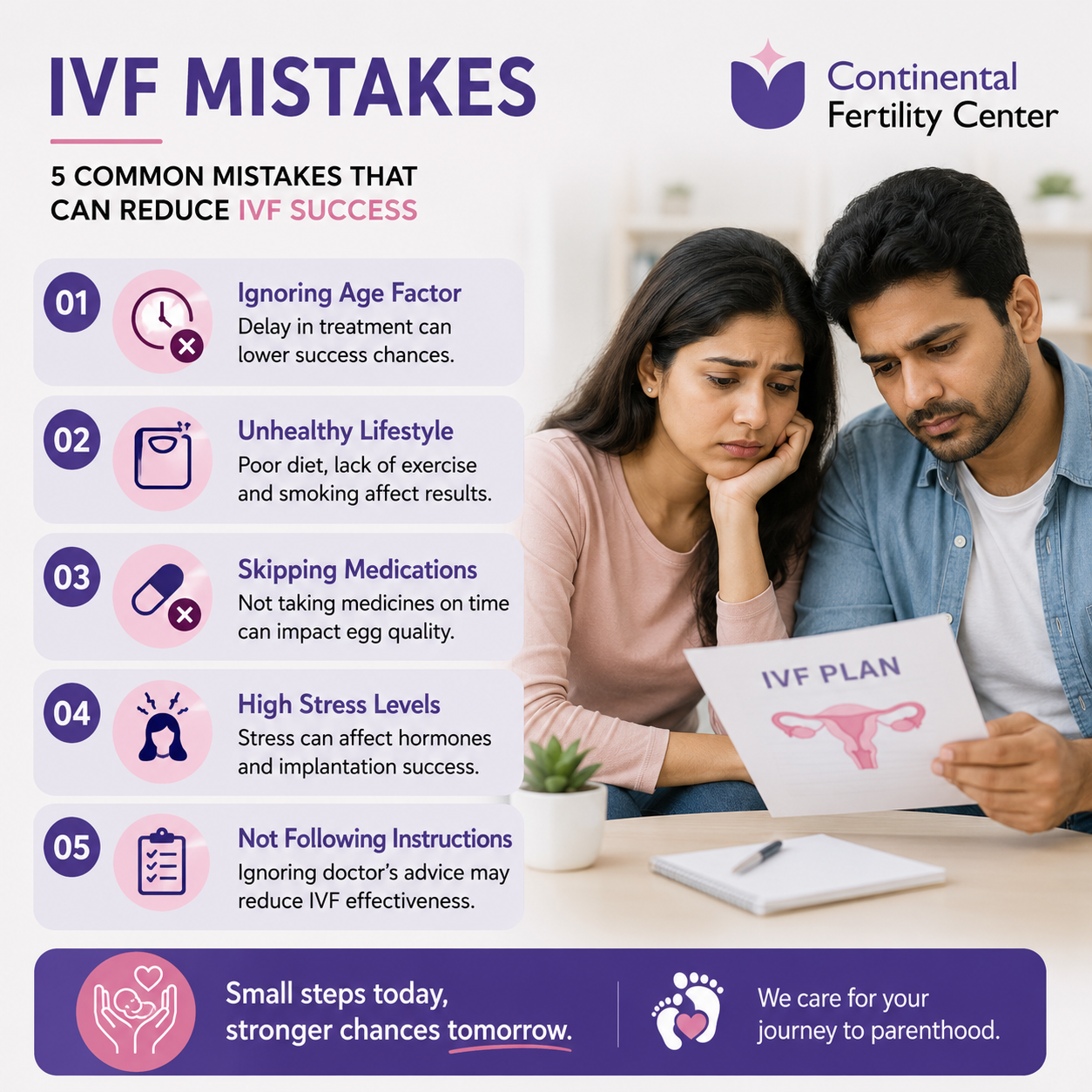
What Are the 5 Common Mistakes That Can Reduce IVF Success?
1. Ignoring Medical Instructions
One of the biggest reasons for reduced IVF success is not following the treatment plan carefully.
During IVF treatment, medications must be taken exactly as prescribed. Missing injections, taking medicines at the wrong time, or skipping follow up appointments can affect egg development and embryo quality.
Always:
- Take medications on schedule.
- Attend every monitoring appointment.
- Inform your doctor about any side effects.
- Never change medication without medical advice.
Following your fertility specialist's instructions improves the chances of IVF success throughout every stage of treatment.
2. Unhealthy Lifestyle Choices
Lifestyle plays a major role in fertility. Poor eating habits, lack of exercise, smoking, alcohol consumption, and inadequate sleep can negatively affect reproductive health.
Healthy habits that support IVF success include:
- Eat a balanced diet rich in fruits, vegetables, whole grains, and lean protein.
- Stay physically active with moderate exercise.
- Maintain a healthy body weight.
- Sleep for seven to eight hours daily.
- Avoid smoking and alcohol.
- Drink enough water every day.
Small lifestyle improvements before and during IVF treatment can support better fertility and healthier embryo development.
3. Managing Stress Poorly
Although stress alone may not directly cause infertility, excessive emotional stress can make the IVF journey more difficult.
Many couples experience anxiety before egg retrieval, embryo transfer, or pregnancy testing. Managing stress helps improve emotional wellbeing during fertility treatment.
Helpful ways to reduce stress include:
- Practice meditation or deep breathing.
- Spend time with supportive family members.
- Join fertility support groups.
- Stay positive and focus on each treatment step.
- Discuss concerns openly with your fertility specialist.
A calm and balanced mindset can help you stay committed throughout your IVF journey.
4. Returning to Normal Activities Too Soon After Embryo Transfer
Embryo transfer is one of the most important stages of IVF treatment. Some patients believe complete bed rest is necessary, while others resume heavy activities immediately.
The best approach is following your doctor's recommendations.
After embryo transfer:
- Avoid heavy lifting.
- Skip intense workouts.
- Continue prescribed medications.
- Stay hydrated.
- Eat nutritious meals.
- Attend scheduled follow-up visits.
Gentle daily activities are generally safe unless your fertility specialist advises otherwise.
5. Delaying Fertility Treatment
Many couples wait too long before seeking professional help while trying to conceive. Age can significantly influence egg quality and overall IVF success.
If pregnancy has not occurred after an appropriate period of trying to conceive, consulting a fertility specialist early allows timely evaluation and personalized fertility treatment.
Early diagnosis helps identify conditions such as the following:
- Polycystic Ovary Syndrome.
- Endometriosis.
- Blocked fallopian tubes.
- Male factor infertility.
- Hormonal imbalance.
Early intervention often improves the chances of IVF success and expands available treatment options.
How Can You Improve IVF Success?
Improving IVF success involves a combination of medical expertise and healthy lifestyle choices.
Here are practical IVF success tips:
- Choose an experienced fertility specialist.
- Complete all recommended fertility evaluations.
- Maintain a healthy weight.
- Follow medication schedules carefully.
- Eat a nutritious, fertility-friendly diet.
- Stay physically active with moderate exercise.
- Avoid smoking, alcohol, and recreational drugs.
- Manage stress through relaxation techniques.
- Get adequate sleep every night.
- Attend every follow-up appointment.
- Follow your doctor's advice after embryo transfer.
- Stay patient and positive throughout your IVF journey.
These simple habits can support better fertility and improve your overall treatment experience.
Why Choose Continental Fertility Center?
Continental Fertility Center is recognized as one of the best hospitals in Hyderabad for comprehensive fertility treatment. Our experienced fertility specialists provide personalized care using advanced reproductive technology to support every couple's unique fertility journey.
As part of Continental Hospitals, patients benefit from internationally recognized standards of healthcare. The hospital is accredited by JCI and NABH, reflecting its commitment to patient safety, quality care, clinical excellence, and evidence-based medical practices. From fertility evaluation to IVF treatment and embryo transfer, every step is carefully planned to maximize IVF success while providing compassionate support throughout your journey.
Our multidisciplinary approach combines experienced fertility specialists, advanced laboratories, modern technology, and individualized treatment plans to help couples achieve their dream of parenthood.
Conclusion
IVF success depends on careful planning, timely fertility treatment, healthy lifestyle choices, and expert medical guidance. Avoiding common mistakes such as ignoring medical instructions, maintaining unhealthy habits, delaying treatment, poorly managing stress, and not following post-embryo transfer advice can improve your chances of a successful pregnancy.
If you are trying to conceive or facing challenges with fertility, early consultation with an experienced fertility specialist can make a significant difference. Every fertility journey is unique, and personalized care can help you move one step closer to building the family you have always hoped for.
If you are experiencing infertility, repeated IVF failure, or planning to begin your IVF journey, consult our fertility specialists in Hyderabad at Continental Fertility Center. Our expert team provides comprehensive fertility evaluation, advanced IVF treatment, personalized care, and continuous support to help improve IVF success and guide you toward a healthy pregnancy. Your journey to parenthood begins with the right care and the right specialists.
Related Blogs:
Frequently Asked Questions
Several everyday habits and treatment-related mistakes can reduce the chances of IVF success. Skipping fertility medications, missing follow-up appointments, smoking, drinking alcohol, poor sleep, unmanaged stress, unhealthy eating habits, and ignoring your doctor's advice can all affect the outcome. Self-medicating without medical approval may also interfere with treatment. Delaying recommended tests or procedures can impact embryo transfer timing. Every step in an IVF cycle is carefully planned, so following your fertility specialist's instructions is essential. Maintaining a healthy lifestyle, attending every appointment, and communicating openly with your doctor can significantly improve your chances of a successful pregnancy.
Stress alone does not directly cause IVF failure, but chronic stress can negatively affect your overall physical and emotional health during treatment. High stress levels may lead to poor sleep, unhealthy eating, missed medications, or skipped appointments, all of which can influence treatment outcomes. Managing stress through relaxation techniques, gentle exercise, meditation, counseling, or emotional support can make the IVF journey easier. Staying positive and focusing on healthy daily habits can improve your overall well-being. Many fertility clinics also recommend psychological support to help patients cope with treatment-related anxiety.
Yes. Smoking and excessive alcohol consumption can significantly reduce fertility in both men and women. Smoking affects egg quality, sperm health, embryo development, and uterine blood flow. Alcohol may interfere with hormone balance and reproductive function. These habits can lower implantation rates and increase the risk of miscarriage. Fertility specialists usually recommend stopping smoking and avoiding alcohol several months before starting IVF treatment. A healthier lifestyle gives your body the best opportunity to respond positively to fertility medications and supports better pregnancy outcomes.
IVF medications are carefully scheduled to stimulate the ovaries, support egg development, and prepare the uterus for embryo implantation. Missing doses or taking medications at the wrong time can affect hormone levels and disrupt the treatment cycle. This may reduce the number of mature eggs, affect embryo quality, or even require postponing the cycle. Always follow the medication schedule exactly as prescribed. If you accidentally miss a dose, contact your fertility specialist immediately instead of adjusting the medication yourself. Timely treatment plays an important role in IVF success.
Yes. Being significantly overweight or underweight can affect hormone balance, ovulation, egg quality, and the body's response to fertility medications. It may also influence embryo implantation and increase pregnancy-related complications. Achieving a healthy weight before IVF can improve treatment outcomes. A balanced diet, regular physical activity, and guidance from your fertility specialist or nutritionist can help you prepare for treatment. Even modest weight improvement may positively affect fertility. Your doctor will recommend a personalized approach based on your overall health and medical history.
Light to moderate exercise is generally considered safe during IVF treatment unless your fertility specialist advises otherwise. Walking, gentle stretching, and yoga may help improve circulation and reduce stress. However, high-intensity workouts, heavy lifting, or activities that involve jumping or sudden movements should usually be avoided because the ovaries become enlarged during stimulation. Excessive physical activity may increase discomfort or the risk of complications. Always discuss your exercise routine with your fertility specialist to ensure it is appropriate for your stage of treatment.
Follow-up appointments are a critical part of every IVF cycle. These visits allow your fertility specialist to monitor follicle growth, hormone levels, and your response to medications. Ultrasound scans and blood tests help determine the best timing for egg retrieval and embryo transfer. Missing appointments can delay treatment or affect important clinical decisions. Regular monitoring also helps identify any complications early and ensures that your treatment plan is adjusted when necessary. Attending every scheduled visit improves the safety and effectiveness of IVF treatment.
Improving IVF success begins with following your fertility specialist's recommendations throughout treatment. Take medications exactly as prescribed, attend every appointment, eat a nutritious diet, maintain a healthy weight, stay physically active with gentle exercise, avoid smoking and alcohol, and get adequate sleep. Managing stress and communicating openly with your medical team are equally important. Do not take supplements or medications without your doctor's approval. Choosing an experienced fertility center with advanced laboratory facilities and personalized care can also contribute to better treatment outcomes and increase your confidence throughout the IVF journey.