

Can You Have Twins Through IVF? Facts Every Couple Should Know
Twins through IVF is a common question among couples exploring fertility treatment. In vitro fertilization (IVF) helps people conceive by fertilizing eggs with sperm in a laboratory and transferring an embryo into the uterus. Some couples hope to have twins through IVF, while others want to understand the chances of a twin pregnancy and its possible risks.
Although IVF can result in a twin pregnancy, having twins is not guaranteed. The chances of twins with IVF depend on factors such as the number of embryos transferred, maternal age, embryo characteristics, and individual fertility history. At Continental Fertility Center, treatment plans are tailored to each couple, with a focus on achieving a healthy pregnancy and protecting the well-being of both mother and baby.
Can IVF Cause Twins?
Yes, IVF can result in twins. A twin pregnancy may occur when two embryos implant in the uterus after an embryo transfer. Identical twins can also develop when a single embryo divides into two embryos.
However, transferring two embryos does not guarantee twins, and transferring one embryo does not completely eliminate the possibility. Your fertility specialist can explain the likely outcomes based on your individual circumstances.
What Are the Chances of Twins with IVF?
The chances of twins with IVF vary from person to person. One important factor is the number of embryos transferred during treatment.
Factors that can influence an IVF twin pregnancy include:
- Number of embryos transferred: Transferring more than one embryo increases the possibility of a multiple pregnancy.
- Maternal age: Age can influence embryo quality and the likelihood of implantation.
- Embryo quality: Embryo development and characteristics affect implantation outcomes.
- Fertility history: Previous IVF cycles and individual reproductive factors may influence treatment decisions.
- Embryo splitting: Occasionally, a single embryo divides and results in identical twins.
Your doctor can discuss these factors and help you understand the potential outcomes of treatment.
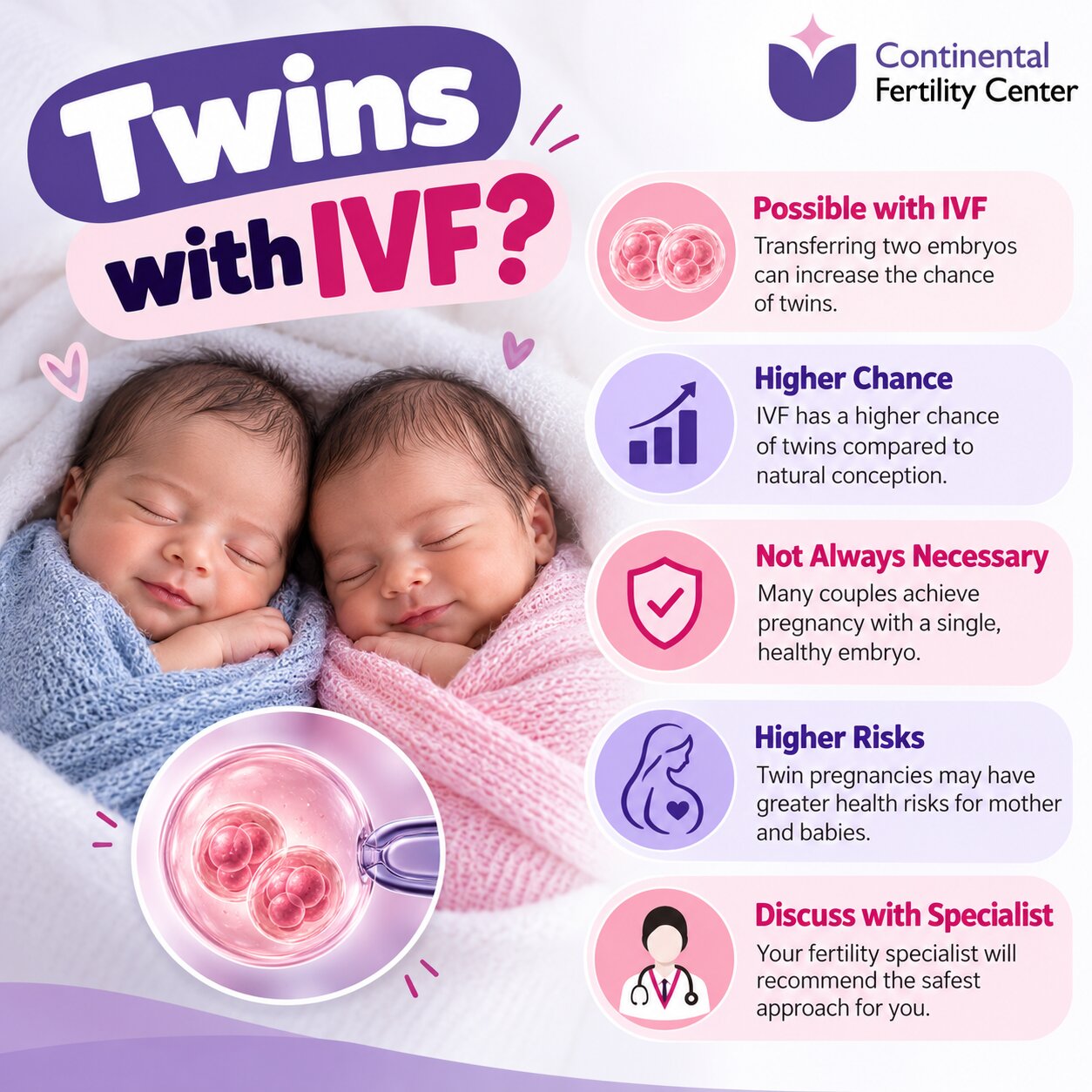
Is Transferring Two Embryos Better for Having Twins?
Transferring two embryos may increase the possibility of twins, but it also increases the risks associated with multiple pregnancies. For this reason, transferring more embryos is not automatically the best choice.
Single embryo transfer is often recommended when appropriate because it can reduce the risk of multiple pregnancy while maintaining a good chance of success for many patients. The decision depends on embryo quality, age, medical history, and previous treatment outcomes.
The goal of IVF should be a healthy pregnancy, not simply achieving twins.
What Are the Risks of an IVF Twin Pregnancy?
An IVF twin pregnancy requires careful monitoring because carrying two babies can place additional demands on the mother's body.
Possible IVF twin pregnancy risks include:
- Premature birth and low birth weight
- High blood pressure and preeclampsia
- Gestational diabetes
- Increased likelihood of cesarean delivery
- Anemia and other pregnancy-related complications
- A greater need for specialized newborn care
Regular antenatal visits, ultrasound examinations, and appropriate medical supervision help identify complications early and support the health of both babies.
How Can Couples Improve Their IVF Outcomes?
Couples can take several steps to support their fertility treatment journey:
- Consult an experienced fertility specialist before starting IVF.
- Complete recommended fertility investigations.
- Follow prescribed medications and treatment instructions.
- Maintain a balanced diet and healthy lifestyle.
- Avoid smoking and alcohol while planning pregnancy.
- Attend scheduled follow-up appointments.
- Discuss the benefits and risks of single versus multiple embryo transfer.
These steps can support overall reproductive health, although they cannot guarantee pregnancy or twins.
Why Choose Continental Fertility Center?
Choosing the right fertility center is an important step when considering IVF. Continental Fertility Center offers personalized fertility evaluation, specialist guidance, diagnostic support, and individualized treatment planning.
Continental Hospitals holds NABH and NABL accreditations, reflecting established standards for healthcare quality, patient safety, and laboratory services. These quality frameworks support a structured approach to clinical care.
Couples can benefit from:
- Experienced fertility and reproductive medicine specialists
- Personalized IVF treatment plans
- Modern diagnostic and laboratory facilities
- Guidance on embryo transfer options
- Pregnancy monitoring and follow-up care
- Patient-focused counselling throughout treatment
For couples seeking fertility care at the best hospital in Hyderabad, the priority should be a center that provides appropriate medical guidance, transparent counseling, and care tailored to individual needs.
When Should You Consult a Fertility Specialist?
If you are planning IVF, have experienced difficulty conceiving, or want to understand the chances of twins with IVF, consult a qualified fertility specialist. Your doctor can assess your reproductive health, explain the available options, and help you make informed decisions about embryo transfer.
At Continental Fertility Center, consult our best fertility specialist in Hyderabad, who can guide you through IVF treatment and discuss the safest approach for your circumstances.
Conclusion
Twins through IVF are possible, but the outcome depends on several medical and reproductive factors. While transferring two embryos may increase the chance of twins, it can also increase pregnancy-related risks. Single embryo transfer may be a safer option for many patients.
If you are considering IVF, speak with a fertility specialist at Continental Fertility Center to understand your options and develop a personalized treatment plan focused on a healthy pregnancy and the well-being of both mother and baby.
Frequently Asked Questions
Yes, it is possible to have twins through IVF treatment. Twins may develop when two embryos implant in the uterus. This can happen when two embryos are transferred during an IVF cycle. Identical twins may also occur when one embryo splits into two. However, transferring two embryos does not guarantee a twin pregnancy. Sometimes, only one embryo implants successfully. In other cases, neither embryo results in pregnancy. The chances of twins depend on several medical factors. These include embryo characteristics and the patient's age. Fertility history may also influence treatment decisions. Twin pregnancies carry higher risks than singleton pregnancies. These risks include premature birth and low birth weight. A fertility specialist can explain the chances and risks based on individual circumstances.
IVF twins can occur in more than one way. One possibility is the transfer of two embryos during an IVF cycle. If both embryos implant and develop, fraternal twins may result. Fraternal twins develop from two separate eggs and sperm. Another possibility is the splitting of a single embryo. When one embryo splits, identical twins may develop. Identical twins generally share the same genetic origin. The likelihood of embryo splitting is relatively low. Transferring one embryo can still occasionally result in identical twins. Therefore, single embryo transfer does not eliminate the possibility of twins. The outcome depends on embryo development and implantation. Fertility specialists consider these factors when planning treatment. Ultrasound scans can help confirm whether a pregnancy involves twins.
No, transferring two embryos does not guarantee a twin pregnancy. Both embryos may implant successfully and develop. Sometimes, only one embryo implants in the uterus. In other cases, neither embryo leads to an ongoing pregnancy. The outcome depends on embryo quality and other fertility factors. The patient's age may also influence implantation chances. Uterine health can play an important role in pregnancy outcomes. Even when two embryos implant, one may stop developing. This is sometimes called a vanishing twin. Transferring multiple embryos can increase the risk of multiple pregnancy. Twin pregnancies also require closer medical monitoring. Doctors generally consider the safest treatment approach for each patient. Single embryo transfer may be recommended when appropriate. Discussing embryo transfer options with a fertility specialist can help couples make informed decisions.
IVF can result in twin pregnancies, but the likelihood varies. The chance depends partly on how many embryos are transferred. Transferring two embryos can increase the possibility of twins. However, not every transferred embryo implants successfully. Single embryo transfer substantially reduces the risk of twins. A small possibility of identical twins remains even with one embryo. Patient age and embryo characteristics can also influence outcomes. Fertility clinics aim to balance pregnancy chances with safety. Twin pregnancies are considered higher risk than singleton pregnancies. They are associated with increased chances of premature delivery. Babies may also have a higher risk of low birth weight. Regular prenatal care is important for monitoring maternal and fetal health. Your fertility specialist can explain the risks relevant to your treatment plan.
Many twins born after IVF grow and develop well. However, twin pregnancies carry higher risks than singleton pregnancies. Twins are more likely to be born prematurely. Premature birth can lead to breathing and feeding difficulties. Low birth weight is another possible concern. Some twins may require additional newborn care. The risks depend on gestational age and individual health factors. Whether twins share a placenta can also affect pregnancy monitoring. Regular prenatal appointments help doctors assess development. Ultrasound scans may be used to monitor both babies. Appropriate nutrition and medical guidance are important during pregnancy. Couples should understand these risks before choosing embryo transfer options. A fertility specialist can discuss safer approaches to achieving a healthy pregnancy.
Yes, one IVF embryo can occasionally result in identical twins. This happens when the embryo splits into two developing embryos. Both babies generally originate from the same fertilized egg. Identical twins usually share the same genetic information. The exact cause of embryo splitting is not fully understood. Single embryo transfer significantly reduces the risk of multiple pregnancy. However, it cannot completely eliminate the possibility of twins. The occurrence of identical twins after IVF is uncommon. The chance may vary depending on treatment and embryo-related factors. A twin pregnancy can require additional prenatal monitoring. Early ultrasound can help identify the number of developing babies. Doctors can also assess whether the twins share a placenta. Your fertility specialist can explain what to expect after embryo transfer.
Yes, twin pregnancies generally carry more risks than singleton pregnancies. Premature birth is one of the main concerns. Twins may also have a higher chance of low birth weight. The mother may face an increased risk of high blood pressure. Gestational diabetes is another possible pregnancy complication. Some twin pregnancies require more frequent medical appointments. Ultrasound scans help doctors monitor both babies' growth. The level of monitoring depends on the pregnancy and individual health factors. Sharing a placenta can create additional complications in some twin pregnancies. Good prenatal care helps identify concerns early. Doctors may recommend specific lifestyle and nutritional guidance. Couples should discuss these risks before deciding on embryo transfer. The aim is to achieve a healthy pregnancy for both mother and babies.
Single embryo transfer is often recommended to reduce the risk of multiple pregnancy. It involves transferring one embryo into the uterus during an IVF cycle. This approach lowers the chance of twins compared with transferring two embryos. It also reduces many risks associated with multiple pregnancies. However, one embryo can occasionally split and result in identical twins. The suitability of this approach depends on individual fertility circumstances. Embryo quality can influence the treatment recommendation. Age and previous IVF outcomes may also be considered. Frozen embryo transfer may be an option in some treatment plans. Your specialist can explain the likely benefits and limitations. The goal is not simply to achieve pregnancy but to support a healthy birth. Couples should discuss embryo transfer numbers before starting treatment. An individualized plan can help balance effectiveness and safety.
Couples can discuss their family-building goals with a fertility specialist. However, a twin pregnancy cannot be guaranteed through IVF. Transferring two embryos may increase the chance of twins, but it also increases certain pregnancy risks. Both embryos may not implant successfully. Transferring one embryo can still occasionally result in identical twins. Fertility specialists consider medical history and embryo quality when recommending treatment. Maternal health is also important when evaluating pregnancy risks. Many fertility guidelines favor single embryo transfer when appropriate. The goal is to achieve a healthy pregnancy rather than a specific number of babies. Multiple pregnancy can increase the likelihood of premature delivery. Doctors can explain the safest options available for your circumstances. Couples should understand the potential complications before making a decision. A consultation can help establish a treatment plan that prioritizes the health of the mother and babies.