
Can Painful Periods Be a Sign of Infertility?
Many women experience painful periods at some stage of their lives. Mild discomfort during menstruation is common, but severe pain that affects daily activities should never be ignored. If your menstrual pain keeps you from going to work, attending school, or carrying out normal activities, it may be a sign of an underlying gynecological condition that needs medical attention.
A common question many women ask is, Can painful periods be a sign of infertility? The answer is yes, in some cases. While not every woman with painful periods will face fertility problems, certain conditions that cause severe menstrual pain can also make it difficult to conceive. Understanding the connection between painful periods, fertility, and reproductive health can help you seek timely care and improve your chances of a healthy pregnancy.
What Are Painful Periods?
Painful periods refer to menstrual cramps that occur before or during menstruation. The pain is usually felt in the lower abdomen but may also spread to the lower back, hips, or thighs. Some women experience mild discomfort, while others suffer from intense period cramps that interfere with their daily routine.
Common symptoms include:
- Lower abdominal pain
- Back pain during menstruation
- Nausea or vomiting
- Headache
- Fatigue
- Heavy periods
- Pain that lasts for several days
Occasional period cramps are normal, but persistent or worsening pain should be evaluated by a fertility or gynecology specialist.
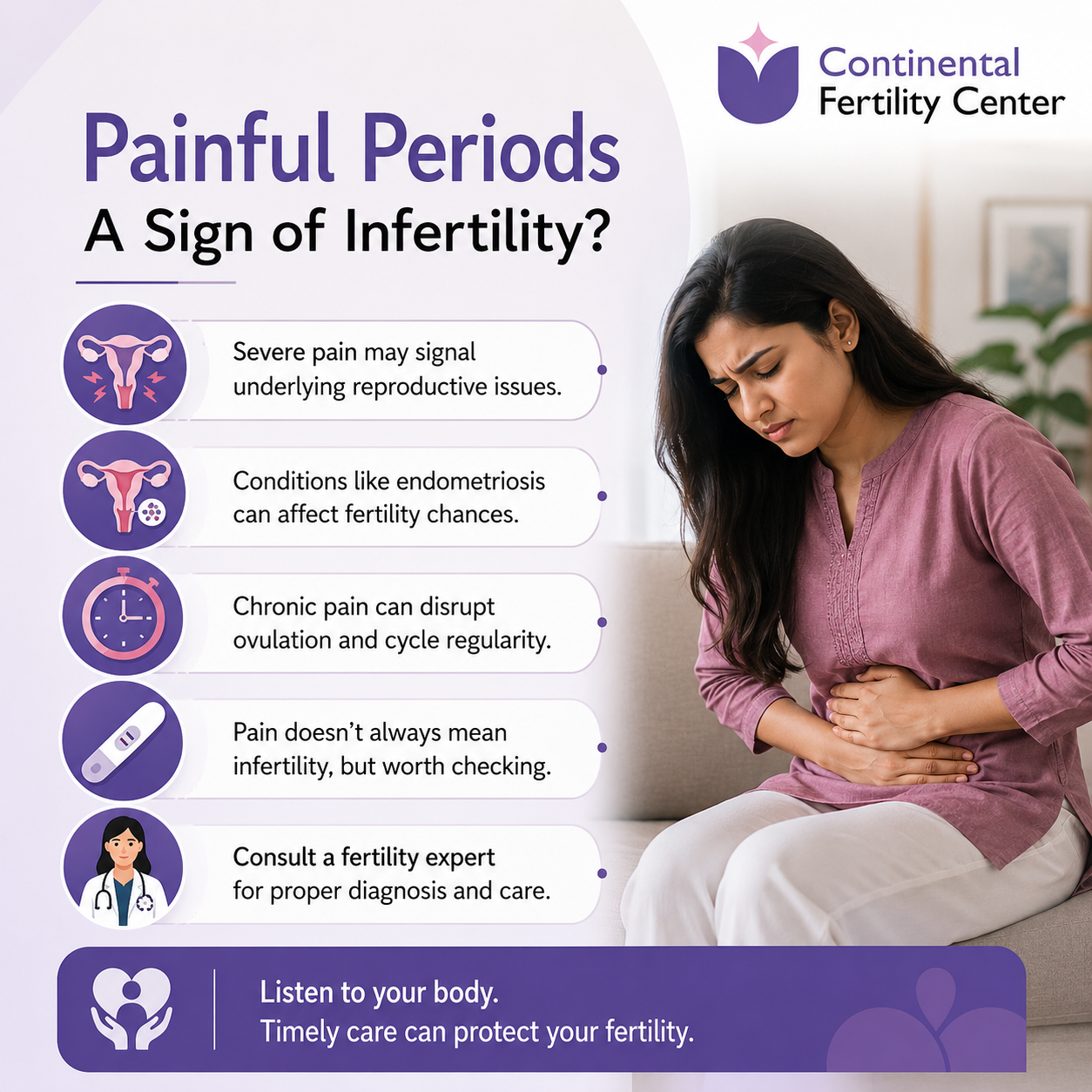
Can Painful Periods Be a Sign of Infertility?
Yes. Painful periods can sometimes indicate medical conditions that affect fertility. The pain itself does not cause infertility. However, the underlying condition responsible for the pain may reduce your chances of becoming pregnant naturally.
If severe menstrual pain is accompanied by irregular cycles, heavy periods, painful intercourse, or difficulty conceiving after trying for several months, it is important to consult a fertility specialist.
Which Conditions Cause Painful Periods and Infertility?
Several reproductive conditions can cause both painful periods and fertility challenges.
Endometriosis
Endometriosis occurs when tissue similar to the lining of the uterus grows outside the uterus. This condition is one of the most common causes of severe period cramps and infertility.
Symptoms include:
- Severe menstrual pain
- Pain during intercourse
- Chronic pelvic pain
- Pain while passing urine or stools during periods
- Difficulty getting pregnant
Endometriosis can affect the ovaries, fallopian tubes, and surrounding tissues, making conception more difficult.
Adenomyosis
Adenomyosis happens when the uterine lining grows into the muscular wall of the uterus. It can cause severe painful periods, enlarged uterus, and heavy periods.
Women with adenomyosis may experience fertility issues, although many can still achieve pregnancy with appropriate treatment.
Pelvic Inflammatory Disease
Pelvic inflammatory disease is an infection of the female reproductive organs. If left untreated, it can damage the fallopian tubes and increase the risk of infertility.
Symptoms may include:
- Pelvic pain
- Painful periods
- Abnormal vaginal discharge
- Fever
- Pain during intercourse
Early diagnosis and treatment can help protect fertility.
Uterine Fibroids
Fibroids are noncancerous growths in the uterus. Depending on their size and location, they may cause the following:
- Heavy periods
- Severe menstrual pain
- Pelvic pressure
- Fertility problems
Many women with fibroids have successful pregnancies after appropriate treatment.
When Should You See a Fertility Specialist?
Seek medical advice if you experience:
- Severe painful periods every month
- Heavy periods lasting longer than usual
- Period pain that does not improve with medication
- Pain during intercourse
- Irregular menstrual cycles
- Difficulty conceiving after trying for pregnancy
- Persistent pelvic pain between menstrual cycles
Early evaluation helps identify the cause and allows timely treatment before fertility is affected.
How Are Painful Periods Diagnosed?
Your fertility specialist may recommend several tests to determine the cause of painful periods.
These may include:
- Detailed medical history
- Pelvic examination
- Ultrasound scan
- Blood tests
- MRI in selected cases
- Hysteroscopy
- Laparoscopy for suspected endometriosis
An accurate diagnosis allows doctors to create the most suitable treatment plan.
Can Treating Painful Periods Improve Fertility?
Yes. Treating the underlying cause of painful periods may improve fertility in many women.
Treatment options may include:
- Medicines to reduce inflammation and pain
- Hormonal therapy
- Treatment for infections
- Minimally invasive surgery for endometriosis or fibroids
- Fertility treatments such as ovulation induction
- Intrauterine insemination when appropriate
- IVF for selected couples
The right treatment depends on your age, symptoms, reproductive goals, and overall health.
How Can You Support Reproductive Health?
Healthy lifestyle habits can support reproductive wellness and may improve fertility outcomes.
Helpful tips include:
- Maintain a healthy body weight
- Eat a balanced diet rich in fruits and vegetables
- Exercise regularly
- Get adequate sleep
- Reduce stress
- Avoid smoking and excessive alcohol consumption
- Keep regular gynecology checkups
- Seek early evaluation for persistent painful periods
Although lifestyle changes cannot cure underlying medical conditions, they contribute to better reproductive health.
Why Choose Continental Fertility Center?
Choosing the right fertility center is an important step in your parenthood journey. Continental Fertility Center, part of Continental Hospitals, offers comprehensive fertility care supported by experienced specialists and advanced reproductive technology.
Why patients trust Continental Fertility Center:
- Expert fertility specialists with extensive experience
- Personalized evaluation and treatment plans
- Advanced diagnostic and fertility treatment facilities
- Comprehensive women's reproductive health services
- Multidisciplinary care under one roof
- Patient-focused and compassionate approach
- International standards of clinical excellence
Continental Hospitals is one of the best hospitals in Hyderabad, recognized for delivering world-class healthcare. The hospital is accredited by JCI, NABH, and QAI, reflecting its commitment to patient safety, clinical quality, and international healthcare standards. Patients benefit from advanced technology, experienced specialists, and evidence-based fertility care.
Conclusion
While painful periods are common, severe or persistent menstrual pain should never be considered normal. Conditions such as endometriosis, adenomyosis, pelvic inflammatory disease, and fibroids can contribute to both painful periods and infertility. Early diagnosis and timely treatment can help relieve symptoms, protect reproductive health, and improve your chances of achieving pregnancy.
If you are experiencing severe period cramps, heavy periods, or have been trying to conceive without success, consult a fertility specialist as early evaluation can make a significant difference.
If you suffer from painful periods, severe period cramps, or heavy periods or are concerned about your fertility, do not delay seeking expert care. The fertility specialists in Hyderabad at Continental Fertility Center provide comprehensive evaluation, advanced diagnosis, and personalized fertility treatment to help you achieve your dream of parenthood. Book your consultation today and take the first step toward better reproductive health and a successful pregnancy.
Related Blogs:
Frequently Asked Questions
Painful periods can sometimes be linked to conditions that affect fertility, but they do not always indicate infertility. Mild menstrual cramps are common and usually occur because the uterus contracts during menstruation. However, severe or worsening pain may be associated with conditions such as endometriosis, adenomyosis, uterine fibroids, or pelvic inflammatory disease. These conditions can interfere with ovulation, fertilization, or implantation. Many women with painful periods conceive naturally without difficulty. If your pain is intense, disrupts daily life, or is accompanied by irregular periods, pain during intercourse, or difficulty conceiving after trying for several months, it is important to seek medical evaluation. Early diagnosis and treatment can improve reproductive health and increase the chances of a successful pregnancy.
Several underlying conditions can cause severe menstrual pain and may also impact fertility. Endometriosis is one of the most common causes, where tissue similar to the uterine lining grows outside the uterus, leading to inflammation and scarring. Adenomyosis, uterine fibroids, pelvic inflammatory disease, ovarian cysts, and congenital uterine abnormalities may also contribute to painful periods. These conditions can affect the reproductive organs, interfere with egg release, block the fallopian tubes, or reduce implantation success. Not every woman with these conditions experiences infertility, but early diagnosis is essential. A fertility specialist may recommend imaging tests, blood investigations, or minimally invasive procedures to determine the exact cause and recommend appropriate treatment.
Endometriosis occurs when tissue similar to the uterine lining grows outside the uterus, causing inflammation, bleeding, and scar formation during each menstrual cycle. This condition often results in severe menstrual cramps, pelvic pain, painful intercourse, and heavy periods. The inflammation and scar tissue may damage the ovaries, affect egg quality, block the fallopian tubes, or alter the pelvic environment, making conception more difficult. Some women with mild endometriosis conceive naturally, while others may require fertility treatment. Early diagnosis can help prevent disease progression and preserve fertility. Treatment options may include medications, laparoscopic surgery, or assisted reproductive techniques such as IVF, depending on the severity of the condition and reproductive goals.
You should consult a fertility specialist if menstrual pain is severe enough to interfere with daily activities, worsens over time, or does not improve with standard pain relief. Medical evaluation is especially important if painful periods are associated with heavy bleeding, irregular cycles, pain during intercourse, chronic pelvic pain, or difficulty becoming pregnant. Women under 35 who have tried to conceive for one year without success, and women over 35 who have tried for six months, should seek fertility assessment. Early evaluation helps identify underlying reproductive conditions before they become more advanced. Prompt diagnosis allows timely treatment, improving both symptom relief and the chances of achieving a healthy pregnancy.
Yes, treating the underlying cause of painful periods may significantly improve fertility in many women. The treatment depends on the diagnosis and may include medications to reduce inflammation, hormonal therapy, minimally invasive surgery to remove endometriosis or fibroids, or antibiotics for infections. In some cases, lifestyle modifications such as maintaining a healthy weight, regular exercise, and managing stress may also support reproductive health. Women with more complex fertility challenges may benefit from assisted reproductive treatments like intrauterine insemination (IUI) or in vitro fertilization (IVF). Receiving timely treatment not only reduces pain but also helps preserve ovarian function, improves reproductive outcomes, and enhances the chances of successful conception.
Yes, many women with painful periods have normal fertility and go on to conceive naturally. Mild to moderate menstrual cramps are common and are usually caused by normal uterine contractions during menstruation. However, severe pain may sometimes indicate an underlying reproductive condition that requires medical attention. Fertility depends on several factors, including ovulation, egg quality, sperm health, fallopian tube function, and uterine health. Having painful periods alone does not automatically mean you are infertile. If your menstrual pain is severe, persistent, or accompanied by symptoms such as irregular periods, heavy bleeding, or delayed conception, consulting a fertility specialist can help determine whether further evaluation or treatment is needed.
A fertility evaluation begins with a detailed medical history and physical examination. Your doctor may recommend pelvic ultrasound to identify fibroids, ovarian cysts, or adenomyosis. Blood tests can assess hormone levels and ovarian reserve, while ovulation testing confirms regular egg release. Hysterosalpingography (HSG) may be performed to evaluate whether the fallopian tubes are open. In some cases, diagnostic laparoscopy is recommended to confirm endometriosis or remove scar tissue. Semen analysis for the male partner is also an essential part of fertility assessment. These investigations help identify the exact cause of infertility and guide personalized treatment plans to improve the chances of successful pregnancy.
At Continental Fertility Centre, our experienced fertility specialists provide comprehensive evaluation and personalized treatment for women experiencing painful periods and fertility concerns. We use advanced diagnostic tools to identify conditions such as endometriosis, adenomyosis, fibroids, hormonal disorders, and ovulation problems. Based on the diagnosis, we create individualized treatment plans that may include medical management, minimally invasive procedures, fertility preservation, IUI, or IVF. Our multidisciplinary team focuses on relieving symptoms while improving reproductive outcomes. With advanced technology, compassionate care, and evidence-based treatment protocols, Continental Fertility Centre supports couples throughout their fertility journey, helping them achieve their dream of parenthood with confidence and expert guidance.