

Can You Get Pregnant with PCOS? What Every Woman Should Know
Polycystic Ovary Syndrome (PCOS) is one of the most common hormonal conditions affecting women of reproductive age. It can affect ovulation, menstrual cycles, hormone levels, and fertility. However, having PCOS does not mean that pregnancy is impossible. With the right evaluation and treatment, many women with PCOS can conceive.
Understanding the connection between PCOS and pregnancy can help women make informed decisions about their reproductive health. PCOS and fertility can vary from woman to woman, so treatment should always be personalized according to ovulation patterns, age, overall health, and other fertility factors.
Can You Get Pregnant with PCOS?
Yes, it is possible to get pregnant with PCOS. The main challenge is that PCOS can cause irregular or absent ovulation. When ovulation does not happen regularly, it can become more difficult to identify the fertile period and achieve pregnancy.
Some women with PCOS may ovulate naturally, while others may need medical support to stimulate ovulation. Therefore, Getting Pregnant with PCOS depends on several individual factors.
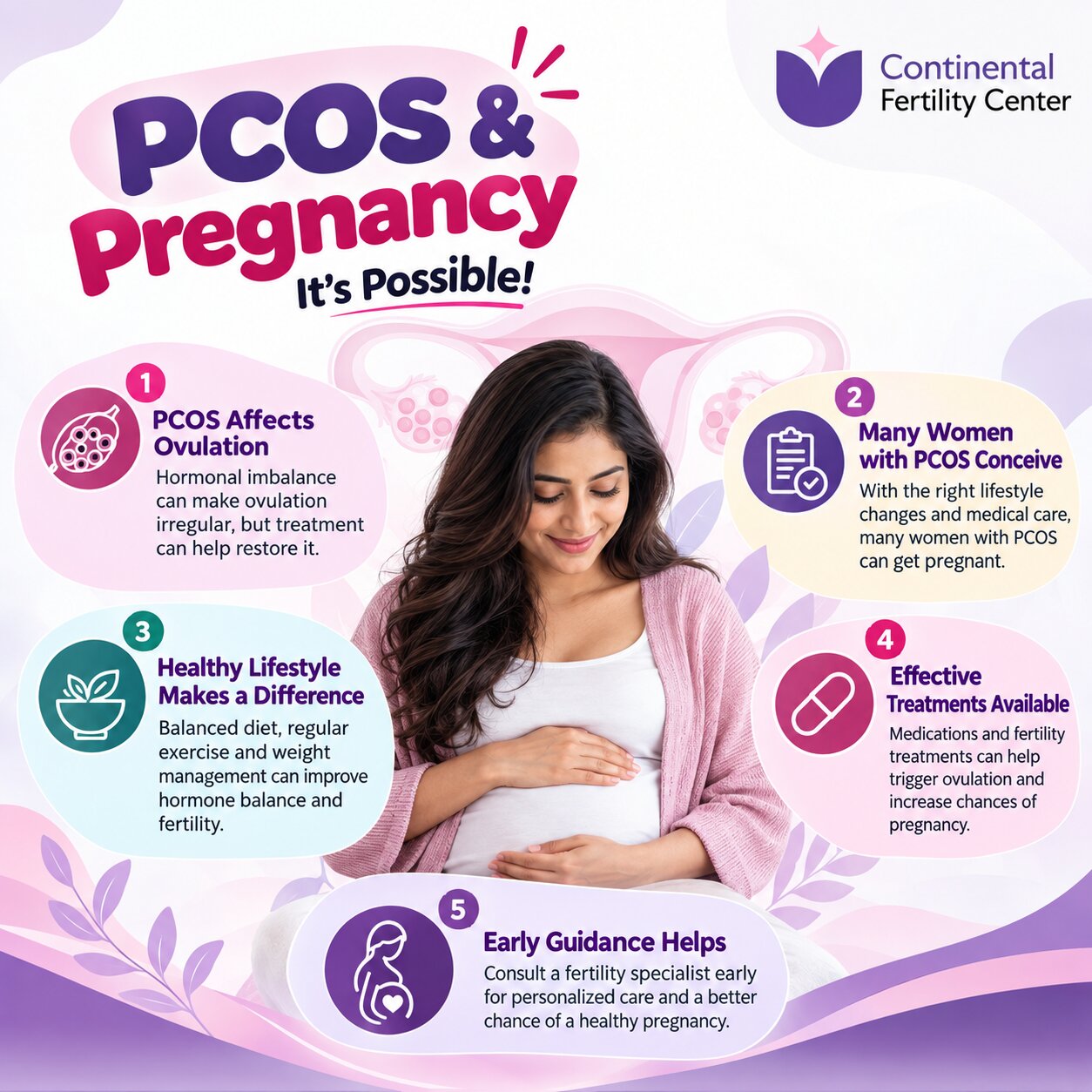
How Does PCOS Affect Fertility?
PCOS can interfere with the normal hormonal process that leads to ovulation. Higher levels of certain hormones can affect the development and release of an egg.
PCOS and infertility may be associated with:
- Irregular menstrual cycles
- Infrequent or absent ovulation
- Hormonal imbalance
- Insulin resistance
- Difficulty predicting the fertile window
- Changes in weight and metabolism
Not every woman with PCOS experiences all these symptoms.
Can PCOS Cause Infertility?
PCOS is a common cause of ovulation-related infertility, but it does not automatically mean permanent infertility. In many cases, fertility can be improved by addressing the underlying factors affecting ovulation.
A fertility specialist may recommend lifestyle changes, medicines to support ovulation, or assisted reproductive treatments depending on the individual situation.
What Are the Chances of Pregnancy with PCOS?
There is no single pregnancy rate that applies to every woman with PCOS. Factors such as age, ovarian reserve, sperm health, weight, metabolic health, fallopian tube health, and the regularity of ovulation can all influence fertility.
A fertility evaluation can help identify the factors that may be affecting conception.
Can Lifestyle Changes Support PCOS Fertility?
Yes. Healthy lifestyle habits can support hormonal and metabolic health and may help improve ovulation in some women.
Helpful habits may include:
- Eating a balanced and nutritious diet
- Maintaining a healthy weight where appropriate
- Staying physically active
- Getting adequate sleep
- Managing stress
- Avoiding smoking and excessive alcohol
- Following medical advice for blood sugar and metabolic health
Lifestyle changes should complement medical care rather than replace professional fertility evaluation when pregnancy is not occurring.
When Should You See a Fertility Specialist?
Women with PCOS may benefit from speaking with a fertility specialist if they have irregular periods, difficulty tracking ovulation, or have been trying to conceive without success.
A specialist may evaluate:
- Ovulation patterns
- Ovarian reserve
- Hormonal levels
- Uterine and fallopian tube health
- Partner's reproductive health
- Previous pregnancy and fertility history
The results can help create an individualized PCOS treatment for pregnancy plan.
What Treatments Can Help with Pregnancy and PCOS?
Treatment depends on the reason pregnancy is not occurring. Depending on the evaluation, treatment may include ovulation-inducing medicines, management of metabolic factors, timed intercourse, intrauterine insemination, or IVF.
The goal is to identify the underlying fertility concern and choose an appropriate treatment rather than treating PCOS in exactly the same way for every woman.
Is Pregnancy with PCOS Safe?
Many women with PCOS have healthy pregnancies. However, PCOS can be associated with a higher risk of certain pregnancy complications, including gestational diabetes and high blood pressure. Regular antenatal monitoring can help identify and manage potential concerns early.
If you become pregnant with PCOS, inform your obstetrician about your condition and follow the recommended pregnancy monitoring schedule.
Why Choose Continental Fertility Center?
Continental Fertility Center provides comprehensive fertility evaluation and treatment with support from experienced fertility specialists and advanced clinical facilities. Patients can receive personalized assessment for PCOS and pregnancy, ovulation concerns, infertility, and other reproductive health conditions.
Continental Hospitals follows established healthcare quality and patient safety standards and holds JCI, NABH, and QAI accreditations and certifications across its healthcare services. The multidisciplinary environment also allows fertility care to be supported by specialists from related medical departments when required.
For women seeking PCOS fertility support, individualized evaluation is important because every woman's reproductive health profile is different.
If You Are Struggling to Conceive with PCOS
If you have PCOS and are finding it difficult to become pregnant, do not assume that pregnancy is out of reach. Irregular ovulation is treatable in many women, and several fertility options may be available depending on your individual needs.
Consult our best fertility specialist in Hyderabad at Continental Fertility Center for a personalized fertility assessment and guidance.
Conclusion
PCOS and pregnancy are not mutually exclusive. Although PCOS can make ovulation irregular and conception more challenging, many women with PCOS can become pregnant with appropriate care.
Understanding your ovulation pattern, maintaining healthy lifestyle habits, identifying other fertility factors, and seeking timely medical guidance can all play an important role. If you are planning pregnancy with PCOS, a fertility specialist can help you understand your options and develop a treatment plan suited to your needs.
Related Blogs:
Frequently Asked Questions
Yes, many women with PCOS can become pregnant. PCOS can sometimes make ovulation irregular or less frequent. Irregular ovulation can make it harder to predict fertile days. Some women with PCOS may still ovulate naturally. Others may need medical support to help with ovulation. Maintaining a healthy weight may support reproductive health when appropriate. Regular physical activity can also benefit metabolic and hormonal health. A balanced diet may help manage some PCOS-related symptoms. Fertility treatment depends on the individual's ovulation and fertility factors. Doctors may recommend medicines to help induce ovulation when needed. Other fertility treatments may be considered if pregnancy does not occur. PCOS does not mean that pregnancy is impossible. A fertility specialist can help create an appropriate treatment plan.
PCOS can make conception more difficult for some women. The condition commonly affects the regularity of ovulation. Irregular or absent ovulation can reduce the number of opportunities to conceive. However, PCOS does not automatically cause permanent infertility. Many women with PCOS conceive naturally or with fertility treatment. Other factors can also affect a woman's ability to become pregnant. These include age, fallopian tube health and ovarian reserve. Sperm health can also influence a couple's chances of conception. Doctors may recommend fertility tests to identify contributing factors. Treatment is usually based on the specific cause of difficulty conceiving. Lifestyle changes may be recommended alongside medical treatment. Ovulation medicines can help some women with PCOS ovulate regularly. A fertility specialist can guide women through suitable treatment options.
PCOS can interfere with the normal process of ovulation. Hormonal changes may prevent an egg from developing or being released regularly. As a result, menstrual cycles may become irregular or infrequent. Some women may have longer gaps between periods. Others may have periods without regular ovulation. Irregular ovulation can make identifying fertile days more difficult. PCOS may also be associated with higher levels of androgen hormones. Insulin resistance can occur in some women with PCOS. Metabolic changes may contribute to hormonal imbalance and ovulation problems. Treatment can help restore or support regular ovulation in some women. Doctors may use lifestyle measures or medicines depending on individual needs. Ovulation tracking can sometimes help identify the fertile window. A medical evaluation can determine whether ovulation is occurring regularly.
Yes, several treatment options can support pregnancy in women with PCOS. The appropriate treatment depends on the woman's individual fertility needs. Lifestyle changes may be recommended as part of PCOS management. Regular physical activity can support overall metabolic and reproductive health. A balanced eating pattern may also help manage PCOS-related metabolic concerns. For some women, medicines may be used to stimulate ovulation. Letrozole is commonly used as an ovulation-induction medicine for PCOS-related infertility. Other medicines may be considered depending on the individual's situation. Fertility specialists may monitor ovulation using blood tests or ultrasound. If ovulation medicines are unsuccessful, other fertility treatments may be discussed. Assisted reproductive treatments such as IVF may be considered in selected cases. Treatment should address other fertility factors when they are present. A personalized plan can improve the chances of achieving pregnancy.
PCOS can be associated with certain pregnancy-related risks. Women with PCOS may have a higher risk of gestational diabetes. Some studies also report an increased risk of high blood pressure during pregnancy. Pregnancy complications can vary from one woman to another. Having PCOS does not mean that complications will definitely occur. Preconception care can help identify and manage potential health concerns. Doctors may check blood pressure, blood sugar and other relevant health factors. Maintaining healthy lifestyle habits can support pregnancy health. Regular prenatal appointments are important throughout pregnancy. Doctors may recommend additional monitoring when clinically appropriate. Medication use should be reviewed with a healthcare professional before or during pregnancy. Women with PCOS should discuss their pregnancy plans with their doctor. Appropriate medical care can help support a healthy pregnancy.
Yes, irregular periods are a common feature of PCOS. Hormonal changes can affect the normal menstrual cycle. Ovulation may occur less frequently or unpredictably. This can lead to longer or irregular menstrual cycles. Some women with PCOS may have fewer periods than expected. Others may experience unpredictable bleeding patterns. The exact menstrual pattern can vary between women. Irregular periods may also make it difficult to identify fertile days. PCOS is not the only possible cause of irregular periods. Thyroid disorders and other hormonal conditions can also affect menstruation. A doctor may recommend tests to determine the underlying cause. Tracking menstrual cycles can provide useful information during evaluation. Appropriate treatment may help regulate periods and improve ovulation.
Yes, pregnancy can occur naturally in some women with PCOS. PCOS does not necessarily stop ovulation completely. Some women continue to ovulate even when their periods are irregular. Pregnancy is possible when ovulation and fertilization occur. Predicting ovulation may be more difficult with irregular cycles. Maintaining healthy lifestyle habits may support overall reproductive health. Tracking menstrual cycles can help identify changes in ovulation patterns. Ovulation predictor tests may be less straightforward for some women with PCOS. If pregnancy does not occur after trying, medical advice may be helpful. Doctors can assess whether ovulation is occurring regularly. Other fertility factors can also be evaluated when needed. Treatment may not be necessary for every woman with PCOS. A fertility specialist can provide guidance based on individual circumstances.
Women with PCOS may benefit from fertility advice when planning pregnancy. Medical consultation can be especially useful when periods are very irregular. A doctor can assess whether ovulation is occurring regularly. Fertility evaluation may also be appropriate when pregnancy has not occurred after trying. The recommended timing can depend on age and individual circumstances. Women with known ovulation problems may benefit from earlier evaluation. A fertility specialist can review menstrual history and previous medical treatment. Tests may be recommended to assess ovulation and reproductive health. Your partner's fertility may also need to be evaluated. Early assessment can help identify factors affecting conception. Treatment options can then be discussed based on the findings. Not every woman with PCOS requires fertility treatment. Individualized medical advice can help determine the right next step.
IVF can be an option for some women with PCOS and infertility. It may be considered when other fertility treatments have not worked. IVF involves stimulating the ovaries to produce multiple eggs. The eggs are then collected and fertilized in a laboratory. A resulting embryo may be transferred into the uterus. Women with PCOS can respond strongly to ovarian stimulation. Doctors therefore carefully plan and monitor fertility medicines. Individualized treatment can help reduce the risk of complications such as ovarian hyperstimulation syndrome. IVF success depends on several factors beyond PCOS alone. Age, egg quality, sperm health and embryo quality can influence outcomes. The cause and duration of infertility also matter. IVF is not required for every woman with PCOS. A fertility specialist can determine whether IVF is appropriate after evaluation.