
Can You Travel During Early Pregnancy After IVF?
Pregnancy after IVF is a joyful milestone for couples who have waited a long time to start their family. After completing fertility treatment, many parents wonder, "Can I travel during early pregnancy after IVF?" It is a common question because every step after successful IVF feels precious. While travel is possible in many cases, it is important to prioritize your health and follow your fertility specialist's advice before making any travel plans.
Early pregnancy after IVF requires extra attention because the first few weeks are important for implantation and the healthy development of the baby. Every pregnancy is different, and the decision to travel depends on your medical condition, pregnancy progress, and doctor's recommendations. Understanding the right precautions can help you enjoy a safe journey while protecting your pregnancy.
Can You Travel During Early Pregnancy After IVF?
Yes, many women can travel safely during pregnancy after IVF if there are no medical complications. However, travel should always be discussed with your fertility specialist before making any plans. Your doctor will evaluate your pregnancy, review your medical history, and advise whether travel is safe for you.
If your pregnancy is progressing normally, short trips are usually considered safe after receiving medical clearance. However, if you have bleeding, severe pain, multiple pregnancies, or other high-risk conditions, your doctor may recommend postponing travel.
Why Is Early Pregnancy After IVF More Sensitive?
The first trimester is an important phase of pregnancy after IVF because the embryo is developing rapidly. During this period, your body is adjusting to hormonal changes while supporting the growing baby.
Many women continue hormone medications after IVF, making regular follow-up appointments essential. Missing medications or medical reviews during travel may affect IVF pregnancy care. This is why careful planning is necessary before leaving home.
When Should You Avoid Traveling?
Your fertility specialist may advise delaying travel if you experience the following:
- Vaginal bleeding
- Severe abdominal pain
- High-risk pregnancy
- Multiple pregnancy with complications
- Uncontrolled nausea and vomiting
- Recent embryo transfer
- History of repeated pregnancy loss
- Signs of infection or fever
If you notice any of these symptoms, seek immediate medical advice instead of traveling.
Tips for Safe IVF Pregnancy Travel
Following simple precautions can make IVF pregnancy travel safer and more comfortable.
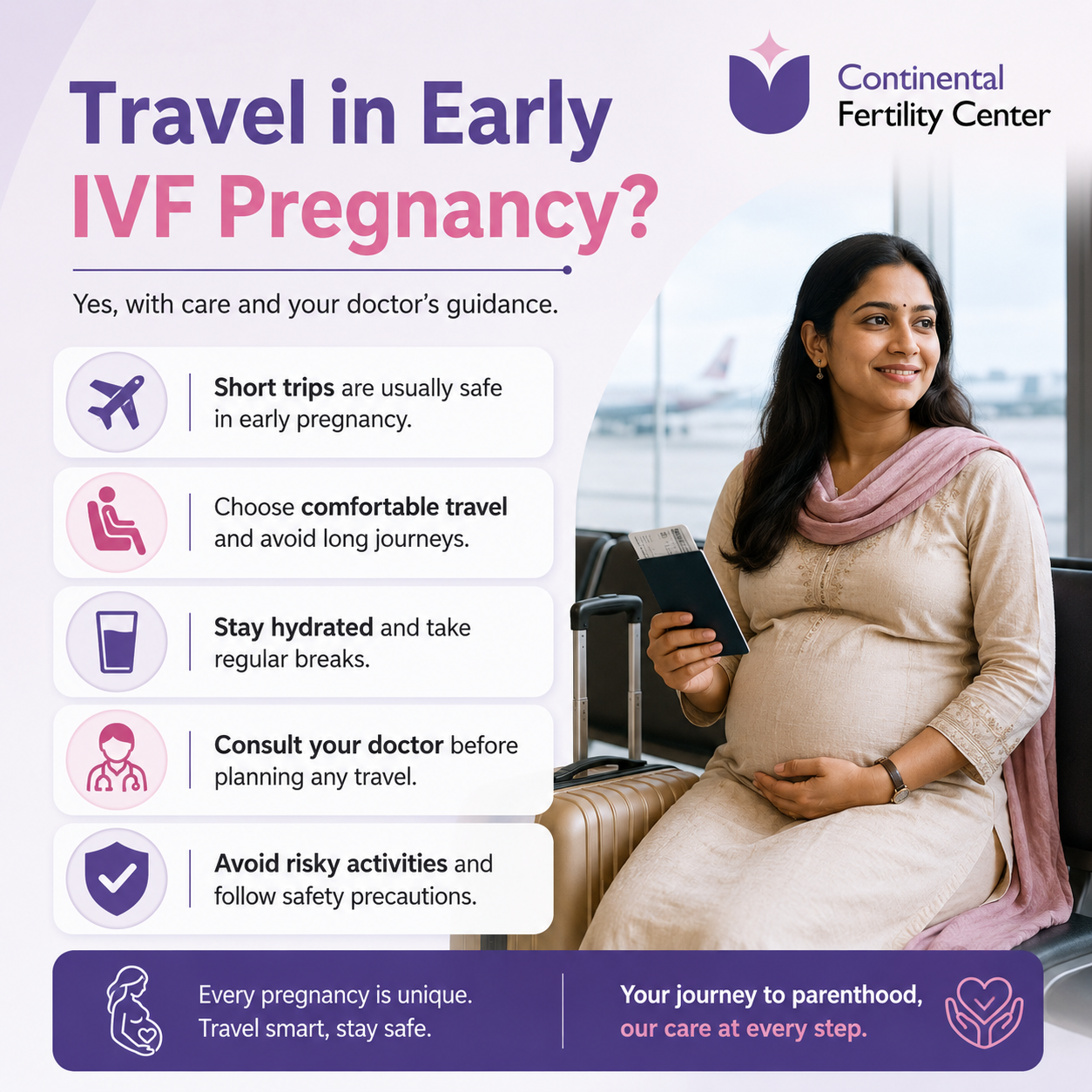
Talk to your fertility specialist
Always schedule a consultation before your trip. Your doctor can confirm whether pregnancy after IVF is progressing normally and whether travel is safe.
Carry Your Medicines
Keep all IVF pregnancy care medications in your hand luggage. Carry enough medicine for the entire journey along with your prescriptions.
Stay Hydrated
Drink plenty of water throughout your journey. Dehydration may increase discomfort and tiredness.
Avoid Heavy Lifting
Do not carry heavy bags. Ask for assistance whenever possible to avoid unnecessary strain.
Take Regular Breaks
If traveling by car, stop every couple of hours to stretch and walk. During flights, move around whenever permitted to improve blood circulation.
Wear Comfortable Clothes
Choose loose, breathable clothing and supportive footwear to stay comfortable throughout the journey.
Keep Emergency Contact Details
Save your fertility specialist's contact information and identify nearby hospitals at your destination.
Is Air Travel Safe During Pregnancy After IVF?
Air travel is generally considered safe for women with uncomplicated pregnancies after IVF after receiving approval from their doctor. Most airlines allow travel during early pregnancy, but it is always wise to check airline policies before booking.
For long flights:
- Walk around the cabin regularly
- Wear comfortable clothing
- Drink enough water
- Avoid sitting continuously for long periods
- Keep medications easily accessible
Is Road Travel Safe?
Road travel is usually safe if your pregnancy is stable. Plan shorter journeys whenever possible and avoid rough roads. Always wear your seat belt correctly, with the lap belt placed below your abdomen.
Foods to Eat While Traveling
Healthy nutrition supports IVF success care throughout pregnancy.
Choose foods such as:
- Fresh fruits
- Whole grains
- Nuts
- Yogurt
- Boiled vegetables
- Protein-rich snacks
- Plenty of clean drinking water
Avoid raw foods, unhygienic meals, and excessive caffeine while traveling.
Warning Signs That Need Immediate Medical Attention
Contact a doctor immediately if you experience:
- Heavy bleeding
- Severe abdominal pain
- Persistent vomiting
- High fever
- Dizziness or fainting
- Fluid leakage
- Severe swelling
Never ignore these symptoms during pregnancy after IVF.
Why Choose Continental Fertility Center?
Continental Fertility Center is one of the trusted destinations for advanced fertility treatment and comprehensive pregnancy after IVF care in Hyderabad. The center offers personalized treatment plans supported by experienced fertility specialists, skilled embryologists, advanced reproductive technology, and compassionate nursing care.
As part of Continental Hospitals, patients benefit from internationally recognized standards of healthcare. Continental Hospitals is accredited by JCI and NABH, reflecting its commitment to patient safety, clinical excellence, quality care, and world-class medical practices. From fertility treatment through pregnancy support, every patient receives continuous guidance and evidence-based care under one roof.
Conclusion
Pregnancy after IVF is a beautiful journey that deserves thoughtful care at every stage. While travel during early pregnancy after IVF may be safe for many women, every pregnancy is unique. Always seek approval from your fertility specialist before making travel plans. Careful preparation, healthy habits, and timely medical follow-up can help you travel confidently while protecting both mother and baby.
If you have questions about pregnancy after IVF, IVF pregnancy travel, or need expert IVF pregnancy care, consult the fertility specialists at Continental Fertility Center. Our experienced team provides personalized guidance, advanced fertility treatment, and comprehensive pregnancy support to help you enjoy a safe and healthy journey toward parenthood. Book your consultation today with the fertility specialist in Hyderabad at Continental Fertility Center, Hyderabad.
Related Blogs:
Frequently Asked Questions
Travel during early pregnancy after IVF may be safe for many women, but it depends on individual medical circumstances. The first trimester is a crucial stage when the embryo is implanting and developing. Your fertility specialist will evaluate your pregnancy progress, medical history, and any existing complications before approving travel. Women with bleeding, severe cramping, multiple pregnancies, or previous miscarriages may be advised to avoid unnecessary trips. Short journeys are generally considered safer than long-distance travel. It is important to stay hydrated, avoid excessive physical strain, and take regular breaks during travel. Always carry your medical records and emergency contact information. Follow your prescribed medications exactly as directed. Every IVF pregnancy is unique, so personalized medical advice is essential. Never travel without first consulting your fertility specialist.
The ideal time to travel after IVF varies depending on your pregnancy progress and overall health. Many fertility specialists recommend waiting until your first ultrasound confirms a healthy pregnancy and fetal heartbeat. This usually happens around six to eight weeks after embryo transfer. If your pregnancy is progressing normally, your doctor may permit short trips. However, women with high-risk pregnancies or complications may need to postpone travel. Always discuss your travel plans during your follow-up appointments. Your doctor will assess factors such as bleeding, pain, hormone support, and multiple gestation before giving approval. Planning ahead helps reduce stress and ensures a safer journey. Medical clearance should always come before booking travel.
Air travel during early pregnancy after IVF is often possible if your pregnancy is stable and your fertility specialist approves. Most airlines allow pregnant women to fly during the first and second trimesters without restrictions. However, long flights may increase discomfort and the risk of dehydration. Wear loose clothing, stay hydrated, and walk periodically during the flight to improve circulation. Keep your medications in your carry-on luggage and avoid lifting heavy baggage. If you experience bleeding, abdominal pain, or dizziness before departure, postpone your trip and seek medical advice. Women carrying twins or those with pregnancy complications require additional evaluation. Always obtain medical clearance before flying after IVF.
Proper planning can make travel safer during early pregnancy after IVF. Carry all prescribed medications, prenatal vitamins, and copies of your medical reports. Stay hydrated by drinking plenty of water throughout the journey. Wear comfortable clothing and supportive footwear. Avoid standing or sitting continuously for long periods and take regular walking breaks whenever possible. Eat light, nutritious meals and avoid unhygienic food. Ensure you know the location of nearby hospitals at your destination. Keep emergency contact numbers easily accessible. Do not skip scheduled medications or follow-up appointments. Most importantly, contact your fertility specialist immediately if you notice bleeding, severe pain, or reduced well-being during or after travel.
Travel should be postponed if your fertility specialist identifies any risk factors during early pregnancy. Vaginal bleeding, severe abdominal pain, persistent cramping, dizziness, or signs of threatened miscarriage require immediate medical attention. Women carrying twins or higher-order multiple pregnancies may also be advised to limit travel. If you have uncontrolled medical conditions such as high blood pressure or diabetes, your doctor may recommend postponing trips until your condition is stable. Long-distance travel immediately after embryo transfer is usually discouraged unless necessary. Never ignore unusual symptoms while traveling. Delaying non-essential travel until your pregnancy becomes more stable can reduce unnecessary risks and provide greater peace of mind.
Long road trips do not directly harm an IVF pregnancy, but prolonged sitting may cause discomfort, fatigue, and poor circulation. If travel is necessary, schedule frequent breaks every one to two hours to stretch and walk briefly. Stay hydrated and avoid heavy meals before the journey. Wear your seatbelt correctly, placing the lap belt below the abdomen and the shoulder belt across your chest. Avoid rough roads whenever possible and do not drive if you feel tired or unwell. Keep your medications easily accessible throughout the trip. If any concerning symptoms develop, stop traveling and seek immediate medical care. Always follow your fertility specialist's recommendations before planning extended road travel.
There is no strong scientific evidence that normal, doctor-approved travel alone increases the risk of miscarriage after IVF. The greatest concern is the underlying health of the pregnancy rather than the journey itself. Women with uncomplicated pregnancies can often travel safely after receiving medical approval. However, strenuous activities, dehydration, excessive stress, or ignoring warning symptoms can negatively affect overall well-being. Follow all medication schedules, remain hydrated, and avoid physically demanding travel. Contact your doctor immediately if you experience bleeding, severe pain, fever, or persistent discomfort. Personalized medical advice remains the safest approach because every IVF pregnancy has different risks and requirements.
Your fertility specialist understands your complete IVF journey, medical history, and pregnancy progress better than anyone else. Before approving travel, they will assess ultrasound findings, hormone support, previous pregnancy history, and any current symptoms. They can determine whether your pregnancy is considered low-risk or requires additional monitoring. Your doctor may also provide instructions regarding medications, emergency precautions, and follow-up appointments while you are away. Having professional guidance reduces anxiety and helps you make informed travel decisions. Even if you feel completely healthy, medical clearance offers added reassurance. Consulting your fertility specialist before every planned trip is one of the safest steps you can take during early pregnancy after IVF.