
How is IVF pregnancy different from natural pregnancy?
Pregnancy is a life-changing journey filled with excitement, hope, and many questions. One of the most common questions couples ask is, How is IVF pregnancy different from natural pregnancy? Understanding the difference can help reduce anxiety and prepare parents for a healthy pregnancy experience. While the way conception happens is different, the goal remains the same, which is a healthy mother and a healthy baby.
The topic of IVF pregnancy vs natural pregnancy often creates confusion because many people believe IVF pregnancies are riskier or that IVF babies are different from naturally conceived babies. In reality, advances in reproductive medicine have made IVF highly successful, and most IVF pregnancies progress just like natural pregnancies with proper medical care. This guide explains everything you need to know about ivf pregnancy vs natural pregnancy in simple language.
What Is Natural Pregnancy?
Natural pregnancy occurs when a sperm fertilizes an egg inside the woman's fallopian tube. The fertilized egg then travels to the uterus, where it implants into the uterine lining and begins to grow. This process happens naturally without medical intervention.
Natural conception depends on several factors, including healthy sperm, regular ovulation, open fallopian tubes, and a healthy uterus.
What Is IVF Pregnancy?
An IVF pregnancy begins through the IVF process, where eggs are collected from the ovaries and fertilized with sperm in a specialized laboratory. Once healthy embryos develop, one or more embryos are transferred into the uterus, where implantation takes place.
Although fertilization happens outside the body, pregnancy develops inside the uterus just like a natural pregnancy after successful implantation.
IVF Pregnancy vs Natural Pregnancy: What Is the Difference?
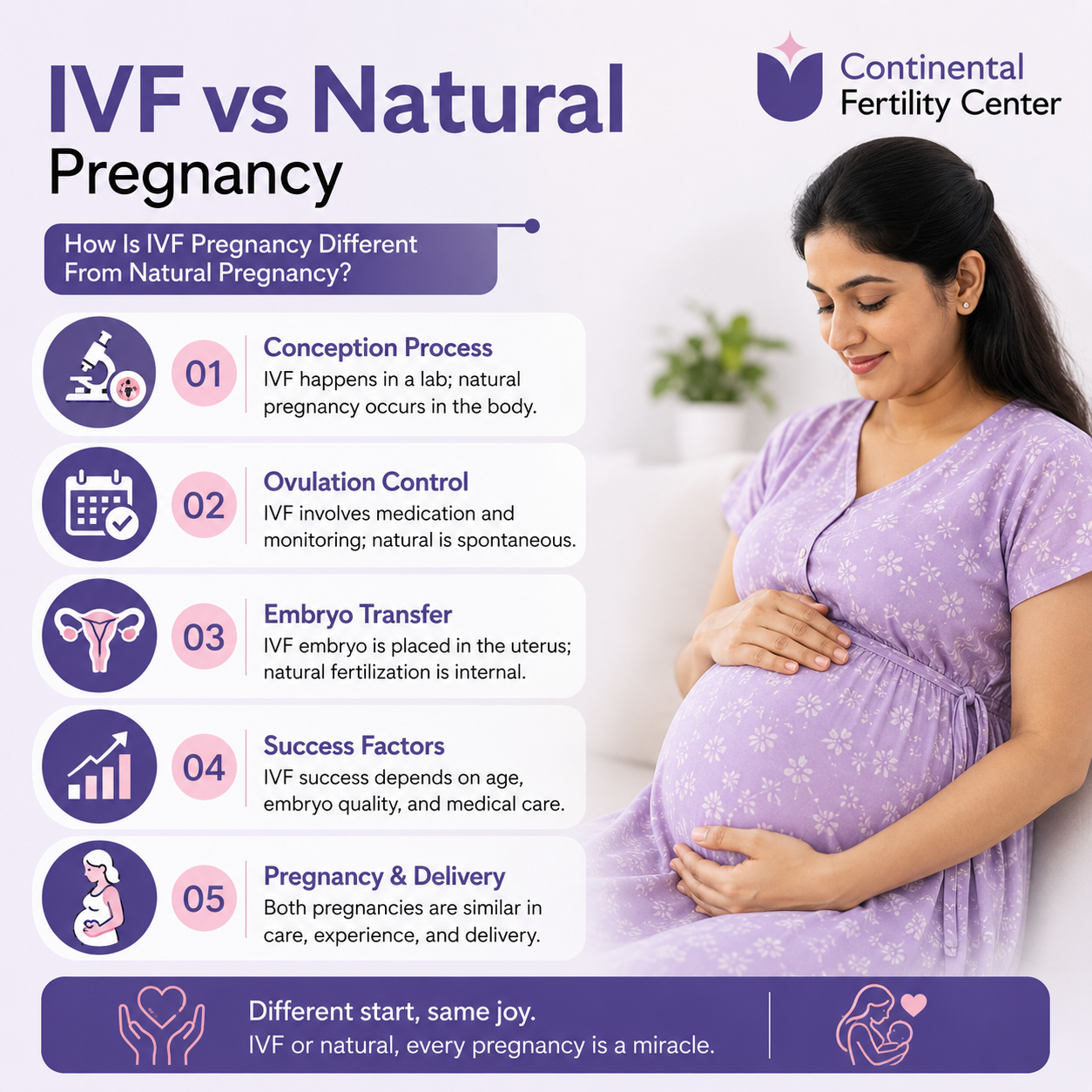
The biggest difference in IVF pregnancy vs natural pregnancy is how fertilization occurs.
| IVF Pregnancy | Natural Pregnancy |
|---|---|
| Fertilization happens in a laboratory | Fertilization happens inside the body |
| The embryo is transferred into the uterus | The fertilized egg naturally reaches the uterus |
| Requires fertility treatment | Happens without medical assistance |
| Pregnancy is monitored closely in early weeks | Standard pregnancy monitoring is usually enough |
After implantation, both pregnancies grow in the same way. The baby's organs, growth, and development follow the same biological process.
Does IVF Pregnancy Feel Different?
Many women wonder if ivf pregnancy vs natural pregnancy feels different.
The answer is usually no.
Once pregnancy is established, most symptoms are similar, including:
- Morning sickness
- Breast tenderness
- Fatigue
- Frequent urination
- Food cravings
- Mood changes
Some women undergoing IVF may notice additional symptoms in the beginning because of fertility medications used during treatment.
Are IVF Babies Different from Normal Babies?
One of the biggest myths surrounding IVF babies vs normal babies is that IVF babies are different.
Research shows that IVF babies grow, learn, and develop just like naturally conceived children. Their intelligence, physical growth, emotional development, and long-term health are generally similar.
The health of the baby depends more on parental health, maternal age, pregnancy care, and lifestyle than on the method of conception.
Is IVF Pregnancy More Risky?
When discussing IVF pregnancy vs natural pregnancy, many people ask about risks.
An IVF pregnancy may need closer observation during the early weeks because many couples undergoing IVF have underlying fertility conditions. Some pregnancies may have a slightly higher chance of certain complications, especially in older mothers or multiple pregnancies.
Doctors usually monitor the following:
- Early embryo development
- Hormone levels
- Implantation progress
- Baby's growth
- Mother's overall health
With regular prenatal care, many IVF pregnancies continue smoothly until delivery.
Why Is Monitoring Important During IVF Pregnancy?
The first trimester is especially important in an IVF pregnancy.
Doctors may recommend:
- Regular ultrasound scans
- Blood tests
- Hormone monitoring
- Medication support when required
- Routine antenatal checkups
Once the pregnancy is stable, care becomes similar to natural pregnancy.
Common Myths About IVF Pregnancy
Many misconceptions exist about IVF pregnancy vs natural pregnancy.
Myth: IVF babies are weaker.
Fact: IVF babies are generally as healthy as naturally conceived babies.
Myth: Every IVF pregnancy requires a cesarean delivery.
Fact: Many women with IVF pregnancies have normal vaginal deliveries depending on their medical condition.
Myth: IVF pregnancies always involve twins.
Fact: Modern IVF commonly transfers a single embryo, reducing the chance of multiple pregnancies.
Tips for a Healthy Pregnancy After IVF
Whether conception happens naturally or through IVF, healthy habits support both mother and baby.
Follow these simple tips:
- Attend every prenatal appointment.
- Eat a balanced and nutritious diet.
- Stay physically active as advised by your doctor.
- Take prescribed prenatal vitamins.
- Get enough sleep and rest.
- Avoid smoking and alcohol.
- Manage stress with relaxation techniques.
- Report unusual symptoms to your doctor immediately.
Why Choose Continental Fertility Center?
Continental Fertility Center is part of Continental Hospitals, one of the best hospitals in Hyderabad, known for delivering advanced fertility care with compassion and clinical excellence. The hospital is accredited by JCI, NABH, and QAI, reflecting its commitment to international standards of patient safety and quality healthcare.
Our fertility specialists use advanced reproductive technology, modern embryology laboratories, personalized treatment plans, and evidence based protocols to improve the chances of successful conception. From fertility evaluation to pregnancy care, every patient receives dedicated support throughout the journey.
Conclusion
Understanding IVF pregnancy vs natural pregnancy helps couples make informed decisions and reduces unnecessary fears. While the method of conception differs, both pregnancies grow and develop in the same way after implantation. Most women experience similar pregnancy symptoms, and IVF babies are just as healthy as naturally conceived babies when supported by good prenatal care.
If you have concerns about infertility, are planning your first IVF process, or would like expert guidance on IVF pregnancy vs natural pregnancy, early consultation can make a significant difference in your fertility journey.
If you are experiencing infertility, repeated pregnancy loss, or delayed conception or have questions about IVF pregnancy vs natural pregnancy, consult the experienced fertility specialists in Hyderabad at Continental Fertility Center, Continental Hospitals, Hyderabad. Our team offers comprehensive fertility evaluation, advanced IVF treatment, personalized pregnancy care, and compassionate support to help you achieve your dream of parenthood.
Related Blogs:
Frequently Asked Questions
An IVF pregnancy begins differently because fertilization occurs in a laboratory before embryo transfer, while natural fertilization occurs inside the fallopian tube. After implantation, both pregnancies develop similarly. Baby growth, organ development, and pregnancy milestones remain the same. IVF pregnancies may require closer monitoring during early pregnancy due to fertility history or treatment factors. Most IVF pregnancies progress normally and result in healthy babies with appropriate prenatal care.
Not every IVF pregnancy is high-risk. Additional monitoring is often recommended because of maternal age, infertility history, previous pregnancy losses, or underlying medical conditions rather than IVF itself. Many women experience healthy pregnancies and deliveries. Risk depends on individual health factors, and regular prenatal care helps ensure the best possible outcomes.
IVF pregnancies are monitored closely during the first trimester to confirm successful implantation, monitor hormone levels, detect fetal heartbeat, and assess embryo development. Regular ultrasounds and blood tests provide reassurance and help identify any concerns early. Once the pregnancy is stable, routine prenatal care usually follows the same schedule as natural pregnancies.
Yes. Many women who conceive through IVF have successful vaginal deliveries. The delivery method depends on maternal health, baby's position, labor progress, and pregnancy complications rather than IVF itself. Your obstetrician will recommend the safest delivery option based on your individual pregnancy.
Current research shows that babies conceived through IVF can be just as healthy as those conceived naturally. Baby health depends on genetics, maternal health, prenatal care, nutrition, and pregnancy management rather than the method of conception. Millions of healthy babies have been born through IVF worldwide.
Women should take prescribed medications, attend regular prenatal appointments, eat a balanced diet, stay hydrated, avoid smoking and alcohol, and follow activity recommendations from their doctor. Heavy lifting and strenuous exercise may need to be limited during early pregnancy. Any unusual symptoms should be reported immediately.
Twins were previously more common in IVF because multiple embryos were transferred. Today, single embryo transfer is commonly recommended to reduce the risk of multiple pregnancies while maintaining excellent success rates. The chance of twins depends on the treatment plan and number of embryos transferred.
Most women with uncomplicated IVF pregnancies can return to light daily activities after embryo transfer, following their doctor's advice. Routine work, walking, and normal household activities are generally safe. Heavy physical activity should be avoided if advised by the healthcare provider. Individual recommendations depend on pregnancy progress.