
Early Signs of Infertility You Shouldn’t Ignore
Understanding your reproductive health is a journey that often begins long before you decide to start a family. For many individuals and couples, the path to parenthood is straightforward, but for others, subtle physical cues may suggest underlying challenges. Recognizing the early signs of infertility is not about creating alarm; it is about empowerment through knowledge and timely intervention.
When these signs are identified early, the success rates for clinical treatments improve significantly. At Continental Fertility Centre, we believe that informed patients are better equipped to make decisions that align with their long-term family goals.
Understanding the Basics of Infertility
In medical terms, infertility is typically defined as the inability to conceive after one year of regular, unprotected intercourse. However, for women over the age of 35, this window shortens to six months. It is a common condition that affects millions of people globally, yet it remains shrouded in many myths.
It is important to remember that infertility is not a female issue alone. Statistics consistently show that reproductive challenges are distributed nearly equally between men and women, with a third of cases stemming from female factors, a third from male factors, and the remaining third involving both partners or unexplained causes.
If you suffer from any symptoms mentioned above, please schedule a consultation with our best fertility specialist at Continental Fertility Centre.
Early Warning Signs in Women
Female fertility is a complex biological process involving the ovaries, fallopian tubes, and the uterus. Any disruption in the hormonal balance or structural integrity of these organs can manifest as visible symptoms.
Irregular or Absent Cycles
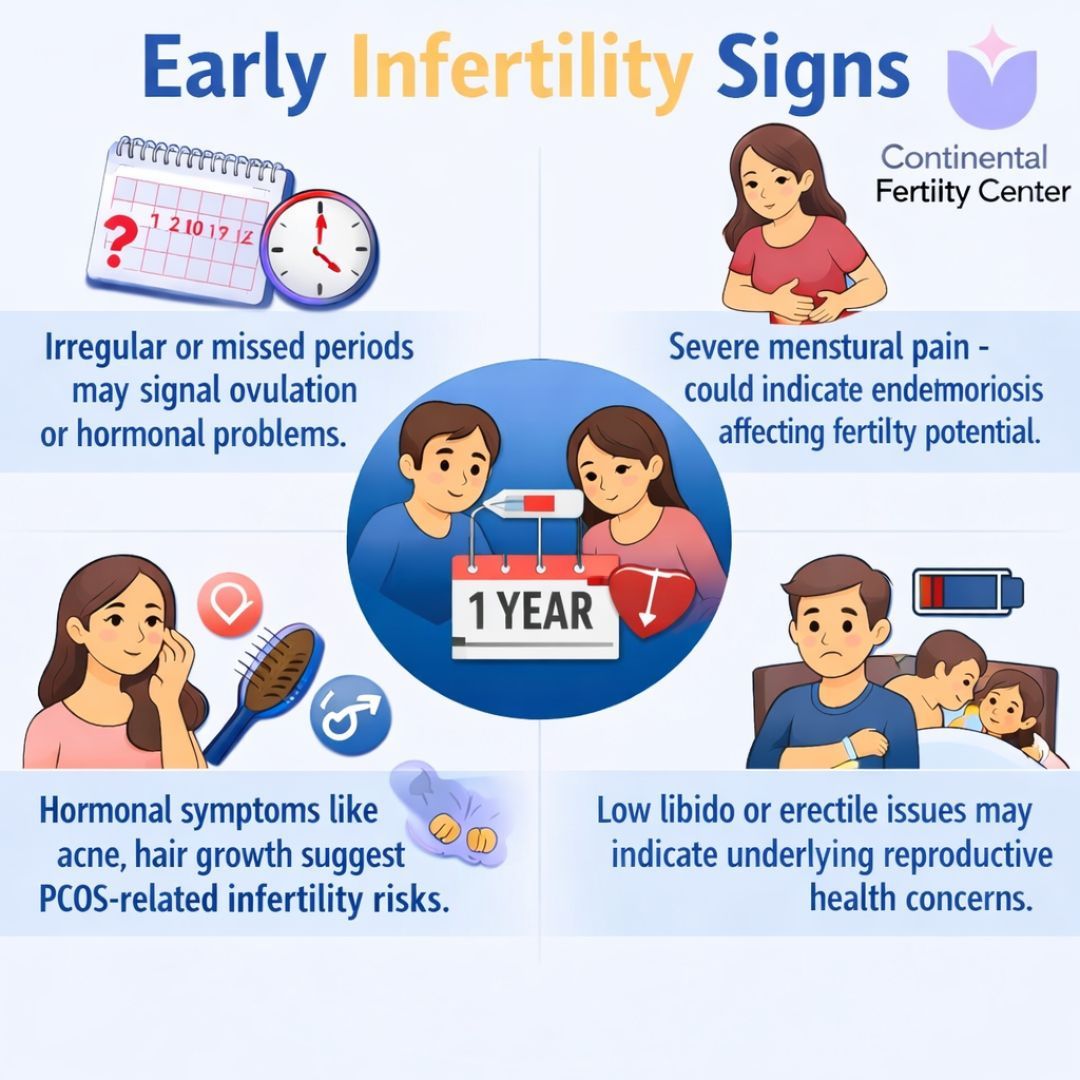
The most prominent indicator of potential infertility is a disruption in the menstrual cycle. A healthy cycle typically lasts between 21 and 35 days. If your periods are consistently shorter, longer, or vary wildly from month to month, it could indicate issues with ovulation. If you do not ovulate, there is no egg available for fertilization.
Extremely Painful Periods
While mild cramping is common, debilitating pain that interferes with your daily life is not normal. Chronic pelvic pain or heavy bleeding may be a symptom of endometriosis or uterine fibroids. These conditions can cause scarring or structural changes that contribute to infertility by blocking fallopian tubes or affecting embryo implantation.
Hormonal Fluctuations
Hormones regulate every step of the reproductive process. Signs of a hormonal imbalance might include:
- Unexplained weight gain
- Persistent acne outbreaks
- Thinning hair on the head or excess hair growth on the face and chest
- Low libido or painful intercourse
Previous Health History
Past infections, specifically pelvic inflammatory disease (PID) or certain sexually transmitted infections, can leave lasting damage on the reproductive tract. If you have a history of these conditions, it is wise to seek a fertility assessment sooner rather than later.
Early Warning Signs in Men
Male infertility often presents without any outward symptoms. A man may have a normal sex drive and erectile function while still having issues with sperm production or quality.
Changes in Sexual Desire or Function
Changes in libido or difficulty maintaining an erection can be linked to low testosterone levels. Hormonal health is just as vital for men as it is for women when it comes to reproductive success.
Testicular Pain or Swelling
Pain, lumps, or swelling in the testicles can indicate various conditions, such as a varicocele (enlarged veins in the scrotum). This is a leading cause of male infertility because it raises the temperature of the testicles, which can damage sperm production.
Small, Firm Testicles
The size and health of the testicles are directly related to their ability to produce healthy sperm. If you notice significant changes in the firmness or size of the testicles, a consultation with a specialist is recommended.
Ejaculation Issues
Difficulties with ejaculation or a noticeable decrease in the volume of fluid during ejaculation may suggest a blockage or a condition where semen enters the bladder instead of exiting the penis.
Why Early Detection Matters
The biological clock is a reality of reproductive science. For women, both the quantity and quality of eggs decrease with age. For men, sperm motility and DNA integrity can also decline. By identifying infertility symptoms early, patients can explore options like egg freezing, lifestyle modifications, or minimally invasive procedures before the situation becomes more complex.
Ignoring the warning signs of infertility often leads to prolonged emotional stress. Taking the first step toward a diagnosis can provide a clear roadmap and alleviate the anxiety of the unknown.
Why Choose the Continental Fertility Center?
Selecting the right partner for your fertility journey is a monumental decision. Continental Hospitals is recognized as the best hospital in Hyderabad for comprehensive clinical care, and our Fertility Centre upholds this standard of excellence through a patient-first approach.
Advanced Accreditations
Continental Hospitals is proud to be a JCI (Joint Commission International) accredited facility. This global gold standard signifies our commitment to the highest levels of patient safety and quality of care. We also hold NABH accreditation, ensuring that our clinical protocols are rigorous, transparent, and aligned with national excellence.
State-of-the-Art Technology
Our center is equipped with the latest diagnostic and embryology lab technology. From advanced semen analysis to high-resolution imaging for detecting tubal blockages or uterine abnormalities, we ensure that every diagnosis is precise.
A Multidisciplinary Approach
We do not look at infertility in isolation. Our fertility specialists work alongside endocrinologists, nutritionists, and counselors to provide holistic care. We understand that your physical health, mental well-being, and lifestyle all play a role in your reproductive success.
Ethical and Transparent Care
We believe in evidence-based medicine. Our specialists provide clear explanations of every procedure, ensuring you understand the "why" behind every recommendation. We prioritize treatments that offer the highest chance of success while respecting your personal preferences and values.
Conclusion
The journey to parenthood can sometimes take unexpected turns, but you do not have to navigate it alone. Recognizing the signs of fertility problems is the first step toward finding a solution. Whether it is a subtle change in your cycle or a persistent physical discomfort, listening to your body is essential.
Frequently Asked Questions
Early signs of infertility in women include irregular or missed periods, severe menstrual pain, hormonal imbalances, unexplained weight gain, and difficulty conceiving after 6–12 months of trying.
Irregular periods can signal ovulation issues, meaning the ovaries may not release eggs regularly, which reduces the chances of pregnancy.
Yes, hormonal imbalances can disrupt ovulation, menstrual cycles, and egg quality, making it harder to conceive naturally.
Early signs in men include low libido, erectile dysfunction, pain or swelling in the testicles, reduced facial or body hair, and abnormal semen quality.
Couples should consult a doctor if they are unable to conceive after 12 months of regular unprotected intercourse, or after 6 months if the woman is over 35.
Yes, factors like smoking, excessive alcohol intake, poor diet, obesity, stress, and lack of physical activity can negatively impact fertility in both men and women.
Severe menstrual pain may indicate conditions like endometriosis or fibroids, which can affect fertility if not treated early.
Yes, early detection improves treatment success. Options like medication, lifestyle changes, assisted reproductive techniques, or surgery can help many couples conceive.