
How Age Affects Fertility in Men and Women
Understanding the relationship between age and fertility is a vital step for anyone planning a family. While the desire to have children remains a constant human experience, the biological clock operates on a specific timeline. Scientific evidence shows that age is one of the most significant factors influencing the ability to conceive and carry a healthy pregnancy to term.
The Biological Clock and Female Fertility
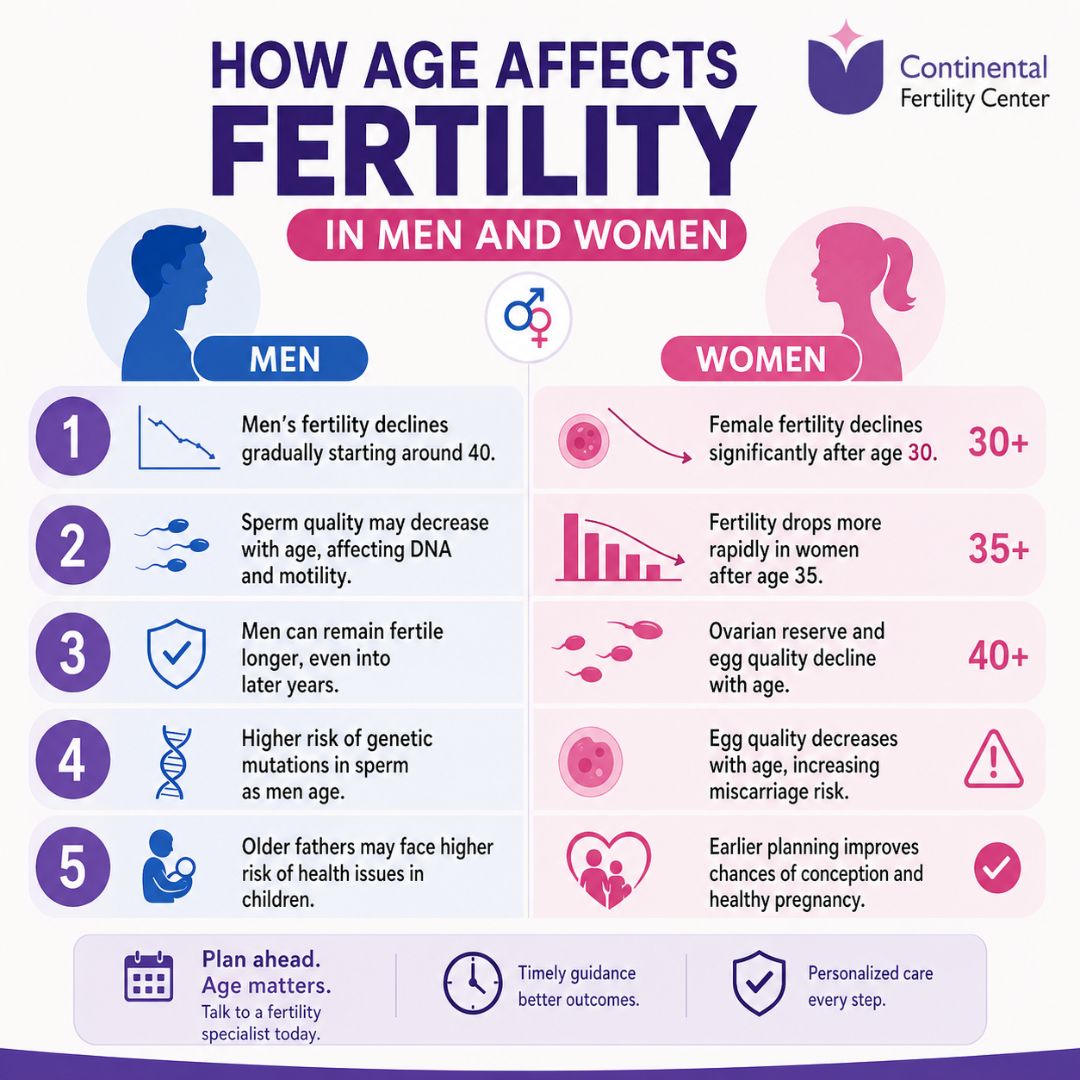
For women, the peak reproductive years are generally between the late teens and late 20s. By age 30, fertility begins to decline, and this transition becomes more rapid once a woman reaches her mid-30s. By age 45, most women find that natural conception becomes significantly more difficult.
The primary reason for this shift is that women are born with a fixed number of eggs. Unlike other cells in the body, the ovaries do not produce new eggs. As time passes, the quantity of these eggs decreases. Perhaps more importantly, the quality of the remaining eggs also diminishes.
Lower egg quality can lead to several challenges:
- A higher likelihood of chromosomal abnormalities.
- An increased risk of miscarriage.
- Difficulties in the embryo implanting properly in the uterus.
While many women successfully conceive in their late 30s and early 40s, it is important to recognize that the journey may require more time or medical assistance as the biological reserve naturally lowers.
Understanding Male Fertility and Age
It is a common misconception that age only affects women. While men do not experience a total cessation of fertility like menopause, male fertility is also subject to the passing of time. Research indicates that after the age of 40, there is a measurable decline in the quality of sperm.
Several factors contribute to male infertility as men age:
Sperm Volume and Motility: The volume of semen and the speed at which sperm move tend to decrease.
Genetic Integrity: Older men may have a higher rate of DNA fragmentation in their sperm, which can impact the health of the embryo.
Hormonal Changes: Testosterone levels gradually decline with age, which can affect libido and erectile function.
When a couple is trying to conceive, the health and age of both partners play an equal role in the outcome. Recognizing that infertility in men can be age-related allows couples to seek comprehensive evaluations together rather than focusing solely on one partner.
Identifying the Best Age to Get Pregnant
Biologically, the best age to get pregnant is generally considered to be in the 20s or early 30s. During this window, the body is at its physical peak for reproduction, and the risks of complications are at their lowest.
However, modern lifestyle choices, career goals, and personal readiness often lead couples to delay starting a family. If you are planning to wait until your late 30s, it is helpful to consult with a fertility specialist early on to understand your ovarian reserve or sperm health. Being proactive can help you make informed decisions about your future.
Common Causes of Infertility Beyond Age
While age and fertility are closely linked, other factors can also lead to challenges when trying to conceive. Understanding these causes of male infertility and female reproductive issues is essential:
Lifestyle Factors: Smoking, excessive alcohol consumption, and high stress levels can impair reproductive health.
Weight and Nutrition: Being significantly under or overweight can disrupt hormonal balances in both men and women.
Environmental Exposure: Frequent exposure to high heat or toxic chemicals can specifically damage sperm production.
Pre-existing Conditions: Conditions like PCOS in women or varicoceles in men are common medical hurdles that require professional intervention.
Why Choose Continental Fertility Centre?
When facing challenges with age and fertility, choosing the right healthcare partner is the most important decision you will make. Continental Hospitals stands as a beacon of medical excellence and is recognized as the best fertility center in Hyderabad for comprehensive reproductive care.
Continental Hospitals is proud to be a JCI- and NABH-accredited facility. These international and national accreditations are a testament to our commitment to the highest standards of patient safety, clinical quality, and ethical practices. When you walk through our doors, you are entering a facility that meets global benchmarks in healthcare delivery.
Our Fertility Center offers:
Advanced Diagnostics: We use state-of-the-art technology to assess egg quality and sperm health with precision.
Multidisciplinary Approach: Our fertility specialists work alongside nutritionists, counselors, and endocrinologists to provide holistic care.
Patient-Centric Privacy: We understand the sensitive nature of fertility treatments and ensure absolute confidentiality and emotional support throughout your journey.
Success Rates: Our clinical protocols are designed to maximize the chances of a successful pregnancy while prioritizing the health of the mother and child.
Steps to Take When You Are Ready to Conceive
If you are concerned about how your age might be impacting your reproductive health, consider the following steps:
Consult Early: Don't wait for a year of unsuccessful attempts if you are over the age of 35. Early intervention is key.
Health Optimization: Focus on a balanced diet rich in antioxidants, which are known to support egg and sperm health.
Track Your Cycle: Understanding your ovulation window increases the chances of natural conception.
Partner Involvement: Ensure both partners undergo basic fertility screenings to get a complete picture of the couple's health.
Conclusion
The path to parenthood is unique for everyone. While the biological reality of age and fertility is a factor, modern medicine has made incredible strides in helping couples overcome these natural hurdles. Whether you are in your 20s and planning for the future or in your 40s and ready to start now, the right guidance makes all the difference. At Continental Fertility Centre, we combine world-class technology with compassionate care to help you realize your dream of building a family.
If you suffer from irregular cycles or known reproductive health issues or have been trying to conceive for over six months without success, it is time to speak with a professional. Our experts are here to provide the clarity and treatment you need in a supportive environment. Book an appointment today with our best fertility specialist in Hyderabad at Continental Fertility Center.
Related Blog Topics:
Frequently Asked Questions
As women age, fertility naturally declines, especially after 30. Egg quantity and quality reduce, making conception harder and increasing miscarriage risk.
Female fertility starts declining gradually after 30 and more sharply after 35 due to decreased ovarian reserve and egg quality.
Male fertility declines with age, particularly after 40. Sperm quality, motility, and testosterone levels decrease, affecting conception chances.
While men can produce sperm throughout life, advanced age may increase risks of infertility, genetic mutations, and pregnancy complications.
Delayed pregnancy increases risks such as infertility, miscarriage, chromosomal abnormalities, and pregnancy complications like gestational diabetes.
Maintaining a healthy lifestyle, avoiding smoking and alcohol, managing stress, and seeking early medical advice can help improve fertility outcomes.
Couples under 35 should seek help after one year of trying; those above 35 should consult a specialist after six months.
Yes, treatments like IVF can help, but success rates decline with age. Early intervention increases the chances of successful pregnancy.