

Female Reproductive System: Understanding Its Role in Fertility
The female reproductive system is important for menstruation, ovulation, conception, pregnancy, and childbirth. This means that learning about how female reproductive organs work together can allow women to become more knowledgeable about their reproductive health and when medical consultation may be warranted.
The female reproductive system is closely tied to fertility. Every organ in the reproductive system has its own role, such as producing eggs and hormones and creating the right conditions for fertilization and gestation. It is essential to know about the female reproductive anatomy to make informed choices when planning for infertility treatments.
What are the different female reproductive structures?
The female reproductive structures are made up of both inner and outer organs. The internal male reproductive organs are:
- Ovaries
- Fallopian tubes
- Uterus
- Cervix
- Vagina
Each organ serves a unique role, but they collectively contribute to the reproduction process.
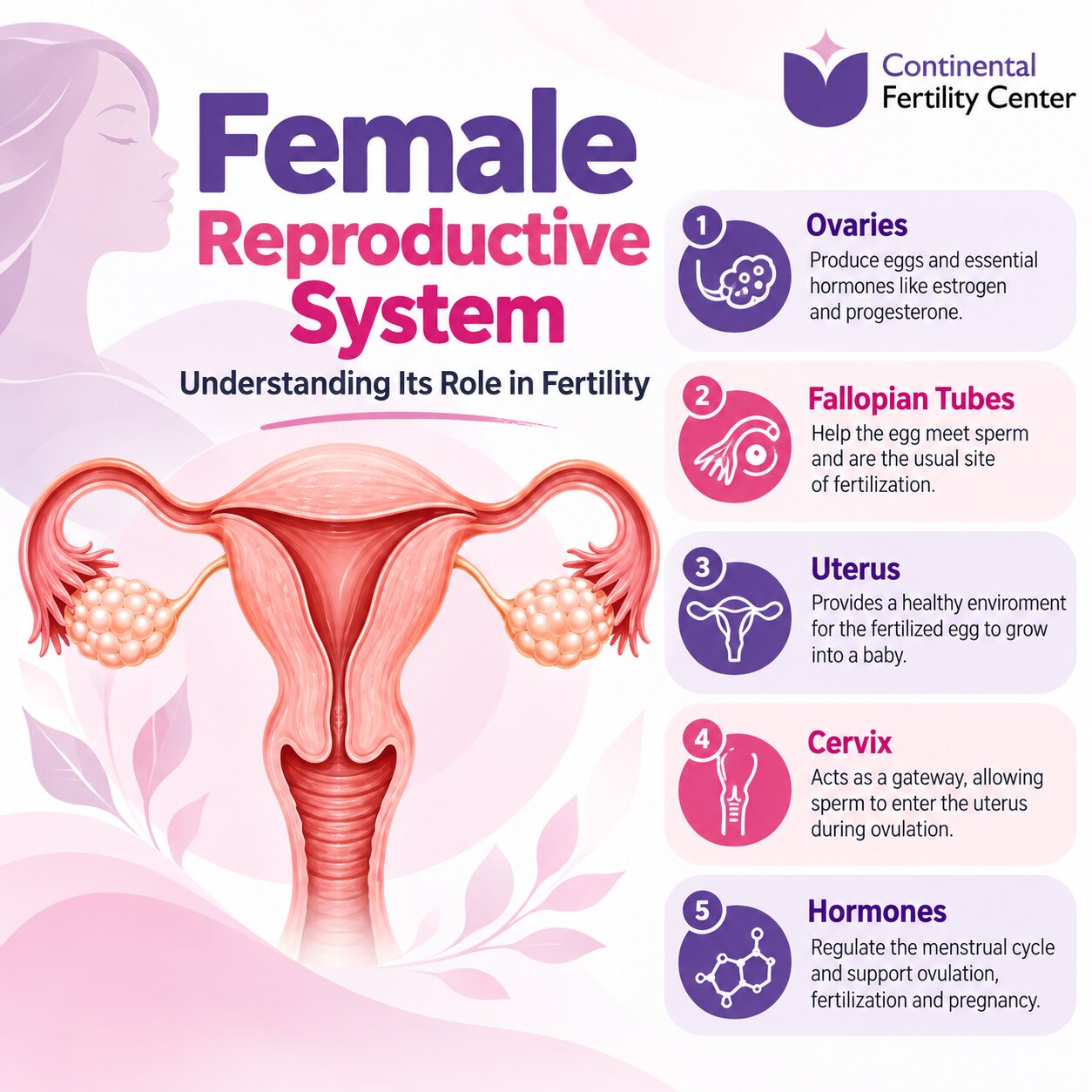
What Role Do the Ovaries Have in Female Reproduction?
The ovaries are tiny internal organs positioned beside the uterus. Their main role is producing eggs and hormones (such as estrogen and progesterone) required for reproduction.
Every month, one or more eggs are produced in the ovaries. When ovulation occurs, an egg is released from the ovary.
The number of eggs the female has influences her fertility. Factors such as age, health problems, and egg diseases may also influence the ovaries activity.
What Are the Functions of the Fallopian Tubes?
The fallopian tubes are responsible for linking the ovaries with the uterus. These tubes play a pivotal role in natural conception.
After the release of the egg, the egg passes into one of the fallopian tubes. Most of the time, fertilization happens in the fallopian tube as the egg meets the sperm. The embryo then moves to the uterus.
In case of blockage or damage in the fallopian tubes, the process may get adversely affected and hinder fertility.
What Is the Role of the Uterus During Pregnancy?
The uterus is a muscular body that acts as a place of development during pregnancy. Throughout the monthly cycle, the wall of the uterus, called the endometrium, goes through several changes in preparation for the chance of a pregnancy.
If the embryo implanted successfully after fertilization, the pregnancy can take place. However, problems with the uterus or the endometrium can make successful implantation impossible.
What is the function of the cervix and vagina?
The cervix denotes the bottom part of the uterus and allows its connection with the vagina. It is responsible for the cervical mucus that varies throughout the menstrual flow and influences sperm's movement.
The vagina has two functions connecting the cervix with the outside of the body and being the birth canal during me.
The cervix and the vagina together are incredibly important parts of the female reproductive system.
How Does the Female Reproductive System Help to Become Pregnant?
The female reproductive system functions through the designed sequence of functions, which include reproductive organs, some hormones, and the processes of ovulation, fertilization, and implantation.
The most important functions concerning fertility are:
- Producing and secreting eggs.
- Controlling reproductive hormones.
- Facilitating the process of ovulation.
- Providing a convenient channel for sperm.
- Providing conditions for fertilization in case of necessity.
- Preparing the uterus for implantation.
- Providing for the pregnancy after the implantation stage.
When all these processes work properly, it means that the body allows natural conception.
What are the influencing elements of women's reproductive health?
The factors that can affect woman reproductive health are numerous. These factors include age, hormonal disruptions, the presence of endometriosis or polystyic ovarian syndrome, fibroids, blocked fallopian tubes or experiencing an infection, particular illness, and lifestyle changes.
If you experience any changes in your menstrual cycles, have any sort of pelvic pain, have difficulties with conceiving, or face other issues related to reproduction, it is better to contact a specialist doctor who would know how to help you.
When Should a Person Consult a Fertility Specialist?
Suppose you have tried to get pregnant for a long time without any success, have irregular menstrual cycles, have a previous health issue, lost and released a fetus numerous times, or have any concerns concerning your ovaries. In that case, you might consider seeing a fertility specialist.
The examination may include your medical background, hormonal studies, ultrasounds, and ovarian capacity determination.
What Makes Continental Fertility Centre Unique?
The Continental Fertility Centre has been set up with the primary focus on providing a complete fertility evaluation and reproductive care. The center is backed by the clinical infrastructure of Continental Hospitals, Hyderabad.
Continental Hospitals has been accredited by NABH and NABL, which represents recognized practice standards for health care quality, patient care, and laboratory services. Patients of the Continental Fertility Centre get coordinated assistance from fertility specialists, diagnostic teams, embryology services, and other medical specialists as per their requirements.
The methodology is based on acquiring knowledge regarding the different fertility needs of patients and creating a treatment protocol according to medical evaluation techniques and proper medical direction.
Conclusion
The female reproductive system is a complex network of organs and hormones that work together to support reproductive health and fertility. Understanding the role of the ovaries, fallopian tubes, uterus, cervix, and vagina can help women recognize the importance of regular reproductive healthcare.
If you are experiencing fertility difficulties, irregular periods, pelvic symptoms, or concerns about your reproductive health, consult our best fertility specialist in Hyderabad at Continental Fertility Center for an appropriate evaluation and personalized guidance. Early assessment can help identify potential fertility concerns and determine suitable treatment options.
Related Blogs:
Frequently Asked Questions
The female reproductive system includes organs involved in reproduction and fertility. It includes the ovaries, fallopian tubes, uterus, cervix and vagina. The ovaries produce eggs and important reproductive hormones. The fallopian tubes provide a pathway for the egg to travel. Fertilisation usually occurs inside a fallopian tube. The uterus is where a pregnancy can develop after implantation. The cervix connects the uterus with the vagina. The vagina forms the lower part of the reproductive tract. These organs work together during the menstrual cycle. Hormones help regulate ovulation and prepare the uterus for pregnancy. Problems affecting these organs can sometimes affect fertility. Understanding reproductive health can help women seek timely medical care.
The ovaries play an important role in female fertility. They store and release eggs during the reproductive years. The ovaries also produce hormones such as estrogen and progesterone. These hormones help regulate the menstrual cycle. Ovulation is the process in which an egg is released from an ovary. Pregnancy can occur when sperm fertilises a released egg. Ovarian reserve refers to the remaining supply of eggs in the ovaries. Egg quantity and quality generally change with increasing age. Certain medical conditions can also affect ovarian function. Conditions such as PCOS may interfere with regular ovulation. Some treatments and surgeries can also affect ovarian function. A fertility specialist can evaluate ovarian health when needed.
The fallopian tubes are important structures in the female reproductive system. They connect the ovaries with the uterus. After ovulation, the released egg enters a fallopian tube. Sperm may meet the egg inside the tube during fertilisation. The early embryo then travels toward the uterus. Healthy fallopian tubes allow this process to occur normally. Blocked or damaged tubes can interfere with natural conception. Pelvic infections can sometimes cause damage to the tubes. Endometriosis and previous pelvic surgery may also affect them. Some women may have blocked tubes without obvious symptoms. Tests such as hysterosalpingography can help assess tubal patency. Fertility specialists may recommend appropriate testing when conception is difficult.
The uterus is a major organ involved in pregnancy. It is a muscular organ located in the pelvis. The inner lining of the uterus is called the endometrium. The endometrium changes throughout the menstrual cycle. Hormones help prepare this lining for a possible pregnancy. After fertilisation, an embryo may travel to the uterus. Implantation occurs when the embryo attaches to the uterine lining. The uterus then provides an environment for pregnancy to develop. Conditions affecting the uterus can sometimes affect fertility. Fibroids, polyps and certain uterine abnormalities may interfere with implantation. Some conditions may cause heavy or painful menstrual bleeding. A fertility specialist can recommend tests to evaluate uterine health when required.
Ovulation is an important part of the menstrual cycle and fertility. It occurs when an ovary releases a mature egg. The egg can potentially be fertilised for a limited period after ovulation. Sperm can survive in the female reproductive tract for several days. This creates a fertile window around the time of ovulation. Regular ovulation can support predictable menstrual cycles. Irregular or absent ovulation can make conception more difficult. PCOS is one common condition associated with ovulation problems. Thyroid disorders and other hormonal conditions may also affect ovulation. Stress, significant weight changes and excessive exercise can sometimes influence cycles. Tracking menstrual cycles can provide useful information about ovulation patterns. Medical evaluation can help identify the cause of irregular ovulation.
Age is an important factor that can influence female fertility. Women are born with a finite number of eggs. Both egg quantity and egg quality generally decline with age. This decline becomes more noticeable as women approach their mid-30s and beyond. Lower egg quality can increase the chance of chromosomal abnormalities. The likelihood of miscarriage can also increase with advancing maternal age. Fertility can still vary considerably between individuals of the same age. Ovarian reserve tests can provide additional information about reproductive potential. However, these tests cannot precisely predict natural fertility or pregnancy. Women planning pregnancy may benefit from discussing their reproductive goals with a specialist. Early evaluation can be particularly useful when there are fertility concerns. Individual medical history should always be considered when assessing fertility.
Several factors can affect female fertility. Age is one of the important factors associated with reproductive potential. Problems with ovulation can also make conception more difficult. Blocked or damaged fallopian tubes may prevent sperm and egg from meeting. Uterine conditions can sometimes affect implantation or pregnancy. Endometriosis may also affect fertility in some women. PCOS can interfere with regular ovulation. Hormonal and thyroid disorders may contribute to reproductive problems. Certain infections can affect the reproductive organs. Previous pelvic surgery may sometimes affect fertility. Lifestyle factors such as smoking and excessive alcohol use can also affect reproductive health. A fertility specialist can evaluate different factors through appropriate tests.
A fertility specialist can help evaluate difficulties with conception. Women under 35 are generally advised to seek evaluation after 12 months of regular unprotected intercourse without pregnancy. Women aged 35 or older may consider evaluation after six months. Earlier assessment may be appropriate when there are known fertility concerns. Irregular or absent periods can be a reason to seek medical advice sooner. A history of endometriosis or pelvic infections may also warrant earlier evaluation. Previous reproductive surgery can be another important factor. Known ovarian or uterine problems may require specialist assessment. Recurrent pregnancy loss should also be discussed with a doctor. Fertility evaluation usually considers both partners when appropriate. Tests may assess ovulation, ovarian reserve, reproductive anatomy and other factors. Early evaluation can help identify potential causes and available treatment options.