

What Happens During an MTP Procedure? A Step-by-Step Guide
MTP, which stands for Medical Termination of Pregnancy, is a medical procedure that is utilized to terminate an early pregnancy in the care of a qualified healthcare provider. The choice of method used depends on various factors, including the duration of pregnancy, medical history, and the results of clinical investigations.
Knowing what happens during the MTP procedure can help you be better prepared for it. This procedure typically involves consultation, assessment of pregnancy, choice of method, treatment, and follow-up. While performing MTP, it is essential to ensure that it takes place under appropriate medical supervision and follows all acceptable medical and legal protocols.
What is the MTP procedure?
The MTP procedure is an FDA-approved method of terminating the pregnancy under medical supervision. Depending on the duration of pregnancy and other factors, doctors may choose to use either medication or a procedural method.
Before taking necessary action, doctors must evaluate the pregnancy and health condition of the patient to decide on the safest option.
What occurs prior to the MTP procedure?
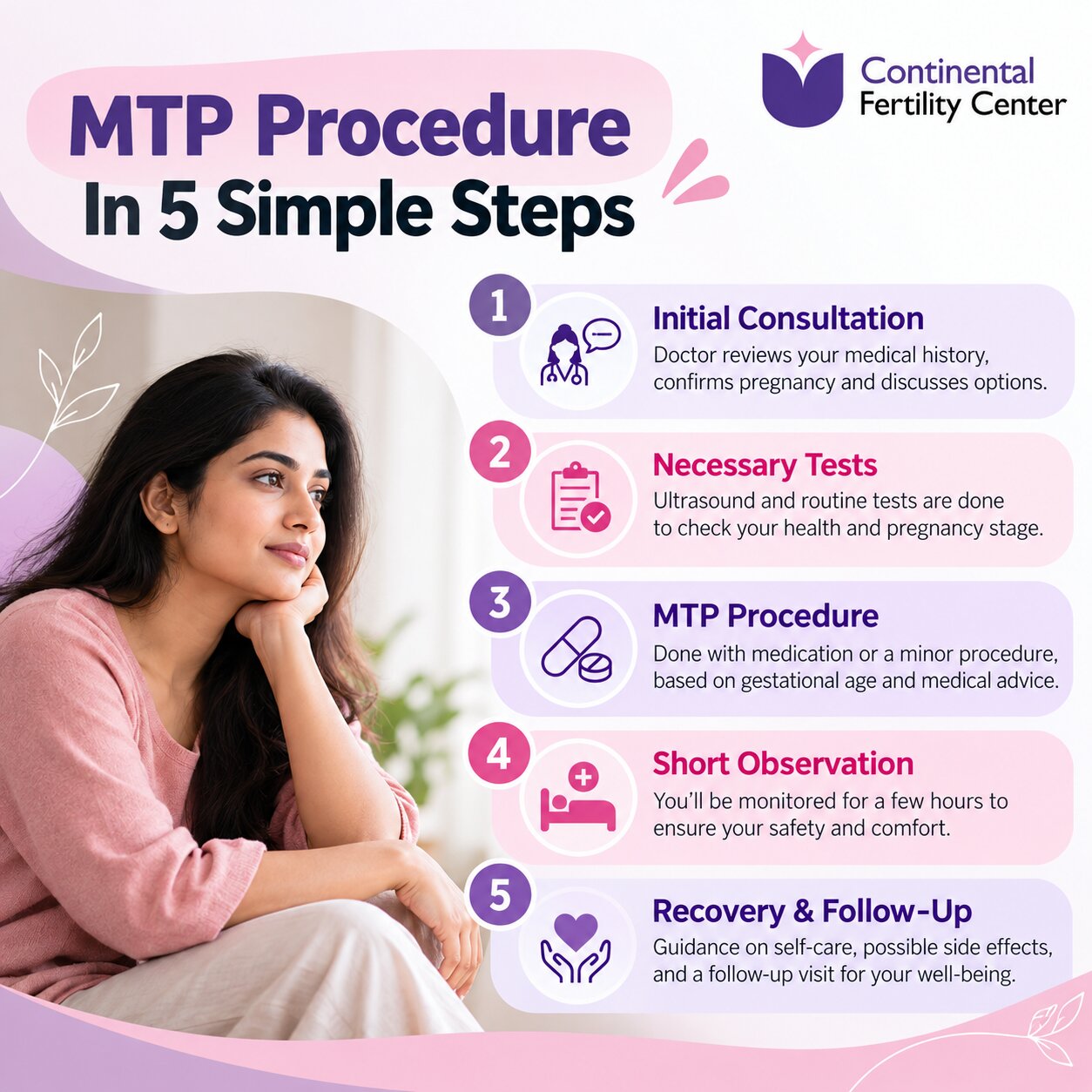
The first step is consultation with a doctor. The doctor could ask you about your previous medical history, menstrual cycle, past pregnancies, any medicines being taken, and current medical conditions.
The doctor may suggest:
- Confirmation of pregnancy
- Ultrasound examination if necessary
- Blood investigations if needed
- Blood group and its evaluation
- Overview of medicines and medical history
What are the exact steps of the MTP procedure?
The process of performing MTP varies from method to method.
Step 1: Assessment of Pregnancy
The doctor confirms the pregnancy and estimates its duration. If required, the doctor may recommend an ultrasound to establish the location of the pregnancy and its gestational age.
Step 2: Selection of the Right Method
The doctor informs the patient about the suitability of the medication or procedure. The selection of the method depends on the duration of pregnancy, medical history, clinical examination, and up-to-date clinical protocols.
Step 3: Treatment
If the pregnancy is early, medication may be prescribed by the doctor. In other cases, a procedure is performed in a specialized medical center.
Patients must not take abortion drugs on their own, and it is important that the treatment approach conforms to the medical needs of the patient.
Step 4: Medical Follow-Up and Recovery
After treatment, the team giving the treatment will provide information about the possible symptoms expected after the termination, medications, and activities that the patients need to follow after treatment. As expected, there would be some bleeding and cramping that need to be taken care of.
What Symptoms Should You Look for After MTP?
Recovery is different for everyone. Your physician will elaborate on symptoms that are normal after MTP and those ones that may require you to be seen urgently.
Seek help immediately if you notice something of the following:
- Excessive obvious bleeding
- Severe or worsening abdominal pain
- Fever or chills
- Foul smell from the vagina
- Feeling faint or weak
- Any other symptoms of concern
You should consider making sure to follow the doctor’s recommendations in order to make sure you recover properly.
Is MTP Safe?
Provided that it is done by a qualified specialist in accordance with all the necessary standards, MTP abortion can be considered rather safe. However, as in other cases of medical treatment, the risk exists.
What Makes Continental Fertility Center the Better Choice?
In view of medical termination of pregnancy, it is essential to select an experienced healthcare team. Continental Fertility Center offers services in women's health care and therapy, which are provided by qualified personnel, diagnostic facilities, and doctors of different specialties.
Continental Hospitals satisfies all recognized international standards for quality and patient safety; it is accredited by NABH and JCI. The existence of these accreditations verifies well-organized healthcare processes and the application of standards of clinical work, patient safety, and the work of healthcare institutions.
The benefits for patients are:
- Personalized consultation and evaluation
- Qualified specialists in the area of fertility and women's health
- Adequate diagnostic support
- Confidential and private health service
- Individualized treatment programs
- Recovery management with follow-up care
- Support of many specialists when needed
At What Point Will You Need to Go to a Doctor's Office?
Self-treatment is not recommended. In case you want to go for MTP treatment, prefer seeing a doctor instead. A doctor will be able to assess the condition of the pregnancy, discuss various options, talk about the risks involved, etc.
People who want to have the MTP treatment or are concerned about abortion should see local practitioners consult our best fertility specialist in Hyderabad at the Continental Fertility Center.
Conclusion
The better you understand the MTP process, the easier it will be for you to deal with the procedure in general. MTP includes pregnancy assessment, medical evaluation, treatment method selection, and follow-ups.
MTPs should always be performed under the supervision of a medical specialist. The specific approach to the MTP transaction can depend on various factors like the stage of pregnancy, medical history, and personal needs.
Frequently Asked Questions
MTP means Medical Termination of Pregnancy. It is a medical procedure used to end a pregnancy. The method depends on the stage of pregnancy. The doctor first confirms the pregnancy and its duration. Medical history and overall health are also reviewed. An ultrasound may be recommended when clinically appropriate. For some pregnancies, medicines may be used for termination. A procedural method may be recommended in other situations. The doctor explains the selected method before treatment. Possible benefits, risks and side effects are discussed. Follow-up care is important after the procedure. The patient should follow all instructions provided by the doctor.
The MTP process usually begins with a medical consultation. The doctor confirms the pregnancy and estimates its duration. Medical history and current medicines are reviewed. The doctor may perform a physical examination when needed. Pregnancy-related tests may be recommended based on the situation. An ultrasound may help determine pregnancy location and gestational age. The doctor checks for conditions that may affect treatment. The available termination options are explained clearly. The patient can discuss questions or concerns with the doctor. Potential side effects and warning signs are also explained. A suitable treatment plan is then selected. The patient receives instructions about preparation and follow-up.
Medical MTP uses prescribed medicines to end a pregnancy. The medicines are given according to the doctor's treatment plan. They work by stopping pregnancy progression and causing the uterus to empty. Cramping and vaginal bleeding are commonly expected during the process. The amount of bleeding can vary from person to person. Some patients may also experience nausea or tiredness. The doctor provides instructions about when and how to take the medicines. Pain relief may be recommended when appropriate. The patient should follow the prescribed schedule carefully. Follow-up may be advised to confirm that the pregnancy has ended. Additional treatment may sometimes be needed if the process is incomplete. Urgent medical care is required if severe warning signs develop.
Surgical MTP is performed by a qualified healthcare professional. The procedure is selected based on pregnancy duration and clinical factors. The patient is assessed before the procedure begins. Pain relief or anaesthesia may be provided as appropriate. The cervix is carefully prepared for the procedure. A suitable medical technique is then used to empty the uterus. The procedure is generally performed in a controlled clinical setting. The healthcare team monitors the patient throughout the procedure. Mild cramping or bleeding may occur afterward. The patient is usually given recovery and aftercare instructions. Follow-up is recommended when clinically necessary. The doctor also explains symptoms that require prompt medical attention.
Some discomfort or cramping can occur during MTP. The level of discomfort varies between individuals. Medical MTP commonly causes cramping as the uterus empties. Surgical MTP may cause pressure or cramping during recovery. Pain relief can be provided or recommended when appropriate. The doctor will explain what sensations may be expected. Bleeding after MTP is also common and can vary in amount. Rest and following aftercare instructions can support recovery. Severe or worsening pain should not be ignored. Heavy bleeding may also require urgent medical assessment. Fever or unusual discharge can be warning signs of complications. Contact the healthcare provider promptly if concerning symptoms occur.
The duration of an MTP procedure depends on the method used. Medical MTP does not usually happen as a single brief procedure. The medicines start a process that may take several hours or longer. The timing of bleeding and cramping varies between individuals. Surgical MTP is usually completed within a relatively short clinical procedure. The overall visit can take longer because of preparation and recovery. The pregnancy duration can influence the treatment approach. Individual health factors may also affect the process. The doctor explains the expected timeline before treatment. Patients should arrange appropriate time for recovery afterward. Follow-up requirements depend on the treatment and individual circumstances. The healthcare provider should be contacted if recovery does not progress as expected.
Some bleeding and cramping may occur after an MTP procedure. The symptoms can gradually reduce as recovery progresses. Tiredness or mild discomfort may occur for a short period. The doctor provides specific aftercare instructions. Medicines may be prescribed or recommended when necessary. Follow-up may be advised to confirm that the pregnancy has ended completely. A pregnancy test or other assessment may sometimes be recommended. The timing of follow-up depends on the treatment method. Patients should avoid ignoring severe pain or very heavy bleeding. Fever, fainting or unusual discharge should also be reported promptly. Emotional responses after an MTP can vary from person to person. Medical and emotional support can be sought whenever needed.
Some bleeding and cramping can be normal after MTP. However, certain symptoms require prompt medical attention. Very heavy or prolonged bleeding should be assessed by a healthcare professional. Severe or worsening abdominal pain should not be ignored. Fever or chills may indicate an infection and need medical evaluation. Fainting or severe weakness requires urgent medical attention. Unusual or foul-smelling vaginal discharge should also be reported. Persistent pregnancy symptoms may require follow-up assessment. Patients should contact their healthcare provider if they feel unwell. Emergency care may be necessary for severe symptoms. Following the prescribed aftercare plan can support safe recovery. Always seek medical advice when symptoms are unexpected or concerning.