
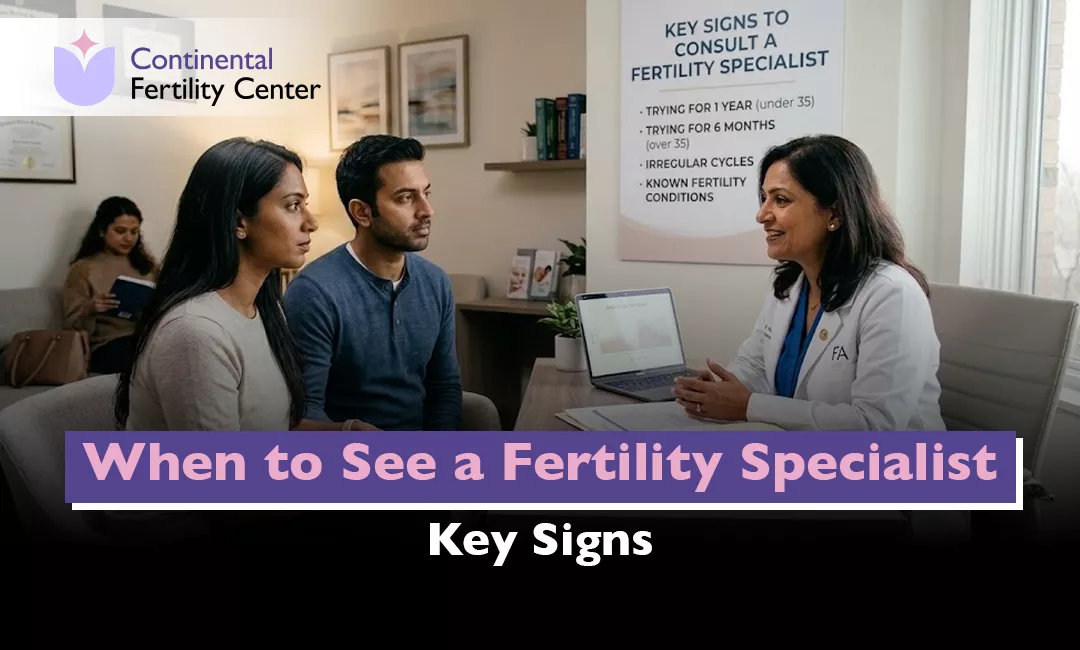
When to See a Fertility Specialist: Key Signs
The journey to parenthood is a deeply personal and often emotional path. While many couples expect conception to happen naturally, there are times when the body requires a little extra support. Recognizing the early signs that you might need medical intervention can make a significant difference in your success rate. Understanding when to transition from trying naturally to seeking professional guidance is the first step toward building your family.
Understanding Fertility and Timing
In the medical world, infertility is generally defined as the inability to conceive after one year of regular, unprotected intercourse. However, this timeline is not a one-size-fits-all rule. Age plays a critical role in reproductive health. For those under the age of 35, the one year mark is the standard benchmark. If you are 35 or older, specialists recommend seeking a consultation after six months of trying. For individuals over 40, an immediate consultation is often advised due to the natural decline in egg quality and quantity.
Recognizing the fertility specialist's signs early allows for a proactive approach. Rather than waiting in uncertainty, a consultation provides clarity through diagnostic testing and personalized care plans.
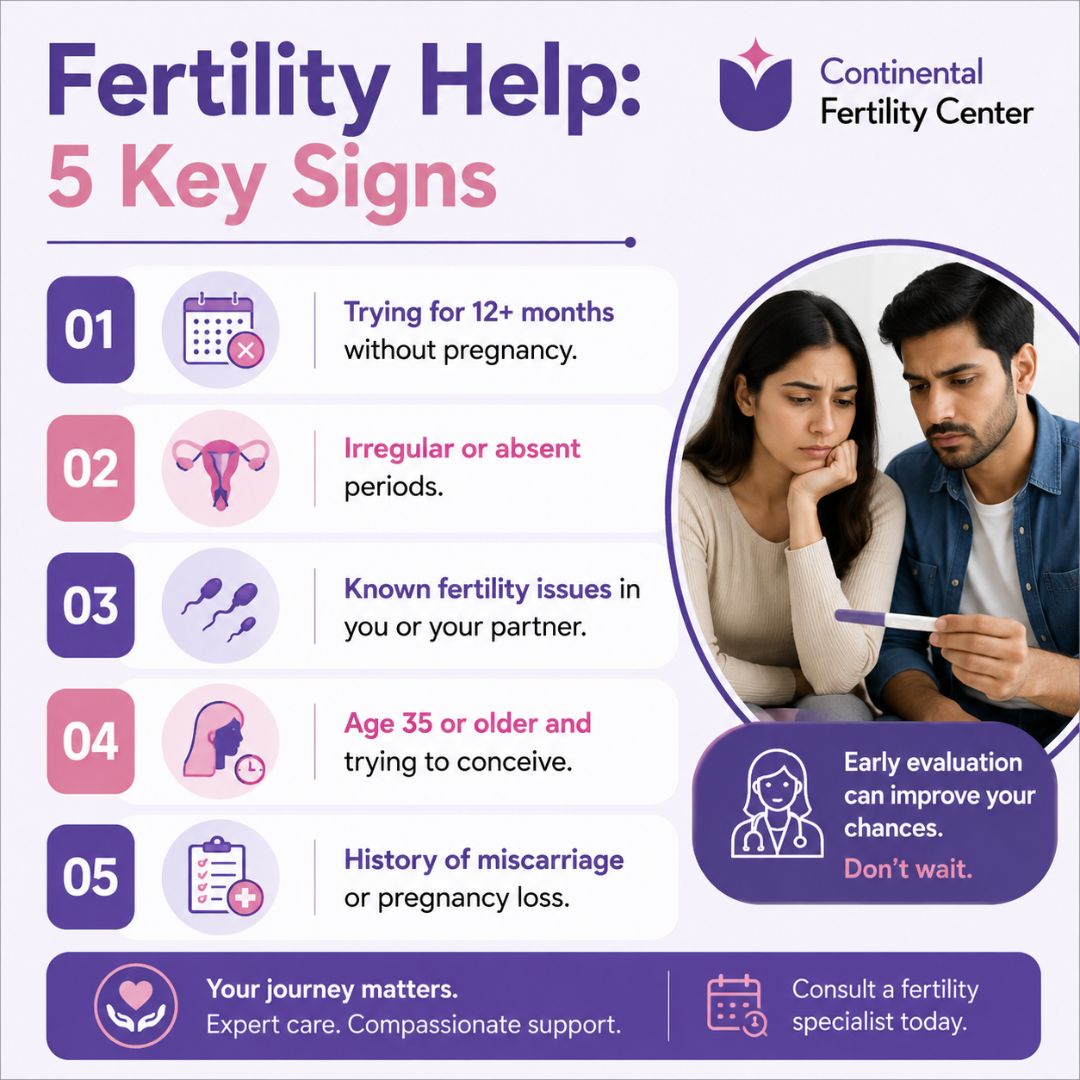
Primary Signs You Should Consult a Specialist
Identifying specific symptoms can help you decide if it is time to book a fertility doctor consultation. Here are the most common indicators that your reproductive system may need professional attention.
1. Irregular or Absent Menstrual Cycles
A regular cycle is a strong indicator of consistent ovulation. If your periods are unpredictable, too frequent, or non-existent, it may suggest an ovulatory disorder such as polycystic ovary syndrome (PCOS). Without regular ovulation, the window for conception becomes difficult to track or may not exist at all.
2. Extremely Painful Periods
While some discomfort is common, debilitating pain that interferes with your daily life is not normal. This can be a symptom of endometriosis or pelvic inflammatory disease. Endometriosis occurs when tissue similar to the lining of the uterus grows outside the womb, potentially causing blockages in the fallopian tubes or affecting ovarian function.
3. Multiple Miscarriages
Conception is only one part of the journey. If you have experienced two or more consecutive pregnancy losses, it is vital to see a specialist. Recurrent miscarriage can be linked to genetic factors, hormonal imbalances, or structural issues within the uterus that a best fertility specialist can help identify and treat.
4. Known Reproductive Health Issues
If you have a history of blocked fallopian tubes, uterine fibroids, or premature ovarian failure, trying naturally for a year may lead to unnecessary frustration. In these cases, early intervention is the most efficient path forward.
5. Male Factor Indicators
Fertility is not solely a female concern. Approximately one third of infertility cases are linked to male factors. Signs such as changes in sexual desire, pain or swelling in the testicles, or a history of prostate or genital problems should prompt a fertility treatment consultation.
Important Symptoms of Infertility in Women
Beyond the primary signs, there are specific signs of infertility in women that often go unnoticed but are crucial for a diagnosis.
Hormonal Fluctuations: Significant skin changes, such as sudden adult acne or thinning hair, can indicate hormonal shifts that affect fertility.
Weight Changes: Sudden, unexplained weight gain or difficulty losing weight can be tied to metabolic issues like PCOS.
Pain During Intercourse: This is often a sign of underlying conditions like infections or endometriosis that could hinder conception.
Heavy Bleeding: Consistently heavy periods that last longer than seven days can signal fibroids or other uterine issues.
The Importance of an Infertility Treatment Plan
Seeking a fertility doctor consultation does not always mean moving straight to complex procedures. Often, the process begins with simple lifestyle adjustments, medication to induce ovulation, or minor surgical corrections. The goal of infertility treatment is to address the specific biological hurdle standing in your way.
A specialist will perform a series of tests, including blood work to check hormone levels and ultrasounds to examine the ovaries and uterus. For men, a semen analysis is a foundational step. Once the data is collected, a tailored strategy is created to maximize the chances of a healthy pregnancy.
Why Choose the Continental Fertility Centre?
Choosing where to receive care is as important as the treatment itself. Continental Fertility Centre, located within the renowned Continental Hospitals in Hyderabad, stands as a leader in reproductive medicine.
Expert Medical Leadership
Our center is managed by some of the best fertility specialist professionals in the country. Our doctors bring years of international experience and a compassionate approach to every patient interaction. We believe that every patient deserves a unique plan rather than a generic protocol.
Advanced Technology and Accreditations
Continental Hospitals is a facility that prides itself on global standards. We hold prestigious accreditations, including the JCI (Joint Commission International) and NABH (National Accreditation Board for Hospitals & Healthcare Providers). These certifications ensure that our laboratory standards, patient safety protocols, and clinical outcomes meet the highest international benchmarks. Our embryology labs are equipped with the latest technology to ensure the highest success rates for infertility treatment.
Comprehensive Care Under One Roof
As part of a multispecialty hospital, we offer integrated care. If a fertility issue is linked to other health conditions like diabetes or thyroid disorders, our fertility experts work alongside top endocrinologists and internal medicine specialists to provide holistic treatment.
Key Benefits of Early Consultation
Why should you act now? Time is a critical factor in reproductive success.
- Preserving Options: Early testing might reveal that egg or sperm freezing is a viable path for the future.
- Reducing Stress: Moving from not knowing to having a clear medical plan significantly reduces the emotional burden on a couple.
- Faster Results: Identifying a minor issue early can lead to a successful pregnancy much sooner than continued natural attempts.
What to Expect During Your First Visit
Your initial fertility treatment consultation is a fact-finding mission. You should bring any previous medical records and a list of questions. The specialist will discuss your medical history, your lifestyle, and your goals. This is a collaborative environment where your concerns are heard and validated.
Common questions to ask during your visit:
- What diagnostic tests do we need to start with?
- Are there lifestyle changes that could improve our success?
- What is the timeline for the recommended treatment?
- How do we manage the emotional aspects of this journey?
Conclusion
If you have been trying to conceive without success or have noticed any of the fertility specialist signs mentioned above, remember that you are not alone. Infertility is a medical condition, and like any other health concern, it deserves professional attention and expert care. Taking the step to consult a specialist is an act of empowerment.
At Continental Fertility Centre, we combine world-class technology with a human touch to help you navigate the complexities of reproductive health. Whether you are at the start of your journey or looking for a second opinion, our team is dedicated to providing the clarity and support you need.
If you suffer from irregular cycles, persistent pelvic pain, or have been unable to conceive after months of trying, do not wait. Early diagnosis is the key to a successful outcome.
Contact Continental Fertility Center today to schedule your consultation with a fertility specialist in Hyderabad.
Frequently Asked Questions
Couples should consider seeing a fertility specialist if they have been trying to conceive for more than one year without success. Women above 35 years are advised to seek fertility evaluation after six months of trying.
Common signs of infertility in women include irregular periods, painful menstruation, hormonal imbalances, recurrent miscarriages, difficulty conceiving, and conditions like PCOS or endometriosis.
Yes, irregular periods may indicate ovulation problems, hormonal imbalances, or underlying reproductive conditions that can impact fertility and reduce the chances of natural conception.
Men should consult a fertility specialist if they experience low sperm count, erectile dysfunction, testicular pain, hormonal issues, or have a history of infections, surgeries, or lifestyle factors affecting fertility.
Yes, fertility naturally declines with age, especially after 35 years. Egg quality and quantity decrease over time, making conception more difficult and increasing pregnancy-related risks.
Yes, recurrent miscarriages may indicate underlying fertility issues such as hormonal imbalances, uterine abnormalities, genetic factors, or autoimmune conditions that require medical evaluation.
Fertility evaluations may include hormone testing, ultrasound scans, ovulation tracking, semen analysis, ovarian reserve testing, and imaging studies to assess reproductive health in both partners.
Yes, unhealthy lifestyle habits such as smoking, excessive alcohol consumption, obesity, stress, poor diet, and lack of exercise can negatively affect fertility in both men and women.