
Zero Sperm Count: What Causes Azoospermia and How Is It Treated?
A zero sperm count can be an unexpected and worrying finding for men trying to have a baby. Medically, having no sperm in the semen is called azoospermia. It does not always mean that sperm production is completely absent or that biological fatherhood is impossible. The underlying cause needs to be identified before deciding on treatment.
A zero sperm count can occur because the testicles are not producing enough sperm, because sperm are unable to reach the semen, or because of a combination of factors. With appropriate evaluation, some causes of azoospermia can be treated, while assisted reproductive techniques may help selected men achieve pregnancy.
What Is Azoospermia?
Azoospermia means that no sperm are detected in a semen sample during laboratory examination. Since sperm production and ejaculation involve several steps, a detailed evaluation is needed to understand why sperm are absent.
A single semen test may not always provide the complete picture. Your doctor may recommend a repeat semen analysis and additional investigations before confirming the diagnosis.
What Causes a Zero Sperm Count?
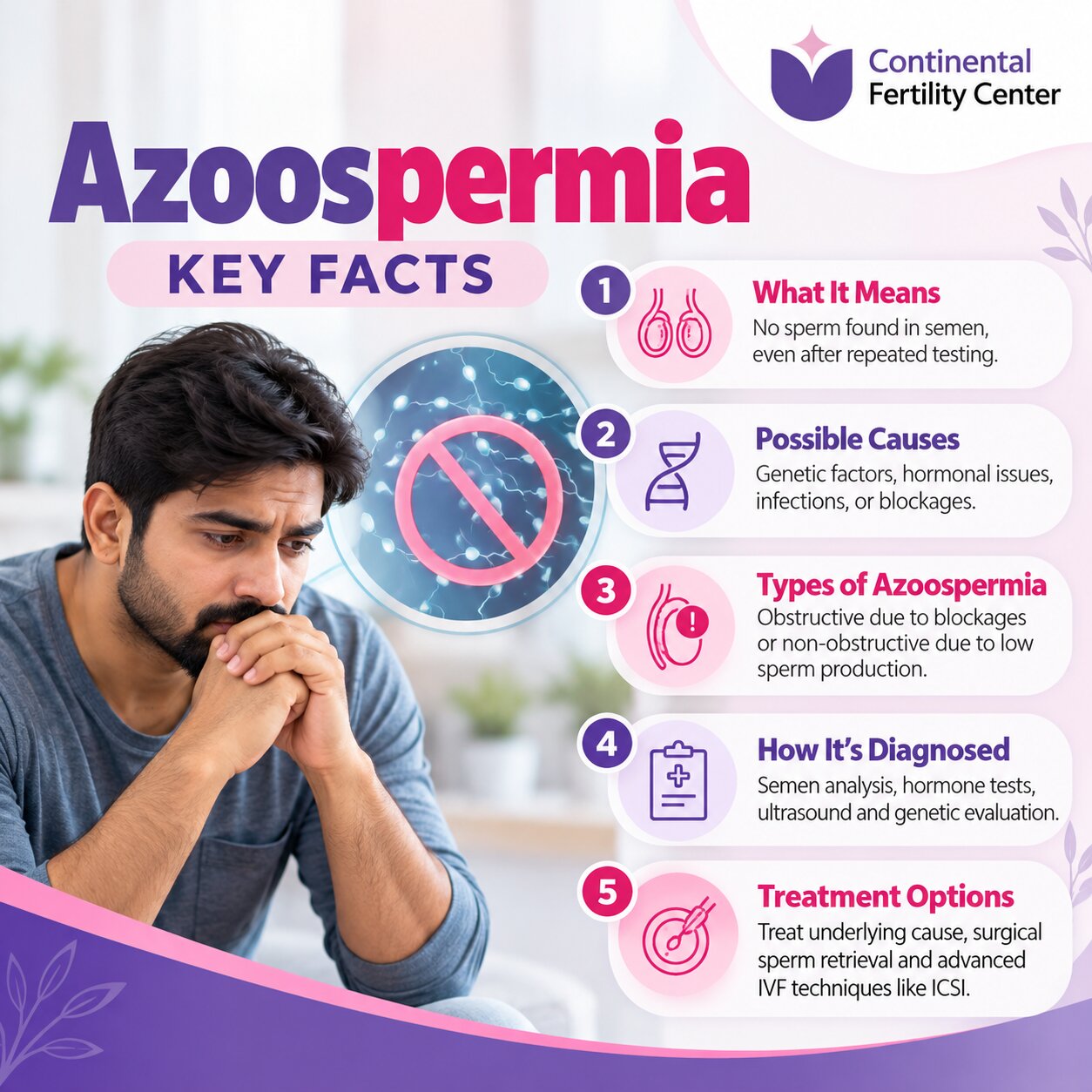
There are several possible azoospermia causes, and they are generally divided into two main types.
1. Obstructive Azoospermia
In this condition, the testicles may produce sperm, but a blockage prevents sperm from reaching the semen.
Possible causes include:
- Blockage in the reproductive tract
- Previous infections
- Previous surgery
- Congenital absence or abnormalities of reproductive ducts
- Certain conditions affecting sperm transport
2. Non-Obstructive Azoospermia
Here, the main problem is reduced or absent sperm production within the testicles.
Possible causes include:
- Hormonal problems
- Genetic conditions
- Testicular disorders
- Previous testicular injury
- Certain infections
- Exposure to some medications or treatments
- Varicocele in selected cases
- Problems affecting normal sperm production
Identifying the exact cause is essential for choosing the appropriate azoospermia treatment.
What Are the Symptoms of Azoospermia?
Azoospermia often does not cause obvious symptoms. Many men discover the condition while undergoing fertility testing.
Depending on the underlying cause, some men may also have:
- Reduced sexual desire
- Erectile difficulties
- Hormonal symptoms
- Changes in testicular size
- Previous history of testicular problems
- Difficulty conceiving despite regular unprotected intercourse
Because symptoms may be absent, semen analysis plays an important role in evaluating male fertility.
How Is Zero Sperm Count Diagnosed?
Doctors usually begin with a detailed medical and reproductive history followed by semen analysis. If no sperm are found, repeat testing may be recommended.
Depending on the findings, evaluation may include:
- Physical examination
- Hormone testing
- Semen analysis
- Scrotal ultrasound when required
- Genetic testing in selected patients
- Assessment of testicular function
- Evaluation for reproductive tract obstruction
These tests help distinguish between obstructive and nonobstructive azoospermia.
How Is Zero Sperm Count Treated?
Zero sperm count treatment depends entirely on the underlying cause. There is no single treatment suitable for every patient.
Treatment options may include:
- Hormonal treatment for specific hormonal disorders
- Surgical correction of certain blockages
- Treatment of underlying infections when present
- Varicocele treatment in selected cases
- Sperm retrieval procedures
- Assisted reproductive techniques such as IVF or ICSI
For some men with non-obstructive azoospermia, procedures such as testicular sperm retrieval may be considered to look for usable sperm directly from the testicular tissue.
Can Azoospermia Be Treated Successfully?
The answer depends on why the condition occurred. Some men may respond well when the underlying problem is treatable. In other cases, sperm retrieval and assisted reproductive treatment may provide an option for biological parenthood.
A fertility specialist can explain the available choices after reviewing semen analysis, hormone levels, medical history, and other test results.
Can Azoospermia Cause Male Infertility?
Yes. Azoospermia and male infertility are closely related because sperm are necessary for natural conception. However, azoospermia does not automatically mean that all fertility options are exhausted.
Modern fertility care can provide different treatment pathways depending on whether sperm production is present and whether sperm can be retrieved.
Why Choose Continental Fertility Center?
Choosing an experienced fertility center can make the evaluation process more structured and personalized. Continental Fertility Center provides comprehensive fertility evaluation and treatment with support from reproductive medicine specialists, diagnostic services, laboratory facilities, and multidisciplinary medical teams.
Continental Hospitals follows established healthcare quality and patient safety standards and is accredited by JCI and NABH. These accreditations reflect the hospital's commitment to quality healthcare, patient safety, clinical processes, and international standards.
Patients seeking Azoospermia Fertility Treatment can benefit from:
- Detailed male fertility evaluation
- Experienced fertility and reproductive medicine specialists
- Advanced diagnostic facilities
- Personalized treatment planning
- Evaluation of sperm retrieval options
- Access to assisted reproductive techniques when appropriate
- Multidisciplinary medical support
When Should You See a Fertility Specialist?
If you and your partner have been trying to conceive without success, or if a semen analysis shows no sperm in semen, it is important to consult a fertility specialist rather than delaying evaluation.
If you have a zero sperm count, consult our best fertility specialist in Hyderabad at Continental Fertility Center for detailed evaluation and personalized azoospermia treatment.
Conclusion
A zero sperm count can have several causes, ranging from hormonal and genetic factors to blockages affecting sperm transport. The condition is known as azoospermia, but it does not always mean that biological fatherhood is impossible.
Accurate diagnosis is the first step toward choosing the right treatment. Depending on the cause, treatment may involve medicines, surgery, sperm retrieval, IVF, ICSI, or other fertility approaches. A personalized evaluation by a fertility specialist can help determine the most suitable path for each patient.
For men experiencing a zero sperm count or concerns about male fertility, early consultation can help identify the cause and explore appropriate treatment options at Continental Fertility Center, one of the leading fertility care centers associated with the best hospital in Hyderabad.
Related Blogs:
Frequently Asked Questions
Azoospermia means there are no sperm in the semen sample. It is one possible cause of male infertility. A semen analysis is usually needed to identify azoospermia. The condition can be caused by several different factors. Some men may have a blockage in the reproductive tract. Others may have problems with sperm production in the testes. Hormonal problems can also affect sperm production. Genetic conditions may contribute to some cases of azoospermia. Certain infections, medications, or previous surgeries may also play a role. Azoospermia does not always mean that sperm production has completely stopped. Some men may still have sperm that can be retrieved directly from the testes. Further testing is important to identify the underlying cause. Treatment depends on the type and cause of azoospermia.
Zero sperm count can have several possible causes. A blockage may prevent sperm from reaching the semen. Problems with the testes can reduce or stop sperm production. Hormonal disorders may interfere with normal sperm development. Genetic conditions can also affect sperm production. Previous infections may sometimes damage the reproductive system. Testicular injury or surgery can affect sperm production or sperm transport. Certain medicines and medical treatments may also affect sperm production. Varicocele may contribute to abnormal testicular function in some men. Lifestyle factors can sometimes affect overall sperm health. Excessive heat exposure may also affect sperm production. Identifying the exact cause requires a proper fertility evaluation. Treatment is chosen based on the underlying problem.
Azoospermia can sometimes be treated depending on its underlying cause. Treatment begins with identifying whether it is obstructive or non-obstructive. Hormonal problems may sometimes be treated with appropriate medicines. A blockage in the reproductive tract may be treated with surgery in selected cases. Some men may benefit from procedures that retrieve sperm directly from the testes. Retrieved sperm may potentially be used with assisted reproductive techniques. Genetic causes may require specialized fertility counselling. Treatment also depends on testicular function and overall reproductive health. Not every case can be corrected with medication or surgery. Fertility specialists can discuss alternative reproductive options when needed. A detailed medical history and semen testing are important first steps. Hormone tests and genetic tests may also be recommended. The treatment plan should be personalized for each patient.
Obstructive azoospermia occurs when sperm production is present but sperm cannot enter the semen. The blockage may occur in different parts of the reproductive tract. Previous infections or surgeries can sometimes cause such blockages. Congenital absence of certain reproductive ducts can also cause obstruction. In some cases, sperm production in the testes remains normal. Hormone levels and testicular size may therefore appear relatively normal. Additional tests may be needed to confirm the cause of the blockage. Some blockages can potentially be corrected through microsurgery. Sperm can also sometimes be retrieved directly from the reproductive tract or testes. Retrieved sperm may be used for assisted reproductive treatment. The appropriate approach depends on the location and cause of obstruction. A male fertility specialist can recommend suitable investigations. Treatment outcomes vary depending on individual circumstances.
Non-obstructive azoospermia occurs when the testes produce very few or no sperm. It can result from problems affecting sperm production. Hormonal disorders may interfere with the signals needed for sperm production. Genetic conditions can also contribute to this type of azoospermia. Testicular damage or certain medical treatments may affect sperm-producing tissue. In some cases, the exact cause may not be identified. Evaluation may include hormone testing and genetic investigations. A specialist may also recommend testicular imaging or other assessments. Some men with non-obstructive azoospermia may have small areas of sperm production. Surgical sperm retrieval may sometimes find usable sperm in these areas. If sperm are retrieved, assisted reproductive techniques may be considered. Treatment options depend on the individual findings. Specialist evaluation is important before deciding on treatment.
Azoospermia can be a significant cause of male infertility. Without sperm in the semen, natural fertilization cannot occur through ejaculation. However, azoospermia does not always mean that sperm cannot be found anywhere in the testes. Some men may have sperm production despite having no sperm in their semen. Specialized procedures can sometimes retrieve sperm directly from the testes. Retrieved sperm may potentially be used for IVF with ICSI. The possibility of finding sperm depends on the underlying cause. Obstructive azoospermia may have different treatment options from non-obstructive azoospermia. Proper testing helps determine the chances of successful sperm retrieval. Fertility evaluation should include both partners when appropriate. A fertility specialist can explain available reproductive options. Early evaluation may help couples understand their treatment choices. Individual outcomes can vary significantly.
Sperm may return in some men after treating the underlying cause of azoospermia. This depends on why sperm are absent from the semen. Hormonal treatment may restore sperm production in certain hormonal conditions. Surgery may help when a reproductive tract blockage is present. Changes in medicines may sometimes improve sperm production when a medication is responsible. Recovery after treatment can take several months because sperm production takes time. Follow-up semen analyses may be needed to assess the response. Some men may continue to have azoospermia despite treatment. In such cases, sperm retrieval may be considered. The presence of sperm in the testes can vary between individuals. Genetic and testicular factors can influence treatment outcomes. A fertility specialist can recommend appropriate follow-up testing. Treatment should be based on the confirmed cause rather than sperm count alone.
IVF may be an option for some men with azoospermia. The treatment approach depends on whether sperm can be retrieved. In some cases, sperm can be collected directly from the testes or reproductive tract. A procedure such as surgical sperm retrieval may be used for this purpose. Retrieved sperm can potentially be used with intracytoplasmic sperm injection. ICSI involves injecting a single sperm into an egg during the IVF process. This approach can help when sperm numbers are extremely low. However, sperm retrieval is not successful in every case. The likelihood depends on the cause of azoospermia and testicular function. Some patients may need hormonal or surgical treatment before assisted reproduction. Genetic counselling may also be recommended in selected cases. A fertility specialist can explain the most suitable treatment pathway. Personalized evaluation is essential before starting IVF or ICSI.