
10 Signs of Poor Egg Quality: Causes, Symptoms and Fertility Impact
The quality of eggs is very important for conception and for having a successful pregnancy. Eggs play a major role in fertilization and implantation of embryos. Sometimes, the change in egg quality can impact female fertility, leading to problems with conceiving, either naturally or even using fertility treatments such as IVF.
Egg quality issues can be one of the difficulties experienced by women when attempting to conceive, especially during their mature age. Even though egg quality cannot be diagnosed by any symptoms, there are some factors related to fertility that can suggest the necessity of additional investigation.
What Are the 10 Signs of Poor Egg Quality?
It is not always evident when eggs have low quality through visible symptoms. There could be some reproductive and fertility symptoms that may show concerns in relation to the quality of the eggs.
Here are the 10 symptoms:
1. Fertility Issues in Conceiving
It takes longer for you to conceive because there may be fertility issues. The poor quality of the eggs affects your chances of conceiving and developing embryos.
2. Multiple Unsuccessful IVF Cycles
Multiple unsuccessful IVF cycles may indicate that there are egg quality issues, but then one should assess other possibilities, including sperm, embryo, uterus, and others.
3. Miscarriages
There could be some chromosomal abnormalities in your embryos caused by poor egg quality. However, there could be other reasons for the miscarriages.
4. Decreased Ovarian Reserve
Decreased ovarian reserve results in a low number of eggs. It is often found in combination with age-related problems with egg quality, although the two are different things.
5. Problems with Regularity of Menstrual Cycle
Irregular menstrual cycles suggest that there might be certain hormone balance issues or problems with ovulation.
6. Low Response to IVF Stimulation
In some cases, women produce fewer eggs due to poor response to ovarian stimulation.
7. Inefficiency of Embryo Development
Sometimes, fertilized eggs fail to develop into good embryos. Egg quality, sperm quality, and conditions at the laboratory may have an effect on this process.
8. Age-related Fertility Problems
Egg quality gradually decreases with age. This happens after mid-thirties and influences pregnancy and conception outcomes.
9. Presence of Repeated Chromosomal Abnormalities
Certain chromosomal abnormalities are associated with age-related egg quality decline and impact implantation and pregnancy development.
10. Unexplained Infertility
Unexplained infertility means that the reasons for difficulty conceiving are not known and need to be investigated further.
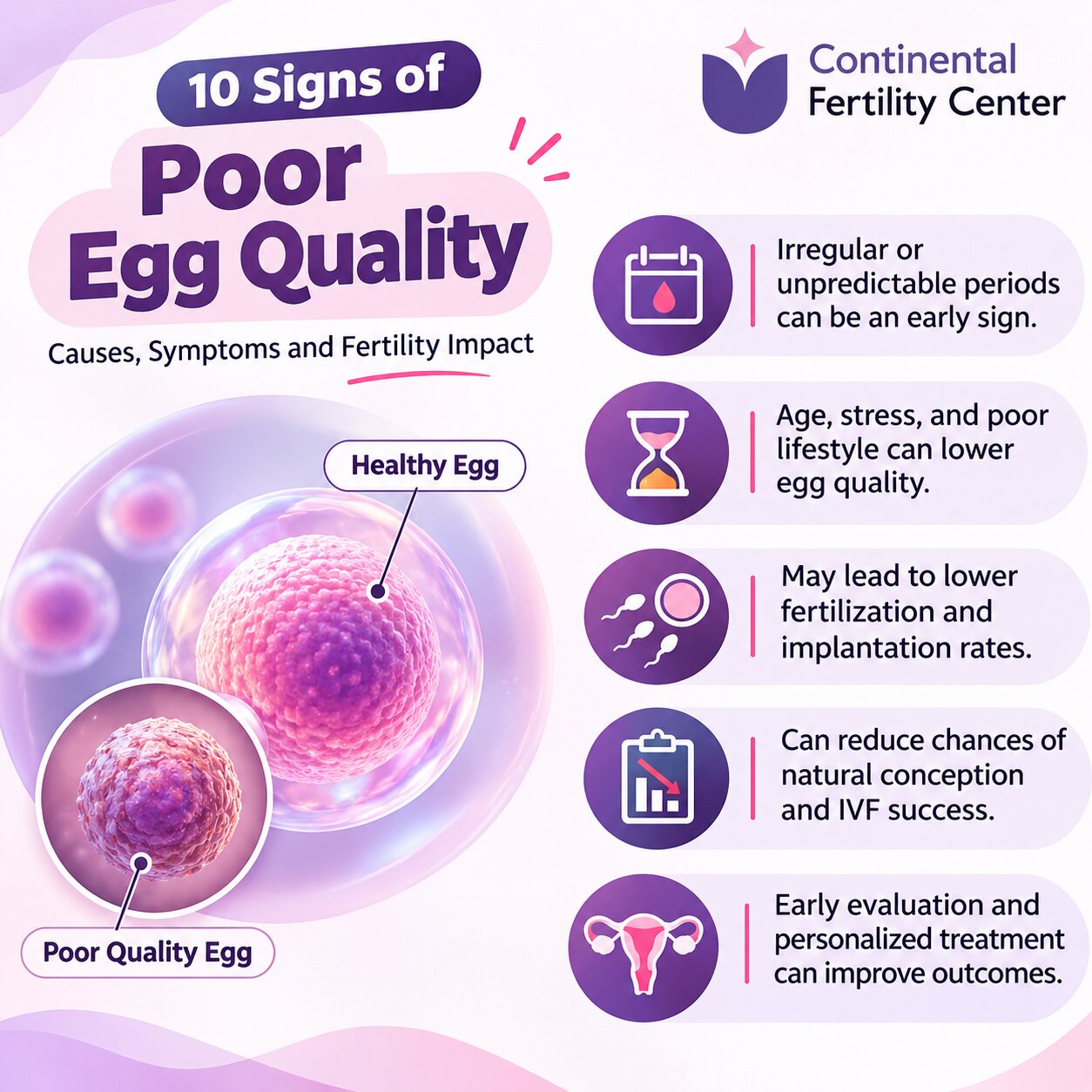
What Affects Egg Quality?
Some of the factors that might impact egg quality and female fertility include:
- Aging: As women age, their eggs become less healthy.
- Hormonal imbalances: Diseases that affect reproductive hormones might disrupt ovulation.
- Endometriosis: This disease might affect the health of the ovaries.
- Cigarette smoking and drinking: Unhealthy habits might impact reproductive health.
- Oxidative stress: Too much oxidative stress might be harmful for cell functioning.
- Some medical conditions: Autoimmune diseases and treatment of cancers might affect the ovaries.
How is egg quality assessed?
There is no one specific test for egg quality; various tests can be performed by fertility experts to determine the ovarian status and possible fertility problems.
The following tests are common:
- AMH test: Used to determine ovarian reserve capacity.
- Antral follicle count: An ultrasound technique that counts the number of small follicles in the ovaries.
- FSH test: Tests for a particular hormone related to ovarian function.
- Ultrasound: Useful for determining the health status of ovaries and other reproductive organs.
- IVF assessment: Assessment of egg maturity, fertilization, and embryo development.
Can Egg Quality Be Naturally Improved?
The effects of aging on egg quality cannot be reversed. Nevertheless, good lifestyle choices may help maintain reproductive well-being.
Here are some ideas for you:
- Follow a healthy diet rich in fruits, vegetables, whole grains, and healthy fats.
- Keep a normal weight.
- Do not smoke and do not consume much alcohol.
- Exercise.
- Get enough rest.
- Practice stress reduction in your daily life.
- Ask your infertility expert about proper supplements.
Why Should One Opt for Continental Fertility Center?
It is essential to choose the best fertility center when it comes to addressing problems related to poor egg quality. The Continental Fertility Center located in Hyderabad provides complete fertility assessment and customized treatment plans for those undergoing infertility issues.
The Continental Hospitals has been accredited by JCI and NABH for its dedication towards international health care standards and patient safety measures. Its laboratory is also accredited with NABL.
Some of the key services provided by the hospital are:
- Fertility and reproductive medicine specialists.
- Complete fertility assessments.
- Assisted reproductive technologies, including IVF.
- Fertility treatment plans tailored for individual patients.
- State-of-the-art laboratory and diagnostic facilities.
- Personalized counseling and medical support services.
Conclusion
Egg quality can be related to fertilisation, embryo development, implantation, and the outcome of pregnancy. Even though some issues with fertility can signal problems with eggs, there are no specific signs of poor egg quality. It is important to undergo fertility testing and evaluation.
If you are having trouble conceiving or are worried about your egg quality, then visit our best fertility specialist in Hyderabad at Continental Fertility Center, Hyderabad.
Frequently Asked Questions
Poor egg quality does not usually cause noticeable physical symptoms. Many women discover it during fertility testing or IVF treatment. However, certain factors may indicate concerns about egg health. These include difficulty getting pregnant despite regular attempts. Repeated miscarriages may sometimes be associated with chromosomal abnormalities in eggs. Irregular menstrual cycles can indicate hormonal or ovulation problems. Low ovarian reserve may also be identified through fertility tests. A lower response to ovarian stimulation during IVF can raise concerns. Age is another important factor affecting egg quality. Women above 35 may experience a gradual decline in egg quality. However, age alone cannot determine the quality of every egg. Tests such as AMH and antral follicle count help assess ovarian reserve, not directly measure egg quality. A fertility specialist can evaluate individual fertility concerns and recommend appropriate treatment.
Several factors can influence egg quality and reproductive health. Age is one of the most significant factors affecting egg quality. As women grow older, the number of available eggs gradually decreases. The risk of chromosomal abnormalities in eggs also increases with age. Hormonal imbalances may affect normal ovarian function. Conditions such as endometriosis and certain ovarian disorders may influence fertility. Smoking can negatively affect reproductive health. Excessive alcohol consumption may also affect fertility. Poor nutrition and nutritional deficiencies can influence overall reproductive health. Chronic stress may affect hormonal balance and menstrual regularity. Certain medical treatments, including chemotherapy, can affect ovarian function. Genetic factors may also contribute to reproductive difficulties. Identifying the underlying cause helps fertility specialists plan suitable treatment.
Yes, poor egg quality can contribute to female infertility. Healthy eggs are important for successful fertilisation and embryo development. Eggs with chromosomal abnormalities may not fertilise normally. Some fertilised eggs may fail to develop into healthy embryos. Poor egg quality can also contribute to unsuccessful implantation. In some cases, it may increase the risk of early pregnancy loss. However, poor egg quality does not mean pregnancy is impossible. Many women with fertility challenges conceive with appropriate medical support. Female age is an important factor when evaluating egg quality. Ovarian reserve and hormonal health also help specialists understand fertility potential. IVF may be recommended depending on the underlying condition. Additional tests can help evaluate reproductive health. Consulting a fertility specialist can help identify suitable treatment options.
Egg quality cannot be measured accurately through a single routine fertility test. Doctors usually evaluate several factors to understand reproductive health. AMH testing helps estimate ovarian reserve. Antral follicle count through ultrasound helps assess the number of developing follicles. FSH and estradiol tests may provide additional information about ovarian function. Menstrual cycle history is also important during evaluation. A woman's age provides useful information about the likelihood of chromosomal abnormalities. During IVF, specialists can observe egg maturity after retrieval. Fertilisation and embryo development provide further clinical information. Genetic testing of embryos may identify certain chromosomal abnormalities. However, these tests do not directly measure the quality of every egg. A complete fertility assessment helps identify possible reproductive concerns. Your fertility specialist can recommend appropriate investigations based on your medical history.
Egg quality may be influenced by overall health and lifestyle habits. However, natural methods cannot reverse age-related changes in eggs. Eating a balanced diet supports general reproductive health. Include vegetables, fruits, whole grains, nuts and healthy fats in your meals. Maintain a healthy body weight through regular physical activity. Avoid smoking and limit alcohol consumption. Getting sufficient sleep supports hormonal health. Managing stress can improve overall physical and emotional well-being. Addressing conditions such as thyroid disorders may also support reproductive health. Certain nutritional supplements may be recommended after medical evaluation. However, no supplement is proven to guarantee improved egg quality. Lifestyle changes cannot correct chromosomal abnormalities in eggs. Speak with a fertility specialist before starting supplements or fertility treatments.
Yes, age has a significant influence on egg quality. Women are born with a limited number of eggs. Both egg quantity and quality gradually decline over time. This decline becomes more noticeable after the age of 35. The likelihood of chromosomal abnormalities increases as women get older. This can affect fertilisation and embryo development. It may also increase the risk of miscarriage. Women in their late thirties and forties may experience additional fertility challenges. However, individual fertility varies from person to person. Some younger women may also experience reduced ovarian reserve. Age alone cannot provide a complete picture of fertility health. Tests such as AMH and ultrasound help assess ovarian reserve. Early fertility evaluation can help women understand their reproductive options. A specialist can recommend suitable treatment based on age and individual fertility needs.
IVF may help some women experiencing fertility challenges associated with poor egg quality. The treatment involves stimulating the ovaries to produce multiple eggs. Mature eggs are collected and fertilised with sperm in a laboratory. Specialists monitor fertilisation and embryo development. Embryos are assessed before transfer into the uterus. However, IVF cannot directly correct poor egg quality. The treatment cannot reverse age-related chromosomal abnormalities. The chances of success depend on several factors. These include maternal age, ovarian reserve and embryo development. Previous IVF outcomes may also influence treatment planning. In selected cases, additional approaches may be discussed with the fertility specialist. Preimplantation genetic testing may help identify certain chromosomal abnormalities in embryos. However, it does not improve egg quality or guarantee pregnancy. A personalised IVF plan helps determine the most appropriate treatment approach.
A balanced and nutritious diet supports overall reproductive health. Include antioxidant-rich fruits such as berries, oranges and pomegranates. Green leafy vegetables provide important vitamins and minerals. Nuts and seeds contain healthy fats and essential nutrients. Include protein sources such as eggs, lentils, beans and fish. Whole grains provide fibre and support balanced nutrition. Foods containing folate are important for reproductive health. Omega-3 fatty acids found in certain fish, walnuts and flaxseeds support general health. Adequate iron intake is also important for women planning pregnancy. Drink sufficient water throughout the day. Avoid excessive processed foods and sugary beverages. However, no specific food can guarantee improved egg quality. A healthy diet cannot reverse age-related egg changes. A nutritionist or fertility specialist can help create an appropriate dietary plan.