
Are IVF Injections Painful? What to Expect During Fertility Treatment
Starting IVF treatment can bring many questions, especially about injections. One of the most common concerns is, “Are IVF injections painful?” IVF injections are an important part of fertility treatment because they help stimulate the ovaries, support egg development, and prepare the body for different stages of the IVF process. While the thought of having regular injections may feel stressful, most people find that IVF injection discomfort is manageable and becomes easier with proper guidance.
IVF injections are usually given under the skin, commonly in the abdomen or thigh, depending on the medication and your fertility specialist’s instructions. The needles used for IVF medication injections are generally small, and the sensation is often brief. Understanding what to expect can help reduce anxiety and make the treatment journey more comfortable.
What Are IVF Injections?
IVF injections are medications used at different stages of fertility treatment. Your fertility specialist selects the medicines and dosage based on your age, ovarian reserve, medical history, hormone levels, and treatment plan.
The main purposes of injections during IVF may include:
• Stimulating the ovaries to develop multiple eggs
• Preventing premature ovulation
• Helping mature the eggs before egg retrieval
• Supporting the uterine lining after embryo transfer
• Supporting early pregnancy when recommended by the fertility specialist
Not every person will receive exactly the same IVF medication injections. The type, timing, dosage, and duration can vary from one treatment plan to another.
Are IVF Injections Painful?
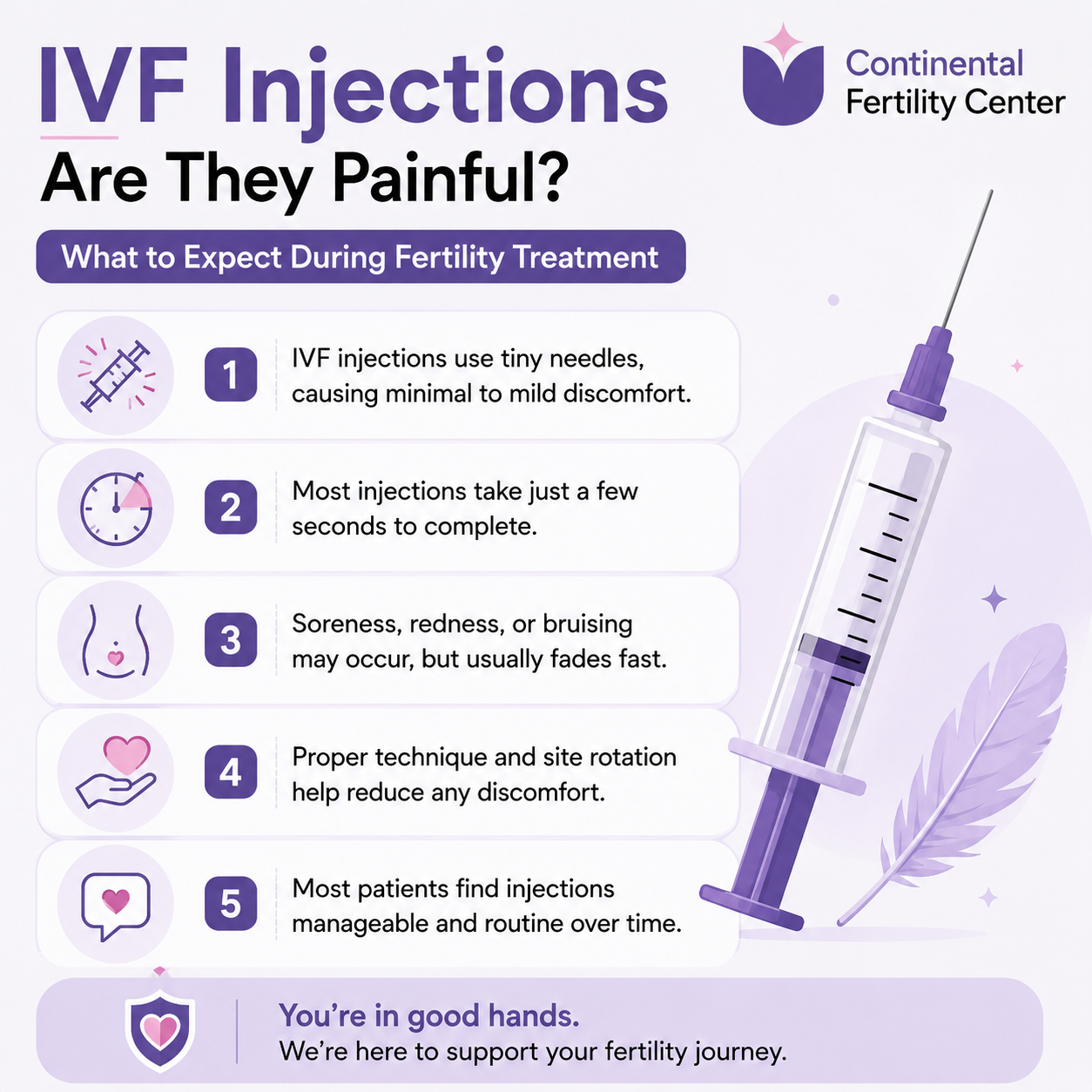
For most people, IVF injection pain is mild and short lasting. You may feel a small pinch when the needle enters the skin, followed by slight burning, pressure, or tenderness around the injection site.
Some people experience very little discomfort, while others may notice more sensitivity, particularly when injections are given repeatedly in the same area.
The level of discomfort can depend on:
• The type of medication
• The injection technique
• The injection site
• Individual pain sensitivity
• Frequency of injections
• How relaxed the muscles and skin are during administration
If you are worried about pain, speak with your fertility specialist or nurse before starting treatment. They can explain the correct technique and help you feel more confident.
What Can You Expect During IVF Treatment Injections?
IVF treatment injections are usually part of a carefully monitored treatment cycle. Your fertility specialist will tell you when each medication should be taken.
A typical process may involve:
1. Ovarian Stimulation
Fertility treatment injections may be prescribed to encourage the ovaries to develop several follicles. You may need injections for several days, with regular ultrasound scans and hormone tests to monitor your response.
2. Preventing Premature Ovulation
Certain IVF injections may be used to prevent ovulation from happening too early. This helps the fertility team plan egg retrieval at the appropriate time.
3. Trigger Injection
A trigger injection may be given when the eggs have reached the appropriate stage of development. It helps complete the final maturation process before egg retrieval. Timing is especially important, so follow your fertility specialist’s instructions carefully.
4. Hormonal Support
After egg retrieval or embryo transfer, some patients may require hormonal medication to support the uterine lining. Depending on the treatment plan, this may involve injections or other forms of medication.
Common IVF Injections Side Effects
Along with mild IVF injection discomfort, some people may experience temporary side effects. These can vary depending on the medication and individual response.
Common effects may include:
• Mild redness or swelling at the injection site
• Tenderness or bruising
• Bloating
• Breast tenderness
• Mood changes
• Headache
• Mild abdominal discomfort
• Tiredness
These effects are not experienced by everyone. Your fertility team will monitor your response throughout treatment.
In some cases, ovarian stimulation can cause excessive ovarian response. Symptoms such as significant abdominal swelling, severe pain, breathing difficulty, persistent vomiting, or rapid weight changes should be reported to your fertility team promptly.
How Can You Reduce IVF Injection Discomfort?
There are simple ways to make IVF shots more comfortable:
• Follow the injection instructions provided by your fertility team.
• Use the recommended injection site and rotate sites when advised.
• Keep the medication at the recommended temperature.
• Relax the area before giving the injection.
• Avoid repeatedly injecting the exact same spot.
• Follow the prescribed timing carefully.
• Ask your fertility nurse to demonstrate the technique if you are unsure.
Never change the dose, timing, or injection method without consulting your fertility specialist.
Do IVF Injections Leave Marks?
Some people may notice temporary redness, small bruises, swelling, or tenderness after injections. These usually improve naturally. Rotating injection sites as instructed can help reduce repeated irritation in one area.
If you notice increasing pain, severe swelling, significant skin changes, or other unusual symptoms, contact your fertility care team.
What If You Are Afraid of Needles?
Needle anxiety is common, and feeling nervous before IVF injections does not mean you are unprepared for treatment. Your fertility team can teach you how to administer the injections safely or explain available support if someone else will be administering them.
Knowing the purpose of each injection can also make the process feel less overwhelming. Rather than thinking about the number of injections, focus on the specific stage of treatment and why the medication has been prescribed.
Why Choose Continental Fertility Center?
Choosing the right fertility center is an important part of your IVF journey. Continental Fertility Center provides fertility care with a focus on individualized treatment planning, clinical expertise, patient monitoring, and emotional support throughout the treatment process.
The center benefits from the wider clinical infrastructure of Continental Hospitals, a leading healthcare institution in Hyderabad. Continental Hospitals is accredited by internationally and nationally recognized healthcare accreditation bodies, including JCI and NABH, reflecting its commitment to patient safety, quality standards, and clinical excellence.
Patients can also benefit from access to multidisciplinary medical expertise when additional medical evaluation or specialist support is required. The focus is on providing coordinated care in a hospital environment with advanced facilities and experienced clinical teams.
When Should You Consult a Fertility Specialist?
If you have been trying to conceive without success, have concerns about fertility, or have been advised to consider assisted reproductive treatment, consulting a fertility specialist can help you understand your options.
A fertility specialist can evaluate your individual situation and explain whether IVF, other assisted reproductive techniques, or a different fertility treatment may be appropriate.
If you are concerned about IVF injection pain or want to understand what to expect from IVF treatment injections, discuss your concerns openly with your fertility care team. Knowing what happens at each stage can make the treatment process easier to understand and manage.
Conclusion
So, are IVF injections painful? For most people, IVF injections cause only mild and temporary discomfort, such as a brief pinch, tenderness, redness, or minor bruising. The experience can vary from person to person, but proper technique, guidance, and regular monitoring can make the process more comfortable.
IVF injections are an important part of many fertility treatment plans, but every treatment is individualized. Your fertility specialist will determine which medications you need, when they should be taken, and how your progress should be monitored.
If you are considering IVF or have questions about IVF injections, consult our best fertility specialist in Hyderabad at Continental Fertility Center for personalized guidance and treatment planning.
Frequently Asked Questions
IVF injections may cause mild pain or discomfort for some women. Most injections feel like a quick pinch or sting at the injection site. The level of discomfort can vary depending on the type of medication used. Some women may experience mild redness, swelling, or tenderness afterward. Fertility injections are usually given under the skin using a small needle. The injections are generally designed to be manageable during daily treatment. Using the correct injection technique can help reduce discomfort. Keeping the medication at the recommended temperature may also improve comfort. Changing injection sites as advised can prevent repeated soreness in one area. Some women become more comfortable with injections as treatment progresses. If pain becomes severe or unusual, inform your fertility specialist promptly. Your fertility team can guide you on ways to make injections more comfortable.
Many IVF injections are given into fatty tissue under the skin. Common injection areas include the lower abdomen or upper thigh. The exact injection site depends on the medication being prescribed. Some fertility medicines may require a different type of injection. Your fertility specialist or nurse will explain where each injection should be given. They can also demonstrate the correct injection technique before treatment begins. It is important to follow the instructions provided by your fertility clinic. Rotating injection sites may help reduce irritation and tenderness. Avoid injecting into areas that are bruised, swollen, or irritated. Keep the injection area clean before administering the medicine. Never change the injection site or medication schedule without medical advice. Contact your fertility team if you are unsure about how or where to inject.
The number of IVF injections varies from person to person. It depends on the treatment plan, ovarian response, and medications prescribed. Some patients may need injections for around one to two weeks during stimulation. Additional medicines may be prescribed at different stages of the IVF cycle. A trigger injection is commonly used to help final egg maturation. Some treatment protocols may require medicines before or after ovarian stimulation. Your fertility specialist determines the medication schedule based on your needs. Hormone levels and ultrasound scans help guide treatment decisions. The dosage may be adjusted depending on how your ovaries respond. Following the prescribed schedule is important for treatment timing and effectiveness. Do not skip, repeat, or change an injection dose without medical guidance. Your clinic will provide a personalized injection schedule for your IVF cycle.
IVF injections are used to control and support different stages of treatment. Some medicines stimulate the ovaries to develop multiple follicles. Developing multiple follicles can allow several eggs to mature during one cycle. Other medicines may help prevent premature ovulation during treatment. A trigger injection helps the eggs complete their final maturation stage. Certain medicines may also be used during later stages of fertility treatment. The exact medication combination depends on your individual IVF protocol. Doctors monitor ovarian response through ultrasound scans and hormone testing. Medication doses may be adjusted according to these monitoring results. The goal is to support controlled ovarian stimulation and egg collection. Not every patient receives exactly the same combination of injections. Your fertility specialist will explain the purpose of each medicine prescribed.
IVF injections can cause temporary side effects in some patients. Common effects may include redness, swelling, or tenderness at the injection site. Hormonal medicines can sometimes cause bloating or abdominal discomfort. Some women may experience headaches, breast tenderness, or mood changes. Feeling tired or emotionally sensitive can also occur during fertility treatment. The type and severity of symptoms vary between individuals. Many side effects are mild and improve after the medication is stopped. Your fertility team monitors you throughout the stimulation process. Ultrasound scans and hormone tests help identify how your ovaries are responding. Rarely, ovarian stimulation can cause a more serious condition called OHSS. Severe abdominal swelling, breathing difficulty, or significant pain needs prompt medical attention. Always report concerning or worsening symptoms to your fertility specialist.
Several simple steps may help make IVF injections more comfortable. Ask your fertility nurse to demonstrate the correct injection technique. Use the needle and injection method recommended for your specific medication. Allow the skin to dry after cleaning it before giving the injection. Avoid repeatedly using exactly the same injection spot. Rotate injection areas according to your clinic's instructions. Try to keep your muscles relaxed while administering the injection. Follow the medication storage instructions provided by your fertility clinic. Do not apply ice, heat, or other products unless your medical team recommends them. Avoid rubbing or pressing the injection area aggressively afterward. If injections remain very painful, discuss the problem with your fertility specialist. Your healthcare team may suggest technique adjustments or other appropriate measures.
Many IVF medicines are designed to be administered at home. Patients are often taught how to give subcutaneous injections themselves. A fertility nurse or healthcare professional should demonstrate the technique first. You should understand the correct dose, timing, storage, and injection site. Some patients prefer having a partner or caregiver help with injections. Your fertility clinic can advise whether self-administration is appropriate for your medication. Always use the exact dose and schedule prescribed by your fertility specialist. Use a new sterile needle or syringe as instructed for each injection. Dispose of used needles safely according to your clinic's instructions. If you miss an injection, contact your fertility clinic for guidance. Do not double the next dose unless your healthcare team specifically advises you. Following the prescribed schedule is especially important during IVF treatment.
Contact your fertility specialist if you develop severe or unusual symptoms. Mild injection-site tenderness is generally not a reason for immediate concern. However, severe or worsening abdominal pain should be reported promptly. Significant abdominal swelling or rapid weight gain may require medical assessment. Breathing difficulty, chest pain, or fainting requires urgent medical attention. Heavy vaginal bleeding should also be discussed with your healthcare team. Persistent vomiting or difficulty keeping fluids down should not be ignored. Severe pelvic pain may require evaluation depending on your treatment stage. Your clinic may provide specific warning signs for your individual IVF protocol. Do not stop prescribed fertility medicines without speaking with your specialist. Early communication can help your medical team identify and manage complications. When in doubt, contact your fertility clinic for personalized medical advice.