

Breastfeeding After IVF Pregnancy: Common Concerns and Expert Advice
Breastfeeding plays a vital role in the process of growing and developing a baby. For women who became pregnant by undergoing in vitro fertilization (IVF), lactating can bring not only joy but also concerns regarding milk supply, hormones, and recovering from delivery. Available information suggests that breastfeeding should be possible after IVF, just as with women who became mothers without medical intervention.
Nonetheless, there may be mothers who face struggles associated with late milk production, a history of infertility issues, trouble while giving birth, or various medications. A thorough understanding of these issues will help women prepare for breastfeeding after IVF and receive the needed help to effectively enter the world of motherhood.
Can You Breastfeed After an IVF Birth?
Breastfeeding after an IVF birth is generally possible. Although IVF can aid in getting pregnant, it does not necessarily affect the body's ability to produce breast milk. Many elements contribute to the production of milk, including hormones after birth, breastfeeding routine, and the health condition of the mother.
Mothers who have experienced fertility treatments can breastfeed. Proper advice and support will help achieve the desired result.
Is there any effect of IVF on producing breast milk?
In general, it's not the process of IVF that reduces the amount of breast milk that a woman produces. Still, there are different factors connected with fertility treatment and pregnancy that can affect breastfeeding.
Hormones: Disorders affecting the thyroid or other hormones can affect how much milk is made.
Age: Some older mothers may have to wait longer before they begin to make milk, although age is not by itself an obstacle to successful breastfeeding.
Multiples: Twins and other multiple births mean more demand for feeding.
C Delivery: Surgical recovery can slow down the breastfeeding process for some women.
Premature Birth: Preterm babies may require extra assistance with feeding.
By understanding these factors, mothers have a better chance at getting proper assistance during IVF and after birth.
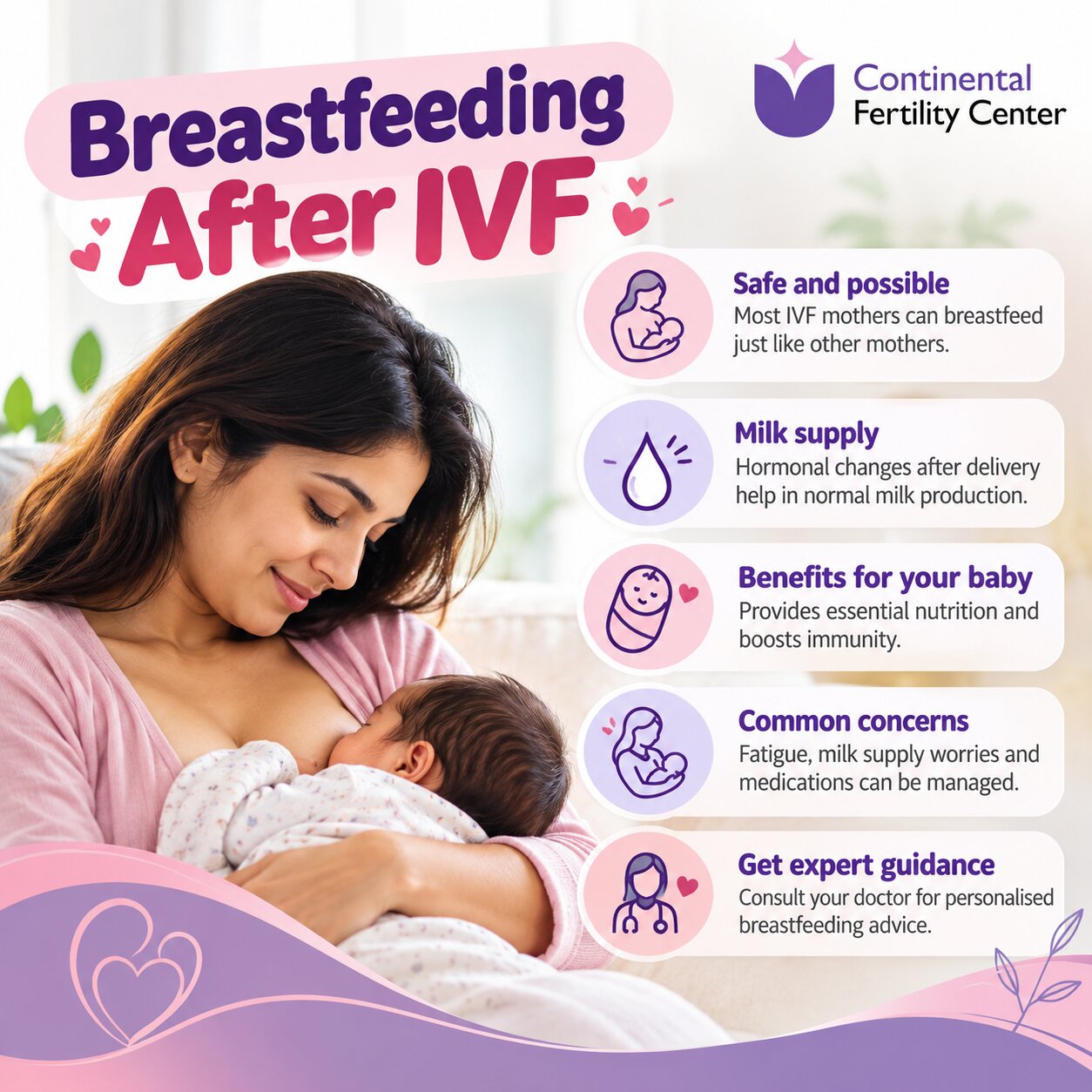
Is It Safe To Breastfeed After IVF Delivery?
Yes, breastfeeding is considered safe after IVF delivery for both moms and babies. The process of IVF does not mean that breast milk is unsafe or less nutritious.
However, moms need to share with their doctor any medications they may be taking post-delivery. Most fertility medications will be discontinued before and during pregnancy, but some may still need to be taken after the delivery.
Before starting to take any fertility medications or hormonal treatments during breastfeeding, it is best to seek the advice of a doctor.
What is the main challenge of breastfeeding following IVF treatment?
Many mothers may have trouble breastfeeding; however, this problem is not specific to IVF pregnancies.
Here are some of the various problems:
- Delay of milk production after the baby is born
- Difficulty putting the baby at the breast
- Painful and cracked nipple
- Concerns over how much milk the baby is getting
- Physical and emotional fatigue from the recovery process
- Issues with feeding schedule following a complicated delivery
Regular feeding, right positioning, enough rest, and the help of a lactation consultant can be of big help in dealing with these issues.
Ways to Promote Successful Post-IVF Breastfeeding
There are a few different important things that mothers can do to ensure that they have the best chance of successful breastfeeding after IVF.
- Skin-to-skin contact is advised, preferably as soon as possible.
- Feed your baby any time that they show signs of hunger.
- Consult with a lactation expert to measure the baby’s suction.
- Maintain a healthy diet and drink according to your thirst.
- Rest, and also accept help.
- Use your pediatrician’s advice to monitor the baby's weight and wet diapers.
If you notice anything like a less than expected number of wet diapers or even your baby being unusually irritable, get in touch with the doctor straight away.
Why Choose Continental Fertility Center?
Choosing the right healthcare team can make a difference throughout your fertility journey and after delivery. Continental Fertility Center offers fertility-focused care supported by the broader clinical services of Continental Hospitals.
Continental Hospitals holds JCI and NABH accreditations, reflecting its commitment to healthcare quality, patient safety, and established clinical standards.
Mothers can benefit from individualized fertility guidance, specialist consultations, and coordination with relevant maternity, pediatric, and lactation services when required. This approach supports women as they transition from fertility treatment to pregnancy and motherhood.
When Should You Seek Expert Advice?
If you experience persistent breastfeeding difficulties, concerns about milk supply, breast pain, or problems with your baby's feeding, consult your healthcare provider. Early support can help identify the cause and guide appropriate treatment.
If you are planning pregnancy through IVF or need guidance about breastfeeding after IVF, consult our best fertility specialist in Hyderabad at Continental Fertility Center, Hyderabad, for personalized advice.
Conclusion
Breastfeeding after IVF is possible for most mothers and can provide essential nutrition and bonding benefits for their babies. Although some women may experience challenges related to hormones, delivery, or milk production, IVF itself does not prevent successful breastfeeding.
With early guidance, appropriate medical support, and individualized care, mothers can approach breastfeeding with greater confidence. For women seeking fertility care at the best hospital in Hyderabad, Continental Fertility Center offers specialist support throughout the journey toward pregnancy and motherhood.
Frequently Asked Questions
Yes, most women can breastfeed after an IVF pregnancy. Conceiving through IVF does not usually affect the ability to produce breast milk. Milk production depends on hormonal changes, breast development, and the baby's feeding needs. The body prepares for breastfeeding during pregnancy. After delivery, hormone levels change to support milk production. Some women may need extra time for their milk supply to increase. A difficult delivery or premature birth may also affect the initial breastfeeding experience. IVF medications used during fertility treatment are generally stopped before or during pregnancy, depending on the treatment plan. Medicines taken after delivery should be reviewed for breastfeeding compatibility. Previous fertility treatment alone is not usually a reason to avoid breastfeeding. Skin-to-skin contact can help encourage milk production and bonding. Feeding frequently can support the establishment of a healthy milk supply. Consult your doctor or lactation consultant if you experience difficulties.
IVF does not automatically cause a low breast milk supply. Most women who conceive through IVF can produce milk after delivery. Milk production is influenced by hormones, breast development, and effective milk removal. Some women may experience a delay in milk production after childbirth. A caesarean delivery or significant blood loss may contribute to this delay. Premature birth and certain maternal health conditions can also affect milk supply. Fertility treatment history may be relevant in some individual cases. Frequent breastfeeding helps stimulate milk production. Expressing breast milk can help when the baby cannot latch effectively. Ensure the baby feeds regularly and has appropriate wet diapers. Your baby's weight gain is another important indicator of adequate feeding. A lactation consultant can assess positioning, attachment, and feeding patterns. Seek medical advice if you suspect your baby is not getting enough milk.
The safety of medicines during breastfeeding depends on the specific drug. Many medicines used during fertility treatment are discontinued before delivery. However, some women may need hormonal or other medications after childbirth. Certain medicines can pass into breast milk in varying amounts. Their effects depend on the dose, timing, and the baby's age and health. Progesterone and other hormones require individual assessment based on the formulation and clinical circumstances. Some fertility medicines have limited safety data during breastfeeding. Do not restart fertility medication without consulting your doctor. Inform your fertility specialist that you are breastfeeding. Your doctor can review prescriptions and identify suitable alternatives if needed. Never stop an essential prescribed medicine without medical guidance. Extra care may be necessary for premature or medically vulnerable infants. A pharmacist or lactation specialist can also help assess medication safety. Always seek professional advice before taking fertility-related medicines while nursing.
Yes, breastfeeding can delay the return of menstrual periods after childbirth. The hormone prolactin supports milk production and can suppress ovulation. Women who breastfeed frequently may experience a longer delay before periods return. The timing varies from person to person. Some women resume menstruation within a few months. Others may not have periods for a year or longer while breastfeeding. IVF does not determine exactly when menstruation will return. Hormonal changes after pregnancy influence the menstrual cycle. The frequency of breastfeeding and nighttime feeds can affect this timing. Ovulation may occur before the first period returns. Therefore, pregnancy is still possible during breastfeeding. Breastfeeding alone is not always a reliable method of contraception. Discuss suitable contraception options with your doctor. Seek medical evaluation if you experience unusual bleeding, severe pain, or other concerning symptoms.
Yes, breastfeeding is usually possible after a caesarean birth following IVF. A C-section does not normally prevent milk production. However, recovery from surgery may make feeding positions uncomfortable initially. Pain management and adequate rest can support recovery and breastfeeding. Skin-to-skin contact, when medically appropriate, can encourage early feeding. Ask the maternity team to help you position your baby comfortably. Side-lying or football-hold positions may reduce pressure on the surgical incision. Your milk may take a little longer to increase after delivery. This can happen after caesarean births for several reasons. Frequent feeding and effective attachment help stimulate milk production. If the baby is premature or needs special care, expressing milk may be helpful. Your healthcare team can guide you on feeding and milk storage. Contact a lactation consultant if latching or feeding remains difficult. Follow your obstetrician's advice during surgical recovery.
Breastfeeding causes natural hormonal changes that support milk production. The hormone prolactin helps the breasts produce milk. Oxytocin helps release milk during feeding. Frequent breastfeeding can temporarily suppress the hormones involved in ovulation. These changes may delay the return of menstrual cycles. They are normal responses to breastfeeding after pregnancy. IVF treatment does not usually prevent these hormonal processes. However, some women may need hormonal medication for specific medical reasons. The effects of such medicines depend on the drug and dosage. If you are considering another fertility treatment, inform your specialist that you are nursing. Some treatments may need to be postponed or adjusted. Your doctor can explain how breastfeeding affects the timing of future IVF treatment. Do not take hormones or fertility medication without medical guidance. Individual advice is important when planning breastfeeding and another pregnancy.
Yes, many mothers can breastfeed twins after an IVF pregnancy. Producing enough milk for two babies is possible for some women. Milk production responds to how frequently and effectively milk is removed. Feeding both babies regularly can help establish supply. Some mothers feed their twins together, while others feed them separately. Choose a method that feels comfortable and allows effective attachment. A twin pregnancy may increase the likelihood of premature birth. Premature babies may need additional feeding support. Expressed breast milk can be useful when a baby cannot feed directly. Your maternity team can help you develop an appropriate feeding plan. Monitor each baby's weight gain and diaper output separately. Some babies may need additional milk if intake is insufficient. Supplementation decisions should be guided by a qualified healthcare professional. A lactation consultant experienced with twins can provide practical support.
Milk supply after an IVF pregnancy can often be supported with regular feeding. Offer the breast frequently and respond to your baby's hunger cues. Ensure your baby attaches deeply and transfers milk effectively. Skin-to-skin contact can encourage feeding and bonding. If direct feeding is difficult, ask about expressing breast milk. Regular expression can help stimulate production when the baby cannot feed effectively. Drink fluids according to your thirst and eat balanced, nutritious meals. Rest whenever possible and seek practical support from family members. Avoid starting herbal supplements or medicines to increase milk supply without medical advice. Some products may have side effects or interact with medication. Monitor your baby's weight and wet diapers to assess feeding adequacy. A lactation consultant can identify problems with positioning or milk transfer. Your doctor may evaluate medical causes of low supply if needed. Seek prompt advice if your baby has signs of inadequate feeding or dehydration.
Seek breastfeeding support if you experience persistent pain during feeding. Difficulty getting your baby to latch is another reason to ask for help. Contact your healthcare professional if your milk supply seems low. Poor weight gain or fewer wet diapers may indicate inadequate milk intake. A baby who is unusually sleepy or difficult to wake for feeds needs prompt assessment. Breast redness, warmth, fever, or worsening breast pain may indicate mastitis. Severe nipple damage should also be evaluated. Mothers recovering from IVF-related pregnancy complications may need additional support. A lactation consultant can assess feeding technique and milk transfer. Your obstetrician can review postpartum recovery and any ongoing medication. A pediatrician can monitor your baby's growth and hydration. Do not wait if your baby shows signs of dehydration or becomes unwell. Early guidance can help address feeding problems before they worsen. Individualized support can make breastfeeding safer and more comfortable.