
IVF Pregnancy vs. Natural Pregnancy: Key Differences, Risks, and What to Expect
Pregnancy is an important milestone for many couples, whether it happens naturally or through fertility treatment. Understanding natural pregnancy vs IVF pregnancy can help couples make informed decisions about conception, pregnancy care, and their overall health. Both methods can lead to the birth of a healthy baby, but they differ in how fertilization occurs and the medical support required.
IVF pregnancy vs natural pregnancy is a common topic for couples exploring fertility options. In natural conception, fertilization usually occurs inside the fallopian tube, while in in vitro fertilization (IVF), eggs and sperm are combined in a laboratory before an embryo is transferred into the uterus. At Continental Fertility Center, couples receive personalized fertility guidance and support throughout their pregnancy journey.
What Is the Difference Between IVF and Natural Pregnancy?
The primary difference is how fertilization takes place.
In natural conception, sperm fertilizes an egg inside the reproductive tract. The resulting embryo travels to the uterus and may implant in the uterine lining.
In IVF, fertility specialists stimulate the ovaries, collect eggs, fertilize them with sperm in a laboratory, and transfer an embryo into the uterus.
Key differences include:
- Conception: Natural fertilization occurs inside the body, while IVF fertilization occurs in a laboratory.
- Medical support: IVF involves fertility medications, monitoring, and medical procedures.
- Pregnancy monitoring: IVF pregnancies may receive additional early monitoring depending on individual risk factors.
- Time to conception: Natural conception may occur without treatment, while IVF involves treatment planning and multiple stages.
Once pregnancy is established, both pregnancies require appropriate antenatal care.
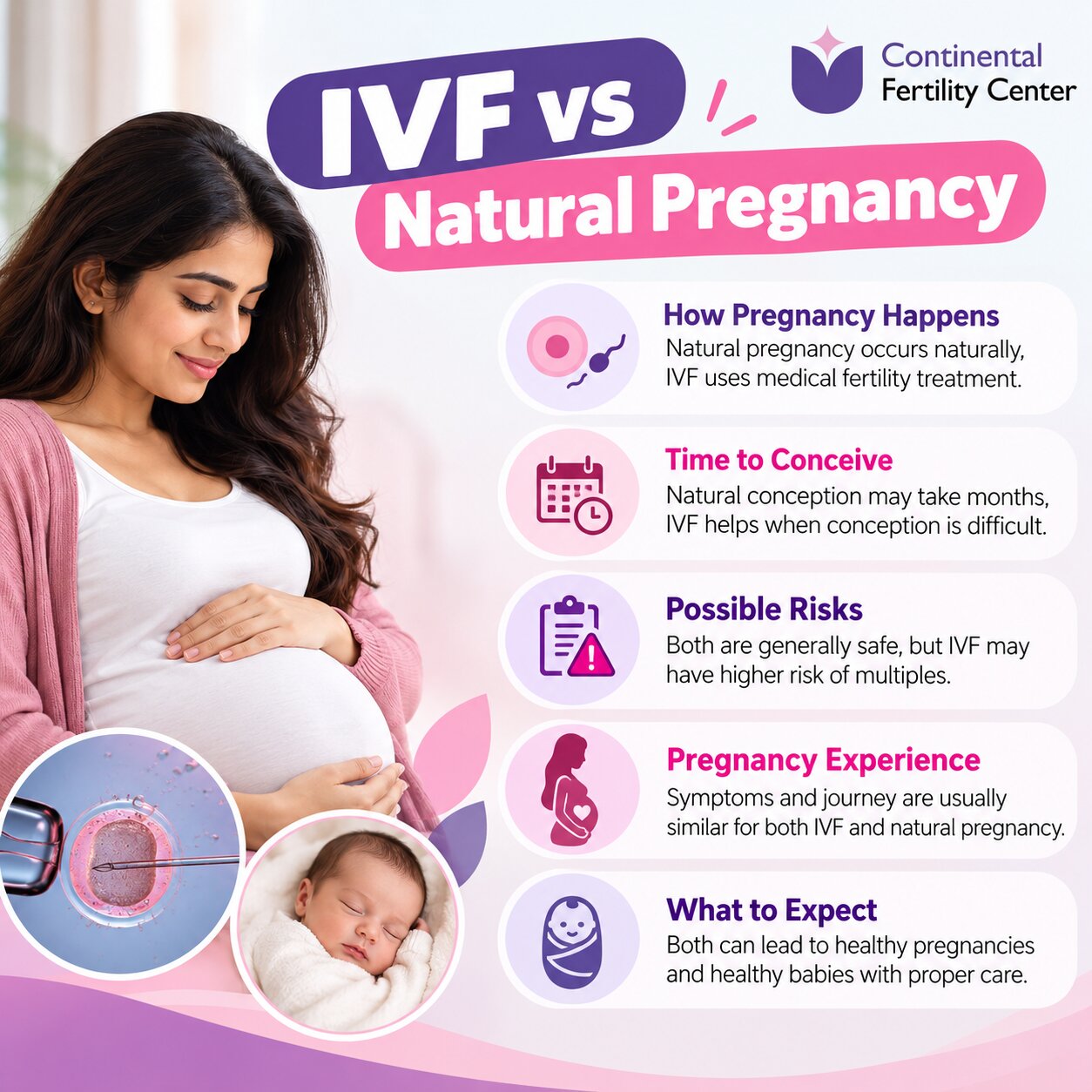
Are IVF Pregnancy Symptoms Different From Natural Pregnancy Symptoms?
Many women wonder whether IVF pregnancy symptoms differ from those of natural conception.
Common symptoms can be similar in both, including:
- Nausea and vomiting
- Breast tenderness
- Fatigue and sleepiness
- Frequent urination
- Food cravings or sensitivity to certain smells
However, fertility medications, especially progesterone, can cause symptoms that resemble early pregnancy. Some women experience very few symptoms despite having a healthy pregnancy.
Symptoms alone cannot confirm pregnancy or determine whether it is progressing normally. A pregnancy test and ultrasound, as advised by your doctor, provide more reliable information.
What Are the Risks of IVF Pregnancy?
IVF pregnancy risks depend on factors such as maternal age, underlying fertility conditions, and whether one or multiple embryos are transferred.
Potential risks include the following:
- Multiple pregnancy: Transferring more than one embryo can increase the likelihood of twins or higher-order pregnancies, which carry additional risks.
- Ectopic pregnancy: An embryo may implant outside the uterus, requiring urgent medical attention.
- Pregnancy complications: Some patients may have an increased risk of conditions such as preterm birth or high blood pressure.
- Ovarian hyperstimulation syndrome: This can occur during fertility treatment and may require medical care.
IVF does not automatically mean a high-risk pregnancy. Many women have healthy pregnancies after IVF, with care tailored to their individual needs.
Is IVF Pregnancy Safer Than Natural Pregnancy?
Neither method is universally safer for every woman. The outcome depends on age, medical history, reproductive health, and pregnancy-related conditions.
Natural conception generally does not require fertility procedures. IVF provides an option for couples experiencing infertility, blocked fallopian tubes, or other reproductive challenges.
Your fertility specialist can explain the potential benefits and risks of each approach based on your circumstances.
What Is the IVF Pregnancy Success Rate?
The IVF pregnancy success rate varies according to maternal age, egg quality, embryo development, sperm health, and the fertility clinic's treatment approach. No single success rate applies to everyone.
Natural conception chances also vary depending on age, reproductive health, and how long a couple has been trying to conceive.
A fertility evaluation can help identify the most appropriate treatment options and establish realistic expectations.
Why Choose Continental Fertility Center?
Choosing the right fertility center is an important step toward parenthood. Continental Fertility Center offers individualized fertility assessment, specialist-led treatment planning, advanced diagnostic facilities, and guidance throughout the conception and pregnancy journey.
Continental Hospitals is accredited by JCI and NABH, reflecting its commitment to healthcare quality and patient safety. Its multidisciplinary approach supports coordinated care when additional medical expertise is needed.
Patients receive guidance based on their medical history, fertility needs, and pregnancy progress.
When Should You Consult a Fertility Specialist?
If you have been trying to conceive without success, have irregular periods, have a known reproductive condition, or have experienced repeated pregnancy loss, consider consulting a fertility specialist. Women under 35 are generally advised to seek evaluation after 12 months of trying, while women aged 35 and older should consider evaluation after six months. Earlier assessment may be appropriate when known fertility problems exist.
Consult our best fertility specialist in Hyderabad at Continental Fertility Center for personalized guidance on natural conception, IVF treatment, and pregnancy care.
Conclusion
Understanding natural pregnancy vs IVF pregnancy can help couples feel more prepared for their fertility journey. Although conception occurs differently, both methods can result in a healthy pregnancy. The right approach depends on individual reproductive health, medical history, and fertility goals. With appropriate evaluation and regular medical care, couples can make informed decisions and receive support at every stage of their journey toward parenthood.
Frequently Asked Questions
IVF pregnancy begins through in vitro fertilization, while natural pregnancy usually occurs after fertilization inside the body. In IVF, eggs are collected from the ovaries and fertilized with sperm in a laboratory. A resulting embryo is transferred into the uterus. In natural conception, fertilization generally occurs in a fallopian tube. Once pregnancy is established, both types involve similar stages of fetal development. Many women with IVF pregnancies experience normal pregnancies and healthy births. Antenatal checkups are important for both IVF and natural pregnancies. Some IVF pregnancies may need closer monitoring depending on individual risk factors. Maternal age and existing medical conditions can influence pregnancy outcomes. The number of embryos transferred can affect the chance of a multiple pregnancy. IVF does not automatically mean a pregnancy will be complicated. An obstetrician can provide personalised care throughout pregnancy.
IVF pregnancy can result in a healthy baby and a safe delivery. However, every pregnancy carries certain risks. The mother's age and overall health can influence these risks. Some people undergoing IVF may have underlying fertility conditions that affect pregnancy. IVF pregnancies have been associated with a higher risk of certain complications. These may include high blood pressure during pregnancy and preterm birth. Multiple pregnancies can increase the risk of complications for both mother and babies. Transferring a single embryo can reduce the likelihood of twins or higher-order multiples. Regular antenatal visits help monitor maternal and fetal health. Doctors may recommend additional scans or assessments when needed. Following medical advice can support a healthier pregnancy. Discuss your individual risks and care plan with your fertility specialist and obstetrician.
IVF pregnancy symptoms are generally similar to those of natural pregnancy. Common symptoms include nausea, breast tenderness, tiredness, and frequent urination. Some women experience mild cramping or bloating in early pregnancy. Others may have very few noticeable symptoms. Fertility medications can cause symptoms that resemble early pregnancy signs. Progesterone supplements may contribute to breast tenderness, fatigue, or bloating. Symptoms alone cannot confirm whether an embryo has implanted successfully. A pregnancy blood test can detect the hormone hCG. Your fertility clinic may schedule this test after embryo transfer. Do not stop prescribed fertility medication without medical advice. Severe abdominal pain, heavy bleeding, fainting, or difficulty breathing requires urgent medical assessment. Every pregnancy is different, regardless of how conception occurred. Contact your healthcare team if you are concerned about your symptoms.
Miscarriage can occur in both IVF and natural pregnancies. The risk depends on several factors, including maternal age and embryo development. Chromosomal abnormalities are a common cause of early miscarriage. Some people undergoing IVF may also have underlying medical conditions affecting pregnancy. IVF does not automatically mean a miscarriage will occur. The risk varies according to individual fertility and health factors. A positive pregnancy test confirms pregnancy but does not guarantee its continuation. Your doctor may recommend ultrasound scans to assess early pregnancy development. Follow-up appointments help monitor progress and identify potential concerns. Avoid comparing your pregnancy directly with someone else's experience. Seek medical advice if you experience bleeding or persistent abdominal pain. Heavy bleeding, severe pain, or fainting requires urgent assessment. Your healthcare team can explain your individual risk and appropriate monitoring.
IVF pregnancies require regular antenatal care, just like natural pregnancies. The exact level of monitoring depends on the mother's health and pregnancy progress. Your doctor may review your fertility treatment history and medical conditions. Early ultrasound scans can help confirm the location and development of the pregnancy. Routine antenatal visits monitor blood pressure, growth, and overall wellbeing. Additional scans may be recommended when specific risk factors are present. Pregnancies involving twins usually require closer monitoring. Taking prescribed medicines as directed is important during early pregnancy. Do not change or stop medication without consulting your doctor. Eating a balanced diet and taking recommended supplements can support maternal health. Attend all scheduled appointments and discuss any new symptoms. Your obstetrician will tailor care to your individual needs.
IVF can result in a twin pregnancy, particularly when more than one embryo is transferred. However, transferring a single embryo greatly reduces the risk of twins from multiple embryo implantation. Identical twins can occasionally develop when one embryo splits into two. Twin pregnancies generally need closer antenatal monitoring than singleton pregnancies. They carry higher risks of preterm birth and low birth weight. The mother may also have a greater risk of pregnancy-related complications. Ultrasound scans help identify the number of babies and assess their development. Your fertility specialist can explain the risks associated with embryo transfer options. The decision about how many embryos to transfer depends on clinical circumstances and applicable guidelines. A single embryo transfer is often recommended when appropriate to reduce multiple pregnancy risks. Twin pregnancy does not always lead to complications. Regular care helps doctors monitor both mother and babies.
Many babies conceived through IVF are born healthy. Their health depends on several factors, including genetics and pregnancy conditions. Parental age and underlying medical conditions may influence outcomes. Some IVF pregnancies have a higher risk of preterm birth or low birth weight. Multiple pregnancies contribute to some of these risks. Single embryo transfer can reduce the chance of complications associated with twins. Routine antenatal screening helps monitor fetal growth and development. Your doctor may recommend additional tests depending on your medical history. IVF itself does not mean a baby will have a health problem. No fertility treatment can guarantee a particular pregnancy outcome. Follow recommended prenatal care and screening guidance. Discuss any concerns about genetic risks with your fertility specialist. Your healthcare team can provide information based on your individual circumstances.
Delivery after IVF can be vaginal or by caesarean section. IVF alone does not automatically mean a caesarean delivery is necessary. The safest delivery method depends on the mother's health and the baby's condition. The baby's position and progress of labour also influence the decision. Twin pregnancies may require a different delivery plan. Certain pregnancy complications may make a caesarean section advisable. Your obstetrician will assess these factors as pregnancy progresses. Routine prenatal appointments help prepare for labour and delivery. Discuss your birth preferences with your healthcare team in advance. A planned caesarean may be recommended for specific medical reasons. Vaginal birth may be possible when there are no contraindications. The final decision should prioritise the safety of both mother and baby. Ask your obstetrician about the delivery options appropriate for your pregnancy.
Regular medical care is important after a positive IVF or natural pregnancy test. Contact your fertility clinic to arrange the recommended pregnancy assessment. Your doctor may schedule blood tests and an early ultrasound. Seek medical advice if you experience persistent abdominal pain or vaginal bleeding. Severe pain, heavy bleeding, fainting, or shoulder-tip pain requires urgent assessment. These symptoms can sometimes indicate an ectopic pregnancy or another serious condition. Do not wait for a scheduled appointment if emergency symptoms occur. Attend all recommended antenatal checkups and scans. Take prescribed medicines according to your doctor's instructions. Avoid starting new medicines or supplements without professional advice. Tell your healthcare team about your fertility treatment and medical history. Early assessment can help identify problems and guide appropriate care. Contact your obstetrician whenever you are concerned about your symptoms or pregnancy progress.