

Can Birth Control Affect Future Fertility
For decades, birth control has empowered individuals to take control of their reproductive timelines. Whether it is to pursue higher education, build a career, or ensure personal readiness, family planning is a major part of modern life. However, a common question often lingers in the minds of those using these methods: does birth control affect fertility in the long run?
When the time comes to transition from preventing pregnancy to planning a family, it is completely natural to wonder about the lasting effects of contraception and fertility. Fortunately, extensive medical research provides reassuring answers. Understanding how different birth control methods interact with your reproductive system can help you navigate your journey toward parenthood with confidence.
Does Birth Control Affect Fertility?
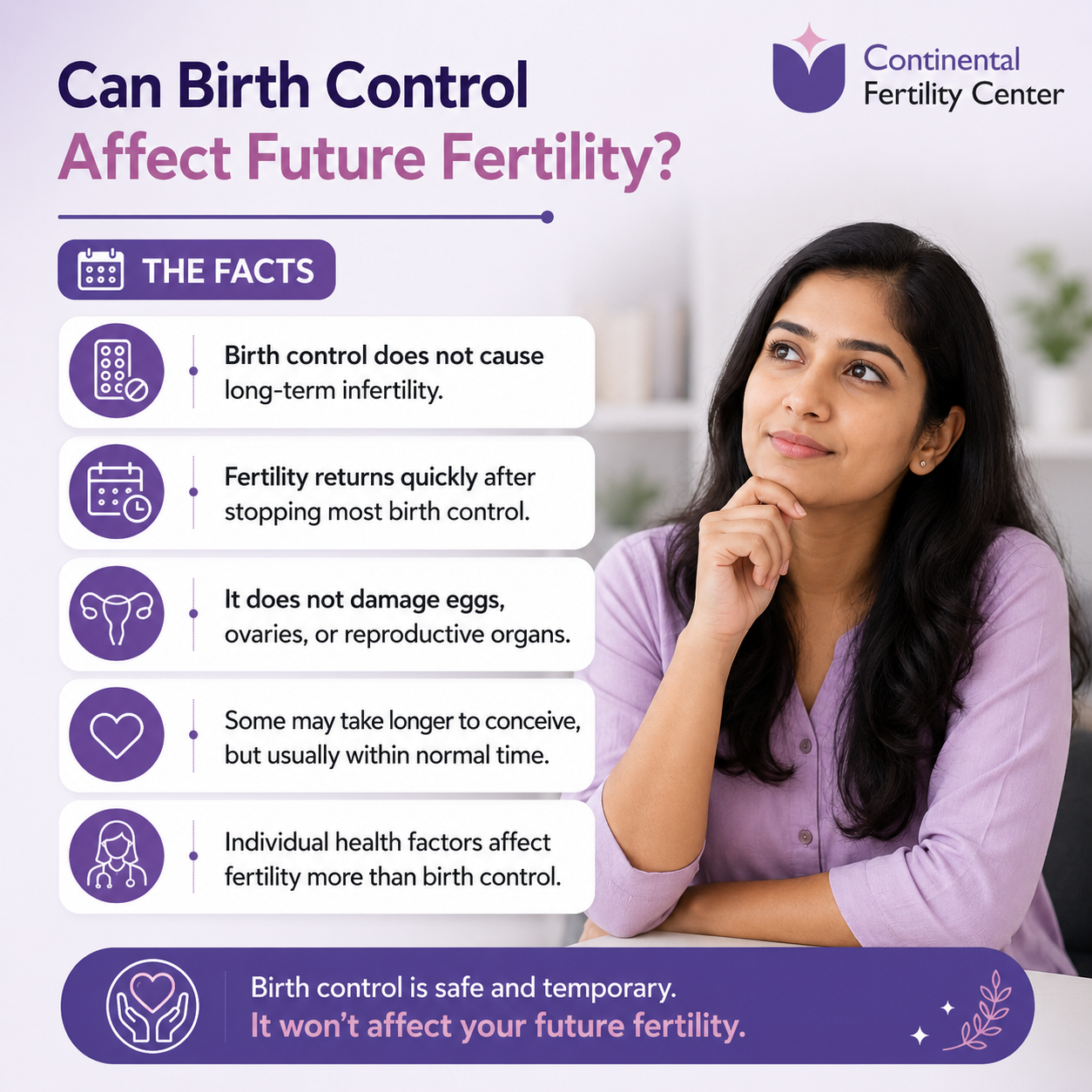
The short answer from reproductive specialists is a resounding no. Temporary methods of birth control do not cause permanent infertility or alter your long-term reproductive potential.
The primary function of most hormonal birth control methods is to prevent pregnancy temporarily by stopping ovulation, thickening cervical mucus, or thinning the uterine lining. Once you discontinue the use of your chosen method, the synthetic hormones clear from your system relatively quickly, allowing your body to resume its natural reproductive cycle.
It is vital to separate the direct effects of birth control from other external factors. Often, what appears to be fertility challenges caused by past contraception use is actually related to age, underlying pre-existing reproductive conditions, or lifestyle factors that simply become more evident when a couple starts trying to conceive.
Different Birth Control Methods and Fertility After Stopping
Every body reacts differently, and the timeline for your natural cycle to return depends largely on the specific type of birth control you have been using.
Birth Control Pills
Oral contraceptive pills are among the most popular forms of family planning globally. When you stop taking birth control pills, the synthetic hormones leave your body within a few days. Most individuals find that their natural menstrual cycle and ovulation return within one to three months.
If your cycles were irregular before you started the pill, they will likely return to that irregular pattern once you stop. This return to your baseline state is a clear sign that the birth control itself has not altered your intrinsic fertility.
Injectable Contraception
The contraceptive injection, commonly known as the Depo-Provera shot, is an exception when it comes to immediate return to fertility. Because it is a high-dose, long-acting hormone injection designed to protect against pregnancy for three months, it takes longer to fully clear from your body.
After stopping the injection, it can take anywhere from six to ten months, and sometimes up to a year, for regular ovulation and normal fertility levels to return. This delay is entirely temporary and does not mean your long-term fertility is damaged.
Intrauterine Devices (IUDs) and Implants
Long-acting reversible contraceptives, such as hormonal implants or intrauterine devices (IUDs), are highly effective and convenient.
Whether you choose a hormonal IUD or a non-hormonal copper IUD, your fertility returns to its natural baseline almost immediately after a healthcare professional removes the device. The physical barrier or localized hormone release stops immediately upon removal, allowing many individuals to conceive during their very first natural cycle post-removal.
Common Birth Control Side Effects vs. Underlying Fertility Issues
When individuals experience a delay in conceiving after stopping contraception, they often mistake this for birth control side effects. In reality, birth control can sometimes mask underlying reproductive issues that were present before starting the medication.
For instance, many women choose to take birth control pills to manage symptoms of Polycystic Ovary Syndrome (PCOS), irregular periods, or severe endometriosis. While on the pill, their periods become regular and predictable because of the synthetic hormones.
When they stop taking the pill to try for a baby, the irregular periods and ovulation difficulties associated with PCOS or endometriosis return. The pill did not cause these issues; it simply managed the symptoms while it was being taken.
Additionally, age is a critical factor. If someone starts birth control in their early twenties and stops in their mid-thirties, any natural decline in egg quality or quantity that occurred over that decade is due to the natural aging process, not the long-term use of birth control.
Evaluating Your Reproductive Health: When to Consult a Specialist
If you have stopped using birth control and are actively trying to conceive, how long should you wait before seeking medical advice?
Fertility specialists generally recommend trying to conceive through regular, unprotected intercourse for a specific period before scheduling a fertility assessment. The timeline depends heavily on your age:
Under 35 years old: It is recommended to try for a full year before seeking a consultation.
35 years old and above: It is wise to consult a specialist after six months of trying, as ovarian reserve decreases more rapidly during this stage of life.
During an initial fertility consultation, specialists will look at multiple factors beyond past birth control use. They will assess your ovulation patterns, check hormone levels, evaluate the health of the fallopian tubes and uterus, and perform a semen analysis for your partner, as male factors contribute significantly to a couple's fertility journey.
Why Choose Continental Hospitals for Fertility and Reproductive Care?
When you decide it is time to build your family, having an expert, compassionate medical team by your side is essential. Continental Hospitals is widely recognized as the best hospital in Hyderabad for comprehensive reproductive healthcare and fertility management.
The Continental Fertility Centre stands out due to its unwavering commitment to international clinical protocols and advanced medical technology. Continental Hospitals holds prestigious national and international accreditations, including the National Accreditation Board for Hospitals & Healthcare Providers (NABH) accreditation. These stringent accreditations serve as a guarantee that the hospital maintains the highest benchmarks for patient safety, clinical quality, and ethical medical practices.
At Continental Hospitals, patients gain access to an advanced embryology laboratory, cutting-edge diagnostic screening tools, and modern therapeutic options. The multidisciplinary team works together to create personalized treatment pathways, ensuring that every patient receives tailored care in an environment that prioritizes privacy, emotional support, and clinical excellence.
Conclusion
The relationship between contraception and fertility is reassuringly straightforward. Temporary birth control methods do not harm your long-term ability to have children. Once you stop using them, your body will gradually return to its natural rhythm, paving the way for a future pregnancy. Understanding your body and separating myth from medical fact is the first step toward a stress-free fertility journey.
If you suffer from irregular periods after stopping birth control, or if you face challenges trying to conceive, remember that expert guidance is always available to help you identify the root cause and find the right solutions.
Consult our best fertility specialist at Continental Fertility Center within Continental Hospitals today to take a confident step toward your future family.
Frequently Asked Questions
Birth control methods generally do not cause permanent infertility in women. Most women regain their fertility soon after stopping contraceptives such as pills, intrauterine devices (IUDs), patches, injections, or implants. The time taken for ovulation to return may vary depending on the type of birth control used. For example, fertility may return within weeks after stopping oral contraceptive pills, while injectable contraceptives may take a few months longer. Scientific studies show that long-term use of birth control does not damage the reproductive organs or reduce the chances of pregnancy permanently. Age, hormonal balance, underlying medical conditions, and lifestyle factors usually play a bigger role in fertility than birth control use itself. If pregnancy does not occur after several months of trying, consulting a fertility specialist is recommended.
Most women begin ovulating within a few weeks after stopping birth control pills. Pregnancy can occur as early as the first month after discontinuation, although some women may take a few months for their menstrual cycle to regulate. Oral contraceptive pills temporarily prevent ovulation, but they do not permanently affect egg quality or fertility. Factors such as age, stress, polycystic ovary syndrome (PCOS), thyroid disorders, and overall reproductive health may influence how quickly conception occurs. Women who had irregular periods before taking pills may continue to experience cycle irregularities afterward. Maintaining a healthy lifestyle, balanced nutrition, and regular exercise may support reproductive health during this transition. If pregnancy does not occur within 6 to 12 months of trying, medical evaluation may be beneficial.
Long-term use of birth control pills does not usually make it harder to conceive in the future. Research shows that fertility rates among women who used oral contraceptives for many years are similar to those who never used them. Birth control pills work by temporarily suppressing ovulation and regulating hormone levels, but they do not damage the ovaries or uterus. Some women may notice a temporary delay in the return of regular menstrual cycles after stopping the pill, especially if they had irregular periods before using contraception. Underlying fertility conditions that existed before birth control use may become noticeable only after stopping the medication. Age-related decline in fertility may also affect conception chances. Consulting a gynecologist can help identify any reproductive concerns if conception is delayed.
Emergency contraception is not known to cause infertility or long-term reproductive problems. These medications are designed to prevent or delay ovulation temporarily after unprotected intercourse. They do not harm the ovaries, uterus, or future egg production. Women can still become pregnant in future cycles after using emergency contraceptive pills. However, emergency contraception should not be used as a regular birth control method because it is less effective than standard contraceptive options. Some women may experience temporary side effects such as irregular bleeding, nausea, fatigue, or changes in the menstrual cycle after taking the medication. These effects are usually short-lived and do not affect long-term fertility. If periods are significantly delayed after use, a pregnancy test and medical consultation may be recommended.
Intrauterine devices (IUDs), including hormonal and copper IUDs, are considered safe and reversible forms of contraception. Fertility usually returns quickly after the IUD is removed, and many women can conceive within the first few months. IUDs do not damage the uterus or permanently affect reproductive health when properly inserted and monitored. Rare complications such as pelvic infections or uterine injury may occur, but these are uncommon and usually related to pre-existing infections rather than the IUD itself. Hormonal IUDs work by thickening cervical mucus and sometimes suppressing ovulation, while copper IUDs create an environment that prevents fertilization. Neither method permanently impacts fertility. Regular gynecological follow-ups can help ensure the IUD remains safely positioned and functioning correctly.
Birth control injections such as Depo-Provera may delay the return of fertility for several months after the last dose. This happens because the hormone in the injection remains active in the body for a longer duration compared to other contraceptive methods. Ovulation may take 6 to 12 months, and sometimes longer, to resume normally. However, this delay is temporary and does not mean permanent infertility. Women who plan pregnancy in the near future may consider discussing alternative contraceptive options with their doctor. Factors such as body weight, age, metabolism, and overall reproductive health may also influence the time required for fertility to return. Regular menstrual cycles often indicate that ovulation has resumed and pregnancy may become possible again.
Yes, stopping birth control can sometimes reveal underlying fertility issues that were previously unnoticed. Hormonal contraceptives often regulate menstrual cycles and reduce symptoms of conditions such as PCOS, endometriosis, or hormonal imbalances. Once birth control is discontinued, irregular periods, painful cycles, or ovulation problems may become noticeable again. This can create the impression that birth control caused infertility, when in fact the underlying condition existed beforehand. Age-related fertility decline may also become apparent after stopping contraception. Women who experience persistent irregular periods or difficulty conceiving should seek evaluation from a gynecologist or fertility specialist. Early diagnosis and appropriate treatment can improve reproductive outcomes and support healthy conception.
Women under the age of 35 are generally advised to consult a fertility specialist if they have been trying to conceive for 12 months without success after stopping birth control. Women over 35 may benefit from medical evaluation after 6 months of unsuccessful attempts due to natural age-related fertility decline. A doctor may assess ovulation patterns, hormone levels, reproductive organ health, sperm quality, and overall medical history. Conditions such as PCOS, thyroid disorders, endometriosis, low ovarian reserve, or male infertility may contribute to delayed conception. Early medical guidance can help identify potential issues and improve pregnancy chances through lifestyle modifications or fertility treatments. Maintaining a healthy diet, regular exercise, stress management, and avoiding smoking or alcohol may also support reproductive health.