
Fibroids and Pregnancy: Do They Affect Fertility?
Hearing that you have fibroids can raise many questions, especially if you are planning to start a family. One of the most common concerns women have is, Do fibroids affect fertility? While many women with fibroids and pregnancy experience healthy pregnancies, others may face challenges depending on the size, number, and location of the fibroids.
Understanding the connection between fibroids and pregnancy is the first step toward making informed decisions about your reproductive health. With timely diagnosis, expert medical care, and personalized fertility treatment, many women with uterine fibroids successfully conceive and deliver healthy babies. At Continental Fertility Center, Hyderabad, our experienced fertility specialists help couples overcome fertility challenges with advanced diagnostic techniques and evidence-based treatment plans.
What Are Fibroids?
Fibroids, also called uterine fibroids, are noncancerous growths that develop in or around the uterus. They are common among women of reproductive age and may vary from tiny seed-like growths to larger masses that can change the shape of the uterus.
Many women do not experience symptoms, while others may notice the following:
- Heavy menstrual bleeding
- Pelvic pain or pressure
- Frequent urination
- Pain during intercourse
- Lower back pain
- Difficulty becoming pregnant
Not every fibroid affects fertility, but certain types can interfere with conception or pregnancy.
Do Fibroids Affect Fertility?
Yes, Do Fibroids Affect Fertility? The answer depends on where the fibroids are located and how large they are.
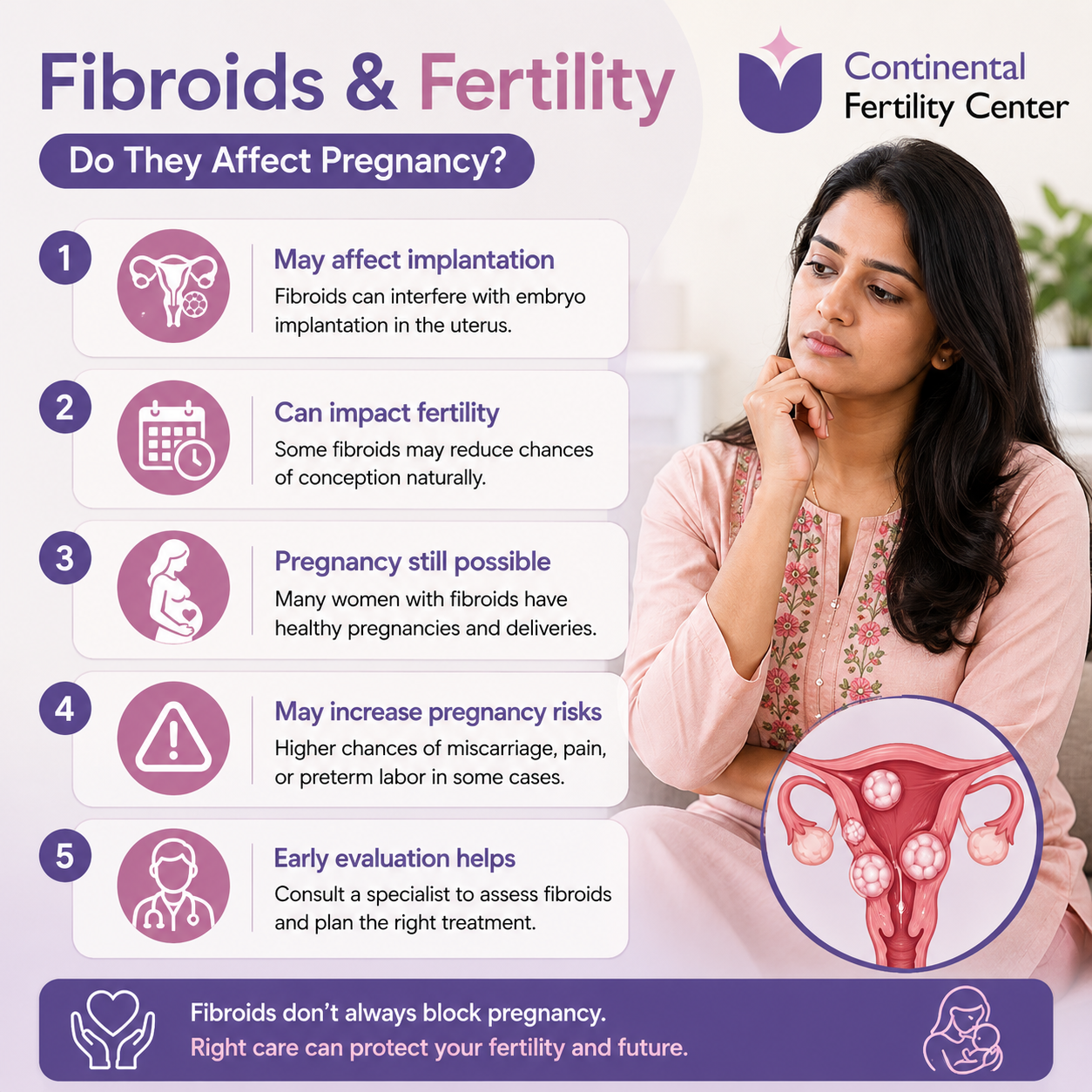
Fibroids can affect fertility by:
- Blocking the fallopian tubes
- Changing the shape of the uterus
- Preventing embryo implantation
- Reducing blood flow to the uterine lining
- Affecting sperm movement toward the egg
However, many women with fibroids and fertility concerns still conceive naturally or with fertility treatment.
Which Fibroids Are More Likely to Affect Pregnancy?
Different types of fibroids have different effects.
Submucosal Fibroids
These grow inside the uterine cavity and are the most likely to affect fertility and pregnancy because they interfere with embryo implantation.
Intramural Fibroids
These develop within the muscular wall of the uterus. Large intramural fibroids may reduce the chances of conception.
Subserosal Fibroids
These grow on the outside of the uterus and usually have little effect on fertility unless they become very large.
Understanding the type of uterine fibroids helps fertility specialists recommend the most suitable treatment.
Can You Get Pregnant with Fibroids?
Yes. Many women with fibroids and pregnancies experience successful pregnancies without complications.
Pregnancy is often possible when:
- Fibroids are small
- The uterine cavity is not affected
- The fallopian tubes remain open
- Ovulation occurs normally
- There are no additional fertility problems
If pregnancy does not occur after regular attempts, a fertility evaluation becomes important.
How Can Fibroids Affect Pregnancy?
Although many pregnancies progress normally, fibroids during pregnancy can sometimes increase certain risks.
Possible complications include:
- Pain caused by fibroid growth
- Bleeding during pregnancy
- Miscarriage
- Preterm labor
- Abnormal baby position
- Placental problems
- Increased chance of cesarean delivery
Regular monitoring by experienced obstetricians and fertility experts helps reduce these risks.
What Symptoms Should You Watch For?
Women with Fibroids and Pregnancy should seek medical advice if they experience the following:
- Severe pelvic pain
- Heavy bleeding
- Persistent abdominal pressure
- Difficulty getting pregnant
- Recurrent pregnancy loss
- Frequent urination with pelvic discomfort
Early diagnosis can improve fertility outcomes.
How Are Fibroids Diagnosed?
Doctors use advanced imaging techniques to identify uterine fibroids accurately.
Common diagnostic methods include:
- Pelvic examination
- Ultrasound scan
- Transvaginal ultrasound
- MRI scan
- Hysteroscopy
- Fertility assessment
Accurate diagnosis helps create an effective treatment plan.
Treatment Options for Fibroids and Fertility
Treatment depends on symptoms, age, fertility goals, and the type of fibroids.
Common treatment options include:
Observation
Small fibroids without symptoms may only require regular monitoring.
Medications
Certain medicines help control symptoms but may not permanently remove fibroids.
Myomectomy
This surgical procedure removes fibroids while preserving the uterus, making it one of the preferred options for women planning pregnancy.
Fertility Treatments
Women with persistent infertility may benefit from treatments such as ovulation induction, intrauterine insemination, or IVF after appropriate evaluation.
A fertility specialist will recommend the best approach based on individual needs.
Can Fibroids Be Prevented?
Although fibroids cannot always be prevented, healthy lifestyle habits may support overall reproductive health.
Helpful practices include:
- Maintain a healthy weight
- Eat a balanced diet rich in fruits and vegetables
- Exercise regularly
- Manage stress effectively
- Attend routine gynecological checkups
- Seek treatment for abnormal menstrual symptoms early
Regular health screenings help detect fibroids before they become problematic.
Why Choose Continental Fertility Center, Hyderabad?
Choosing the right fertility center can make a significant difference in your journey toward parenthood.
At Continental Fertility Center, Hyderabad, patients receive compassionate care supported by experienced fertility specialists, advanced reproductive technology, and personalized treatment plans. The center is backed by Continental Hospitals, one of the best hospitals in Hyderabad, known for delivering world-class healthcare with patient safety and clinical excellence.
Continental Hospitals is accredited by JCI and NABH, reflecting its commitment to international standards of quality, patient care, safety, and medical excellence. Our multidisciplinary team works closely with gynecologists, reproductive medicine specialists, radiologists, embryologists, and maternal care experts to provide comprehensive fertility solutions under one roof.
Whether you are trying to conceive naturally or require advanced fertility treatment, our team is dedicated to supporting you at every step of your journey.
When Should You Consult a Fertility Specialist?
You should consult a fertility specialist if:
- You have been trying to conceive without success.
- You have been diagnosed with uterine fibroids.
- You experience repeated miscarriages.
- Your menstrual periods are unusually heavy or painful.
- You have pelvic pain or pressure.
- You have concerns about fibroids and fertility before planning pregnancy.
Early consultation can improve your chances of achieving a healthy pregnancy.
Conclusion
Fibroids and pregnancy do not always prevent women from becoming mothers. While some fibroids have little or no impact, others can affect conception, implantation, and pregnancy outcomes. The good news is that modern fertility treatments and expert medical care have helped many women with fibroids and fertility concerns successfully achieve pregnancy.
If you have been diagnosed with uterine fibroids, have concerns about fibroids during pregnancy, or are wondering, "Do fibroids affect fertility?", do not ignore the symptoms. Consult the experienced fertility specialists in Hyderabad at Continental Fertility Center, Hyderabad, for a comprehensive fertility evaluation, accurate diagnosis, and a personalized treatment plan that helps you move confidently toward parenthood.
Related Blogs:
Frequently Asked Questions
Yes, fibroids can affect fertility in some women, depending on their size, number, and location. Fibroids growing inside the uterine cavity are more likely to interfere with conception than those on the outer surface of the uterus. They may block the fallopian tubes, change the shape of the uterus, or make it difficult for a fertilized egg to implant. However, many women with fibroids conceive naturally without any problems. The impact varies from person to person, and not every fibroid requires treatment. A proper evaluation by a fertility specialist helps determine whether fibroids are contributing to infertility. Imaging tests such as ultrasound or MRI can identify their exact location. Early diagnosis allows doctors to recommend the most suitable treatment. With timely care, many women with fibroids achieve successful pregnancies.
Many women with fibroids become pregnant naturally and deliver healthy babies. The chances depend on the size, type, and position of the fibroids. Small fibroids that do not distort the uterine cavity often have little or no effect on fertility. Larger fibroids or those growing inside the uterus may reduce the chances of conception. Your age, ovarian reserve, and overall reproductive health also influence pregnancy success. If pregnancy does not occur after several months of trying, a fertility evaluation is recommended. Doctors can determine whether fibroids are responsible for the difficulty. Treatment options are available when fibroids interfere with conception. Early consultation improves the chances of achieving a healthy pregnancy.
Submucosal fibroids, which grow inside the uterine cavity, have the greatest impact on fertility and pregnancy. These fibroids can interfere with embryo implantation and increase the risk of miscarriage. Large intramural fibroids may also affect pregnancy by changing the shape of the uterus. Subserosal fibroids, found on the outer surface of the uterus, usually have little effect on fertility. The size and number of fibroids are also important factors. Every woman's condition is different, so proper imaging is necessary. Ultrasound and MRI help identify the exact type and location of fibroids. Based on the findings, fertility specialists recommend the best treatment plan. Personalized care helps improve pregnancy outcomes.
Certain fibroids can increase the risk of miscarriage, especially those located inside the uterine cavity. These fibroids may reduce blood supply to the developing embryo or interfere with implantation. Large fibroids may also limit the space needed for normal fetal development. However, many women with fibroids complete healthy pregnancies without complications. The level of risk depends on the fibroid's size, location, and number. Regular prenatal care helps monitor the pregnancy closely. Your doctor may recommend additional scans if fibroids are present. Early detection allows timely management of potential complications. Following your specialist's advice improves the chances of a successful pregnancy. Individual risk should always be assessed by a fertility expert.
Not all fibroids need to be removed before pregnancy. Treatment depends on whether the fibroids are causing infertility, repeated miscarriages, heavy bleeding, or significant pain. Fibroids inside the uterine cavity are more commonly removed because they can interfere with implantation. Your fertility specialist will assess the fibroid's size, location, and symptoms before recommending surgery. In many cases, women with small, symptom-free fibroids can safely try to conceive without treatment. Surgical removal may improve pregnancy outcomes when fibroids significantly affect the uterus. Every treatment plan is individualized. The goal is to maximize fertility while minimizing unnecessary procedures. A detailed evaluation helps determine the best approach.
Yes, fibroids can grow during pregnancy because of increased estrogen and progesterone levels. Growth is usually more noticeable during the first trimester, although some fibroids remain unchanged or even shrink later. Enlarging fibroids may cause pelvic pain, abdominal discomfort, or pressure. Most women still have healthy pregnancies despite fibroid growth. Doctors monitor fibroids through routine ultrasound examinations. Treatment during pregnancy is generally conservative unless complications develop. Adequate rest, hydration, and pain management often help relieve symptoms. Close prenatal monitoring ensures the health of both mother and baby. Your obstetrician will guide you throughout the pregnancy.
Fibroids are commonly diagnosed using pelvic ultrasound, which provides detailed images of the uterus. In some cases, MRI is recommended to evaluate larger or multiple fibroids more accurately. Additional tests such as hysteroscopy or saline infusion sonography may be performed to examine the uterine cavity. These investigations help determine whether fibroids are affecting fertility. The results guide treatment planning based on the fibroid's size and location. Early diagnosis allows timely intervention before pregnancy. A complete fertility evaluation may also include hormone testing and ovarian reserve assessment. Identifying all contributing factors improves treatment success. Your fertility specialist will recommend the most appropriate investigations.
You should consult a fertility specialist if you have fibroids and have been trying to conceive without success, have experienced recurrent miscarriages, or suffer from heavy menstrual bleeding or pelvic pain. Women over 35 should seek evaluation after six months of unsuccessful attempts to conceive. Early consultation helps identify whether fibroids are affecting fertility. The specialist will perform a detailed assessment using imaging and fertility tests. Personalized treatment recommendations may include monitoring, medication, minimally invasive procedures, or surgery. Timely intervention can significantly improve the chances of pregnancy. Every fertility journey is unique, and expert guidance ensures the best possible outcome. Early diagnosis and appropriate care help support a healthy pregnancy.