
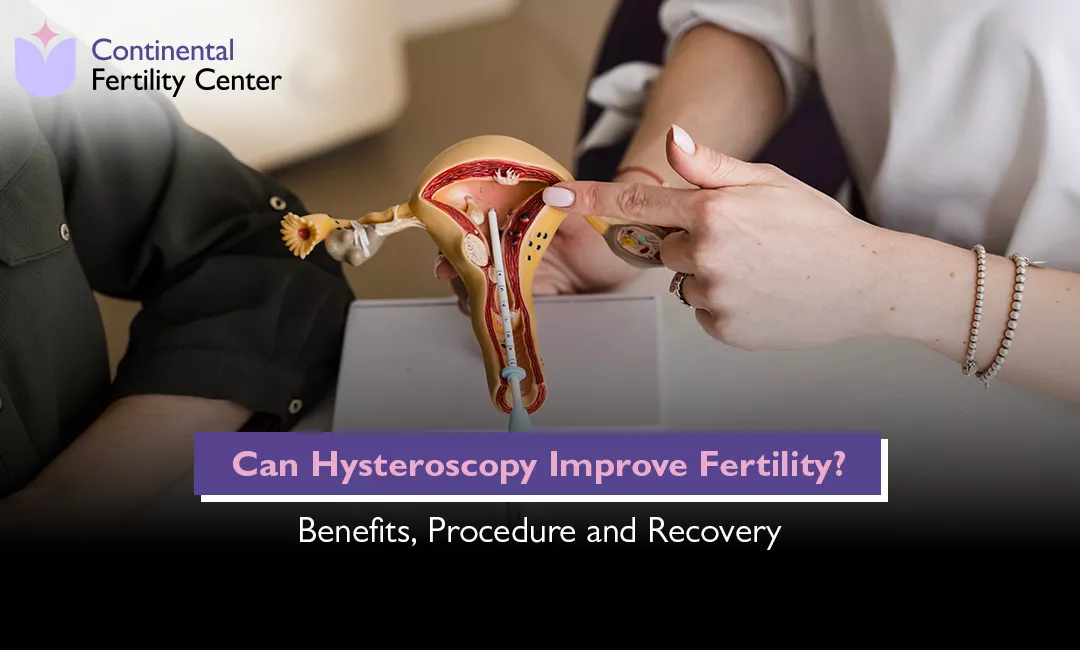
Can Hysteroscopy Improve Fertility? Benefits, Procedure and Recovery
For women experiencing difficulty getting pregnant, identifying problems inside the uterus can be an important step toward successful treatment. Hysteroscopy for fertility is a procedure that allows a fertility specialist to examine the inside of the uterus and identify conditions that may affect conception, implantation, or pregnancy.
Hysteroscopy uses a thin instrument with a camera, called a hysteroscope, which is gently passed through the vagina and cervix into the uterus. It helps doctors identify and sometimes treat conditions such as uterine polyps, adhesions, and certain fibroids. When these problems are affecting fertility, hysteroscopy may help improve the chances of pregnancy. However, its benefits depend on the underlying condition and individual fertility factors.
Can Hysteroscopy Improve Fertility?
Yes, hysteroscopy can improve fertility in selected women when a problem inside the uterus is contributing to difficulty conceiving. By identifying and treating certain abnormalities, the procedure may help create a healthier uterine environment for embryo implantation.
Hysteroscopy for infertility may be recommended for women with repeated pregnancy loss, abnormal uterine findings, unexplained bleeding, or previous unsuccessful IVF cycles. However, it does not treat every cause of infertility, such as blocked fallopian tubes or problems with egg quality.
What Are the Benefits of Hysteroscopy for Fertility?
The benefits of hysteroscopy depend on the condition being diagnosed or treated. Key benefits include:
- Identifying uterine abnormalities: Helps detect polyps, adhesions, and certain fibroids that may affect reproductive health.
- Supporting embryo implantation: Treating specific uterine abnormalities may improve the environment for implantation.
- Treating certain conditions: Doctors can remove selected polyps, divide adhesions, or treat suitable fibroids during operative hysteroscopy.
- Supporting IVF planning: Hysteroscopy before IVF may be useful when ultrasound or other tests suggest a uterine abnormality.
- Providing direct assessment: Allows the specialist to examine the uterine cavity rather than relying only on imaging.
Hysteroscopy does not guarantee pregnancy, and routine hysteroscopy is not necessary for every woman undergoing fertility treatment.
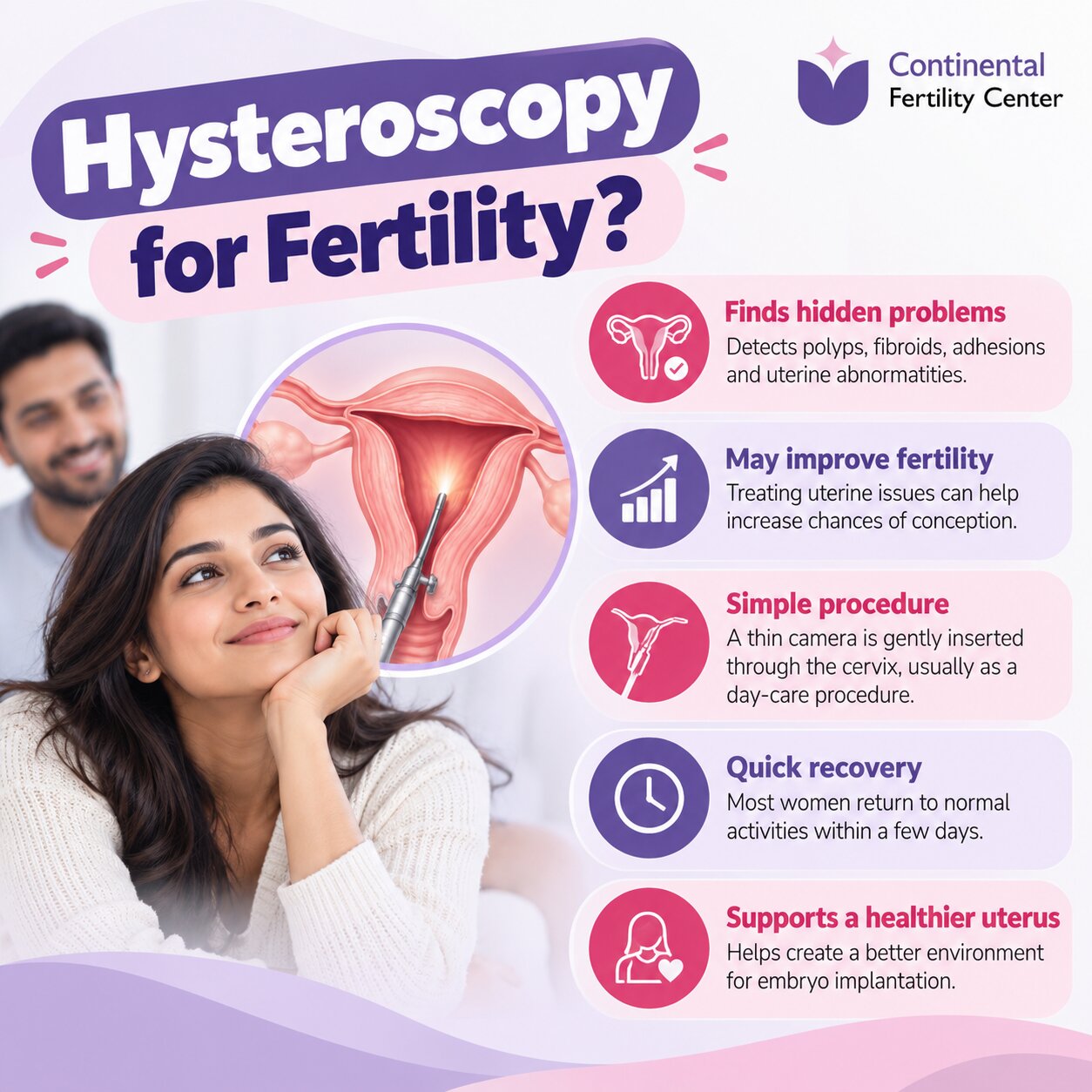
When Is Hysteroscopy Recommended Before IVF?
Hysteroscopy before IVF may be advised when initial investigations suggest a problem inside the uterus. A fertility specialist may recommend it in situations such as:
- Suspected uterine polyps or cavity-distorting fibroids
- Intrauterine adhesions or scar tissue
- Abnormal uterine bleeding
- Repeated implantation failure in selected cases
- Previous uterine procedures that may have affected the uterine cavity
The decision is based on medical history, ultrasound findings, previous treatment outcomes, and individual needs.
What Happens During a Hysteroscopy Procedure?
The hysteroscopy procedure usually involves the following steps:
- Preparation: The doctor reviews your medical history, symptoms, and test results.
- Insertion: A thin hysteroscope is gently passed through the vagina and cervix into the uterus.
- Examination: A sterile fluid may be used to expand the uterine cavity so the doctor can examine its lining.
- Treatment, if needed: Small instruments may be used to remove polyps or treat adhesions, depending on the findings.
- Recovery: You are monitored briefly before going home, depending on the procedure and anesthesia used.
Some diagnostic procedures can be performed without general anesthesia, while operative hysteroscopy may require additional pain relief or anesthesia.
What Is Recovery Like After Hysteroscopy?
Recovery depends on whether the procedure was diagnostic or involved treatment. Mild cramping and light vaginal bleeding or spotting may occur for a few days.
Helpful recovery tips include:
- Follow your doctor's instructions about activity and medication.
- Use sanitary pads if you experience light bleeding.
- Ask your doctor when you can resume sexual activity and exercise.
- Attend follow-up appointments to review findings and plan fertility treatment.
- Contact your doctor promptly if you develop heavy bleeding, fever, worsening abdominal pain, or foul-smelling vaginal discharge.
Why Choose Continental Fertility Center?
Choosing an experienced fertility team can help you understand your diagnosis and make informed treatment decisions. Continental Fertility Center offers fertility evaluation and personalized treatment planning based on each patient's reproductive health and medical history.
Continental Hospitals is accredited by NABH and NABL, reflecting established standards for healthcare quality, patient safety, and laboratory services. Patients can benefit from:
- Experienced fertility and reproductive medicine specialists
- Modern diagnostic facilities
- Individualized fertility investigations and treatment plans
- Support for IVF evaluation and preparation
- Multidisciplinary medical care and follow-up
The team can help determine whether hysteroscopy is appropriate and explain the potential benefits, risks, and alternatives.
When Should You Consult a Fertility Specialist?
If you have been trying to conceive without success, experienced repeated pregnancy loss, or had unsuccessful IVF cycles, consult a fertility specialist for a detailed evaluation. Hysteroscopy for fertility may be useful if a uterine abnormality is suspected, but the right treatment depends on the cause of your fertility concerns.
Consult our best fertility specialist in Hyderabad at Continental Fertility Center for personalized guidance on hysteroscopy, IVF planning, and other fertility treatment options.
Conclusion
Hysteroscopy can play an important role in fertility care by identifying and treating selected abnormalities inside the uterus. For women whose fertility is affected by polyps, adhesions, or certain fibroids, treatment may improve the chances of conception. However, outcomes vary, and hysteroscopy is not required for every patient.
A thorough fertility assessment can help determine whether hysteroscopy is appropriate for you and how it fits into your treatment plan. With expert guidance at Continental Fertility Center, you can take an informed step toward understanding your reproductive health and available options.
Frequently Asked Questions
Hysteroscopy can help improve fertility in women with certain uterine conditions. It allows a doctor to examine the inside of the uterus using a thin, lighted instrument. The procedure can identify problems that may affect implantation or pregnancy. These problems may include uterine polyps, adhesions, or certain fibroids. Some conditions can be treated during the same procedure. Removing a uterine abnormality may improve the uterine environment in selected patients. However, hysteroscopy does not improve fertility in every woman. Its benefits depend on the underlying reproductive problem. It may be recommended after abnormal imaging or repeated pregnancy loss. It can also help investigate selected cases of infertility. Hysteroscopy is not a guarantee of pregnancy. Other factors, including age, egg quality, sperm health, and ovulation, can affect fertility. A fertility specialist can determine whether the procedure is appropriate for you.
Hysteroscopy is performed to examine the inside of the uterus. It helps doctors identify abnormalities that may affect menstrual health or fertility. Common reasons include investigating unexplained abnormal uterine bleeding. It can also help detect uterine polyps and certain fibroids. Doctors may use it to identify scar tissue or adhesions inside the uterus. These adhesions can sometimes develop after surgery or infection. Hysteroscopy may be recommended when ultrasound findings need further evaluation. It can also help investigate selected cases of infertility. In some patients, it is used to assess the uterine cavity before fertility treatment. Certain abnormalities can be treated during the procedure. The doctor may collect a tissue sample if further testing is necessary. Not everyone experiencing infertility needs hysteroscopy. The decision depends on symptoms, medical history, and previous test results. Your doctor will explain the expected benefits before recommending it.
The level of discomfort during hysteroscopy varies from person to person. Some women experience mild cramping similar to menstrual pain. Others may feel pressure or temporary discomfort during the procedure. The experience depends on the type of hysteroscopy and the treatment performed. Diagnostic hysteroscopy may be performed without general anaesthesia in selected patients. Pain relief or local anaesthesia may be offered when appropriate. Operative hysteroscopy may require sedation or general anaesthesia. Your doctor will discuss suitable options before the procedure. The examination itself often takes a relatively short time. Mild cramps or light spotting may occur afterward. These symptoms usually improve within a few days. Severe pain is not expected and should be assessed. Contact your doctor if you develop fever, heavy bleeding, or worsening abdominal pain. Sharing concerns about pain beforehand can help your medical team plan your care.
Hysteroscopy is performed using a thin instrument called a hysteroscope. The instrument has a light and camera to view the inside of the uterus. The doctor gently passes it through the vagina and cervix. No abdominal incision is usually required. A sterile fluid may be used to expand the uterine cavity for better visibility. The doctor examines the uterine lining and looks for abnormalities. If necessary, small instruments can be used to treat certain conditions. These may include removing polyps or dividing adhesions. The type of anaesthesia depends on the procedure and individual needs. Diagnostic hysteroscopy may take only a few minutes. Operative procedures can take longer depending on the treatment required. Most patients can return home the same day. Your doctor will provide instructions for recovery and follow-up. The procedure plan depends on your medical history and examination findings.
Recovery after hysteroscopy depends on whether it is diagnostic or operative. Many women return to normal activities within a day or two after diagnostic hysteroscopy. Recovery may take longer if treatment is performed during the procedure. Mild cramping and light vaginal spotting are common afterward. These symptoms usually settle within a few days. Rest when needed and follow your doctor's instructions. You may be advised to avoid strenuous exercise for a short period. Your doctor may also recommend temporarily avoiding intercourse or inserting anything into the vagina. The recommended duration depends on the procedure and your recovery. Follow any instructions about pain relief and wound care. Contact your doctor if bleeding becomes heavy or pain worsens. Fever or foul-smelling vaginal discharge also requires medical assessment. Most uncomplicated procedures have a relatively quick recovery. Attend follow-up appointments to discuss findings and further fertility planning.
Hysteroscopy may help selected patients preparing for IVF. It allows the doctor to examine the uterine cavity for abnormalities. Polyps, adhesions, and certain fibroids may affect the uterine environment. Treating a relevant abnormality may be beneficial in some cases. However, hysteroscopy is not necessary for every person undergoing IVF. Its value depends on symptoms, imaging results, and medical history. Research has not established that routine hysteroscopy improves IVF outcomes for all patients with normal uterine assessments. A fertility specialist may recommend it when a uterine problem is suspected. The procedure can help clarify findings from ultrasound or other investigations. It does not improve egg quality or sperm quality. IVF success also depends on age, embryo quality, and other reproductive factors. Treatment should be based on individual clinical needs. Discuss the potential benefits and limitations before proceeding. Your specialist can help determine whether hysteroscopy is appropriate before embryo transfer.
Hysteroscopy is generally considered a safe procedure when performed by a trained medical professional. However, complications can occur in some cases. Mild cramping and light bleeding are common temporary effects. Infection is an uncommon potential complication. Rarely, the instrument may cause injury to the cervix or uterus. Fluid-related complications can occur during some operative procedures. The overall risk depends on the complexity of the procedure and your health. Anaesthesia may also carry risks when it is required. Your doctor will review your medical history before treatment. Inform the medical team about allergies, medications, and existing health conditions. Follow all preparation and recovery instructions carefully. Seek medical advice if you develop fever, severe pain, heavy bleeding, or unusual discharge. Understanding possible complications helps you make an informed decision. Your doctor can explain the risks relevant to your individual situation.
The timing of conception after hysteroscopy depends on the procedure performed. Some women can try to conceive soon after an uncomplicated diagnostic hysteroscopy. If polyps, fibroids, or adhesions are treated, recovery may take longer. Your doctor will advise when it is safe to resume trying. The recommendation depends on the extent of treatment and healing. Light spotting or mild cramps may occur for a few days. Wait until your symptoms settle and follow your doctor's instructions. Some patients may need a follow-up scan or examination. If you are undergoing IVF, your fertility specialist will plan the next steps. The timing of embryo transfer depends on your uterine recovery and treatment plan. Hysteroscopy does not guarantee pregnancy after the procedure. Fertility outcomes also depend on age, ovulation, sperm health, and other factors. Avoid rushing into conception without appropriate medical guidance. A personalized plan can help support safe and timely fertility treatment.