
Can IVF Pregnancy Have Different Symptoms from Natural Pregnancy?
Pregnancy is an exciting journey, especially for couples who have undergone fertility treatment. However, many women wonder whether an IVF pregnancy feels different from a naturally conceived pregnancy. IVF pregnancy symptoms can sometimes feel different because of fertility medications, hormonal changes, and the embryo transfer process. However, the actual pregnancy symptoms are generally similar in both cases.
Understanding the difference between early IVF pregnancy symptoms and natural pregnancy symptoms can help women feel more confident during the early stages of pregnancy. Some women experience nausea, breast tenderness, fatigue, and bloating, while others may have very few symptoms. Every pregnancy is different, and the presence or absence of symptoms does not determine whether the pregnancy is progressing normally.
Are IVF Pregnancy Symptoms Different from Natural Pregnancy Symptoms?
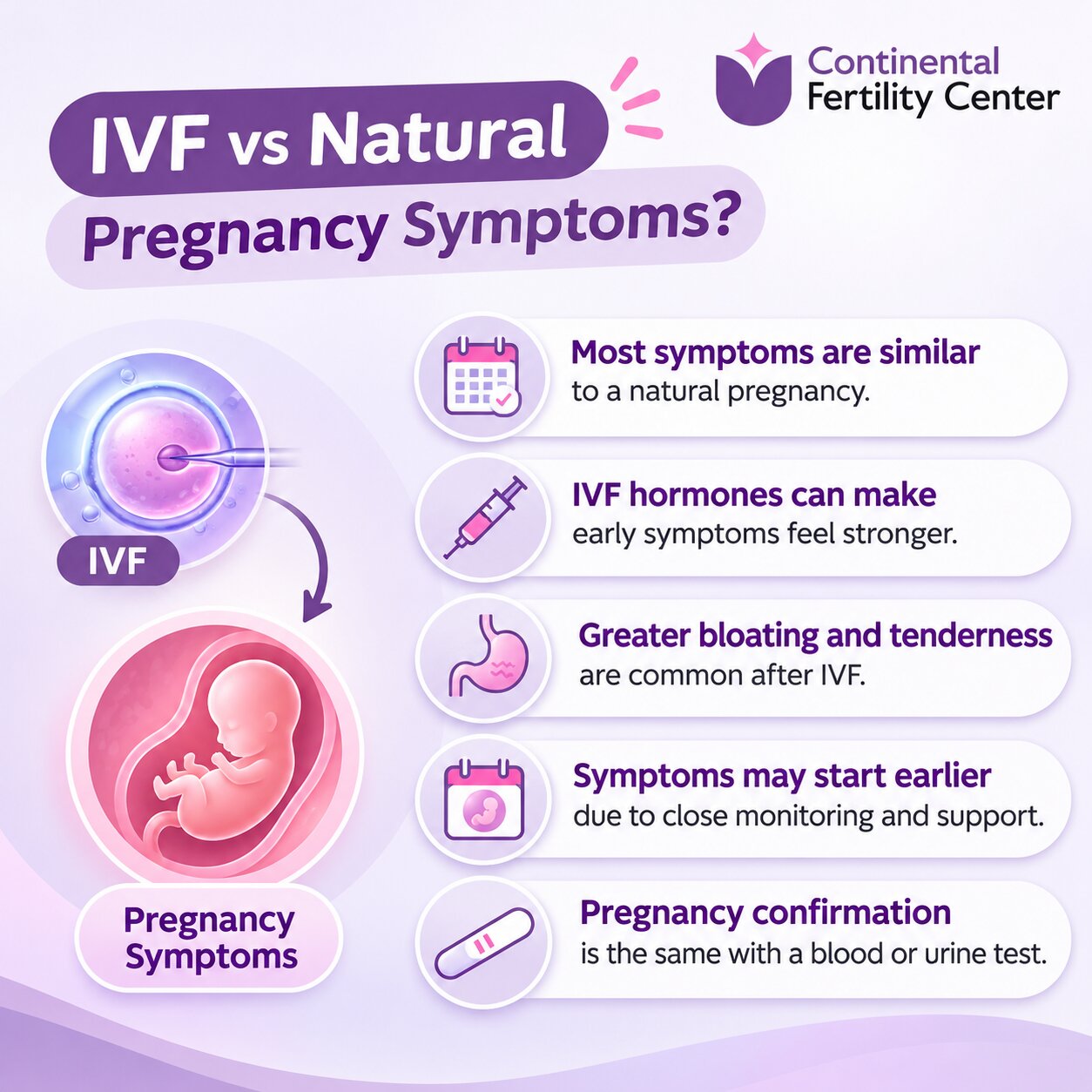
IVF pregnancy symptoms are generally similar to natural pregnancy symptoms because both involve hormonal changes that support the development of the baby. However, women undergoing IVF may notice additional symptoms due to fertility medications, progesterone supplements, and other hormonal treatments.
Common symptoms include:
- Breast tenderness and sensitivity
- Morning sickness or nausea
- Fatigue and increased sleepiness
- Mild abdominal cramps
- Bloating and constipation
- Frequent urination
- Mood changes
- Food cravings or sensitivity to smells
The intensity of these symptoms varies from person to person. Some women experience several symptoms, while others feel completely normal.
What Are the Early IVF Pregnancy Symptoms?
Early IVF pregnancy symptoms may appear after embryo transfer, although not every woman experiences them. Some symptoms are related to pregnancy hormones, while others may be caused by medications used during IVF treatment.
Common early pregnancy signs include:
- Mild spotting or light bleeding
- Breast tenderness
- Mild pelvic discomfort
- Tiredness and fatigue
- Nausea or food aversions
- Increased vaginal discharge
- Bloating
It is important to remember that these symptoms alone cannot confirm pregnancy. A blood test measuring beta hCG is the most reliable way to confirm an early pregnancy after IVF.
What Are the Symptoms After Embryo Transfer?
After embryo transfer, women may notice physical changes as their bodies respond to hormonal medications and the treatment process.
Some commonly reported symptoms after embryo transfer include:
- Mild cramping: Light abdominal cramps may occur due to hormonal changes or the embryo transfer procedure.
- Spotting: A small amount of spotting may occur, but it does not always indicate implantation.
- Breast tenderness: Progesterone supplements can cause breast sensitivity.
- Bloating: Hormonal medications may contribute to abdominal bloating.
- Fatigue: Changes in hormone levels may increase tiredness.
Not experiencing these symptoms does not mean that the embryo transfer has failed.
Why Do IVF Pregnancy Symptoms Occur?
Pregnancy symptoms after IVF are mainly associated with hormonal changes. During fertility treatment, medications such as progesterone and estrogen may be prescribed to support the uterine lining and early pregnancy.
The pregnancy hormone hCG also plays an important role in causing symptoms such as nausea, breast tenderness, and fatigue.
Some women may experience stronger symptoms because of medication support, while others may have fewer noticeable changes.
Can IVF Pregnancy Have No Symptoms?
Yes. An IVF pregnancy can progress normally even when a woman does not experience noticeable pregnancy symptoms.
Some women have nausea, breast tenderness, and fatigue, while others experience no significant physical changes during the early weeks.
Remember these important points:
- Absence of nausea does not indicate pregnancy failure.
- Breast tenderness may come and go.
- Mild cramping does not always indicate a problem.
- Symptoms can change from one week to another.
- Ultrasound examinations and blood tests are more reliable than symptoms.
If you experience severe abdominal pain, heavy bleeding, dizziness, or fainting, seek immediate medical attention.
How Can You Take Care of Yourself During an IVF Pregnancy?
Proper IVF pregnancy care helps support maternal health and the developing baby. Follow your fertility specialist's instructions and attend all recommended appointments.
Some helpful practices include:
- Eat a balanced diet with fresh fruits and vegetables.
- Take prescribed medications and supplements regularly.
- Stay hydrated throughout the day.
- Get adequate sleep and rest.
- Avoid smoking and alcohol.
- Attend scheduled blood tests and ultrasound examinations.
- Avoid strenuous activities if advised by your doctor.
- Discuss any unusual symptoms with your fertility specialist.
Why Choose Continental Fertility Center?
Choosing the right fertility center is important for a comfortable and well-supported pregnancy journey. Continental Fertility Center, Hyderabad, provides fertility evaluation, IVF treatment, and pregnancy care with a patient-focused approach.
Continental Hospitals is accredited by JCI and NABH, reflecting its commitment to international healthcare standards, patient safety, and quality clinical practices. The hospital also has QAI accreditation, supporting its focus on healthcare quality.
Key reasons to choose Continental Fertility Center include:
- Experienced fertility and reproductive medicine specialists.
- Advanced fertility assessment and diagnostic facilities.
- Personalized IVF treatment planning.
- Support throughout the IVF and early pregnancy journey.
- Multidisciplinary medical care.
- Patient-focused counselling and follow-up.
- Quality-focused clinical practices and safety standards.
Conclusion
IVF pregnancy symptoms can be similar to those experienced during natural pregnancy, although fertility medications may influence how and when certain symptoms appear. Nausea, fatigue, breast tenderness, bloating, and mild cramping are commonly reported, but every woman's experience is different.
Remember that pregnancy symptoms are not a reliable way to measure IVF success. Blood tests and ultrasound examinations provide a clearer picture of pregnancy progression.
If you are experiencing unusual symptoms during pregnancy after IVF or need guidance about your pregnancy, consult our best fertility specialist in Hyderabad at Continental Fertility Center, Hyderabad. Early medical guidance and regular pregnancy monitoring can help support a healthier pregnancy journey.
Frequently Asked Questions
IVF pregnancy symptoms are generally similar to those of natural pregnancy. Both pregnancies involve hormonal changes that support the baby's development. Women may experience nausea, breast tenderness, fatigue and frequent urination. Some women notice mild abdominal cramps or bloating. IVF medications can sometimes cause additional symptoms. Progesterone supplements may lead to breast tenderness, constipation or tiredness. These symptoms can sometimes resemble early pregnancy signs. However, not every woman experiences the same symptoms. Some IVF pregnancies may have very few noticeable symptoms. Others may experience several early pregnancy changes. The presence or absence of symptoms does not confirm pregnancy. A blood beta hCG test is used to confirm pregnancy after IVF. An ultrasound is then performed at the appropriate time to assess pregnancy development.
Some women may experience more noticeable symptoms during an IVF pregnancy. This can happen because of fertility medications used during treatment. Progesterone and estrogen supplements can contribute to physical changes. These medications may cause bloating, breast tenderness and mood changes. Ovarian stimulation medicines can also cause temporary discomfort. However, these symptoms do not necessarily indicate a successful pregnancy. Natural pregnancies can also involve similar hormonal changes. Every woman's response to pregnancy hormones is different. Some women feel tired or nauseated during the early weeks. Others may feel completely normal during the same period. The number of symptoms does not determine pregnancy health. A positive beta hCG test helps confirm pregnancy. Regular medical monitoring is important after IVF treatment. Consult your fertility specialist if symptoms become severe or unusual.
Nausea can occur during early pregnancy after IVF treatment. It is commonly associated with changing pregnancy hormone levels. Some women experience nausea in the morning. Others may feel sick throughout the day. Certain smells or foods can trigger discomfort. Fertility medications may also contribute to digestive symptoms. However, not every woman experiences nausea after IVF. Some women may have a healthy pregnancy without morning sickness. Eating small and frequent meals may help manage mild nausea. Drinking enough water is also important. Avoid foods or smells that trigger discomfort. Persistent vomiting or difficulty keeping fluids down requires medical attention. Do not stop prescribed IVF medications without consulting your doctor. Your fertility specialist can recommend suitable ways to manage pregnancy-related nausea.
Breast tenderness can occur during an IVF pregnancy. It is mainly associated with changes in estrogen and progesterone levels. These hormones prepare the body to support pregnancy. IVF patients may also receive progesterone supplements after embryo transfer. These medications can increase breast sensitivity. Some women experience swelling or a feeling of heaviness. Others may notice mild nipple sensitivity. Similar changes can occur during natural pregnancy. The intensity of breast tenderness varies between individuals. Some women experience discomfort for several weeks. Others notice that the tenderness gradually reduces. Breast tenderness alone cannot confirm a successful IVF cycle. A pregnancy blood test is needed to check for pregnancy. Always discuss unusual breast pain or other concerns with your doctor.
Mild abdominal cramps can occur after an IVF embryo transfer. Some women experience sensations similar to menstrual cramps. These may be associated with hormonal changes or fertility medications. The embryo transfer procedure can sometimes cause temporary mild discomfort. Progesterone treatment may also contribute to bloating and abdominal sensations. Mild cramps do not necessarily indicate implantation. They also do not mean that the IVF treatment has failed. Similar cramping can occur during early natural pregnancy. Every woman's experience is different. Rest and follow your fertility specialist's instructions. Avoid taking pain medication without medical advice. Severe abdominal pain should never be ignored. Heavy bleeding, dizziness or fainting also require urgent medical attention. Contact your fertility specialist if cramps become persistent or uncomfortable.
Yes, an IVF pregnancy can occur without noticeable early symptoms. Some women do not experience nausea, breast tenderness or fatigue. This does not automatically mean that the pregnancy is unsuccessful. Pregnancy symptoms vary significantly from one woman to another. Hormone levels and individual sensitivity influence these experiences. Some women develop symptoms only after a few weeks. Others may experience very mild changes throughout early pregnancy. IVF medications can also affect how symptoms are experienced. The absence of morning sickness does not indicate a problem. Similarly, experiencing many symptoms does not guarantee a healthy pregnancy. A beta hCG blood test helps confirm pregnancy after embryo transfer. Follow-up ultrasound scans help assess pregnancy development. Continue prescribed medications unless your doctor advises otherwise. Speak with your fertility specialist if you have concerns about your symptoms.
IVF pregnancy symptoms can begin at different times for different women. Some women notice changes during the early weeks of pregnancy. Others may not experience symptoms until later. Breast tenderness and fatigue are among the commonly reported early symptoms. Nausea may develop as pregnancy hormone levels change. However, progesterone supplements can cause similar symptoms even before pregnancy is confirmed. This makes it difficult to identify pregnancy through symptoms alone. The timing of symptoms may also depend on the embryo transfer stage. A blood beta hCG test is generally scheduled by the fertility clinic after embryo transfer. This test helps confirm whether pregnancy has occurred. An ultrasound is performed later to assess the pregnancy. Do not rely on home pregnancy symptoms to judge IVF success. Follow your clinic's testing schedule. Contact your doctor if you experience unusual pain or bleeding.
An IVF pregnancy is confirmed through a blood beta hCG test. This test measures the pregnancy hormone in the blood. Your fertility specialist will recommend the appropriate testing date. Testing too early may produce unclear results. A positive beta hCG result generally indicates pregnancy. Your doctor may recommend another blood test to monitor hormone levels. The change in beta hCG levels provides additional information. However, hormone levels alone cannot confirm a healthy pregnancy. An ultrasound scan is performed at the appropriate stage. It helps identify the pregnancy location and assess early development. Your doctor may also check for a fetal heartbeat during a later scan. Continue taking prescribed fertility medications as advised. Attend all scheduled follow-up appointments. Early medical monitoring helps support appropriate care throughout an IVF pregnancy.