
Diabetes and Fertility: How High Blood Sugar Affects Men and Women
Diabetes and fertility are closely connected because high blood sugar can affect reproductive health in both men and women. Poorly controlled diabetes may interfere with hormone balance, sperm quality, ovulation, and the ability to achieve a healthy pregnancy. Understanding these effects can help couples take the right steps before planning a family.
The good news is that managing blood sugar levels, maintaining a healthy lifestyle, and seeking timely medical advice can support reproductive health. At Continental Fertility Center, Hyderabad, couples can receive personalized fertility evaluation and guidance for diabetes and pregnancy planning.
How Does High Blood Sugar Affect Fertility?
High blood sugar can damage blood vessels and nerves and may affect hormone function. Over time, these changes can interfere with the reproductive system. The impact depends on how well diabetes is controlled, how long a person has had the condition, and other health factors.
Diabetes and fertility concerns may develop in both men and women, making early assessment important for couples trying to conceive.
How Does Diabetes Affect Male Fertility?
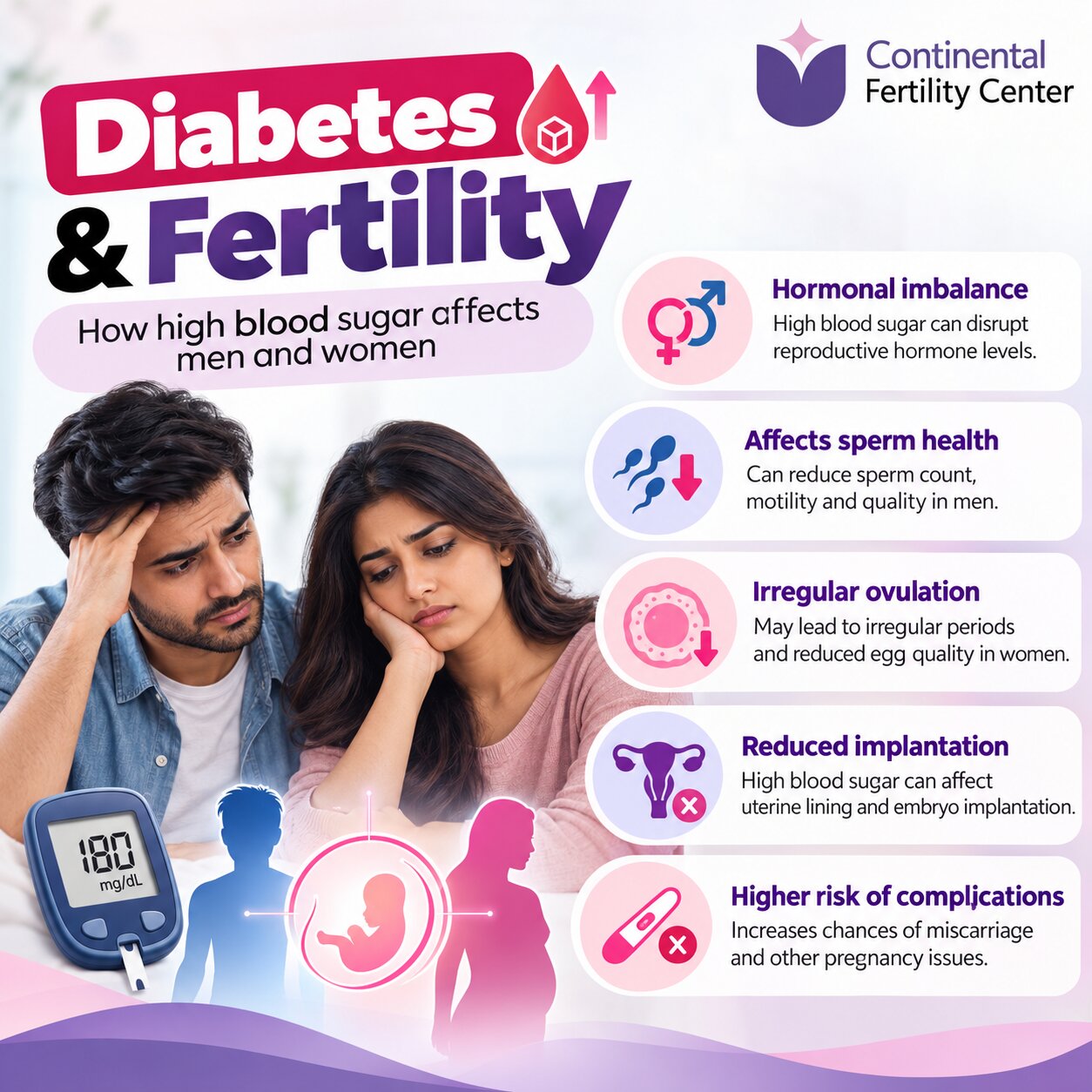
Diabetes and male infertility are linked to several factors that may affect sperm health and sexual function. Poorly controlled blood sugar can contribute to hormonal changes, nerve damage, and reduced blood flow.
Possible effects include:
- Reduced sperm quality: Diabetes may affect sperm movement, structure, and DNA integrity.
- Erectile dysfunction: Blood vessel and nerve damage may make it difficult to achieve or maintain an erection.
- Ejaculation problems: Some men may experience retrograde ejaculation, where semen enters the bladder instead of leaving the body normally.
- Hormonal changes: Diabetes may be associated with lower testosterone levels in some men.
Men experiencing these concerns should consult a specialist for appropriate testing and treatment.
How Does Diabetes Affect Female Fertility?
Diabetes and female infertility may be associated with hormonal imbalance, irregular menstrual cycles, and conditions that affect ovulation. Insulin resistance, particularly in women with polycystic ovary syndrome (PCOS), can also make conception more difficult.
Potential concerns include the following:
- Irregular periods: Hormonal changes can affect menstrual regularity.
- Ovulation problems: Irregular or absent ovulation may reduce the chances of conception.
- PCOS: Insulin resistance can worsen hormonal imbalances associated with PCOS.
- Pregnancy complications: Poorly controlled blood sugar before and during pregnancy can increase the risk of miscarriage, birth defects, and other complications.
Having diabetes does not mean a woman cannot conceive. Appropriate medical care and blood sugar management can improve the chances of a healthier pregnancy.
Can Managing Diabetes Improve Fertility?
Yes, managing diabetes can support reproductive health and improve readiness for pregnancy. Although blood sugar control cannot guarantee conception, it can help reduce complications associated with poorly controlled diabetes.
Helpful steps include:
- Monitoring blood glucose as advised by your doctor.
- Following a balanced diet with appropriate portions of whole grains, vegetables, fruits, and protein.
- Exercising regularly according to your health needs.
- Maintaining a healthy weight.
- Avoiding smoking and limiting alcohol.
- Taking prescribed medications and attending regular medical reviews.
- Do not stop or change diabetes medication without consulting your doctor, especially when planning pregnancy.
What Should Couples Know About Diabetes and Pregnancy Planning?
Diabetes and pregnancy planning should begin before conception. Both partners should discuss their medical history, medications, and reproductive health with their healthcare providers.
Women with diabetes should work with their doctor to achieve safe blood sugar control before pregnancy. A fertility specialist may recommend hormone tests, ovulation assessment, semen analysis, or other investigations depending on the couple's needs.
Why Choose Continental Fertility Center?
Continental Fertility Center in Hyderabad offers personalized fertility assessment and treatment planning for individuals and couples. Its approach focuses on understanding the underlying causes of fertility difficulties and providing guidance based on individual medical needs.
Continental Hospitals holds JCI and NABH accreditations, reflecting its commitment to established healthcare quality and patient safety standards. The hospital also has diagnostic and multidisciplinary medical services to support coordinated care.
Patients can benefit from individualized fertility evaluation, specialist consultations, appropriate diagnostic testing, and guidance for managing medical conditions that may affect conception.
When Should You Consult a Fertility Specialist?
If you have diabetes and are planning a pregnancy, or if you have been trying to conceive without success, men experiencing erectile or ejaculation problems and women with irregular periods should also seek medical evaluation.
At Continental Fertility Center, Hyderabad, our specialists can help assess how diabetes may be affecting your reproductive health and guide you towards an appropriate treatment plan.
Conclusion
Diabetes and fertility are connected, but diabetes does not automatically mean infertility. High blood sugar can affect sperm quality, ovulation, hormones, and pregnancy outcomes. With early evaluation, effective blood sugar management, and personalized medical guidance, many couples with diabetes can work towards a healthy pregnancy.
If you are concerned about high blood sugar and fertility, consult our best fertility specialist in Hyderabad at Continental Fertility Center to discuss your options and plan your next steps.
Frequently Asked Questions
Yes, diabetes can affect fertility in both men and women. Persistently high blood sugar may interfere with several reproductive functions. In women, diabetes may contribute to menstrual irregularities and hormonal changes. Poorly controlled diabetes can also increase the risk of pregnancy complications. In men, diabetes may affect sperm quality and sexual function. Some men experience erectile dysfunction or ejaculation problems. Insulin resistance may also be associated with conditions such as polycystic ovary syndrome. Fertility outcomes depend on overall health and blood glucose control. Diabetes does not mean that a person cannot conceive. Good diabetes management can support reproductive and general health. Medical evaluation can help identify other factors affecting fertility. Consult a fertility specialist if you are planning a pregnancy or experiencing difficulty conceiving.
Diabetes can affect female reproductive health, particularly when blood sugar remains poorly controlled. Hormonal changes may contribute to irregular menstrual cycles. Insulin resistance is commonly associated with polycystic ovary syndrome, which can affect ovulation. Irregular or absent ovulation can make conception more difficult. Diabetes may also coexist with thyroid disorders or other conditions that affect fertility. High blood sugar around conception can increase the risk of pregnancy complications. However, diabetes does not automatically cause infertility. Many women with diabetes conceive and have healthy pregnancies with appropriate care. Monitoring blood glucose is important before trying to conceive. Your doctor may review medications and assess other health conditions. A fertility evaluation can help identify the cause of irregular periods or delayed conception. Seek guidance from your diabetes care team and fertility specialist when planning pregnancy.
Yes, diabetes may affect male reproductive health in several ways. Persistently high blood sugar can damage nerves and blood vessels over time. This damage may contribute to erectile dysfunction. Some men with diabetes experience problems with ejaculation. Diabetes has also been associated with changes in sperm quality and movement. Oxidative stress may contribute to reproductive cell damage. Hormonal problems can sometimes affect sexual function and sperm production. The impact varies depending on diabetes control and individual health. Diabetes does not mean that a man is infertile. Managing blood glucose can help reduce the risk of long-term complications. A semen analysis may be recommended when fertility concerns arise. Consult a urologist or fertility specialist for appropriate testing and treatment.
Persistently high blood sugar and insulin resistance may affect reproductive hormone balance. These changes can interfere with normal ovulation in some women. Insulin resistance is frequently associated with polycystic ovary syndrome. PCOS may cause irregular periods or prevent the release of an egg. Without regular ovulation, predicting fertile days can become more difficult. Diabetes can also coexist with other hormonal conditions that affect menstrual cycles. However, high blood sugar does not always cause ovulation problems. Some women with diabetes ovulate normally and conceive naturally. Blood glucose management is important when planning pregnancy. Your doctor may assess menstrual patterns and reproductive hormones. Additional investigations may be needed to identify the cause of irregular ovulation. Consult a fertility specialist if your periods are irregular or conception is taking longer than expected.
Diabetes may be associated with changes in sperm quality in some men. Persistently high blood sugar can increase oxidative stress in the body. Oxidative stress may affect sperm cells and their function. Some studies have reported changes in sperm movement, concentration, or DNA integrity among men with diabetes. The findings vary, and not every man with diabetes experiences these problems. Other factors, including smoking, obesity, and hormonal disorders, can also affect sperm health. Good blood glucose management supports overall reproductive health. A balanced diet and regular physical activity may help improve metabolic health. Avoid smoking and excessive alcohol consumption when planning a pregnancy. A semen analysis can assess sperm concentration, movement, and shape. Further testing may be recommended depending on the results. Consult a fertility specialist if you have concerns about sperm quality or conception.
Yes, people with diabetes may be able to undergo in vitro fertilization. Eligibility depends on overall health, diabetes control, and individual fertility factors. Before treatment, the fertility team may review blood glucose levels and diabetes-related complications. Good glucose management is important before conception and throughout pregnancy. Poorly controlled diabetes can increase pregnancy-related risks. IVF medicines and monitoring requirements depend on the individual treatment plan. Diabetes medications may need review before fertility treatment or pregnancy. Never stop or change prescribed medicines without medical advice. The fertility specialist may coordinate care with an endocrinologist or diabetes physician. Other factors, such as age, ovarian reserve, and sperm health, also influence IVF planning. Diabetes does not guarantee IVF failure or prevent successful treatment. Discuss your medical history with your fertility team before starting IVF.
Diabetes can increase certain risks during pregnancy, especially when blood sugar is poorly controlled. High glucose levels around conception may increase the risk of birth defects. Diabetes can also increase the risk of miscarriage and pregnancy complications. During pregnancy, poorly controlled blood sugar may contribute to excessive fetal growth. This can increase the likelihood of delivery complications. Mothers may also face a higher risk of high blood pressure and other health problems. Babies may experience low blood sugar after birth. These risks can often be reduced with careful medical management. Planning pregnancy and reviewing medications beforehand are important steps. Your doctor may recommend regular glucose monitoring and additional prenatal assessments. Follow a personalized nutrition, activity, and medication plan from your healthcare team. Consult your diabetes specialist and obstetrician before trying to conceive.
Managing blood sugar is an important step when planning a pregnancy with diabetes. Follow your healthcare professional's recommended glucose targets. Eat a balanced diet with vegetables, whole grains, healthy fats, and appropriate protein. Engage in regular physical activity suited to your health and fitness level. Maintain a healthy weight where possible. Avoid smoking and limit or avoid alcohol when planning pregnancy. Get adequate sleep and manage stress through healthy routines. Take prescribed medicines as directed and review them before conception. Women should discuss preconception care and folic acid supplementation with their doctor. Men may benefit from fertility testing if conception is delayed. A fertility specialist can assess ovulation, sperm health, and other possible causes. Coordinated care with a diabetes specialist can support safer pregnancy planning.