
Donor Egg IVF Treatment in Hyderabad: Procedure, Cost and Success Factors
Donor Egg IVF Treatment in Hyderabad is an assisted reproductive treatment that helps individuals and couples who may have difficulty achieving pregnancy using their own eggs. In this treatment, eggs from a suitable egg donor are fertilized with sperm in a laboratory to create embryos. A selected embryo is then transferred into the recipient's uterus with the aim of achieving pregnancy.
At Continental Fertility Center, Hyderabad, patients can explore donor egg IVF as a potential fertility treatment after a detailed medical evaluation. The treatment plan is designed according to the recipient's health, fertility history, uterine condition, and individual reproductive needs. Understanding the procedure, cost factors, and success factors can help patients make informed decisions about their fertility journey.
Who May Need IVF with Donor Eggs?
Egg Donation IVF may be considered for individuals who have certain fertility challenges that affect egg quality or egg availability. A fertility specialist will assess the underlying cause before recommending donor eggs.
Donor egg treatment may be considered in the following situations:
- Reduced ovarian reserve or premature ovarian insufficiency.
- Advanced maternal age with reduced egg quality.
- Repeated IVF attempts with poor embryo development.
- Certain genetic conditions that may be passed through the patient's own eggs.
- Medical treatments that have affected ovarian function.
- Situations where using donor eggs may offer a suitable alternative to other fertility options.
The decision to use donor eggs is personal and should be made after discussing the benefits, limitations, and available alternatives with a fertility specialist.
How Does Donor Egg IVF Treatment Work?
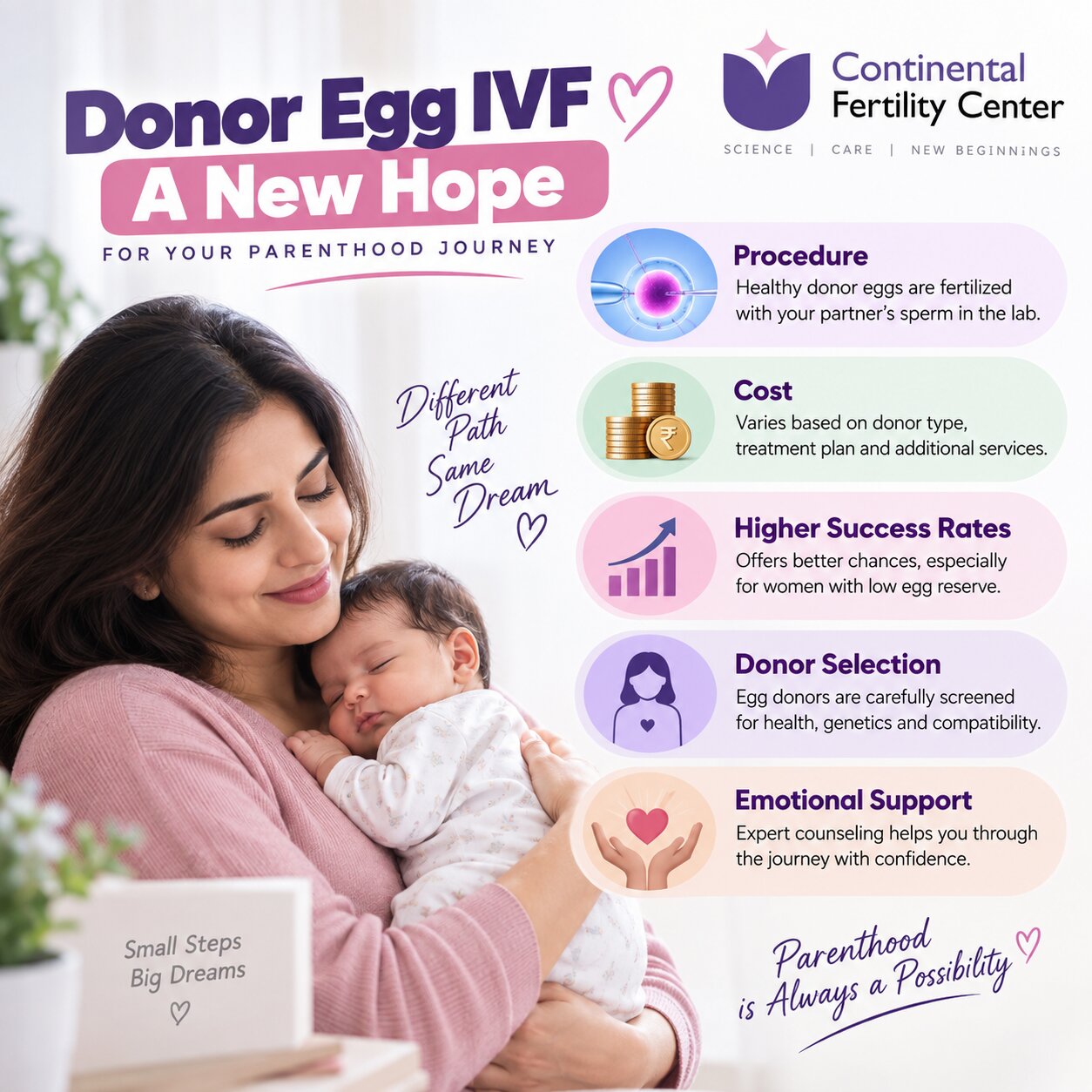
The Donor Egg IVF Treatment in Hyderabad process involves several important steps. The exact treatment plan may vary depending on the donor, recipient, and medical requirements.
1. Fertility Evaluation and Counselling
The recipient undergoes a detailed fertility assessment. This may include blood tests, ultrasound scans, uterine evaluation, and other investigations. Counselling helps patients understand the treatment process, emotional considerations, and relevant legal requirements.
2. Donor Selection and Screening
A suitable egg donor is identified through an appropriate donor program. Donor screening may include medical history, infectious disease testing, genetic assessment where indicated, and other required evaluations. Donor selection and screening are conducted according to applicable regulations and clinical protocols.
3. Preparing the Recipient's Uterus
The recipient may receive hormonal medication to prepare the uterine lining for embryo transfer. The fertility specialist monitors the endometrium and adjusts treatment according to the patient's response.
4. Egg Retrieval and Fertilization
Eggs are collected from the donor through a medical procedure. The eggs are then fertilized with sperm from the recipient's partner or an appropriate sperm source in the IVF laboratory. Embryos are monitored as they develop.
5. Embryo Transfer and Pregnancy Testing
A suitable embryo is transferred into the recipient's uterus. A pregnancy test is performed after the recommended interval. If pregnancy occurs, follow-up care is provided to monitor early development.
What Factors Affect Donor Egg IVF Success?
Patients often ask, "What is the Donor Egg IVF Success Rate?"
Outcomes vary between individuals and clinics. Donor egg IVF may reduce the impact of the recipient's egg quality, but pregnancy is not guaranteed. Important factors that influence treatment outcomes include:
- Recipient's age and overall health.
- Uterine health and endometrial condition.
- Embryo quality and development.
- Sperm quality and fertilization results.
- Donor screening and egg quality.
- Underlying medical conditions.
- Experience and laboratory standards of the fertility center.
Your fertility specialist can explain the relevant success statistics and how they relate to your individual circumstances.
What Is the Cost of Donor Egg IVF in Hyderabad?
The donor egg IVF cost in Hyderabad varies according to the treatment plan and services required. Several factors may influence the overall expense:
- Donor-related screening and program charges.
- Fertility consultations and diagnostic tests.
- Medications and preparation of the recipient.
- IVF laboratory procedures and embryo culture.
- Embryo transfer and follow-up care.
- Additional investigations or treatments, when medically indicated.
Patients should discuss the complete treatment plan and applicable charges with the fertility center before beginning treatment.
Why Choose Continental Fertility Center in Hyderabad?
Continental Fertility Center is part of Continental Hospitals, a healthcare institution in Hyderabad offering specialist-led medical care and advanced clinical facilities. The hospital's quality framework includes JCI, NABH, and QAI accreditations, reflecting its commitment to recognized standards in healthcare quality, patient safety, and clinical practice.
Patients choosing Continental Fertility Center can benefit from:
- Personalized fertility assessment and treatment planning.
- Support from fertility and reproductive medicine specialists.
- Modern diagnostic and IVF laboratory facilities.
- Multidisciplinary medical care when required.
- Patient counselling and treatment guidance.
- Structured follow-up throughout the fertility journey.
When Should You Consult a Fertility Specialist?
If you have been advised to consider donor eggs, have experienced repeated IVF challenges, or have concerns about ovarian reserve or egg quality, consult our best fertility specialist in Hyderabad at Continental Fertility Center, Hyderabad. A detailed evaluation can help determine whether Donor Egg IVF in Hyderabad is appropriate for you.
Conclusion
Donor Egg IVF Treatment in Hyderabad offers a potential path to pregnancy for individuals and couples who may not be able to achieve their fertility goals using their own eggs. The treatment involves donor screening, recipient preparation, laboratory fertilization, embryo transfer, and careful follow-up.
Although donor egg IVF can help address certain egg-related fertility challenges, outcomes differ from person to person. Understanding the procedure, cost factors, medical considerations, and success factors is essential before starting treatment. With personalized guidance from a fertility specialist, patients can make informed decisions about their next steps toward parenthood.
Frequently Asked Questions
Donor egg IVF uses eggs from a suitable egg donor to help achieve pregnancy. The donor eggs are collected through a medical procedure. The eggs are fertilized with sperm in an IVF laboratory. The resulting embryos are monitored for development. A suitable embryo may then be transferred into the recipient's uterus. The recipient carries the pregnancy and gives birth to the baby. Donor egg IVF may help women with reduced ovarian reserve. It may also be considered after repeated unsuccessful IVF cycles. Certain inherited conditions may be another reason to consider donor eggs. The treatment involves medical evaluation of both the recipient and donor. Fertility specialists explain the procedure, possible risks, and expected outcomes. Donor egg IVF can be a treatment option for selected patients.
Donor egg IVF may be recommended for women with significantly reduced ovarian reserve. It may also help women with premature ovarian insufficiency. Some women may consider donor eggs after repeated unsuccessful IVF cycles. Certain genetic conditions may make donor eggs a possible treatment option. Women who cannot produce usable eggs may also consider this approach. Advanced maternal age can sometimes affect egg quality and fertility outcomes. A fertility specialist will assess the reason for infertility before recommending treatment. Blood tests and ovarian reserve assessments may be part of the evaluation. Previous fertility treatment and medical history are also important. The recipient's uterine health should be assessed before embryo transfer. Donor egg IVF is not necessary for every person experiencing infertility. A personalized consultation helps determine whether this treatment is appropriate.
Donor egg IVF begins with a consultation and fertility assessment. The recipient's medical history and reproductive health are reviewed. A suitable egg donor is identified according to applicable guidelines. The donor undergoes screening and ovarian stimulation. Eggs are collected through a procedure called egg retrieval. The collected eggs are fertilized with sperm in the laboratory. Embryos are monitored for their development and quality. The recipient may receive medication to prepare the uterine lining. A suitable embryo is transferred into the recipient's uterus. Pregnancy testing is usually performed after the recommended waiting period. Further monitoring may be advised if pregnancy occurs. The fertility team guides the recipient through each stage of treatment.
The cost of donor egg IVF in Hyderabad varies between fertility centers. The total expense depends on the treatment plan and services required. Donor-related medical procedures may be included in the overall cost. Recipient consultations and fertility investigations may add to the expense. Medicines for preparing the uterine lining may be charged separately. IVF laboratory procedures and embryo culture can affect the total cost. Additional embryo transfers may increase the overall treatment expense. Embryo freezing and storage may involve separate charges. Genetic testing, when medically indicated, may also affect the cost. Patients should ask the fertility center for a detailed cost estimate. The quoted price may differ depending on individual medical requirements. A consultation at Continental Fertility Center can help clarify the expected treatment expenses.
Donor egg IVF may offer favorable pregnancy outcomes for selected patients. Success rates vary depending on several medical and treatment-related factors. Donor egg quality is an important factor in embryo development. The recipient's uterine health can influence implantation and pregnancy. Embryo quality may also affect the chance of achieving pregnancy. Sperm quality can influence fertilization and embryo development. The recipient's age may affect pregnancy and overall pregnancy-related risks. Different fertility centers may report success rates using different measures. Clinical pregnancy and live birth rates are not the same outcome. A single success rate cannot predict an individual patient's result. Patients should ask whether reported rates refer to pregnancy or live birth. A fertility specialist can explain realistic expectations based on the patient's circumstances.
Egg donors undergo a structured screening process before donation. The process includes a review of medical and reproductive history. Donors may undergo physical examinations and fertility-related assessments. Blood tests may be performed to evaluate general health. Screening for infectious diseases is an important part of donor evaluation. Genetic screening may be considered according to applicable guidelines. The donor's ovarian reserve may be assessed before treatment. Psychological counseling may be included in the screening process. Donor selection must follow applicable Indian laws and clinical regulations. Fertility centers maintain procedures to protect donor and recipient safety. The recipient receives information about the donor selection process. The fertility team explains the available options and relevant consent requirements.
The duration of donor egg IVF varies depending on the treatment plan. Donor screening and preparation may take several weeks or longer. The recipient may need tests before starting the treatment cycle. Medication may be prescribed to prepare the uterine lining. The timing of donor egg collection depends on the donor's treatment schedule. After collection, the eggs are fertilized in the IVF laboratory. Embryos may be transferred during the same cycle or after freezing. The recipient's medical condition can influence the timing of embryo transfer. Pregnancy testing is usually performed around two weeks after embryo transfer. Additional appointments may be required for monitoring and medication adjustments. Some patients may need more than one treatment cycle. The fertility specialist can provide a more specific timeline after evaluation.
Continental Fertility Center provides fertility care for patients considering assisted reproduction. The fertility team evaluates each patient's medical history and treatment needs. Donor egg IVF may be considered when clinically appropriate. Patients receive guidance about the treatment process and required investigations. The team can explain donor screening and applicable consent procedures. Fertility specialists discuss possible benefits, risks, and treatment limitations. Individualized treatment planning is an important part of fertility care. The center provides access to fertility-related consultations and laboratory services. Patients can discuss medication requirements and embryo transfer planning. The team can also explain the expected treatment timeline. Cost estimates can be discussed during a consultation. Patients considering donor egg IVF in Hyderabad can contact Continental Fertility Center for further information.