
Fresh vs Frozen Embryo Transfer: Which IVF Approach Is Right for You?
Choosing the right embryo transfer method is an important part of the IVF journey. Many couples ask, "Should we choose fresh or frozen embryo transfer?" Understanding the difference between these two approaches can help patients make informed decisions with their fertility specialist. Both methods aim to transfer an embryo into the uterus, but they differ in when the transfer takes place.
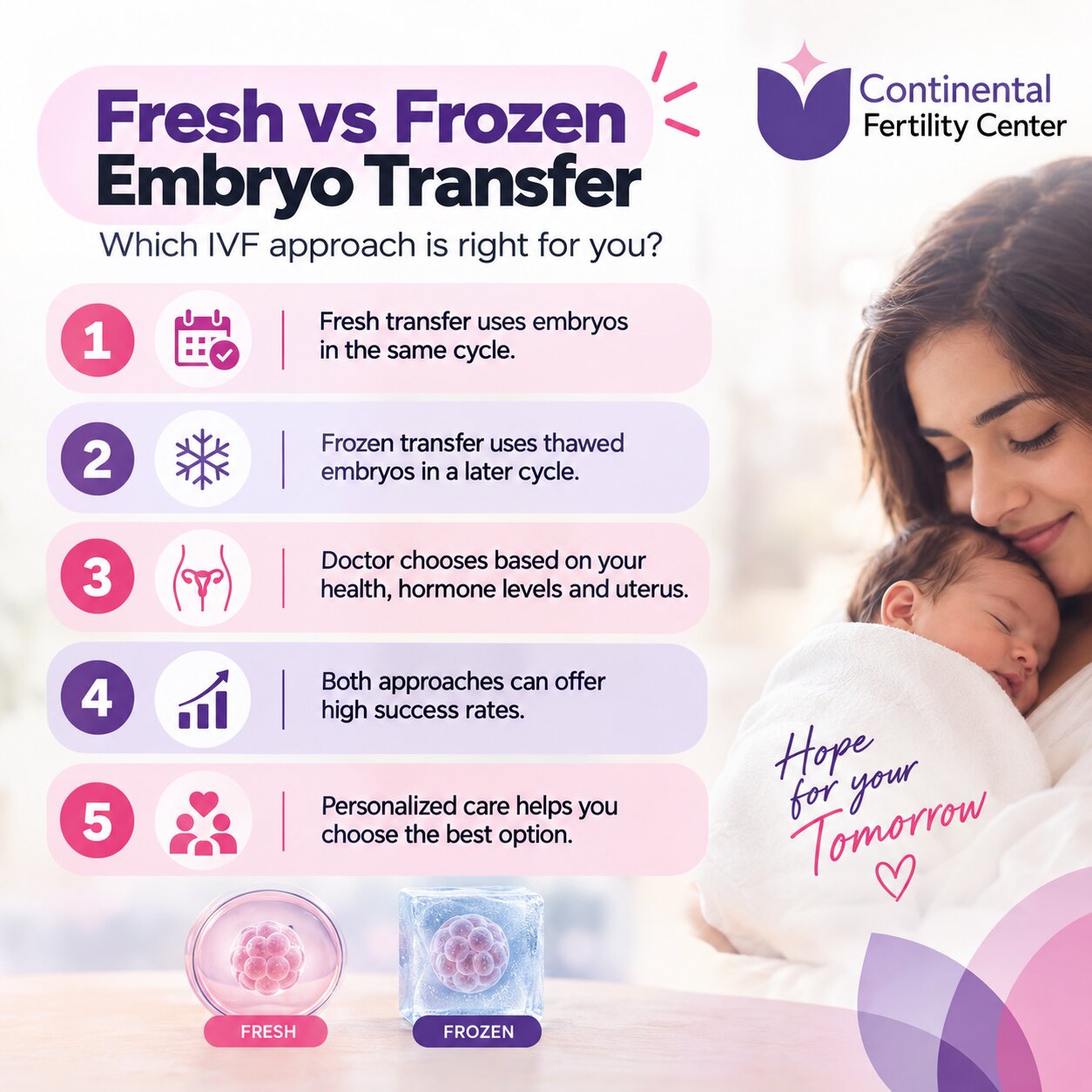
Fresh vs frozen embryo transfer is a common topic of discussion in fertility care. A fresh embryo transfer takes place during the same IVF cycle in which the eggs are collected and fertilized. A frozen embryo transfer uses an embryo that was previously frozen and stored for transfer in a later cycle. The best option depends on individual fertility needs, hormone levels, uterine health, and the advice of a qualified fertility specialist.
What Is Fresh Embryo Transfer?
Fresh embryo transfer is a procedure in which an embryo is transferred into the uterus shortly after egg retrieval and fertilization. The embryo is usually cultured in the laboratory for a few days before transfer.
During this process, the fertility specialist monitors the patient's response to ovarian stimulation and assesses whether the uterus is ready for embryo transfer. If the conditions are suitable, a fresh embryo transfer may be planned.
What Are the Potential Benefits of Fresh Embryo Transfer?
- Allows embryo transfer during the same IVF treatment cycle.
- Avoids the need to freeze and thaw the embryo for that transfer.
- May be suitable when hormone levels and endometrial conditions are favorable.
- Can provide an option for patients who do not need a delay between egg retrieval and transfer.
Fresh transfer is not suitable for everyone. High hormone levels, an increased risk of ovarian hyperstimulation syndrome, or an unsuitable uterine environment may lead the specialist to recommend freezing the embryos instead.
Fresh vs Frozen Embryo Transfer: What Is the Difference?
The main difference between fresh and frozen embryo transfer is the timing of the procedure.
| Feature | Fresh Embryo Transfer | Frozen Embryo Transfer |
| Timing | Same IVF cycle | Later treatment cycle |
| Embryo source | Newly fertilized embryo | Previously frozen embryo |
| Uterine preparation | During stimulation cycle | Natural or hormone-supported cycle |
| Flexibility | Less scheduling flexibility | More flexibility |
| Suitable for | Selected patients with favorable conditions | Patients who benefit from delayed transfer |
What Is Frozen Embryo Transfer in IVF?
Frozen embryo transfer, also called FET in IVF, involves transferring an embryo that was created during an earlier IVF cycle and preserved through cryopreservation. The embryo is thawed before the procedure and assessed by the embryology team.
A frozen embryo transfer may take place in a later menstrual cycle. The uterus is prepared either through natural ovulation or with prescribed hormonal medication, depending on the patient's medical needs.
What Are the Potential Benefits of Frozen Embryo Transfer?
- Allows additional time to prepare the uterine lining.
- Provides flexibility in scheduling embryo transfer.
- May be recommended when hormone levels during stimulation are not ideal for fresh transfer.
- Allows embryos to be preserved for future transfer.
- Can support treatment planning when genetic testing of embryos is indicated.
Frozen embryo transfer does not guarantee pregnancy. The outcome depends on embryo quality, age, uterine health, and several other factors.
Which IVF Embryo Transfer Is Right for You?
There is no single answer to the question, "Which is better, fresh vs frozen embryo transfer?" Both methods can be appropriate, depending on the patient's circumstances.
Your fertility specialist may consider:
- Age and ovarian reserve
- Hormone levels during IVF treatment
- Endometrial thickness and uterine health
- Risk of ovarian hyperstimulation syndrome
- Embryo quality and development
- Previous IVF outcomes
- The need for embryo genetic testing
- Personal medical history and treatment preferences
In some cases, frozen embryo transfer may be preferred because it allows the body more time to recover from ovarian stimulation. In other cases, fresh embryo transfer may be an appropriate option when the uterine environment is favorable.
Why Choose Continental Fertility Center?
Continental Fertility Center provides fertility evaluation and treatment through experienced specialists, modern clinical facilities, and a patient-focused approach. The center is supported by Continental Hospitals, Hyderabad, which holds NABH and JCI accreditations.
These accreditations reflect established standards for healthcare quality, patient safety, and clinical processes. The fertility team focuses on personalized treatment planning, advanced reproductive care, and appropriate counselling throughout the IVF journey.
Patients can benefit from:
- Individualized fertility assessment
- Experienced fertility and reproductive medicine specialists
- Advanced embryology and laboratory support
- Personalized embryo transfer planning
- Multidisciplinary medical care
- Patient counselling and follow-up
When Should You Consult a Fertility Specialist?
If you are planning IVF, have experienced previous treatment challenges, or are unsure whether fresh or frozen embryo transfer is suitable for you, consult a fertility specialist. A detailed assessment can help determine the most appropriate embryo transfer approach for your needs.
If you are seeking guidance about fresh vs frozen embryo transfer, consult our best fertility specialist in Hyderabad at Continental Fertility Center, Hyderabad, for personalized advice and treatment planning.
Conclusion
Fresh vs frozen embryo transfer is an important decision in IVF treatment. Fresh embryo transfer takes place during the same treatment cycle, while frozen embryo transfer uses an embryo preserved for later use. Both approaches have a role in fertility care, and neither is universally better for every patient.
Your fertility specialist can help you understand the benefits, limitations, and suitability of each method. With personalized care and appropriate medical guidance, you can take a confident step toward your fertility treatment goals.
Frequently Asked Questions
Fresh embryo transfer is a procedure performed during the same IVF cycle as egg retrieval. Eggs are collected from the ovaries during this process. The eggs are fertilized with sperm in a laboratory. The resulting embryos are monitored for development. A suitable embryo may be selected for transfer. The transfer usually takes place a few days after egg retrieval. The embryo is placed into the uterus using a thin catheter. Fresh transfer does not require embryo freezing before transfer. Hormonal stimulation and egg retrieval are completed before the transfer. The timing depends on embryo development and the patient's condition. Not every IVF cycle is suitable for fresh transfer. A fertility specialist will recommend the appropriate approach after evaluation.
Frozen embryo transfer involves using an embryo preserved from an earlier IVF cycle. The embryo is frozen using a process called vitrification. It is stored under carefully controlled laboratory conditions. The embryo can be transferred during a later menstrual cycle. The uterus is prepared using natural hormonal changes or prescribed medicines. The fertility specialist monitors the development of the uterine lining. A suitable frozen embryo is thawed before the transfer procedure. The embryo is then placed into the uterus using a thin catheter. Frozen transfer does not require another egg retrieval for that embryo. It may allow additional time for medical evaluation before transfer. Not every frozen embryo transfer requires the same preparation. The treatment plan depends on the patient's reproductive health and medical history.
Fresh and frozen embryo transfers are both used in IVF treatment. Neither approach is universally better for every patient. The most suitable option depends on individual fertility needs. Fresh transfer takes place during the egg retrieval cycle. Frozen transfer takes place during a later prepared cycle. Some patients may benefit from delaying embryo transfer. Others may be suitable for fresh transfer after ovarian stimulation. Hormone levels and uterine lining development can influence the decision. The number and quality of available embryos may also matter. Medical conditions and previous IVF outcomes are important considerations. Research has not established one approach as the best for all patients. A fertility specialist can explain the expected benefits and limitations of each option.
Frozen embryo transfer can result in a successful pregnancy for many patients. Some studies have reported favorable outcomes with frozen transfer. However, freezing embryos does not guarantee a higher pregnancy rate. The effect on success depends on the patient's individual circumstances. Age at egg retrieval is an important factor in embryo outcomes. Embryo quality can also influence implantation and pregnancy. The condition of the uterus may affect the chance of success. Frozen transfer allows the transfer cycle to be planned separately from stimulation. This may be helpful for patients with certain medical or hormonal concerns. Some patients may have similar outcomes with fresh transfer. The best approach depends on the reason for IVF and the available embryos. A fertility specialist can discuss realistic expectations based on the patient's history.
A frozen embryo transfer cycle may take several weeks to complete. The timeline depends on the type of preparation used. Some patients undergo a natural cycle based on ovulation. Others receive hormonal medicines to prepare the uterine lining. The fertility team monitors the lining and hormone levels when needed. The embryo transfer is scheduled according to the embryo's developmental stage. A blastocyst transfer is usually timed after the appropriate period of progesterone exposure. The transfer procedure itself often takes only a short time. It usually does not require general anesthesia. A pregnancy test is commonly performed around two weeks after transfer. The exact testing date depends on the clinic's protocol. Additional appointments may be needed during the preparation cycle. Your fertility specialist will explain the expected schedule before treatment begins.
Frozen embryos are routinely used in assisted reproductive treatment. Modern vitrification techniques help preserve embryo structure during freezing. Embryos are stored in specialized laboratory tanks under controlled conditions. The thawing process is performed by trained embryology professionals. Many embryos survive the thawing process successfully. However, not every embryo is guaranteed to survive freezing and thawing. Embryo quality before freezing can influence the outcome. The risk of damage may vary according to laboratory procedures and embryo characteristics. Frozen embryo transfer has been used in fertility care for many years. Current evidence supports its use as an established IVF option. Pregnancy outcomes can depend on several factors beyond embryo survival. Your fertility specialist can explain the laboratory's freezing and storage procedures.
The cost of fresh and frozen embryo transfer varies between fertility centers. Fresh transfer is usually included in the treatment cycle's planned procedures. Frozen transfer may involve additional embryo storage and preparation costs. The total price depends on the services included in the treatment package. Medicines and hormone monitoring may add to the overall expense. Laboratory charges can also differ between fertility centers. Frozen embryo storage may involve separate fees over time. Some patients may need additional tests before transfer. The number of embryos stored can also affect long-term storage costs. A fresh transfer may require fewer separate preparation visits. A frozen transfer may involve a later cycle with additional medication or monitoring. Ask your fertility center for a detailed estimate before beginning treatment.
Choosing between fresh and frozen embryo transfer requires personalized medical advice. Your fertility specialist will review your IVF treatment history. Age and ovarian reserve may influence the treatment plan. The number and quality of available embryos are also important. Hormone levels during ovarian stimulation may affect the timing of transfer. The condition of the uterine lining can influence the choice of cycle. Certain medical conditions may make a delayed transfer more appropriate. A frozen transfer may be considered when embryos need to be preserved for later use. Fresh transfer may be suitable when the patient is ready for transfer during the same cycle. Both approaches have potential benefits and limitations. Your doctor will discuss the expected success rates and possible risks. An individualized plan can help you understand which option fits your fertility needs.