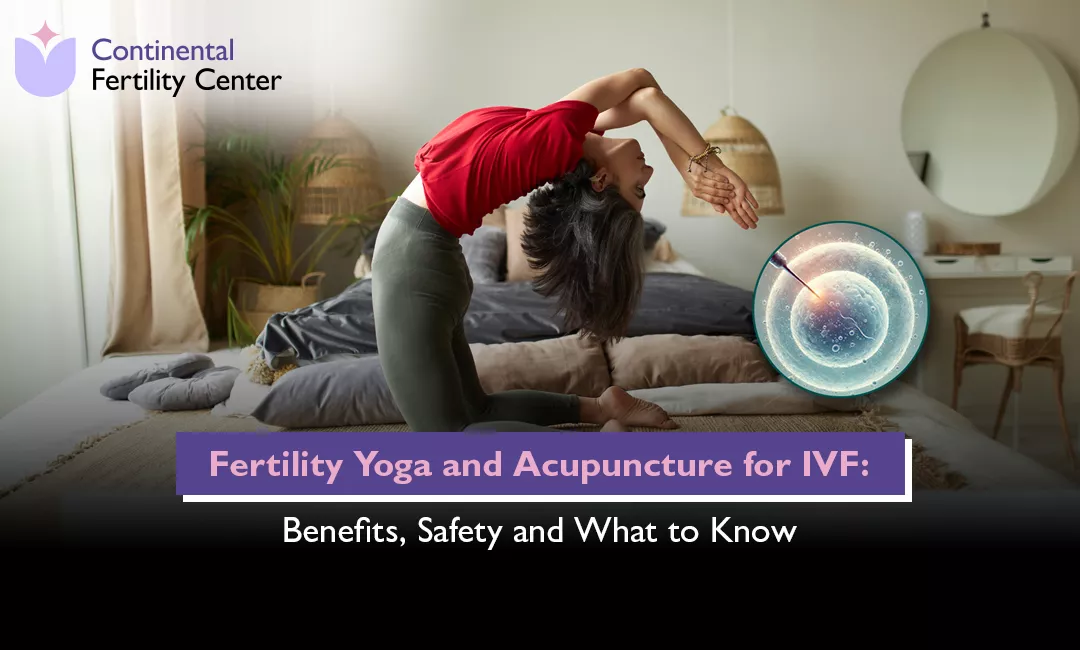
Fertility Yoga and Acupuncture for IVF: Benefits, Safety and What to Know
IVF can involve several physical and emotional challenges, from fertility medications and monitoring to egg retrieval and embryo transfer. Many people undergoing treatment also explore complementary approaches that may help them feel more relaxed and supported during the process. Fertility yoga for IVF and acupuncture are two approaches that are often discussed alongside conventional fertility care.
Fertility yoga for IVF focuses on gentle movement, breathing exercises, relaxation, and mindfulness. Acupuncture involves the careful placement of fine needles at specific points on the body. While these approaches may support relaxation and overall well-being, they should complement, not replace, medically recommended IVF treatment. Their suitability can vary from person to person, so discussing them with your fertility specialist is important.
What Is Fertility Yoga for IVF?
Fertility yoga for IVF is a gentle form of yoga adapted for people undergoing fertility treatment. Unlike intense yoga or demanding workouts, it generally emphasizes comfortable movements, controlled breathing, and relaxation.
Depending on the stage of IVF, a fertility specialist or qualified yoga professional may recommend activities such as:
- Gentle stretching
- Breathing exercises
- Relaxation techniques
- Mindfulness practices
- Light mobility exercises
- Restorative yoga poses
The exercises should be adapted according to the individual's treatment stage and medical needs.
What Are the Benefits of Fertility Yoga for IVF?
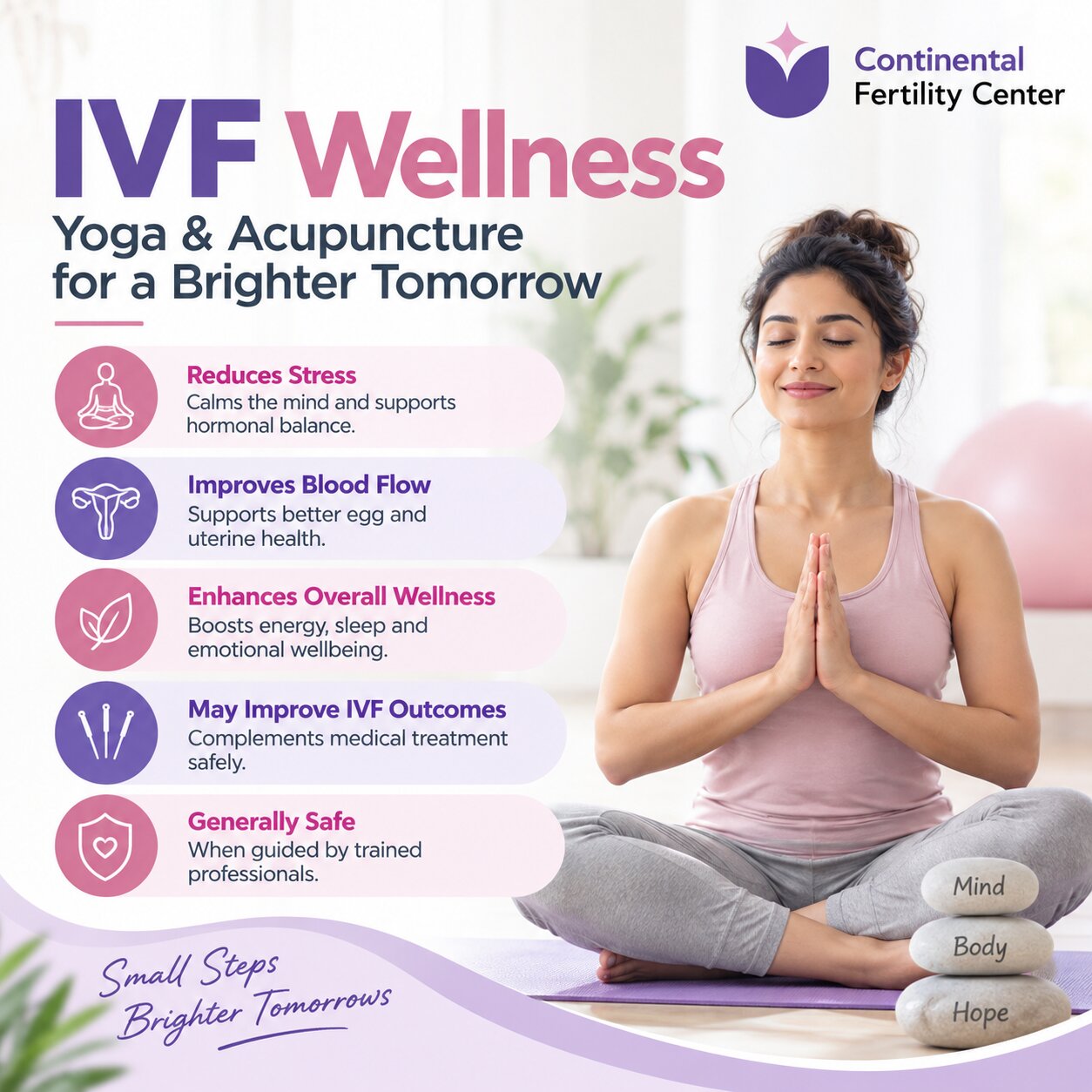
People undergoing IVF may experience stress, tiredness, and emotional pressure. Fertility yoga benefits may include supporting relaxation and helping people maintain gentle physical activity.
Potential benefits include:
- Promoting relaxation and stress management
- Supporting flexibility and gentle movement
- Encouraging mindful breathing
- Helping with general physical well-being
- Supporting emotional well-being during treatment
- Providing a structured relaxation routine
However, fertility yoga should not be promoted as a treatment that directly guarantees pregnancy or improves IVF success.
What Is Acupuncture for IVF?
Acupuncture for IVF is a complementary practice in which very fine needles are placed at selected points on the body. Some patients choose acupuncture during their fertility journey for relaxation and general well-being.
Research into IVF and acupuncture has produced mixed findings. Some studies have explored possible effects on stress, well-being, and reproductive outcomes, but evidence is not strong enough to conclude that acupuncture consistently increases live birth or pregnancy rates for everyone undergoing IVF.
Therefore, acupuncture should be considered a complementary option rather than a substitute for fertility treatment.
Is Acupuncture During IVF Safe?
Acupuncture during IVF should be performed by a properly qualified and experienced practitioner who understands fertility treatment.
Before starting acupuncture for IVF, tell both your fertility specialist and acupuncturist about:
- Your IVF medications
- Your treatment stage
- Any medical conditions
- Previous fertility treatments
- Any complications or concerns
Certain stages of IVF may require modifications or avoidance of specific techniques. Medical advice should always take priority.
Can You Do Yoga During IVF Treatment?
Yoga during IVF treatment may be suitable for some patients, but the type and intensity should change according to the treatment stage.
During ovarian stimulation, egg retrieval, and after embryo transfer, your fertility team may recommend specific activity restrictions. Avoid strenuous exercise, deep abdominal pressure, extreme stretching, and activities that your doctor has advised against.
The key question is not simply, "Can I do yoga during IVF?" It is, "What level and type of activity is appropriate for my current IVF stage?"
Can Fertility Yoga and Acupuncture Be Used Together?
Fertility yoga and acupuncture may be used as complementary well-being practices when medically appropriate. Yoga can focus on gentle movement, breathing, and relaxation, while acupuncture may be used as an additional supportive practice.
Neither should replace prescribed fertility medicines, monitoring, embryo transfer procedures, or other treatments recommended by your fertility specialist.
Why Choose Continental Fertility Center?
Choosing a fertility center with comprehensive medical support is an important part of your IVF journey. Continental Fertility Center offers personalized fertility evaluation and treatment supported by experienced specialists and modern clinical facilities.
Continental Hospitals follows established healthcare quality and patient safety standards and holds JCI and NABH accreditations. These accreditations reflect structured standards related to clinical care, patient safety, and healthcare processes.
At Continental Fertility Center, patients receive:
- Personalized fertility assessment
- Individualized IVF treatment planning
- Experienced fertility specialists
- Advanced diagnostic and laboratory support
- Multidisciplinary medical care
- Guidance throughout the IVF process
- Appropriate evaluation of complementary approaches
When Should You Speak to a Fertility Specialist?
If you are planning IVF or are already undergoing fertility treatment, discuss any complementary therapy before starting it. Your fertility specialist can help determine whether fertility yoga for IVF or acupuncture for IVF is appropriate for your individual situation.
If you are struggling with infertility or planning IVF treatment, consult our best fertility specialist in Hyderabad at Continental Fertility Center for personalized guidance.
Conclusion
Fertility yoga for IVF and acupuncture may provide supportive options for relaxation, gentle movement, and overall well-being during fertility treatment. However, they should be approached realistically. Current evidence does not establish these approaches as guaranteed methods for improving IVF pregnancy or live birth outcomes.
The safest approach is to use complementary practices alongside appropriate medical care and follow the activity and treatment recommendations provided by your fertility specialist.
Frequently Asked Questions
Fertility yoga may support overall physical and emotional well-being during IVF. It can encourage gentle movement and relaxation. Yoga may help reduce stress and promote a sense of calm. Some people find breathing exercises helpful during fertility treatment. Gentle yoga can also support flexibility and body awareness. It should be adapted to the stage of the IVF cycle. Strenuous poses may not be appropriate during ovarian stimulation. After egg retrieval, the body may need additional rest and recovery. Certain poses may also need to be avoided after embryo transfer. A fertility specialist can advise when gentle yoga is appropriate. Yoga should complement IVF rather than replace medical treatment. Choose an instructor familiar with fertility care when possible. Stop exercising and seek medical advice if pain or unusual symptoms occur.
Acupuncture is generally considered safe when performed by a qualified practitioner. It involves inserting very thin needles into specific points on the body. Some people use acupuncture as a complementary approach during IVF. Mild bruising, soreness or temporary discomfort can occur. Serious complications are uncommon when proper techniques are followed. Patients should inform their fertility specialist before starting acupuncture. The practitioner should also know about medications and fertility procedures. Extra care may be needed around egg retrieval and embryo transfer. Acupuncture should be performed using appropriate sterile techniques. It should not interfere with prescribed IVF medicines. Evidence about its ability to improve IVF pregnancy rates remains mixed. Acupuncture should therefore not be presented as a guaranteed fertility treatment. Discuss its potential benefits and risks with your healthcare team.
Research on acupuncture and IVF success has produced mixed findings. Some studies have explored its possible effects on fertility outcomes. Acupuncture may help some patients with relaxation and stress management. However, evidence does not consistently show that it increases live birth rates. It should not be considered a replacement for established IVF treatment. IVF success depends on several individual factors. These include age, ovarian reserve and embryo quality. Sperm health and uterine factors can also influence outcomes. The timing and type of acupuncture may vary between patients. More research is needed to understand its role in fertility treatment. Patients should have realistic expectations about complementary therapies. Acupuncture may be used alongside, rather than instead of, medical fertility care. Your fertility specialist can help you decide whether it fits your treatment plan. Any complementary treatment should be discussed before starting it.
The appropriate time for fertility yoga can vary during an IVF cycle. Gentle yoga may be suitable during parts of fertility treatment. During ovarian stimulation, low-impact movements are generally more appropriate. Avoid poses or activities that cause abdominal pressure or discomfort. After egg retrieval, rest may be recommended while the body recovers. Your fertility team can advise when normal activity can resume. Following embryo transfer, gentle activities may be preferred. Avoid strenuous exercise unless your doctor says it is safe. Deep twists and intense abdominal exercises may not be suitable for some patients. Breathing and relaxation exercises may be easier options. Every IVF cycle is different and activity advice may vary. Listen to your body and stop if you experience pain or discomfort. Always follow the specific activity recommendations given by your fertility specialist.
IVF can be emotionally demanding, and stress management can be an important part of self-care. Gentle yoga may help promote relaxation during fertility treatment. Breathing exercises can encourage slow and controlled breathing. Meditation and mindfulness may also support emotional well-being. Regular gentle movement may help some people feel more comfortable physically. Yoga can provide a structured time for relaxation and self-care. However, it cannot remove all the emotional challenges of IVF. It should not be viewed as a treatment for infertility itself. Different people respond differently to relaxation techniques. Choose activities that feel comfortable and manageable. Avoid physically demanding yoga during sensitive stages of treatment. Your fertility team can provide guidance about safe activity levels. Counseling or emotional support may also be helpful when needed. A balanced approach can support well-being throughout the IVF journey.
Some patients consider acupuncture after embryo transfer as a complementary therapy. The timing of acupuncture should be discussed with the fertility specialist. Research has not established a clear benefit for pregnancy or live birth after transfer. Acupuncture should therefore not be considered essential to IVF treatment. If used, it should be performed by a properly trained practitioner. The practitioner should know that an embryo transfer has taken place. Certain acupuncture points may be avoided depending on the treatment stage. Infection-control and sterile needle practices are important. Patients should also share their medications and medical conditions. Mild bruising or temporary soreness can occur after acupuncture. Seek medical advice if you experience significant pain or unusual symptoms. Continue all prescribed fertility medicines as directed. Do not replace medical follow-up with complementary treatment. Your fertility team can help determine whether acupuncture is appropriate for you.
Yoga and acupuncture may be used as complementary approaches during IVF for some patients. Neither therapy should replace prescribed fertility treatment. Gentle yoga may support relaxation, movement and general well-being. Acupuncture may also be used by some patients for relaxation and complementary care. Their effect on IVF success rates is not firmly established. Tell your fertility specialist about any complementary therapies you are considering. This allows your care team to coordinate treatment safely. Yoga intensity should be adjusted according to the IVF treatment stage. Acupuncture should be performed by a qualified practitioner using sterile techniques. Avoid starting new therapies without discussing them with your healthcare team. Your medications and medical history may affect what is appropriate. Complementary therapies should support, not interfere with, your fertility treatment. Keep regular appointments and follow your IVF medication schedule. Individual medical advice is important throughout the IVF journey.
Not everyone undergoing IVF will be suitable for every yoga or acupuncture technique. Patients should discuss complementary therapies with their fertility specialist first. Strenuous yoga may not be appropriate during ovarian stimulation. Certain movements may also be unsuitable after egg retrieval. People with specific medical conditions may need modified physical activity. Acupuncture may require additional precautions in some situations. Patients with bleeding disorders should discuss acupuncture before treatment. Those taking blood-thinning medicines should also inform the practitioner. Pregnancy-related or post-transfer considerations may change which techniques are appropriate. A qualified practitioner can modify treatment based on individual circumstances. Stop any activity that causes pain, dizziness or significant discomfort. Seek medical advice for unusual bleeding or other concerning symptoms. Safety should always take priority over complementary treatment.