

Egg Freezing: Is It the Right Choice for You
The decision to preserve your fertility is one of the most empowering steps a woman can take regarding her reproductive health. In a world where career goals, personal milestones, and health considerations often take center stage, egg freezing offers a way to hit the pause button on the biological clock. This guide explores everything you need to know about the process and why it might be the right path for you.
Understanding Egg Freezing
At its core, egg freezing, or mature oocyte cryopreservation, is a method used to save a woman's ability to get pregnant in the future. Eggs harvested from your ovaries are frozen unfertilized and stored for later use. When you are ready to start a family, these eggs can be thawed, fertilized with sperm in a lab, and implanted in your uterus.
The biological reality is that a woman is born with a finite number of eggs. As time passes, both the quantity and the quality of these eggs naturally decline. By choosing egg freezing at a younger age, you essentially "lock in" the quality of your eggs, providing a higher chance of a successful pregnancy later in life.
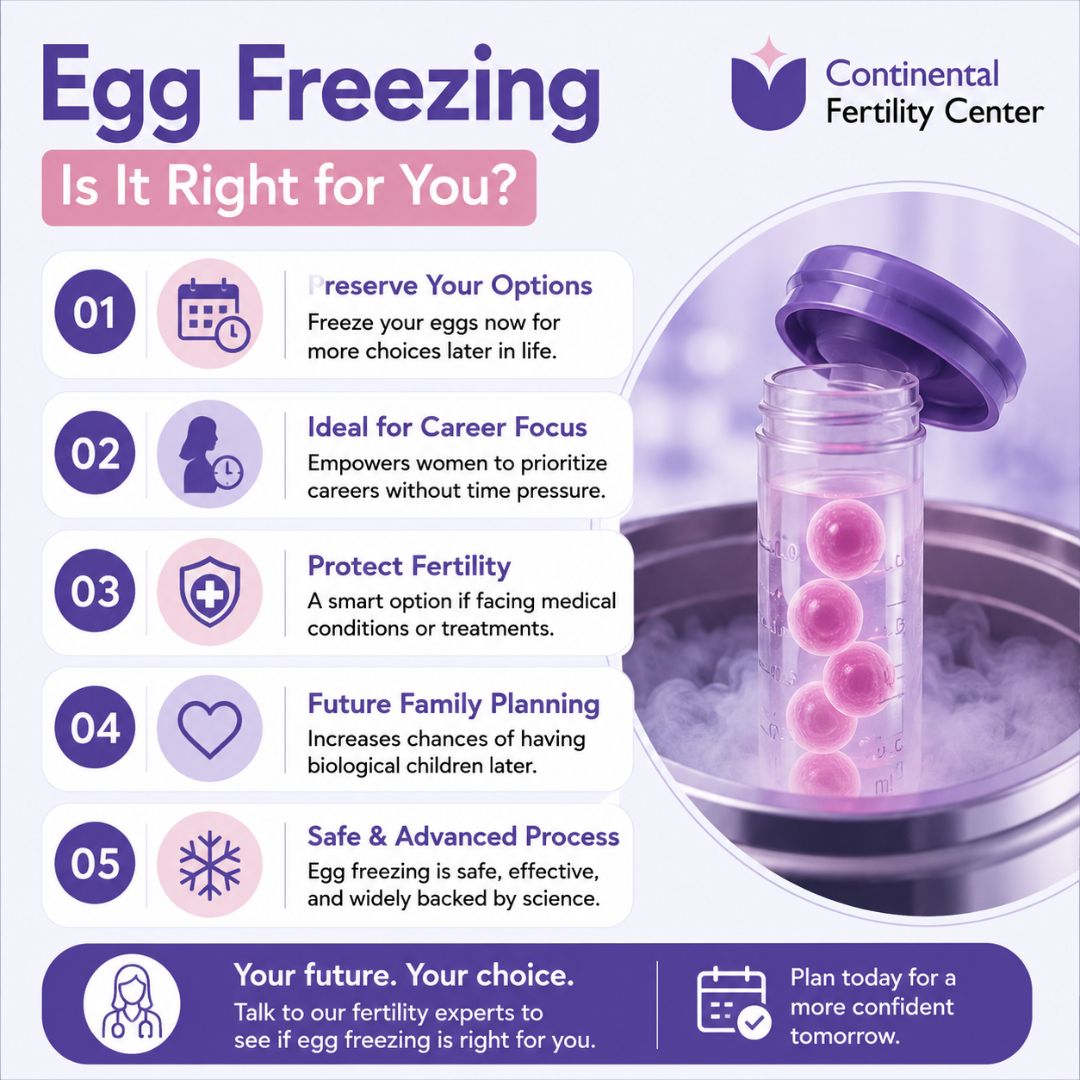
Why Women Consider Freezing Eggs
There are several reasons why women choose this procedure. For many, it is about timing. You may not have found the right partner yet, or perhaps you want to focus on your education or professional growth before committing to parenthood.
Medical reasons also play a significant role. Women diagnosed with cancer or other illnesses that require treatments like chemotherapy or radiation—which can affect fertility—often choose to freeze their eggs before starting treatment. Additionally, those with a family history of early menopause or certain genetic conditions may opt for the egg freezing procedure to secure their options.
The Egg Freezing Process: Step by Step
Understanding the egg freezing process can help demystify the experience and reduce any anxiety you might feel.
- Initial Consultation: The journey begins with a thorough evaluation. Doctors use blood tests and ultrasounds to check your ovarian reserve and overall reproductive health.
- Ovarian Stimulation: To harvest multiple eggs, you will take hormonal medications for about 8 to 12 days. These medications encourage your ovaries to produce several mature eggs instead of the usual one per month.
- Monitoring: During the stimulation phase, you will visit the clinic regularly for ultrasounds and blood tests. This ensures the follicles are developing correctly and allows the medical team to adjust your medication if needed.
- Trigger Injection: Once the follicles reach the ideal size, a "trigger shot" is administered to help the eggs reach final maturation.
- Egg Retrieval: This is a minor surgical procedure performed under light sedation. A doctor uses an ultrasound-guided needle to collect the eggs from the follicles. It typically takes about 20 to 30 minutes.
- Cryopreservation: Immediately after retrieval, the eggs are evaluated. The mature eggs are then frozen using a technique called vitrification, which is a fast-freezing process that prevents ice crystals from forming, ensuring the highest survival rate.
Evaluating Egg Freezing Risks
While the procedure is generally safe, it is important to be aware of potential egg freezing risks. Some women experience mild side effects from the stimulation medications, such as bloating, mood swings, or breast tenderness. A rare but serious complication is Ovarian Hyperstimulation Syndrome (OHSS), where the ovaries become swollen and painful.
The retrieval process itself carries minor risks typical of any outpatient procedure, such as slight bleeding or infection, though these are very rare when performed in a sterile, professional environment. It is also vital to remember that while freezing eggs significantly improves your future chances, it does not guarantee a live birth. Success depends heavily on the age at which the eggs were frozen and the number of eggs stored.
The Financial Investment
When researching this journey, many women look into the egg freezing cost. It is important to view this not just as a medical bill but as an investment in your future autonomy. The total expenditure generally includes the cost of medications, the clinical monitoring, the retrieval procedure, and the annual storage fees for the frozen oocytes. While we do not provide specific numbers here, the value of having a "fertility insurance policy" is often considered priceless by those who wish to delay childbearing.
Why Choose the Continental Fertility Centre?
Selecting the right facility is the most critical decision in your fertility journey. Continental Hospitals stands out as a leader in reproductive medicine in Hyderabad. Here is why we are the preferred choice for many:
Global Accreditations: Continental Hospitals is recognized for its commitment to international standards of safety and quality. We hold prestigious JCI (Joint Commission International) and NABH (National Accreditation Board for Hospitals & Healthcare Providers) accreditations. These honors reflect our adherence to rigorous clinical protocols and patient care excellence.
Advanced Technology: Our Continental Fertility Centre is equipped with the latest vitrification technology and state-of-the-art embryology labs. This ensures that your eggs are handled with the utmost precision and care.
Expert Specialists: Our team consists of highly experienced reproductive endocrinologists, embryologists, and counselors who provide personalized care tailored to your specific biological needs.
Comprehensive Care: Beyond the procedure, we offer holistic support, including nutritional guidance and emotional counseling, ensuring you feel supported at every step of the egg-freezing procedure.
Privacy and Ethics: We maintain the highest levels of confidentiality and ethical standards in all our fertility treatments.
Preparing for the Future
If you are currently trying to conceive but facing challenges, or if you are simply thinking ahead, knowledge is your best tool. Egg freezing provides a bridge between your current life goals and your future family dreams. It removes the pressure of the "ticking clock" and allows you to make life decisions based on your own timeline rather than biological limitations.
Conclusion
The path to parenthood is unique for every woman. Whether you are driven by career ambitions, waiting for the right partner, or navigating a medical diagnosis, egg freezing offers a scientifically proven way to preserve your options. By choosing a facility with international accreditations and a track record of excellence, you are giving yourself the best possible start for the future.
If you have questions about whether this is the right step for you, the best way to find clarity is through a professional consultation. Understanding your own body and the possibilities available to you is the first step toward a confident future.
Are you worried about your future fertility or experiencing difficulties while trying to conceive? Our experts are here to guide you through every option available.
Book a consultation today with our best fertility specialist in Hyderabad at Continental Fertility Centre.
Frequently Asked Questions
Egg freezing, also known as oocyte cryopreservation, is a fertility preservation technique where a woman’s eggs are collected, frozen, and stored for future use. The frozen eggs can later be thawed, fertilized, and implanted during IVF treatment.
Women who wish to delay pregnancy due to career goals, medical treatments, personal reasons, or declining fertility with age may consider egg freezing. It is also recommended for women diagnosed with conditions that may affect future fertility.
The ideal age for egg freezing is generally between 25 and 35 years, when egg quality and quantity are higher. However, women above 35 may still benefit depending on their ovarian reserve and fertility health.
The process involves ovarian stimulation with hormone injections, monitoring through scans and blood tests, followed by egg retrieval under mild sedation. The collected mature eggs are then frozen using advanced vitrification techniques.
Frozen eggs can be safely stored for many years without significant decline in quality. The storage duration depends on local regulations and individual fertility plans.
Egg freezing improves the chances of future pregnancy but does not guarantee success. Factors such as the woman’s age at the time of freezing, egg quality, and overall reproductive health influence pregnancy outcomes.
Egg freezing is generally considered safe, but some women may experience temporary side effects such as bloating, mild discomfort, or hormonal symptoms during ovarian stimulation. Serious complications are rare when performed by experienced fertility specialists.
A consultation with a fertility specialist can help determine whether egg freezing is suitable based on your age, ovarian reserve, medical history, and future family planning goals.