
Egg Quality vs Egg Quantity: What's More Important?
Infertility is becoming more common among couples who are trying to start a family. One of the most important topics in fertility care is understanding egg quality vs egg quantity. Many women believe that having more eggs automatically means better fertility. However, the reality is different. Both egg quality and egg quantity play an important role in natural conception and fertility treatment success.
Understanding egg quality vs egg quantity helps women make informed decisions about their reproductive health. Whether you are planning a pregnancy naturally or considering fertility treatment, knowing how these two factors affect your chances can help you choose the right path. At Continental Fertility Center, our fertility specialists provide personalized care to evaluate both egg quality and egg quantity and recommend the most suitable treatment.
What Is Egg Quality?
Egg quality refers to how healthy an egg is. A high-quality egg has the right number of chromosomes, making it more likely to be fertilized successfully and develop into a healthy embryo.
Good egg quality is essential because healthy eggs have a better chance of implantation and reduce the risk of miscarriage. Egg quality naturally declines with age, especially after the age of 35.
Healthy egg quality helps with:
- Better chances of natural pregnancy
- Higher IVF success rates
- Healthier embryo development
- Lower miscarriage risk
- Better pregnancy outcomes
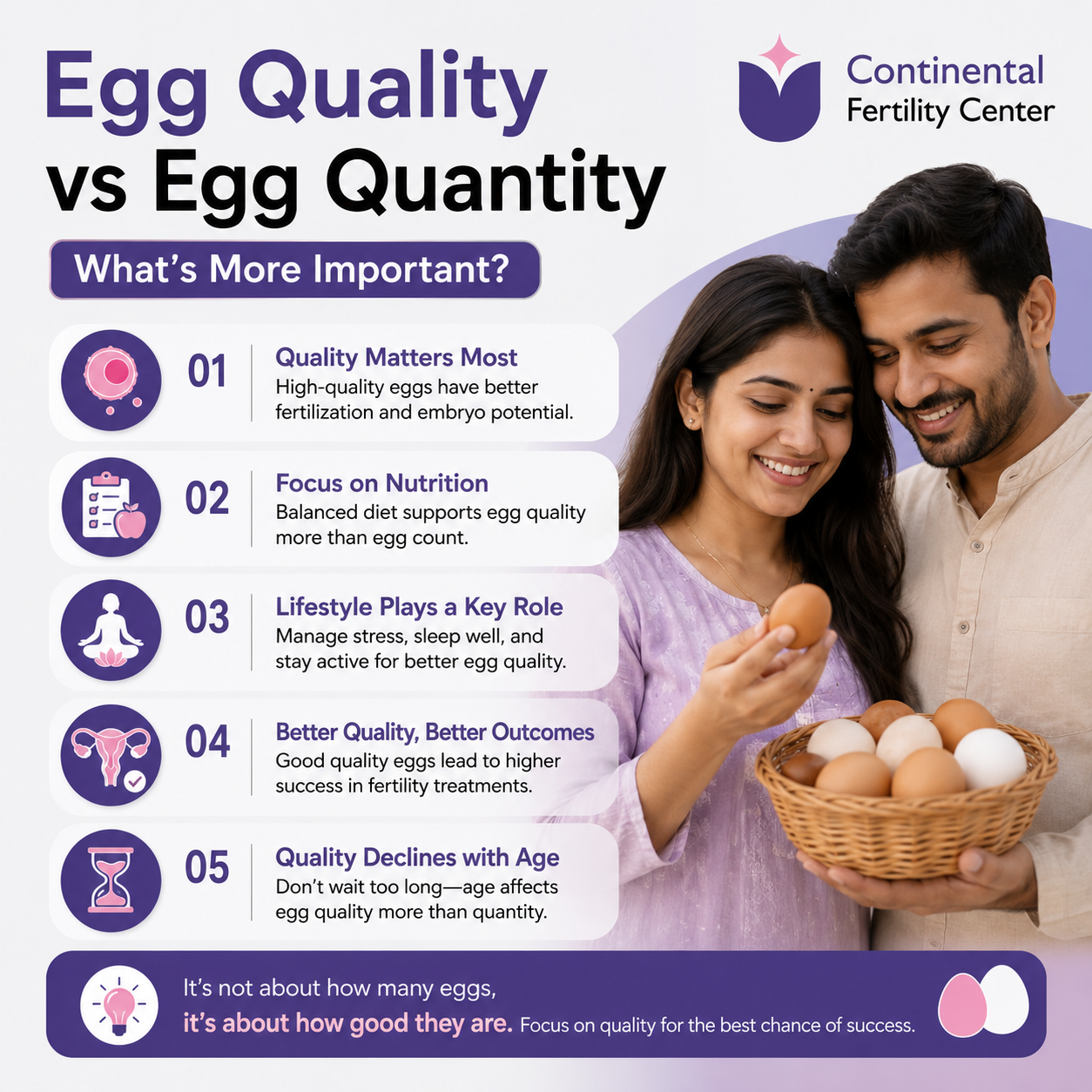
What Is Egg Quantity?
Egg quantity refers to the number of eggs remaining in a woman's ovaries, also known as ovarian reserve. Every woman is born with a fixed number of eggs, and this number gradually decreases throughout life.
Having more eggs does not always mean better fertility. Some women may have a good number of eggs but poor egg quality, while others may have fewer eggs but healthy ones that can still result in pregnancy.
Egg quantity is measured using:
- Anti-Müllerian Hormone (AMH) blood test
- Antral Follicle Count (AFC) ultrasound
- Hormone evaluation
- Fertility specialist assessment
Egg Quality vs Egg Quantity: Which Is More Important?
The answer depends on your fertility journey. When discussing egg quality vs egg quantity, fertility experts often consider egg quality as the more important factor because only healthy eggs can lead to successful fertilization and a healthy pregnancy.
Egg quantity gives doctors information about how many eggs are available, while egg quality determines whether those eggs can produce a healthy embryo.
A woman with fewer healthy eggs may have better pregnancy chances than someone with many poor-quality eggs.
How Does Age Affect Egg Quality and Egg Quantity?
Age has a significant impact on both.
Before age 30
- Higher egg quality
- Good ovarian reserve
- Better natural fertility
Between 30 and 35
- Slight decline in egg quality
- Gradual decrease in egg quantity
- Pregnancy chances remain good
After 35
- Faster decline in egg quality
- Reduced ovarian reserve
- Higher risk of chromosomal abnormalities
After 40
- Significant reduction in egg quality
- Lower fertility potential
- Higher need for fertility treatment
Factors That Affect Egg Quality
Several lifestyle and medical factors influence egg health.
Common factors include:
- Increasing age
- Smoking
- Excessive alcohol intake
- Poor nutrition
- Obesity
- Stress
- Hormonal disorders
- Endometriosis
- Polycystic Ovary Syndrome (PCOS)
- Certain medical treatments
Improving your overall health may support better reproductive health, although age related changes cannot be completely reversed.
Can Egg Quality Be Improved?
While age cannot be changed, healthy habits may support better egg health.
Tips to support egg quality
- Eat a balanced diet rich in fruits and vegetables.
- Maintain a healthy body weight.
- Exercise regularly.
- Get enough sleep.
- Avoid smoking and alcohol.
- Manage stress effectively.
- Take supplements only under medical guidance.
- Schedule regular fertility evaluations if planning pregnancy later.
Can Low Egg Quantity Still Result in Pregnancy?
Yes. Low egg quantity does not always mean infertility. Many women with low ovarian reserve conceive naturally or with fertility treatment if their remaining eggs are healthy.
This is why fertility specialists evaluate both egg quality vs egg quantity before recommending treatment.
How do fertility specialists assess egg quality and Egg Quantity?
A complete fertility assessment may include:
- Medical history review
- Menstrual cycle evaluation
- AMH blood test
- Hormone profile
- Ultrasound scan
- Antral follicle count
- Partner fertility evaluation if needed
These tests help fertility specialists create a personalized treatment plan.
How Do Egg Quality and Egg Quantity Affect IVF Success?
- Both factors influence IVF outcomes.
- Women with better egg quality often produce healthier embryos, leading to higher implantation rates.
- Women with higher egg quantity may produce more eggs during IVF stimulation, giving embryologists more embryos to select from.
- The best IVF outcomes usually occur when both egg quality and egg quantity are favorable.
Why Choose Continental Fertility Center?
Continental Fertility Center is one of the leading fertility centers in Hyderabad, offering comprehensive fertility evaluation and advanced reproductive care. As part of Continental Hospitals, accredited by JCI, NABH, and QAI, we are committed to delivering safe, ethical, and evidence-based fertility treatment.
Why couples trust Continental Fertility Center?
- Experienced fertility specialists
- Advanced fertility diagnostics
- Personalized fertility treatment plans
- Modern IVF laboratory and technology
- Comprehensive fertility care for women and men
- International quality standards through JCI, NABH, and QAI accreditations
- Compassionate support throughout your fertility journey
Conclusion
Understanding egg quality vs egg quantity is essential for making informed fertility decisions. While egg quantity tells us how many eggs remain, egg quality determines their ability to develop into a healthy pregnancy. Both are important, but egg quality often has the greatest influence on successful conception and IVF success.
If you have concerns about your fertility, irregular menstrual cycles, delayed pregnancy, or are planning pregnancy after the age of 35, consult the fertility experts at Continental Fertility Center. Early evaluation can provide valuable insights and help you choose the most effective fertility treatment for your needs.
Book your consultation today with the experienced fertility specialists in Hyderabad at Continental Fertility Center, Hyderabad, and take the next confident step toward parenthood.
Frequently Asked Questions
Egg quantity refers to the number of eggs remaining in a woman's ovaries, also called ovarian reserve. Egg quality refers to how healthy those eggs are and whether they can be successfully fertilized to develop into a healthy embryo. While women are born with a fixed number of eggs, both the number and quality naturally decline with age. However, egg quality generally has a greater impact on pregnancy success because healthy eggs are more likely to result in normal embryo development and implantation. Even women with fewer eggs may conceive if those eggs are healthy. Understanding both egg quantity and quality helps fertility specialists recommend the most suitable treatment plan for each individual.
Egg quality plays a crucial role in fertilization, embryo development, implantation, and maintaining a healthy pregnancy. Healthy eggs contain the correct number of chromosomes, reducing the risk of miscarriage and genetic abnormalities. Although having a good ovarian reserve increases the number of eggs available during treatment, poor-quality eggs may not develop into viable embryos. Women with fewer high-quality eggs often achieve better pregnancy outcomes than women with many poor-quality eggs. Fertility specialists evaluate both factors together to determine the best approach for natural conception or assisted reproductive treatments such as IVF.
Age is one of the most significant factors affecting female fertility. Women are born with all the eggs they will ever have, and this number steadily declines over time. Egg quality also decreases with age, especially after the age of 35, increasing the chances of chromosomal abnormalities. This can make fertilization more difficult and increase the risk of miscarriage. While younger women generally have better-quality eggs, fertility varies from person to person. Regular fertility evaluations can help assess ovarian reserve and guide timely family planning decisions.
There is currently no direct test that measures egg quality with complete accuracy. Fertility specialists estimate egg quality based on factors such as age, medical history, hormone levels, ultrasound findings, and previous fertility treatment outcomes. Blood tests like AMH and FSH primarily assess ovarian reserve rather than egg quality. During IVF, embryo development provides additional information about egg health. Although no single test can guarantee egg quality, a comprehensive fertility evaluation helps doctors estimate reproductive potential and recommend personalized treatment options.
Healthy lifestyle habits may support better reproductive health and potentially improve the environment in which eggs mature. Eating a balanced diet, maintaining a healthy weight, exercising regularly, managing stress, sleeping well, and avoiding smoking and excessive alcohol can positively influence fertility. Certain vitamin and antioxidant supplements may be recommended by fertility specialists in selected cases. However, lifestyle changes cannot reverse the natural aging process or restore egg quality lost due to age. Consulting a fertility expert helps determine the most appropriate strategies for individual needs.
Yes. A low ovarian reserve does not necessarily mean pregnancy is impossible. Many women with fewer remaining eggs conceive naturally or through fertility treatments, particularly if the available eggs are of good quality. Fertility depends on several factors, including age, egg quality, sperm health, uterine health, and overall reproductive function. Early evaluation allows doctors to develop personalized treatment plans that may include ovulation induction, intrauterine insemination, or IVF. Timely consultation can significantly improve the chances of achieving pregnancy.
Egg quantity is commonly assessed using Anti-Müllerian Hormone (AMH) blood testing, Follicle Stimulating Hormone (FSH) levels, and an antral follicle count performed through transvaginal ultrasound. These tests estimate ovarian reserve by measuring the number of remaining follicles capable of developing into mature eggs. They help fertility specialists predict ovarian response during IVF but do not directly measure egg quality. Combining these results with age and clinical history provides a more complete picture of reproductive health and helps guide fertility treatment decisions.
You should consider consulting a fertility specialist if you are under 35 and have been trying to conceive for one year without success, or after six months if you are 35 or older. Women with irregular periods, a history of endometriosis, ovarian surgery, recurrent miscarriage, or other reproductive concerns should seek evaluation sooner. Early fertility assessment provides valuable information about ovarian reserve and reproductive health. Personalized guidance can help identify potential challenges, recommend suitable treatment options, and improve the chances of achieving a healthy pregnancy.