
How Many IVF Cycles Are Usually Needed?
Becoming a parent is a dream for many couples, but sometimes pregnancy does not happen naturally. If you are considering an IVF Cycle, you may have one important question in mind. How many IVF Cycles are usually needed to achieve pregnancy? The answer depends on several factors, including age, overall health, fertility conditions, and embryo quality.
An IVF cycle is a carefully planned fertility treatment that helps many couples overcome infertility. While some people conceive during their first IVF cycle, others may require additional cycles to improve their chances of success. Understanding what influences the outcome can help you prepare for your fertility journey with confidence.
What Is an IVF Cycle?
An IVF cycle is one complete round of the IVF process, starting from ovarian stimulation to embryo transfer and pregnancy testing. During in vitro fertilization, eggs are collected from the ovaries, fertilized with sperm in a specialized laboratory, and the healthiest embryo is transferred into the uterus.
Each IVF cycle is personalized based on the patient's age, medical history, hormone levels, and fertility diagnosis.
How Many IVF Cycles Are Usually Needed?
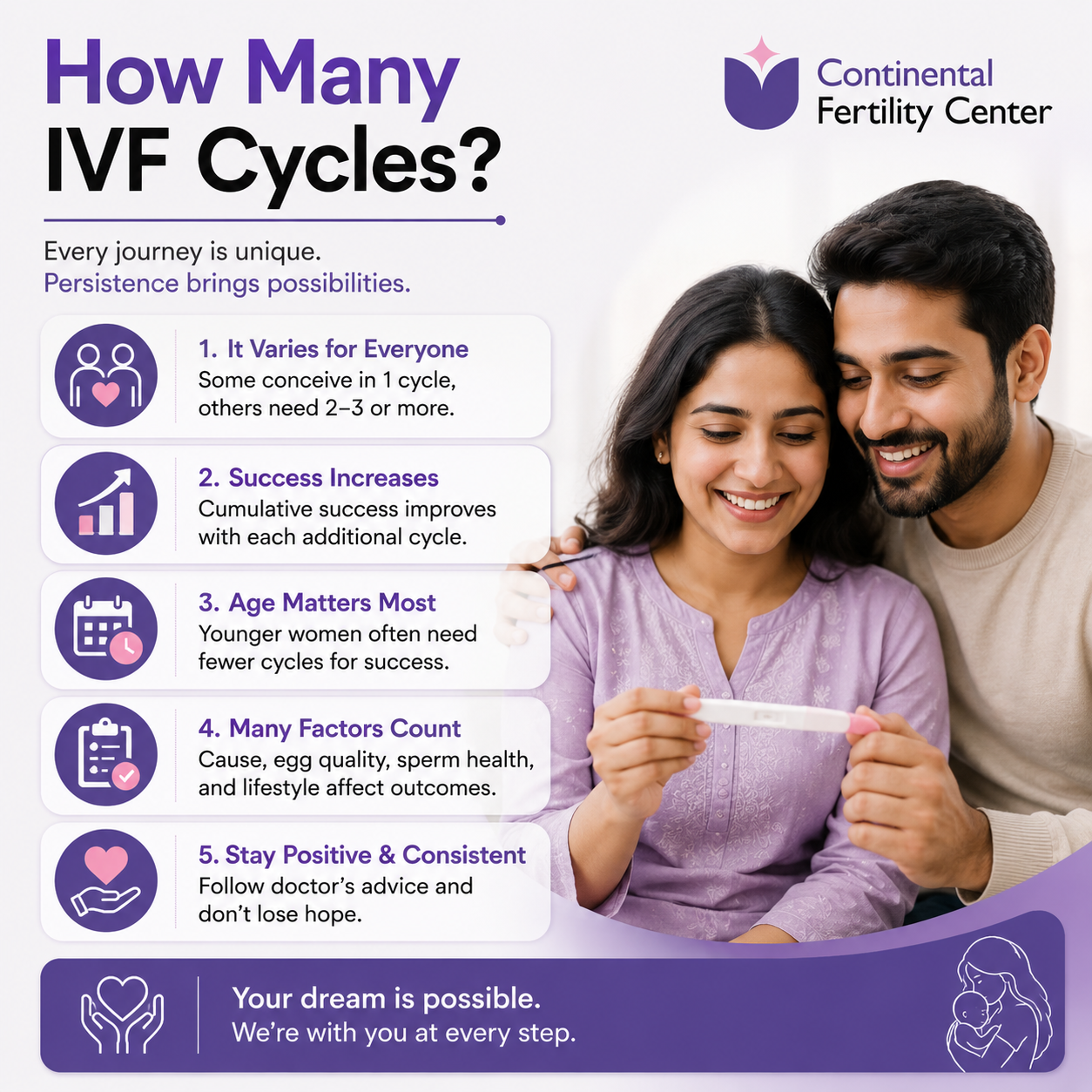
There is no fixed answer because every couple is different. Some women become pregnant during their first IVF cycle, while others may need two or three cycles before achieving a successful pregnancy.
Several studies have shown that the cumulative success rate increases when couples complete multiple IVF cycles. Every cycle provides valuable information that helps your fertility expert adjust medications, improve embryo selection, and optimize treatment for future attempts.
The number of IVF cycles needed depends on several factors such as:
- Woman's age
- Egg quality
- Sperm quality
- Uterine health
- Embryo quality
- Underlying fertility conditions
- Lifestyle habits
- Response to fertility medications
Factors That Affect IVF Success
Age
Age plays a significant role in IVF success. Younger women generally have healthier eggs, increasing the chances of pregnancy during an IVF cycle.
Egg Quality
Healthy eggs are essential for producing strong embryos. Poor egg quality may require additional IVF cycles.
Sperm Health
Healthy sperm improves fertilization rates and embryo development during the IVF process.
Embryo Quality
High-quality embryos have better implantation potential, increasing the likelihood of pregnancy.
Uterine Health
A healthy uterus provides the ideal environment for embryo implantation.
Medical Conditions
Conditions such as endometriosis, polycystic ovary syndrome, blocked fallopian tubes, or male infertility can influence treatment outcomes.
Can IVF Success Improve With Additional Cycles?
Yes. Many couples achieve pregnancy after completing more than one IVF cycle. Every treatment cycle provides important information that helps doctors make improvements, including:
- Adjusting fertility medications
- Improving ovarian stimulation
- Selecting healthier embryos
- Identifying implantation challenges
- Optimizing embryo transfer timing
This personalized approach often improves overall IVF success.
IVF Success Tips for Better Results
Following healthy lifestyle habits can improve your chances during an IVF cycle.
Maintain a Healthy Weight
A balanced weight supports better hormone function and reproductive health.
Eat a Nutritious Diet
Choose fresh fruits, vegetables, whole grains, lean proteins, and healthy fats.
Avoid Smoking and Alcohol
These habits can negatively affect egg and sperm quality.
Reduce Stress
Stress management through meditation, yoga, or relaxation techniques may help support emotional well being.
Follow Your Doctor's Advice
Take medications exactly as prescribed and attend every scheduled appointment.
Get Enough Sleep
Quality sleep supports hormone balance and overall health.
These simple IVF success tips can help improve the chances of a successful IVF cycle.
Is IVF Success Possible the First Time?
Many couples ask about IVF success the first time. While first cycle success is possible, there is no guarantee. Success depends on individual medical factors rather than luck.
Your fertility expert evaluates every aspect of your reproductive health before creating a personalized treatment plan. This individualized approach helps maximize the chances of success from the very beginning.
What Happens After an Unsuccessful IVF Cycle?
A failed IVF cycle does not mean pregnancy is impossible.
Your fertility specialist carefully reviews:
- Embryo development
- Hormone response
- Laboratory findings
- Implantation factors
- Medication protocol
- Overall reproductive health
Based on these findings, your next IVF cycle can be modified to improve success rates.
Why Choosing the Right Fertility Center Matters?
Selecting an experienced fertility center is one of the most important decisions during your fertility journey.
At Continental Fertility Center, every patient receives individualized care supported by advanced reproductive technology, experienced fertility specialists, modern embryology laboratories, and evidence-based treatment protocols. As part of Continental Hospitals, the center follows internationally recognized clinical standards with NABH and JCI-accredited care, offering quality, patient safety, and compassionate support throughout every stage of the fertility journey.
From the initial consultation to embryo transfer and pregnancy care, every IVF cycle is carefully planned to give couples the best possible opportunity for success.
Why Choose Continental Fertility Center?
Choosing the right fertility hospital can make a meaningful difference in your journey.
Some reasons patients trust Continental Fertility Center include:
- Experienced fertility experts with personalized treatment plans
- Advanced IVF laboratory with modern reproductive technology
- Comprehensive fertility evaluation for both partners
- Individualized fertility treatment based on medical needs
- Ethical, transparent, and patient-centered care
- NABH and JCI-accredited healthcare standards
- Multidisciplinary support under one roof
- Trusted fertility care at one of the best hospitals in Hyderabad
When Should You Consult a Fertility Expert?
You should consider consulting a fertility expert if:
- You are below thirty-five years of age and have not conceived after one year of trying
- You are above thirty-five years of age and have not conceived after six months
- You have irregular menstrual cycles
- You have experienced repeated pregnancy loss
- You have known fertility conditions
- You have male fertility concerns
Early evaluation can help identify the right fertility treatment and improve your chances of success.
Conclusion
Every couple's fertility journey is unique, and the number of IVF cycles needed varies from person to person. While some achieve pregnancy in the first cycle, others may require additional attempts. What matters most is receiving the right diagnosis, personalized treatment, and expert guidance throughout the IVF process.
Advances in in vitro fertilization continue to improve outcomes, giving hope to couples facing infertility. Staying positive, following medical advice, and working closely with an experienced fertility team can significantly improve your chances of achieving your dream of parenthood.
If you are planning an IVF cycle, struggling with infertility, or looking for expert guidance on the best fertility treatment, consult our best fertility specialist in Hyderabad at Continental Fertility Center. Our team provides comprehensive fertility evaluation, personalized treatment plans, advanced IVF treatment, and compassionate care to help you move confidently toward a healthy pregnancy. Schedule your consultation today and take the next step toward building your family.
Related Blogs:
Frequently Asked Questions
The number of IVF cycles needed varies from one couple to another. Some people achieve pregnancy in their first IVF cycle, while others may need two or three attempts. Factors such as age, egg quality, sperm quality, embryo development, and underlying fertility conditions all influence success. Doctors usually evaluate the outcome of each cycle before recommending the next step. A failed cycle does not necessarily mean future IVF attempts will fail. Many successful pregnancies happen after multiple IVF cycles. A personalized treatment plan helps improve the chances with every attempt. Your fertility specialist will guide you on the most suitable approach based on your medical history and test results.
Yes, IVF can be successful in the very first cycle for many couples. Success depends on several factors, including the woman's age, embryo quality, uterine health, and overall reproductive health. Younger women generally have higher success rates because of better egg quality. Following the doctor's treatment plan and maintaining a healthy lifestyle can also improve outcomes. However, not every first IVF cycle results in pregnancy. Even if the first attempt is unsuccessful, valuable information gained from the cycle helps optimize future treatment. Your fertility specialist will review every stage and make adjustments if needed.
Every IVF cycle provides important information about how the body responds to treatment. Some couples require multiple cycles because embryo implantation may not occur, embryo quality may vary, or underlying fertility conditions may affect success. Age, ovarian reserve, genetic factors, and uterine conditions also influence outcomes. Doctors often refine medications and treatment strategies after each cycle to improve future chances. Advances in embryo selection and laboratory techniques may also increase success in later attempts. Multiple IVF cycles are common and should not be viewed as treatment failure. Many couples achieve pregnancy after repeated, carefully planned cycles.
Yes, age is one of the most important factors affecting IVF success. Women under 35 generally have higher pregnancy rates because egg quality and quantity are usually better. As age increases, especially after 35 and more significantly after 40, egg quality naturally declines. This can reduce fertilization, embryo development, and implantation rates. Older women may require additional IVF cycles to achieve pregnancy. Fertility specialists may also recommend advanced techniques depending on individual circumstances. Early fertility evaluation can help identify the best treatment options. Personalized care can improve the chances of a successful pregnancy.
Healthy lifestyle habits can positively influence IVF outcomes. Eating a balanced diet, maintaining a healthy weight, staying physically active, and getting enough sleep support overall reproductive health. Avoiding smoking, alcohol, and recreational drugs is strongly recommended during fertility treatment. Managing stress through relaxation techniques or counseling may also be beneficial. Taking prescribed supplements, including folic acid, should only be done under medical guidance. Lifestyle improvements cannot guarantee pregnancy but may support better egg, sperm, and embryo health. Following your fertility specialist's recommendations gives you the best chance of success.
After a failed IVF cycle, your fertility specialist carefully reviews every stage of the treatment. They assess ovarian response, egg quality, fertilization, embryo development, and implantation factors. Additional investigations may be recommended if needed to identify possible reasons for the outcome. Medication protocols or laboratory techniques may be adjusted for future cycles. Emotional support and counseling can also help couples cope during this time. A failed cycle often provides valuable insights that improve future treatment planning. Many couples achieve successful pregnancies after making these personalized changes.
The recommended waiting period between IVF cycles depends on your health and the reason for the previous outcome. Some couples may begin another cycle after their next menstrual cycle, while others may need additional recovery time. Your doctor will evaluate your physical recovery, hormone levels, and emotional readiness before starting again. Any underlying medical issues may also need treatment before the next attempt. Taking the appropriate time helps prepare your body for another cycle. Your fertility specialist will create a personalized timeline that offers the best chance of success.
You should consult a fertility specialist if you have been trying to conceive for one year without success, or after six months if the woman is over 35 years of age. Couples with irregular periods, recurrent miscarriages, male infertility, or known reproductive conditions should seek medical advice even earlier. Early evaluation helps identify fertility problems before they become more challenging. A fertility specialist can recommend appropriate tests and discuss the most suitable treatment options, including IVF if needed. Early diagnosis and personalized treatment planning often improve the chances of a healthy pregnancy.