
Can You Get Pregnant Naturally After a Failed IVF Cycle?
For many couples, an IVF cycle represents hope, determination, and the dream of starting a family. When an IVF cycle does not result in pregnancy, it can feel emotionally overwhelming. However, one failed attempt does not mean the journey has ended. Many people wonder, can you get pregnant naturally after a failed IVF cycle? The answer is yes, in some cases, natural pregnancy is still possible depending on the underlying cause of infertility and overall reproductive health.
Understanding what happens after an unsuccessful IVF cycle is important. A failed IVF cycle does not always indicate that pregnancy can never happen naturally. Some couples conceive without further medical intervention, while others may need a revised fertility treatment plan to improve their chances. Knowing your options and working with experienced fertility specialists can help you make informed decisions for the future.
What Is an IVF Cycle?
An IVF cycle is a series of carefully planned steps involved in in vitro fertilization. During the IVF process, fertility medications stimulate the ovaries to produce multiple eggs. These eggs are collected, fertilized with sperm in a laboratory, and healthy embryos are transferred into the uterus.
The IVF procedure has helped millions of couples worldwide achieve pregnancy. However, every IVF cycle is different, and success depends on factors such as age, egg quality, sperm quality, embryo health, and the condition of the uterus.
Does a Failed IVF Cycle Mean You Cannot Get Pregnant Naturally?
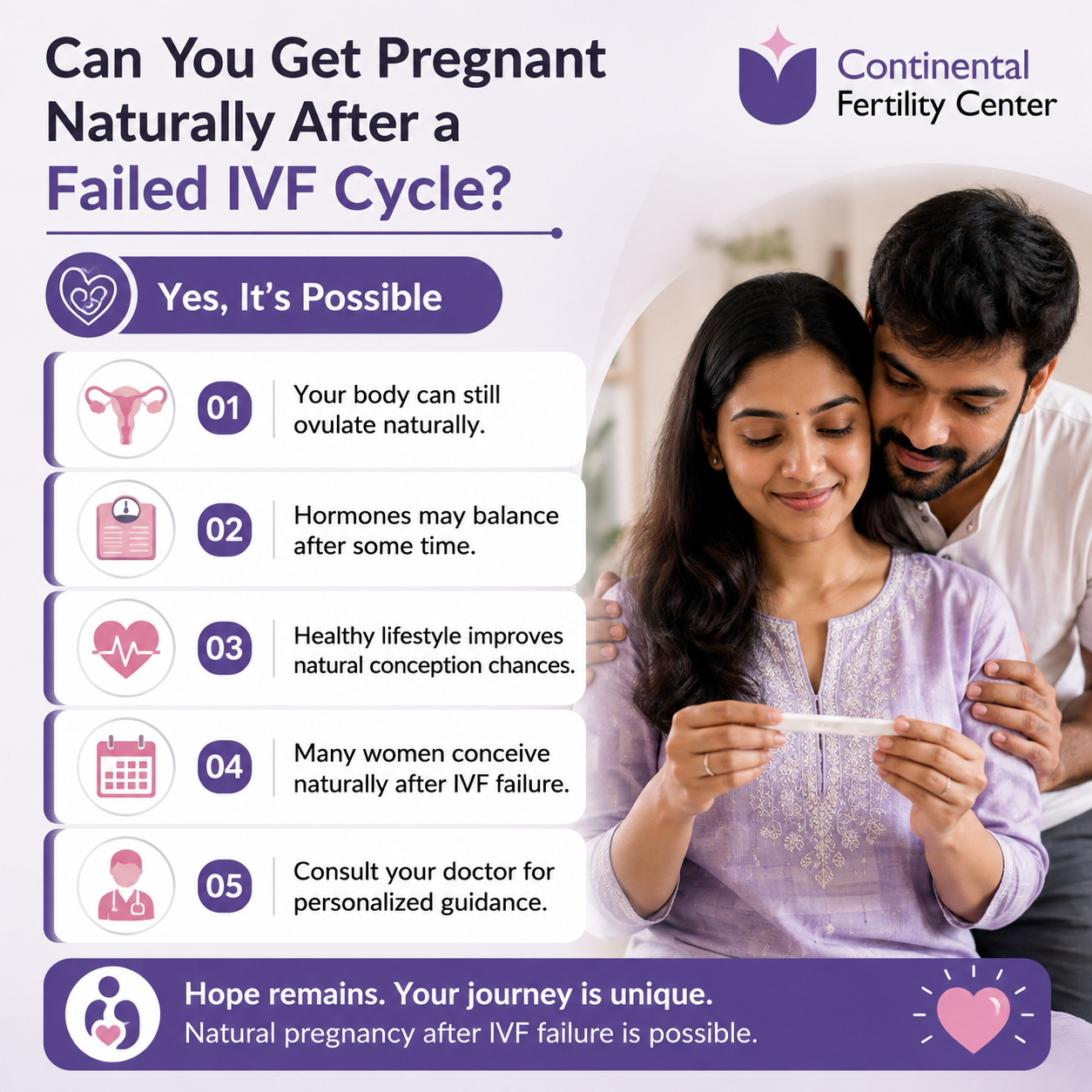
No. A failed IVF cycle does not automatically mean natural pregnancy is impossible.
Some couples become pregnant naturally after an unsuccessful IVF cycle because:
- Stress levels reduce after treatment.
- Lifestyle changes improve fertility.
- Hormonal balance improves over time.
- The underlying fertility issue resolves or becomes less severe.
- Ovulation occurs more regularly.
However, natural pregnancy depends on the reason for infertility. Couples with blocked fallopian tubes, severe male infertility, or significantly reduced ovarian reserve may still require fertility treatment.
Why Does an IVF Cycle Fail?
Understanding why an IVF cycle was unsuccessful helps doctors create a better ivf treatment plan for future attempts.
Common reasons include:
- Poor embryo quality
- Chromosomal abnormalities
- Implantation failure
- Poor egg quality
- Low sperm quality
- Uterine abnormalities
- Hormonal imbalance
- Endometriosis
- Polycystic ovary syndrome
- Advanced maternal age
A detailed evaluation after IVF failure helps identify possible improvements before the next treatment.
Can You Improve Your Chances of Natural Pregnancy?
Yes. While there are no guarantees, several healthy habits may improve fertility naturally.
Maintain a Healthy Weight
Being overweight or underweight can affect ovulation and hormone balance.
Eat a Balanced Diet
Include fruits, vegetables, whole grains, lean proteins, healthy fats, and antioxidant-rich foods.
Exercise Regularly
Moderate physical activity supports hormonal health and improves overall fertility.
Reduce Stress
Stress alone does not cause infertility, but managing emotional health can support your IVF journey and overall well-being.
Avoid Smoking and Alcohol
These habits may reduce fertility in both men and women.
Get Enough Sleep
Quality sleep supports hormone production and reproductive health.
When Should You Try Naturally After an IVF Cycle?
Many fertility specialists recommend allowing your body time to recover before trying again. The ideal timing depends on:
- Your age
- Your overall health
- The reason for ivf failure
- Whether frozen embryos remain
- Your doctor's recommendation
Never begin another fertility treatment or attempt pregnancy without discussing the timing with your fertility specialist.
Should You Try Another IVF Cycle?
Many couples achieve IVF success after changing their IVF treatment plan. A failed IVF cycle provides valuable information that helps doctors improve future treatment.
Your specialist may recommend:
- Additional fertility testing
- Genetic testing of embryos
- Different fertility medications
- Improved embryo selection
- Lifestyle modifications
- Frozen embryo transfer
- Treatment of uterine conditions before the next cycle
Every IVF journey is unique, and personalized care often improves outcomes.
Signs That Natural Pregnancy May Still Be Possible
Some positive indicators include:
- Regular menstrual cycles
- Healthy ovulation
- Good sperm quality
- Open fallopian tubes
- Healthy uterus
- Mild infertility factors
- Good ovarian reserve
- Previous pregnancy history
Even with these positive signs, medical evaluation remains important before trying naturally.
When Should You See a Fertility Specialist?
You should seek medical advice if you experience:
- Multiple failed IVF Cycle attempts
- Irregular menstrual periods
- Recurrent pregnancy loss
- Known fertility disorders
- Difficulty conceiving for an extended period
- Male fertility concerns
- Severe pelvic pain or endometriosis symptoms
Early evaluation can improve pregnancy outcomes and prevent unnecessary delays.
Why Choose Continental Fertility Center?
Choosing the right fertility center plays a significant role in your pregnancy journey.
Continental Fertility Center is part of Continental Hospitals, one of the best hospitals in Hyderabad, known for delivering advanced reproductive care with compassion and clinical excellence. The hospital is internationally recognized with JCI accreditation and nationally accredited by NABH, reflecting its commitment to patient safety, quality healthcare, and global treatment standards.
At Continental Fertility Center, couples receive:
- Personalized fertility evaluation
- Experienced fertility specialists
- Advanced reproductive technology
- Modern embryology laboratory
- Individualized ivf treatment plans
- Comprehensive infertility care for both men and women
- Ethical, evidence-based treatment approach
- Multidisciplinary support under one roof
Every couple receives care tailored to their unique fertility needs, helping maximize the chances of a healthy pregnancy.
Conclusion
A failed IVF cycle can be emotionally challenging, but it does not mean your dream of parenthood is over. Some couples achieve natural pregnancy after ivf, while others find success through a revised ivf treatment plan. Understanding the reason behind IVF failure, improving overall health, and seeking expert fertility guidance can make a meaningful difference in your journey.
Every fertility story is different, and the next step should always be guided by experienced specialists who understand your individual needs.
If you are experiencing infertility, have had an unsuccessful IVF cycle, or are planning your next step toward pregnancy after IVF, consult our best fertility specialists in Hyderabad at Continental Fertility Center, Hyderabad. Early evaluation, advanced fertility treatment, and personalized care can help you move closer to achieving a healthy pregnancy and building the family you have always hoped for.
Related Blogs:
Frequently Asked Questions
Yes, natural pregnancy is possible after a failed IVF cycle for some couples. A failed IVF attempt does not always mean natural conception cannot occur. Many factors such as age, egg quality, sperm health, and the underlying fertility condition influence the chances. Sometimes lifestyle improvements, reduced stress, treatment of hormonal issues, or correction of minor fertility problems can improve natural fertility. Couples with unexplained infertility may have a better chance of conceiving naturally than those with severe reproductive conditions. However, the likelihood varies from person to person. It is important to consult a fertility specialist to understand your individual situation. Your doctor may recommend further evaluation before planning the next pregnancy attempt.
The waiting period depends on your physical recovery and your doctor's advice. Most women can begin trying naturally after completing recovery from an IVF cycle and after their next menstrual cycle unless advised otherwise. Your fertility specialist may recommend additional investigations before attempting another pregnancy. This waiting period also allows hormone levels to return to normal and the uterus to recover. During this time, maintaining a healthy lifestyle, eating nutritious foods, staying active, and avoiding smoking or alcohol can improve fertility. Every couple has unique circumstances, so personalized medical guidance is essential before trying to conceive naturally.
IVF can fail for several reasons, including poor embryo quality, implantation failure, chromosomal abnormalities, uterine abnormalities, hormonal imbalances, or reduced egg and sperm quality. Age also plays a significant role because egg quality naturally declines over time. Certain medical conditions such as endometriosis or fibroids may affect implantation. Lifestyle factors like obesity, smoking, and uncontrolled diabetes can also reduce IVF success. Sometimes no definite cause is identified despite detailed testing. A fertility specialist can review the previous IVF cycle, identify possible reasons for failure, and recommend strategies to improve future pregnancy chances.
Healthy lifestyle habits can positively influence fertility in both men and women. Maintaining a healthy body weight, eating a balanced diet rich in fruits and vegetables, exercising regularly, sleeping well, and managing stress can support reproductive health. Avoiding smoking, excessive alcohol, and recreational drugs is equally important. Men should also focus on improving sperm health through proper nutrition and regular exercise. Although lifestyle changes cannot cure every fertility condition, they may improve the chances of natural conception and also increase the success of future fertility treatments. Regular medical follow-up remains important throughout the fertility journey.
Couples with unexplained infertility, mild ovulation disorders, or temporary fertility issues may have a better chance of conceiving naturally after a failed IVF cycle. Younger women generally have higher fertility potential because of better egg quality. Men with healthy sperm parameters also improve the likelihood of natural conception. If blocked fallopian tubes, severe male infertility, or advanced endometriosis are present, natural pregnancy may be less likely. Every fertility journey is different, and a detailed evaluation helps determine realistic expectations. A fertility specialist can assess your individual chances and recommend the most suitable next steps.
Not every couple needs to begin another IVF cycle immediately after a failed attempt. Your doctor will review the previous cycle, examine embryo development, hormone levels, uterine health, and overall fertility factors before recommending the next step. Some couples may benefit from additional tests or treatment before repeating IVF. Others may choose to try naturally for a period if medically appropriate. Emotional recovery is also important because fertility treatment can be physically and mentally demanding. Discussing your options with an experienced fertility specialist helps create the most suitable treatment plan.
After a failed IVF cycle, your fertility specialist may recommend additional tests to identify possible causes. These may include hormone testing, ultrasound examination, hysteroscopy to evaluate the uterus, genetic testing of embryos when appropriate, sperm DNA fragmentation testing, thyroid evaluation, and assessment of ovarian reserve. Some patients may also require testing for infections or immune-related conditions based on their medical history. The purpose of these investigations is to identify treatable problems and improve future pregnancy outcomes. Not every patient requires every test, and recommendations are always individualized.
You should consult a fertility specialist soon after a failed IVF cycle to discuss the results and future options. Early consultation helps identify any medical concerns that may have affected treatment success. Your doctor can review your fertility history, evaluate the previous IVF cycle, recommend additional testing if necessary, and advise whether natural conception, another IVF cycle, or a different fertility treatment is appropriate. Prompt medical guidance also provides emotional support and helps couples make informed decisions. Early evaluation improves the chances of planning the most effective path toward a successful pregnancy.