
How to Know If IUI Worked: Early Signs and When to Take a Pregnancy Test
After undergoing intrauterine insemination, many couples closely watch for changes in their body and wonder whether the treatment has worked. Understanding IUI success signs can help you know what changes may occur during the waiting period and when it is appropriate to take a pregnancy test.
IUI success signs can include mild changes such as breast tenderness, tiredness, mild cramping, or increased urination. However, these symptoms can also occur because of hormonal medicines used during fertility treatment or because of the normal menstrual cycle. Therefore, symptoms alone cannot confirm pregnancy after IUI. A pregnancy test at the right time provides a more reliable answer.
What Are the Early IUI Pregnancy Signs?
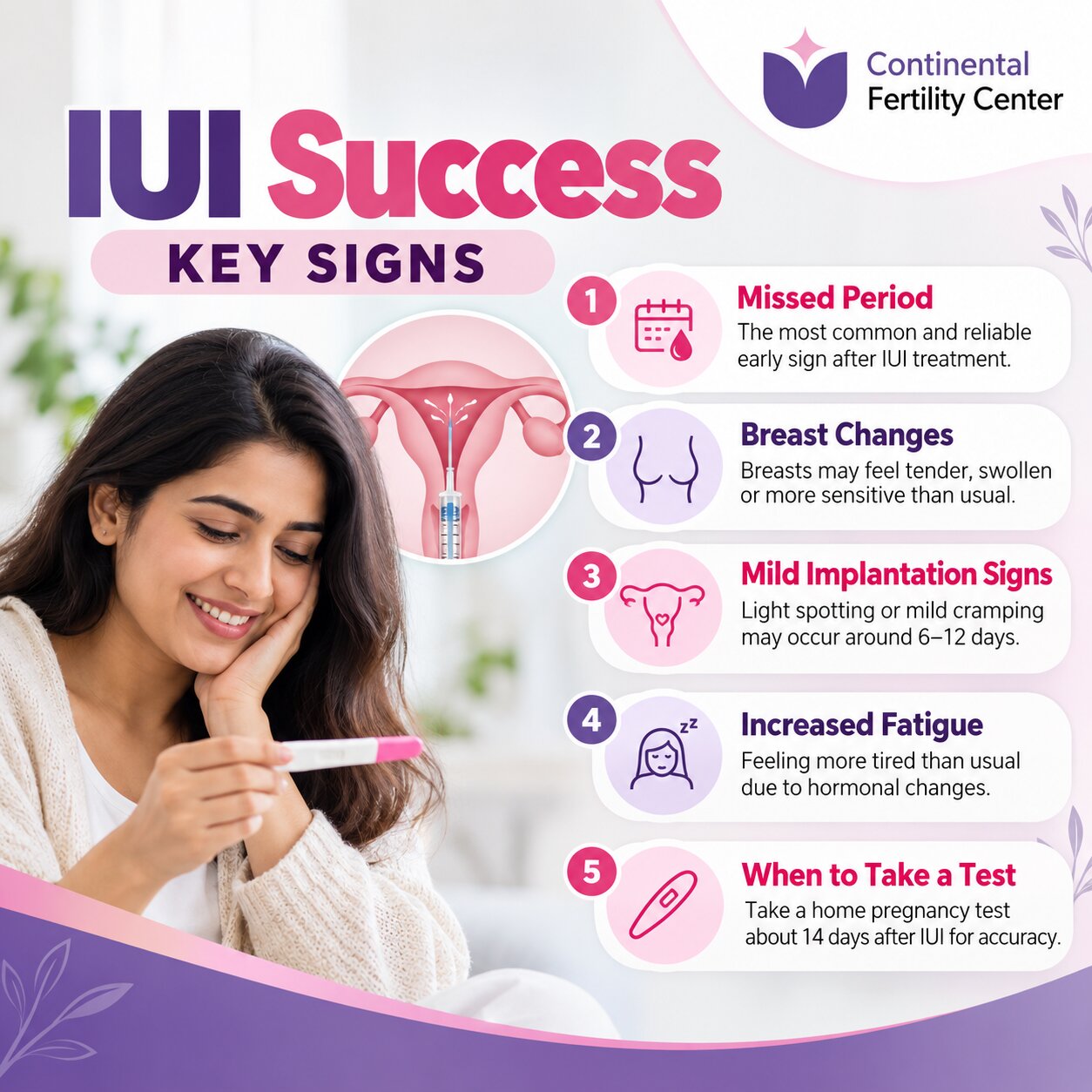
Some women may notice early changes after successful IUI, while others may experience no noticeable symptoms at all. Possible IUI pregnancy signs include:
- Mild abdominal cramping
- Breast tenderness or sensitivity
- Increased tiredness
- Bloating
- Increased urination
- Mild nausea
- Changes in appetite
- Increased sensitivity to smells
- Light spotting in some cases
These early signs after IUI are not proof of pregnancy. Similar symptoms may occur before menstruation, making it difficult to distinguish between early pregnancy symptoms and normal premenstrual changes.
When Do IUI Early Pregnancy Symptoms Usually Start?
Pregnancy symptoms generally do not appear immediately after IUI. If fertilization occurs, the resulting embryo needs time to develop and implant in the uterus. Pregnancy hormone levels then begin to rise.
Some women may notice changes around the time of implantation or later, while others may not experience symptoms until after a pregnancy test becomes positive.
Therefore, the absence of IUI success symptoms does not necessarily mean that the treatment has not worked.
Can Implantation Cause Symptoms After IUI?
Another common question is, "Can implantation cause symptoms after IUI?"
Some women may experience mild cramping or light spotting around implantation. However, not everyone experiences these changes. Implantation symptoms can also be difficult to distinguish from normal menstrual symptoms.
Heavy bleeding, severe abdominal pain, dizziness, or other unusual symptoms should not be ignored. Contact your fertility specialist if you experience concerning symptoms.
When Should You Take an IUI Pregnancy Test?
One of the most important questions after IUI is, "When to Take Pregnancy Test After IUI?"
Taking a pregnancy test too early may produce a confusing result. If an hCG trigger injection was used during the IUI cycle, residual pregnancy hormone from the medication may sometimes cause a false positive result.
Your fertility specialist will usually advise you on the appropriate testing date based on your treatment cycle. A blood pregnancy test may be recommended because it can detect pregnancy more accurately and measure hCG levels.
What Are the Most Reliable IUI Success Signs?
Symptoms are not the most reliable way to confirm pregnancy. The strongest confirmation comes from pregnancy testing.
Important points to remember include:
Symptoms alone cannot confirm pregnancy.
Fertility medicines can cause symptoms similar to pregnancy.
A negative test taken too early may not be conclusive.
Follow your fertility specialist's recommended testing date.
A blood hCG test can help confirm pregnancy.
Follow-up care is important after a positive result.
Can You Have No Symptoms and Still Be Pregnant After IUI?
Yes. Some women have very few or no noticeable symptoms during the early stages of pregnancy. Every pregnancy is different.
Therefore, do not compare your symptoms with those of other people. Having no IUI pregnancy signs does not automatically mean that IUI was unsuccessful.
What Happens After a Positive IUI Pregnancy Test?
If your pregnancy test is positive, your fertility specialist may recommend a follow-up blood test to assess hCG levels. Depending on the results and your clinical history, an ultrasound may later be scheduled to confirm the pregnancy and monitor early development.
Continue any prescribed medicines exactly as advised by your doctor and attend your scheduled follow-up appointments.
Why Choose Continental Fertility Center?
Choosing an experienced fertility center can make the treatment journey more structured and supportive. Continental Fertility Center provides fertility evaluation, IUI, IVF, reproductive medicine, and related care with a patient-focused approach.
Continental Hospitals follows established healthcare quality and patient safety standards and is accredited by NABH and JCI. The hospital also has multidisciplinary specialists and advanced diagnostic and clinical facilities to support comprehensive patient care.
Patients can benefit from:
- Personalized fertility evaluation
- Experienced fertility and reproductive medicine specialists
- Advanced diagnostic facilities
- Individualized IUI treatment planning
- Appropriate pregnancy monitoring and follow-up
- Multidisciplinary medical support
- Patient-focused fertility counselling
When Should You Consult a Fertility Specialist?
If you have undergone IUI and are unsure about your symptoms, pregnancy test timing, or next steps, consult your fertility specialist rather than relying only on IUI success signs.
If you are experiencing difficulty conceiving, repeated IUI failure, unusual symptoms after IUI, or concerns about your fertility treatment, consult our best fertility specialist in Hyderabad at Continental Fertility Center for personalized evaluation and guidance.
Conclusion
Understanding IUI success signs can help couples manage the waiting period after treatment, but symptoms cannot confirm pregnancy on their own. Early pregnancy symptoms may include tiredness, breast tenderness, mild cramping, bloating, or nausea, while some women may have no symptoms at all.
The most reliable way to know whether IUI worked is to take a pregnancy test at the time recommended by your fertility specialist. With timely testing, appropriate follow-up, and personalized fertility care, you can take the next step with greater confidence.
Related Blogs:
Frequently Asked Questions
Pregnancy cannot usually be confirmed immediately after IUI. Implantation may take several days after fertilization. Some people may notice mild changes during this period. These changes can also occur because of fertility medicines. Early symptoms alone cannot confirm pregnancy. The pregnancy hormone hCG rises after implantation. A pregnancy test detects this hormone in urine or blood. Testing too early may give an inaccurate result. Most people are advised to wait about two weeks after IUI. A blood test can provide an earlier and more reliable confirmation. Your fertility specialist may recommend a specific testing date. Following the recommended testing schedule can help avoid unnecessary confusion.
Early pregnancy symptoms after IUI can vary from person to person. Some people may not notice any symptoms at first. Mild abdominal cramping can sometimes occur after ovulation or implantation. Breast tenderness may also develop during early pregnancy. Increased tiredness can be another possible early symptom. Some people may notice changes in vaginal discharge. Light spotting may occur around the time of implantation. Nausea usually develops later rather than immediately after IUI. Fertility medicines can cause symptoms similar to early pregnancy. Therefore, symptoms alone cannot confirm that IUI was successful. A pregnancy test is needed to determine whether pregnancy has occurred. Your doctor can guide you about the right time to test.
A pregnancy test is generally recommended around two weeks after IUI. Testing too early may not detect enough hCG in the urine. This can lead to a false-negative pregnancy test. If an hCG trigger injection was used, early testing may also cause confusion. The medication can remain in the body for several days. This may sometimes produce a false-positive result. Waiting for the recommended testing date can improve accuracy. Your fertility specialist may recommend a blood pregnancy test. A blood test can measure hCG more precisely than a urine test. If a home test is negative, your doctor may recommend repeating it. Do not stop prescribed medicines without consulting your fertility specialist. Follow your clinic's instructions for pregnancy testing and follow-up.
Some people may notice symptoms after IUI, but they are not proof of pregnancy. Mild cramping can occur after the IUI procedure. Breast tenderness may occur because of hormonal changes. Fatigue can also be caused by fertility medicines or normal hormonal fluctuations. Mild spotting may occur in some people after IUI. Changes in appetite or mood can also happen during this period. These symptoms can occur even when pregnancy has not happened. Progesterone supplements may cause symptoms similar to early pregnancy. The timing of symptoms also varies between individuals. Some pregnant people may have no noticeable symptoms during the early days. A pregnancy test is more reliable than symptoms for confirming pregnancy. Contact your fertility specialist if you experience severe or unusual symptoms.
Light spotting after IUI can happen for several different reasons. It may sometimes occur because of minor irritation during the procedure. Some people may also experience spotting around implantation. Implantation generally occurs several days after fertilization. However, spotting does not confirm that pregnancy has occurred. Hormonal changes can also cause light bleeding during the treatment cycle. Fertility medicines may contribute to changes in bleeding patterns. Heavy bleeding is different from mild spotting and should be discussed with a doctor. Severe abdominal pain with bleeding may require prompt medical evaluation. Avoid relying on spotting alone to determine IUI success. A pregnancy test is needed for confirmation. Your fertility specialist can assess bleeding based on your treatment history. Follow the testing schedule recommended by your fertility clinic.
Yes, an IUI cycle can be unsuccessful without causing noticeable symptoms. Many people do not experience clear pregnancy symptoms during the early days. Pregnancy symptoms usually develop only after hormone levels increase. Some people may also have very mild symptoms that are difficult to notice. The absence of symptoms does not necessarily mean that IUI has failed. Similarly, having symptoms does not confirm pregnancy. Fertility medicines can cause symptoms that resemble early pregnancy. The most reliable way to know the outcome is through pregnancy testing. Your doctor may recommend a blood hCG test after the appropriate waiting period. If the test is negative, your fertility specialist can discuss the next steps. Depending on your situation, another IUI cycle may be considered. Other fertility treatment options may also be discussed if needed.
It is possible to take a pregnancy test early after IUI, but it may not be accurate. Pregnancy tests detect the hormone human chorionic gonadotropin, known as hCG. hCG usually becomes detectable after implantation has occurred. Testing before sufficient hCG is produced can result in a false-negative result. An hCG trigger injection can create another testing problem. The medication may temporarily remain in the body and cause a false-positive result. For this reason, early testing can be difficult to interpret. Most fertility specialists recommend waiting until the appropriate testing date. A blood test may be more sensitive than a home urine test. If you test early and receive a negative result, repeat testing may be advised. Follow your fertility specialist's instructions for the most reliable result.
A positive pregnancy test after IUI indicates that pregnancy is likely. Your fertility specialist may recommend a blood test to measure hCG levels. A repeat blood test may be performed to monitor how hCG changes. Your doctor will guide you about continuing prescribed fertility medicines. Do not stop progesterone or other medicines without medical advice. An ultrasound is usually scheduled later to confirm the pregnancy location and development. The timing of the ultrasound depends on your hCG levels and treatment history. Early pregnancy monitoring can help your doctor assess progress. Continue following your doctor's recommendations about medicines and activities. Contact your healthcare team if you develop heavy bleeding or severe abdominal pain. Regular follow-up is important during the early stages of pregnancy. Your fertility specialist will guide you through the next steps of care.