

IVF Myths vs Facts: Separating Truth from Misconceptions
In vitro fertilization, commonly known as IVF, has transformed the landscape of reproductive medicine and brought the joy of parenthood to millions of families worldwide. Despite being one of the most reliable and deeply researched forms of assisted reproductive technology, many false ideas and rumors continue to circulate about how it works, who it is for, and its long-term effects. This lack of accurate information often creates unnecessary anxiety and hesitation for couples who are exploring their options to conceive a child.
Uncovering the reality behind these common misunderstandings is essential for anyone navigating the journey of infertility. When facing reproductive challenges, making informed decisions based on scientific truth rather than popular hearsay can completely change your clinical path. This article aims to address the most widespread IVF myths vs facts, ensuring you have the clarity and confidence required to make the right choices for your future family.
What are the most common IVF Myths vs Facts regarding success rates and demographics?
Is IVF only meant for older couples?
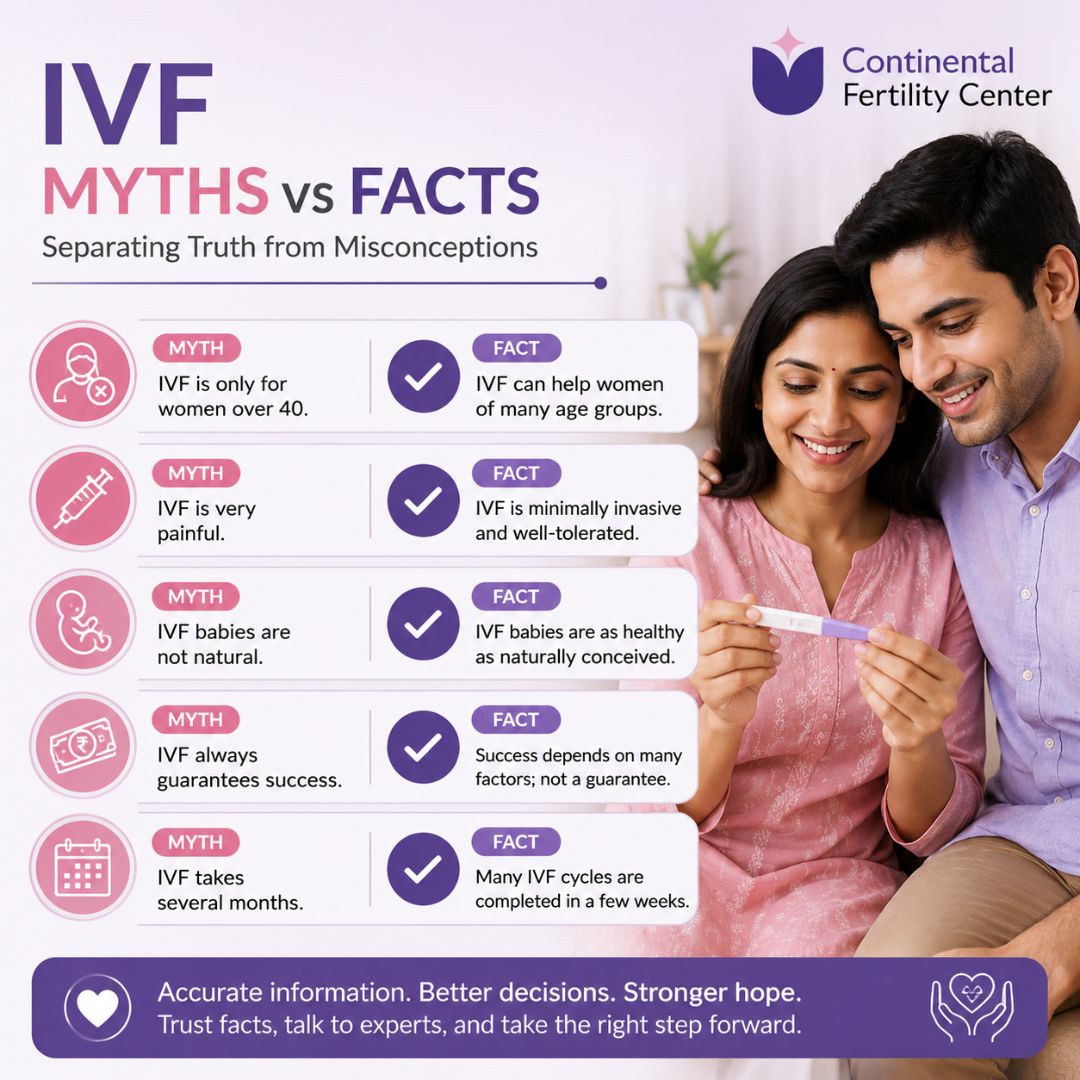
The Myth: Many people believe that in vitro fertilization is an extreme measure reserved exclusively for older women or couples who have delayed childbearing into their late thirties or forties.
The Fact: While age does influence overall fertility, younger couples frequently require IVF due to a variety of medical factors. Conditions such as blocked fallopian tubes, severe male factor infertility, pelvic inflammatory disease, and endometriosis can affect individuals of any reproductive age, making this advanced treatment a highly effective option across different age groups.
Does IVF guarantee a 100 percent success rate on the first attempt?
The Myth: There is a widespread assumption that once a couple chooses to undergo an IVF treatment, a successful pregnancy is absolutely guaranteed on their very first cycle.
The Fact: While this treatment offers some of the highest success rates in reproductive medicine, it does not guarantee an immediate pregnancy. Success depends heavily on individual biological variables, including egg quality, sperm health, uterine receptivity, and the specific underlying causes of infertility. Many couples require more than one cycle to achieve a successful, full-term pregnancy.
What are the biological and health misconceptions surrounding IVF treatment?
Does IVF increase the risk of multiple births automatically?
The Myth: A prominent piece of ivf misconceptions is that the procedure always results in twins, triplets, or high-order multiple pregnancies.
The Fact: Historically, multiple embryos were transferred simultaneously to increase the chances of pregnancy, which did lead to higher rates of multiple births. However, modern clinical guidelines and advanced laboratory technologies heavily favor single embryo transfer. By selecting the single healthiest blastocyst for transfer, fertility specialists drastically reduce the risk of multiple pregnancies while maintaining high success rates.
Are children born through IVF more prone to birth defects or developmental delays?
The Myth: There is an unfounded fear that babies conceived outside the body through in vitro fertilization face a much higher risk of congenital disorders or developmental issues compared to naturally conceived children.
The Fact: Decades of global IVF treatment facts and medical tracking show that children born via assisted reproduction are just as healthy, intelligent, and developmentally sound as any other children. The slight increase in certain risks is generally linked to the underlying health conditions of the parents or advanced maternal age, rather than the scientific process of the treatment itself.
What physical and lifestyle concerns do couples frequently question?
Does undergoing IVF deplete a woman's lifetime supply of eggs?
The Myth: Some women worry that the ovarian stimulation phase of the cycle uses up their reserve eggs rapidly, which might lead to an early onset of menopause.
The Fact: Every single month, a woman's body naturally recruits a group of immature eggs, but only one matures and ovulates while the rest dissolve and are lost. The medications used during an IVF treatment simply rescue those extra eggs that would have otherwise naturally degenerated during that specific cycle, ensuring that your long-term ovarian reserve is not depleted.
Is strict, absolute bed rest mandatory throughout the entire treatment process?
The Myth: Patients often assume they must remain completely bedridden for weeks following the embryo transfer procedure to ensure that implantation occurs successfully.
The Fact: Scientific evidence shows that prolonged bed rest does not improve implantation rates or success. In fact, gentle movement and returning to routine daily activities can reduce stress and improve healthy blood circulation. Medical experts advise avoiding strenuous exercise or heavy lifting, but absolute bed rest is unnecessary and unsupported by clinical facts.
Why choose Continental Fertility Center for your fertility journey?
When navigating reproductive health, choosing a reliable and advanced healthcare provider is crucial. Continental Hospitals is widely recognized as the best hospital in Hyderabad for comprehensive fertility assessments and advanced reproductive care. The institution is known for its rigorous medical standards, cutting-edge infrastructure, and patient-centered care.
Continental Hospitals holds prestigious national and international accreditations, including the National Accreditation Board for Hospitals and Healthcare Providers accreditation. These accreditations guarantee that the hospital adheres to strict international safety protocols, stringent quality control guidelines, and optimal clinical standards.
The Continental Fertility Center features advanced embryology laboratories, high-resolution diagnostic imaging tools, and cleanroom environments designed to optimize embryo development. The multi-disciplinary medical team works together to design highly customized treatment protocols based on accurate diagnosis, ensuring complete transparency and supportive care at every step.
Conclusion
Understanding the true facts surrounding your fertility options is the first step toward a successful parenthood journey. By separating common ivf myths from proven scientific realities, you can alleviate unnecessary fears and approach your clinical care with an optimistic, well-informed mindset. Remember that every fertility path is deeply personal, and speaking directly with a medical professional is the only way to get accurate answers tailored to your specific body.
If you suffer from prolonged infertility or recurrent pregnancy loss or have questions about how in vitro fertilization can help you build your family, expert medical care is available to guide you forward.
Book a personalized consultation with our best fertility specialist in Hyderabad at Continental Hospitals today to discover the true facts and take your next step toward parenthood.
Related Blog Topics:
Frequently Asked Questions
No. IVF is not limited to women who are unable to conceive naturally. It is a fertility treatment used for a variety of reproductive challenges affecting both men and women. IVF may be recommended for blocked fallopian tubes, ovulation disorders, endometriosis, unexplained infertility, diminished ovarian reserve, or male factor infertility. It can also help couples who have experienced repeated pregnancy loss or unsuccessful fertility treatments. In some cases, IVF is used with donor eggs, donor sperm, or genetic testing to improve the chances of a healthy pregnancy. Many people mistakenly believe IVF is the last option, but it can be an effective solution at different stages of fertility care. A fertility specialist evaluates each case individually before recommending IVF.
No. Modern IVF practices focus on achieving a healthy singleton pregnancy whenever possible. Advances in embryo selection and transfer techniques allow fertility specialists to transfer a single high quality embryo in many cases. This significantly reduces the risk of twins and higher order multiple pregnancies. While multiple pregnancies can still occur, especially when more than one embryo is transferred, they are not an inevitable outcome of IVF. The number of embryos transferred is carefully determined based on age, medical history, and embryo quality. The goal is to maximize pregnancy success while minimizing risks to both mother and baby. Patients should discuss embryo transfer options with their fertility specialist.
No. Numerous studies have shown that most babies born through IVF are healthy and develop normally. The vast majority of IVF children grow, learn, and achieve developmental milestones just like naturally conceived children. Any slight increase in certain risks is often linked to underlying parental health conditions rather than the IVF procedure itself. Advances in fertility medicine, laboratory techniques, and prenatal care have further improved outcomes for IVF pregnancies. Regular prenatal monitoring helps ensure the health of both mother and baby throughout pregnancy. Families considering IVF can be reassured that healthy births are common and expected outcomes. Consultation with an experienced fertility specialist can provide personalized guidance.
No. While IVF can significantly improve the chances of pregnancy for many couples, it does not guarantee success in every attempt. Success rates depend on several factors including age, egg quality, sperm quality, reproductive health, and underlying medical conditions. Younger women generally have higher success rates, but outcomes vary from person to person. Some individuals may achieve pregnancy during the first cycle, while others may require multiple treatment cycles. Fertility specialists use detailed evaluations to identify factors that may influence treatment outcomes. Continuous advancements in reproductive medicine have improved IVF success rates over the years. Understanding realistic expectations is important when starting fertility treatment.
Most patients do not describe IVF as highly painful. Some stages of treatment may cause mild discomfort, bloating, or temporary side effects due to fertility medications. Egg retrieval is typically performed under sedation or anesthesia, making the procedure comfortable for most women. Patients may experience mild cramping or soreness afterward, which usually resolves within a short period. Embryo transfer is generally quick and involves minimal discomfort. Fertility clinics provide close monitoring throughout the treatment process to ensure patient safety and comfort. Modern techniques and supportive care have made IVF much more patient friendly than many people assume. Individual experiences may vary, but severe pain is uncommon.
Stress can affect overall well being, but there is no clear evidence that stress alone causes IVF failure. Fertility outcomes are influenced by complex biological factors such as embryo quality, uterine health, age, and reproductive conditions. Emotional stress is common during fertility treatment because of the physical, financial, and emotional investment involved. Managing stress through counseling, support groups, mindfulness, exercise, and healthy lifestyle habits may improve emotional resilience during treatment. Fertility specialists encourage patients to focus on factors they can control while maintaining realistic expectations. A supportive environment can help make the IVF journey more manageable. Seeking emotional support is beneficial for many couples undergoing treatment.
Current research does not show a strong link between IVF treatment and an increased risk of cancer in most patients. Fertility medications used during IVF have been extensively studied for safety. While researchers continue to monitor long term outcomes, available evidence suggests that IVF is generally safe when performed under medical supervision. Some studies have explored possible associations with certain conditions, but no conclusive evidence has established IVF as a direct cause of cancer. Fertility specialists carefully review medical histories before beginning treatment. Regular health checkups and appropriate follow up care are important for all individuals, regardless of fertility treatment history. Patients with specific concerns should discuss them with their doctor.
Age remains one of the most important factors influencing IVF success. Female fertility naturally declines with age due to changes in egg quantity and quality. While IVF can help overcome many fertility challenges, it cannot completely reverse the effects of reproductive aging. Younger women generally have higher success rates and lower miscarriage risks. However, many women in their late thirties and forties also achieve successful pregnancies through IVF with individualized treatment plans. Fertility specialists may recommend options such as embryo freezing or donor eggs in certain situations. Early fertility assessment can help individuals understand their reproductive potential and make informed decisions. Timely medical guidance often improves treatment planning and outcomes.