
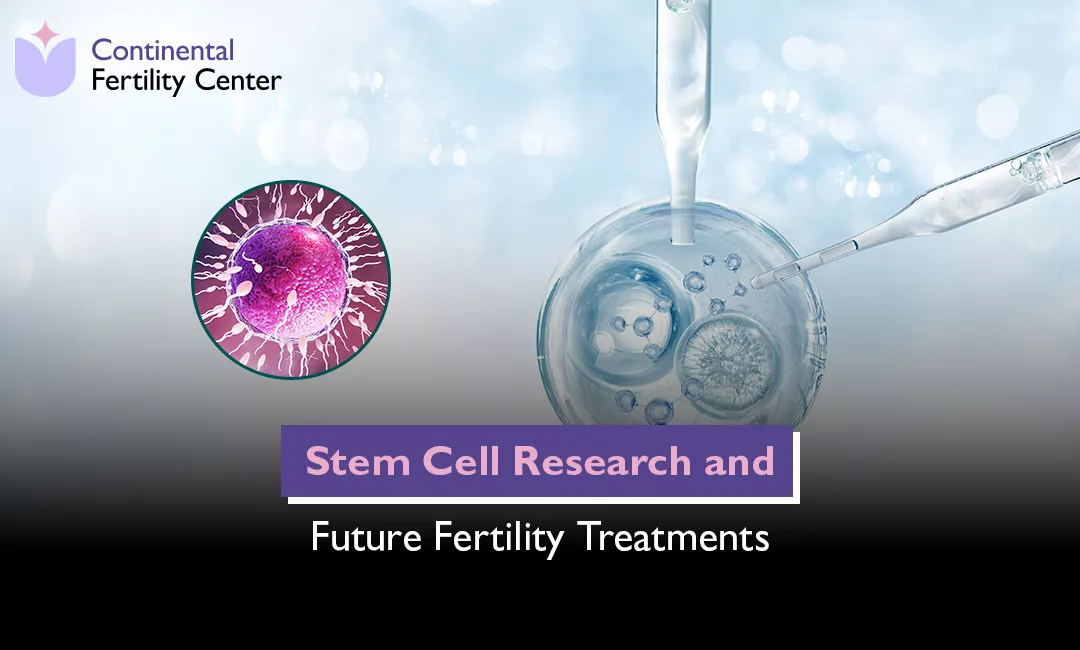
Stem Cell Research and Future Fertility Treatments
How close is science to creating a future where biological clocks can be completely reset? For millions of individuals across the world experiencing fertility challenges, the answer might rest within the evolving domain of regenerative medicine. In recent years, stem cell research has transitioned from a theoretical concept into an active area of medical exploration, offering profound possibilities for the evolution of future fertility treatments.
What makes this clinical shift so critical for couples exploring options today? Traditional assisted reproductive technologies focus heavily on optimizing existing eggs and sperm. Regenerative fertility medicine, however, aims to repair, restore, or even regenerate human cells and tissues that have been damaged by aging, illness, or genetic conditions, unlocking an entirely new paradigm of care for stem cells and infertility management.
What Exactly Are Stem Cells?
To understand how these advancements work, it is important to first ask: what is a stem cell? Stem cells are the foundational cells of the human body, possessing the unique ability to develop into many different specialized cell types, such as muscle cells, brain cells, or reproductive cells. They function as an internal repair system, dividing and renewing themselves over long periods.
In the context of reproductive medicine, scientists look at how these versatile cells can be guided to become functional gametes. If successful, this process could allow medical professionals to address the absolute absence of healthy eggs or sperm, which has historically been an absolute barrier to biological parenthood.
How Is Stem Cell Research Transforming Female Fertility?
How can stem cell research alter the outlook for women facing complex reproductive hurdles? One of the most significant challenges in female reproductive medicine is the fixed nature of a woman's egg supply. Conditions like Premature Ovarian Insufficiency (POI) or the natural decline in egg quality due to age often limit the success of standard treatments.
Through innovative stem cell therapy models, researchers are investigating several targeted interventions:
- Ovarian Rejuvenation: Can existing ovarian tissue be revitalized? Scientists are exploring how injecting specific stem cells into the ovaries might stimulate dormant follicles and improve overall egg production.
- In Vitro Gametogenesis (IVG): Is it possible to grow mature eggs in a specialized laboratory? Early-stage laboratory studies indicate that embryonic or induced pluripotent stem cells can potentially be guided to develop into viable egg cells.
- Endometrial Repair: What happens when the uterine lining cannot support an embryo? Regenerative techniques are being studied to rebuild a damaged or thin endometrium, ensuring a healthy environment for successful implantation.
What Does Regenerative Medicine Offer for Male Infertility?
What options exist when a couple faces severe male factor infertility? Just as with female fertility, stem cell research holds immense promise for addressing conditions like non-obstructive azoospermia, where a man produces no sperm in his ejaculate due to manufacturing issues within the testicles.
Current investigative approaches in male regenerative medicine include the following:
Restoring Sperm Production: Can damaged testicular tissue be repaired? Research focuses on isolating spermatogonial stem cells, multiplying them in a controlled laboratory, and reintroducing them to restore natural sperm production.
Developing Functional Sperm Cells: Can generic tissue cells be transformed? Ongoing global studies seek to differentiate stem cells into mature, functional sperm capable of fertilizing an egg through advanced assisted reproductive techniques.
When Will These Future Fertility Treatments Become Standard Practice?
While the potential of a stem cell fertility treatment is vast, where does the science stand today? It is essential to recognize that while some experimental applications are showing early success, many of these advanced therapies remain in the clinical trial and intensive research phases.
The path to making these innovations standard practice involves rigorous testing to ensure absolute genetic safety, cellular stability, and efficacy. However, the rapid pace of current fertility innovation indicates that regenerative medicine will likely redefine standard reproductive options over the coming decades, providing fresh pathways for individuals who currently have limited choices.
Why Choose Continental Fertility Center for Your Reproductive Journey?
When navigating complex fertility concerns, why is choosing the right medical institution so critical? The Continental Fertility Centre, located within Continental Hospitals, is widely recognized as the best hospital in Hyderabad for comprehensive reproductive care and advanced medical interventions.
Why do patients consistently trust Continental Hospitals? The institution is built to the highest international standards, earning prestigious global recognitions, including the Joint Commission International (JCI) accreditation and the National Accreditation Board for Hospitals & Healthcare Providers (NABH) accreditation. It also stands as a leading eco-friendly facility with advanced modular operating theaters and a highly sophisticated embryology laboratory that prioritizes patient safety, privacy, and clinical transparency.
The medical team at the Continental Fertility Center remains at the absolute forefront of global fertility innovation. By combining evidence-based medicine with the latest diagnostic infrastructure, the hospital ensures that couples receive the most accurate assessments and highly personalized treatment designs available in modern medicine today.
Conclusion
The ongoing evolution of stem cell research signals an inspiring shift in how reproductive medicine addresses complex biological hurdles. While standard treatments continue to help millions, the promise of regenerative medicine offers foundational solutions for the future, bringing fresh clarity to families worldwide.
If you suffer from persistent reproductive challenges or wish to explore the most advanced diagnostic and treatment options available today, taking an early step toward expert evaluation can change your path entirely.
Book a consultation with our best fertility specialist in Hyderabad at Continental Fertility Centre today to receive a personalized roadmap for your family-building goals.
Related Blog Topics:
Frequently Asked Questions
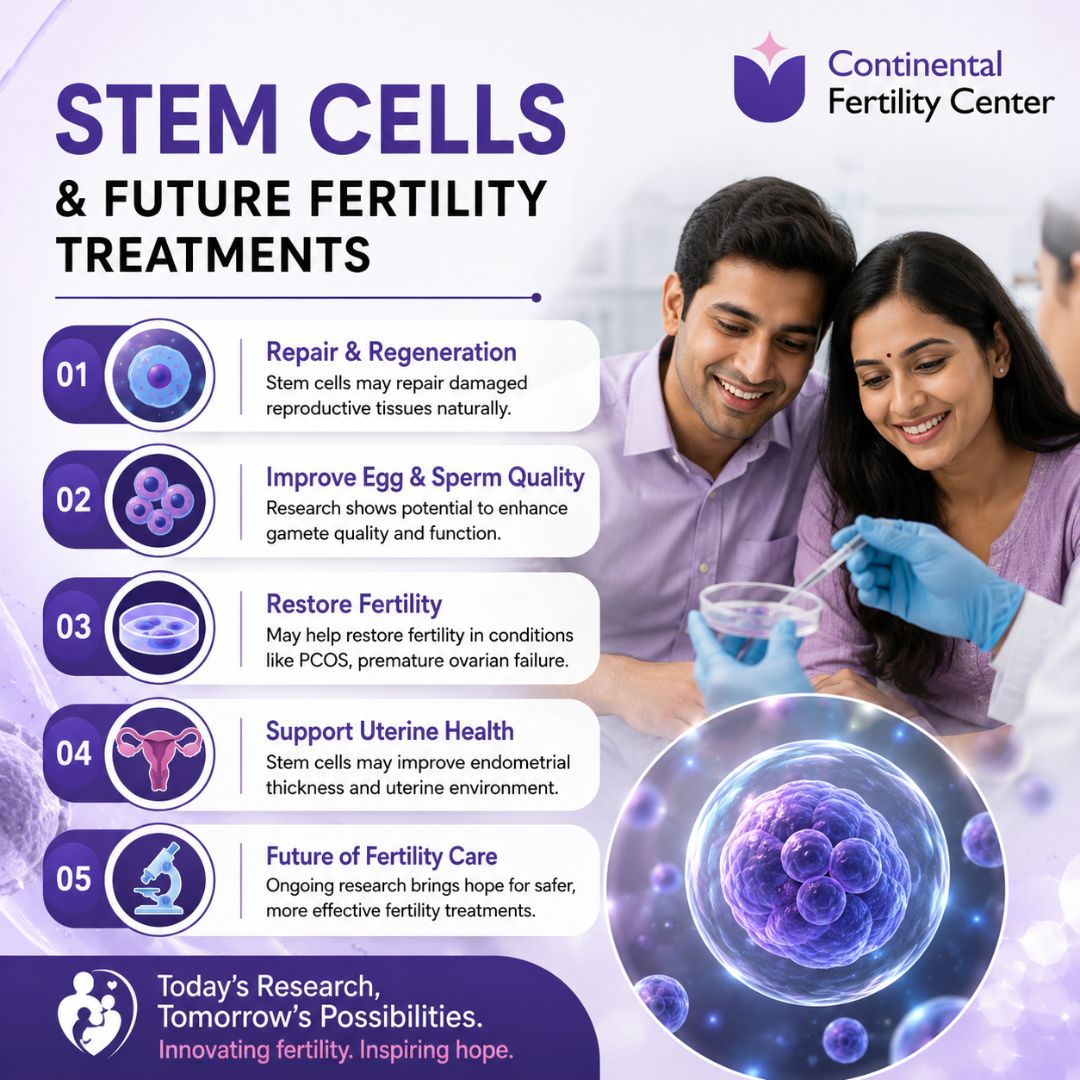
Stem cell research focuses on studying special cells that can develop into different types of cells in the body. In fertility medicine, researchers are exploring how stem cells may help restore reproductive function and improve fertility outcomes. Scientists are investigating whether stem cells can repair damaged ovarian tissue, improve egg quality, and support sperm production. These cells may help regenerate reproductive organs affected by age, disease, or medical treatments. Stem cell technology is also being studied for women with premature ovarian insufficiency and men with infertility caused by low sperm production. Although many studies are promising, most applications remain in the research stage. Clinical trials are ongoing worldwide to determine safety and effectiveness. Future fertility treatments may become more personalized through stem cell innovations. The goal is to provide new reproductive options for individuals who currently have limited treatment choices.
Low ovarian reserve occurs when the number or quality of a woman's eggs decreases significantly. Researchers are studying whether stem cell therapies can rejuvenate ovarian tissue and improve ovarian function. Early studies suggest that stem cells may release growth factors that stimulate blood vessel formation and tissue repair within the ovaries. This could potentially improve hormone production and support follicle development. Some experimental treatments have shown encouraging results in women with diminished ovarian reserve. However, these treatments are not yet considered standard fertility care. More clinical research is needed to confirm their long-term safety and effectiveness. Scientists continue to investigate how stem cells interact with ovarian tissue. Future advancements may provide new hope for women who have limited fertility options due to declining ovarian function.
The possibility of generating new eggs using stem cells is one of the most exciting areas of fertility research. Scientists have successfully created egg-like cells from stem cells in laboratory settings and animal studies. Researchers are exploring whether similar techniques can be safely applied to humans. The objective is to help women who have lost ovarian function due to aging, genetic conditions, or cancer treatments. While laboratory results are promising, the technology is still experimental. Significant scientific and ethical challenges must be addressed before it becomes a clinical treatment. Researchers need to ensure that stem cell-derived eggs are healthy and capable of producing healthy pregnancies. Extensive testing and regulatory approval will be required. If successful, this breakthrough could revolutionize fertility treatment in the future.
Stem cell research is also advancing the understanding of male infertility. Scientists are investigating whether stem cells can help restore sperm production in men with damaged testes or severe sperm deficiencies. Certain stem cells may be able to regenerate sperm-producing cells within the testes. Research has shown encouraging results in animal models where fertility function improved after stem cell treatment. These studies offer hope for men affected by genetic disorders, injuries, infections, or cancer treatments. However, human clinical applications remain under investigation. Researchers must carefully evaluate safety, effectiveness, and potential risks before widespread use. Current fertility treatments remain the primary option for most patients. Future stem cell therapies may provide additional solutions for men facing difficult infertility challenges.
Most stem cell-based fertility treatments are still considered experimental and are not routinely available in standard clinical practice. While research continues to advance rapidly, many therapies remain under investigation through controlled clinical trials. Some fertility centers may offer experimental procedures as part of approved research programs. Patients should understand that these treatments have not yet been fully validated for widespread use. Regulatory authorities require extensive evidence regarding safety and effectiveness before approving new medical therapies. Researchers are working to establish treatment protocols and long-term outcome data. Individuals considering stem cell-related fertility options should consult qualified fertility specialists. It is important to distinguish between approved treatments and experimental approaches. As scientific evidence grows, more stem cell therapies may become available in the future.
Stem cell-based fertility treatments have the potential to transform reproductive medicine. One major benefit may be the ability to repair damaged reproductive tissues naturally. Researchers believe these therapies could improve ovarian function, enhance egg quality, and support sperm production. Stem cells may also help restore fertility after chemotherapy or radiation treatment. Future applications could reduce the need for donor eggs or donor sperm in certain cases. Personalized fertility treatments based on a patient's own cells may become possible. Stem cell therapies may provide new options for individuals who currently have limited reproductive choices. Additionally, regenerative approaches could improve overall reproductive health. Although these benefits remain largely theoretical at present, ongoing research continues to explore their full potential.
Despite its promise, stem cell fertility research faces several scientific and medical challenges. Researchers must ensure that stem cell therapies are safe and do not cause unwanted tissue growth or tumors. Long-term effects on reproductive health and future offspring must also be carefully evaluated. Ethical concerns exist regarding certain types of stem cell research. Standardized treatment protocols have not yet been established for many applications. Clinical outcomes may vary depending on the patient's condition and treatment approach. Regulatory approval processes are rigorous to protect patient safety. Researchers must conduct large-scale clinical trials before treatments become widely available. Addressing these challenges is essential for responsible advancement in reproductive medicine. Ongoing research aims to balance innovation with patient safety.
The future of stem cell research in fertility medicine appears highly promising. Scientists are exploring innovative ways to regenerate reproductive tissues, create egg and sperm cells, and improve fertility outcomes. Advances in regenerative medicine, genetics, and biotechnology are accelerating discoveries in this field. Researchers envision personalized fertility treatments tailored to each individual's reproductive needs. Future therapies may help patients overcome infertility caused by aging, disease, or medical treatments. Stem cell technology could potentially expand reproductive options for millions of people worldwide. However, significant research and clinical validation remain necessary. Safety, effectiveness, and ethical considerations will continue to guide development. As scientific understanding grows, stem cell-based fertility treatments may become an important part of reproductive healthcare.