
Latest Advances in IVF Technology
The journey to parenthood is deeply personal, and for many individuals and couples facing fertility challenges, in vitro fertilization (IVF) has long been a beacon of hope. Over the years, this specialized field of medicine has transformed from a groundbreaking clinical alternative into a highly precise, sophisticated science. Millions of families worldwide owe their beginnings to these medical breakthroughs, which continue to evolve rapidly to maximize safety and success rates.
Today, the latest advances in IVF technology are reshaping the landscape of reproductive medicine. Driven by innovative laboratory breakthroughs, automation, and a deeper understanding of human embryology, modern IVF techniques are designed to optimize every single step of the fertility journey. For anyone exploring fertility treatments, these technical leaps offer higher success rates, shorter timelines to a successful pregnancy, and a more predictable, supportive experience.
At Continental Hospitals, we understand that navigating fertility options can feel overwhelming. Integrating these modern IVF innovations into standard clinical practice means that couples now have access to safer, more precise, and highly customized paths toward building their families. If you are exploring options for an advanced IVF treatment, understanding these recent breakthroughs can give you the clarity and confidence you need to take the next step.
Why Is Advanced IVF Treatment Recommended?
Infertility is a complex condition that affects millions of people globally. Understanding when and why a specialist might recommend modern assisted reproductive technology involves looking at the underlying causes of fertility struggles.
What Causes Fertility Challenges?
Fertility issues can stem from various reproductive health factors in both men and women, including:
- Ovulatory Disorders: Conditions like Polycystic Ovary Syndrome (PCOS) or premature ovarian insufficiency.
- Tubal Damage: Blocked or damaged fallopian tubes that prevent the egg and sperm from meeting.
- Endometriosis: A condition where tissue similar to the lining of the uterus grows outside it, impacting ovarian and uterine function.
- Male Factor Infertility: Low sperm count, poor sperm motility (movement), or abnormal sperm shape.
- Unexplained Infertility: Situations where standard diagnostic tests show no clear cause for design delays.
What Are the Key Risk Factors?
While anyone can experience fertility difficulties, certain risk factors make the use of advanced IVF treatment more likely:
- Advanced Maternal Age: Egg quality and quantity naturally decline significantly after the age of 35.
- Lifestyle Elements: High stress levels, smoking, excessive alcohol consumption, and being severely over or underweight.
- Chronic Health Conditions: Unmanaged diabetes, autoimmune disorders, or genetic conditions.
How Does Modern IVF Technology Improve Diagnosis and Selection?
The cornerstone of recent IVF technology lies in how specialists identify the healthiest embryos and prepare the body for a successful transfer.
How Has Embryo Selection Evolved?
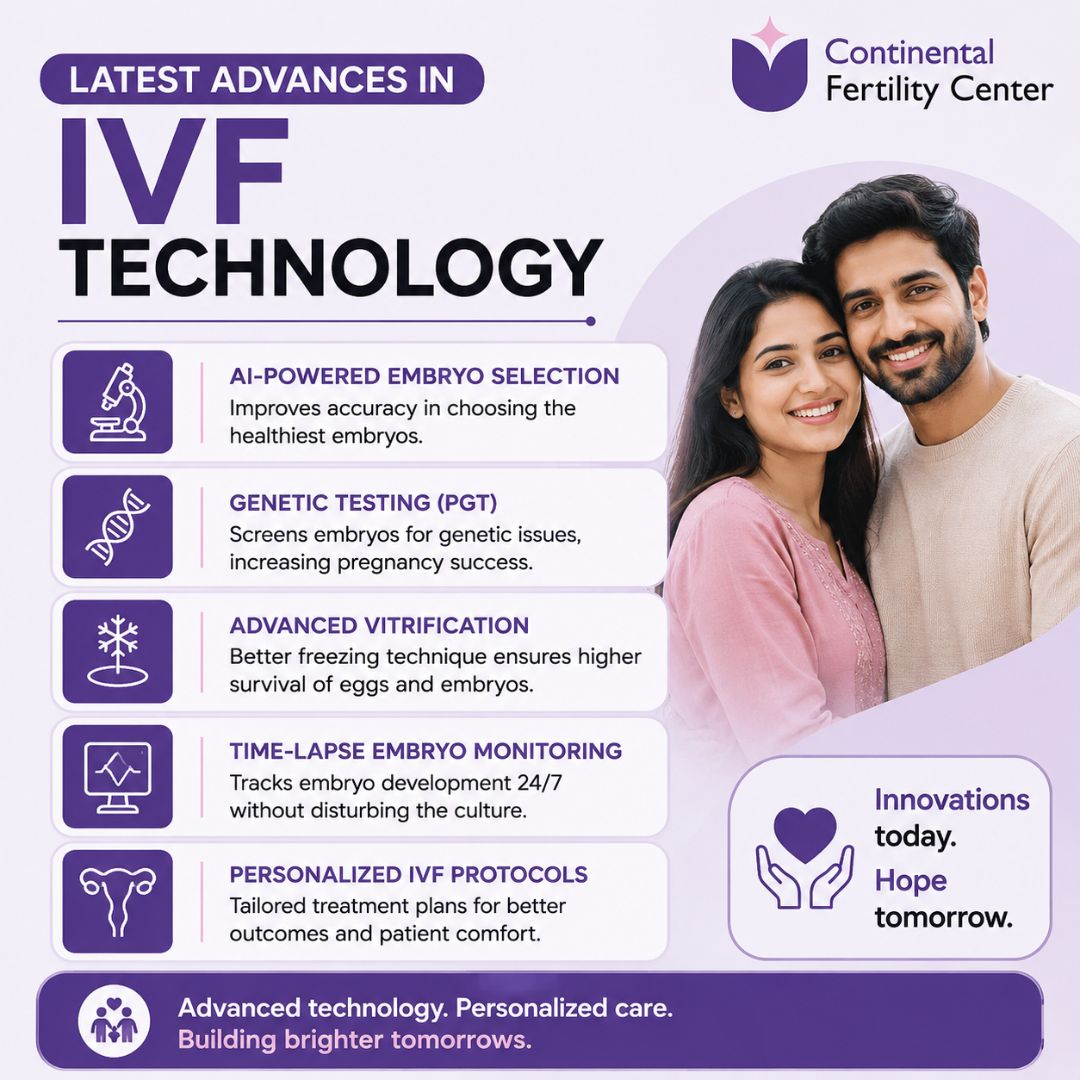
One of the most significant IVF innovations is the use of non-invasive embryo screening and artificial intelligence (AI). Specialists use advanced time-lapse imaging to monitor embryo development 24/7 without removing them from the protective environment of the incubator. AI algorithms analyze these growth patterns to predict which embryo has the highest implantation potential.
Furthermore, Preimplantation Genetic Testing (PGT) allows specialists to screen embryos for chromosomal abnormalities before transfer, significantly reducing miscarriage risks and preventing the transmission of specific genetic disorders.
How Does Pre-Treatment Testing Help?
Before starting a cycle, comprehensive diagnostic tools help map out a precise treatment plan. This includes specialized blood panels, advanced ultrasound imaging to check ovarian reserve, and detailed uterine mapping to ensure the endometrial lining is perfectly receptive before an embryo is introduced.
What Are the Treatment Steps and Prevention Strategies?
A typical cycle utilizing modern IVF techniques involves a carefully synchronized series of medical and laboratory steps.
What Does the Advanced IVF Process Involve?
- Ovarian Stimulation: Tailored hormonal medications encourage the ovaries to develop multiple mature eggs.
- Egg Retrieval: A minor, ultrasound-guided procedure performed under light sedation to collect the mature eggs.
- Sperm Selection and Fertilization: Utilizing techniques like Intracytoplasmic Sperm Injection (ICSI), a single high-quality sperm is injected directly into an egg.
- Embryo Culture and Monitoring: The fertilized eggs are grown in specialized, state-of-the-art incubators equipped with time-lapse cameras.
- Embryo Transfer: The selected, optimal embryo is gently placed into the uterus.
Can Lifestyle Tips and Prevention Optimize Results?
While you cannot control genetic factors, practicing targeted lifestyle habits can significantly protect your reproductive health and improve your treatment outcomes:
- Maintain a Balanced Diet: Focus on antioxidant-rich foods, whole grains, lean proteins, and healthy fats like those found in a Mediterranean diet.
- Manage Stress: Practices like yoga, mindfulness, and professional counseling can help regulate stress hormones that impact fertility.
- Avoid Toxins: Eliminate smoking, limit caffeine intake, and avoid exposure to endocrine-disrupting chemicals found in certain plastics and heavy industrial environments.
When Should You Consult a Doctor?
It is recommended to seek guidance from a fertility specialist if you are under 35 and have been actively trying to conceive for over a year, or after six months if you are over the age of 35. Early consultation is also highly advised if you have a known history of irregular cycles, severe pelvic pain, or recurring miscarriages.
Why Choose Continental Fertility Center for IVF Treatment?
Choosing the right partner for your fertility journey makes all the difference. Continental Fertility Center stands out as a leading destination for couples seeking compassionate, world-class reproductive care.
Our center brings together everything you need for a safe and successful experience:
- Expert Specialists: Our team comprises highly experienced reproductive endocrinologists, clinical embryologists, and specialized fertility nurses.
- Advanced Technology: We utilize the newest IVF technology, including advanced embryology labs, time-lapse monitoring systems, and laser-assisted hatching.
- Multidisciplinary Care: Patients benefit from seamless coordination between fertility experts, endocrinologists, dietitians, and psychological counselors.
- Personalized Treatment: We don’t believe in one-size-fits-all protocols; every treatment plan is custom-built around your unique diagnostic profile.
- Dual Accreditations: Proudly holding both JCI Accreditation and NABH Accreditation, we guarantee adherence to international standards of medical safety and clinical excellence.
- State-of-the-Art Infrastructure: Designed to optimize clinical success, our cleanroom laboratories provide an ideal environment for delicate cellular work.
- 24/7 Emergency & Critical Care Services: Round-the-clock availability ensures that any urgent medical need is addressed instantly by expert teams.
- High Standards of Patient Care: From your initial consultation to your post-treatment checkups, we prioritize your comfort, privacy, and emotional well-being.
Conclusion
The continuous progress in assisted reproductive technology has turned what once seemed impossible into a reality for thousands of families. By combining cutting-edge genetic insights, sophisticated laboratory monitoring, and highly tailored clinical approaches, the latest advances in IVF technology offer unprecedented precision and higher success rates. While the path to parenthood can have its challenges, modern science ensures you have more tools, resources, and hope at your disposal than ever before.
For any queries related to IVF, consult our best fertility specialist in Hyderabad at Continental Fertility Center. Visit Continental Hospitals for expert diagnosis, advanced treatment, and comprehensive care.
Frequently Asked Questions
IVF technology has advanced significantly in recent years, improving success rates and patient outcomes. Innovations include AI-assisted embryo selection, time-lapse embryo monitoring, preimplantation genetic testing (PGT), advanced cryopreservation techniques, and personalized ovarian stimulation protocols. These technologies help fertility specialists select healthier embryos, reduce implantation failures, and improve pregnancy outcomes. Enhanced laboratory conditions and embryo culture systems have also contributed to better embryo development. Modern IVF treatments are more precise, safer, and tailored to individual patient needs. As research continues, IVF is becoming increasingly effective for couples facing infertility challenges.
Artificial intelligence (AI) is transforming IVF by helping embryologists identify the most viable embryos for transfer. AI algorithms analyze embryo images and developmental patterns to predict implantation potential more accurately. This technology reduces subjectivity in embryo selection and improves consistency in decision-making. AI can also assess sperm quality and optimize treatment planning. By selecting embryos with higher chances of successful implantation, AI may increase pregnancy rates and reduce the number of IVF cycles required. As AI technology evolves, it continues to enhance precision and efficiency in fertility treatments.
Time-lapse embryo monitoring is an advanced imaging technology used during IVF treatment. Specialized incubators continuously capture images of developing embryos without disturbing their environment. This allows embryologists to observe embryo growth in real time and assess developmental milestones more accurately. The technology helps identify embryos with the highest implantation potential while maintaining stable culture conditions. Time-lapse monitoring provides valuable insights into embryo quality and can improve embryo selection decisions. It is increasingly used in modern IVF centers to support better clinical outcomes.
Preimplantation genetic testing (PGT) is an advanced screening technique performed on embryos before transfer. It helps identify chromosomal abnormalities and certain inherited genetic conditions. By selecting genetically healthy embryos, PGT can improve implantation rates, reduce miscarriage risks, and increase the likelihood of a healthy pregnancy. The procedure is especially beneficial for couples with a history of genetic disorders, recurrent pregnancy loss, or advanced maternal age. PGT enables fertility specialists to make informed embryo selection decisions and supports personalized fertility treatment plans.
Embryo freezing technology has improved dramatically with the introduction of vitrification. Vitrification is a rapid freezing technique that prevents ice crystal formation and protects embryo integrity. This method results in higher survival rates when embryos are thawed for future use. Improved cryopreservation allows patients to preserve embryos for later transfer without compromising quality. Frozen embryo transfer cycles often achieve success rates comparable to fresh cycles. The advancement has provided greater flexibility in fertility treatment and improved overall IVF outcomes.
Personalized IVF treatment protocols are customized fertility plans designed according to an individual's age, hormone levels, ovarian reserve, medical history, and reproductive goals. Rather than using a standard approach, fertility specialists tailor medication dosages and stimulation strategies to optimize egg production and treatment response. Personalized care helps minimize risks such as ovarian hyperstimulation syndrome and may improve success rates. Advances in reproductive medicine and diagnostic testing have made individualized treatment more effective. This patient-centered approach is becoming a key component of modern IVF care.
Yes, advanced IVF technologies can provide improved options for women with low ovarian reserve. Fertility specialists may use individualized stimulation protocols, advanced hormone monitoring, and fertility preservation techniques to maximize egg retrieval outcomes. AI-assisted embryo selection and genetic testing can help identify the most promising embryos for transfer. Improved laboratory practices and embryo culture systems also contribute to better treatment success. While outcomes vary among individuals, these innovations have expanded fertility opportunities for women who previously had limited options.
Most modern IVF technologies are considered safe and have undergone extensive clinical evaluation before adoption in fertility practice. Techniques such as AI-assisted embryo assessment, time-lapse monitoring, vitrification, and genetic testing are widely used in leading fertility centers worldwide. These innovations aim to improve embryo selection, increase pregnancy rates, and reduce treatment-related risks. The effectiveness of each technology may vary depending on individual patient factors and fertility conditions. Consultation with an experienced fertility specialist can help determine the most appropriate technologies for a patient's specific needs and treatment goals.