

Male Infertility: Common Causes and Treatments
The journey toward parenthood is a shared path, yet for many couples, the road can be unexpectedly challenging. While much of the historical focus on fertility has centered on women, medical data shows that male factors contribute to nearly half of all infertility cases. Understanding that male fertility is a dynamic aspect of overall health is the first step toward finding a solution. At Continental Fertility Centre, we believe that clarity leads to confidence, and identifying the root cause of infertility is the most effective way to build the family of your dreams.
Understanding Male Infertility
Male infertility refers to any health issue in a man that lowers the chances of his female partner getting pregnant. It usually involves problems with sperm production, sperm quality, or the delivery of sperm to the egg. It is a common condition, but because it often carries no outward symptoms, many men are unaware of it until they actively try to conceive.
Fertility depends on a complex process. To result in a pregnancy, the body must produce healthy sperm, which must be carried into the semen and then have the strength and shape to reach and penetrate the egg. A disruption at any point in this sequence can lead to difficulties.
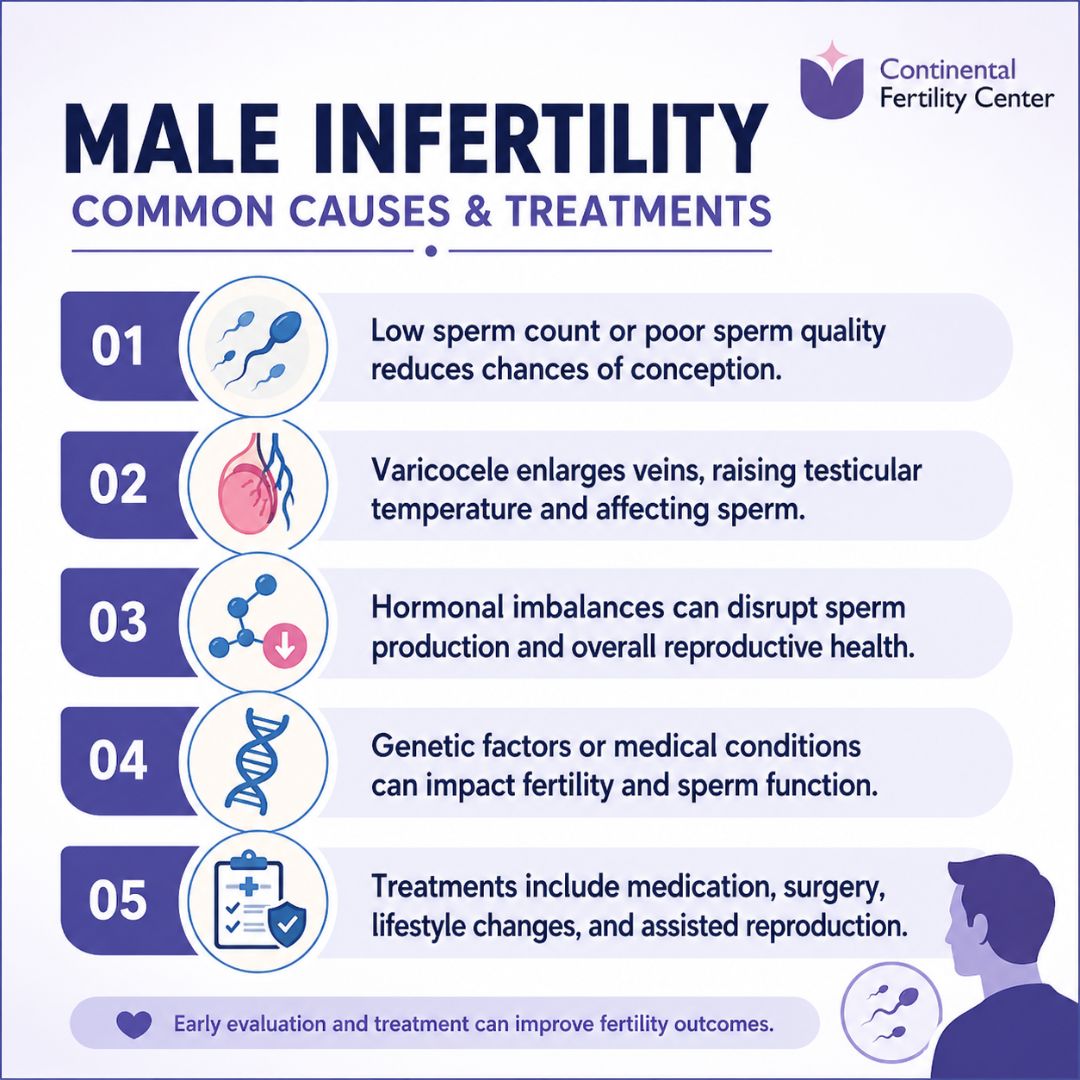
Common Causes of Male Infertility
The causes of infertility in men can be broadly categorized into medical, environmental, and lifestyle factors. Identifying which of these is at play requires expert diagnostic tools and a thorough evaluation.
Medical Causes
Varicocele: This is the most common reversible cause of male infertility. It involves the swelling of the veins that drain the testicle. This leads to reduced sperm quality and quantity by affecting the temperature regulation of the testes.
Infections: Certain infections can interfere with sperm production or cause scarring that blocks the passage of sperm. These include inflammation of the epididymis or testicles and some sexually transmitted infections.
Ejaculation Issues: Retrograde ejaculation occurs when semen enters the bladder during orgasm instead of emerging through the tip of the penis. Various health conditions like diabetes or spinal injuries can cause this.
Hormonal Imbalances: Infertility can result from disorders of the testicles themselves or an abnormality affecting other hormonal systems including the hypothalamus and pituitary glands.
Tubule Blockages: The tubes that carry sperm can be blocked due to various reasons, including prior surgery, infections, trauma, or abnormal development.
Environmental and Lifestyle Factors
Heat Exposure: Frequent use of saunas or hot tubs may temporarily lower sperm count by elevating the temperature of the testes.
Lifestyle Choices: Tobacco use, excessive alcohol consumption, and certain medications can significantly impair male fertility.
Weight: Obesity can cause hormonal changes that reduce male fertility and can also directly affect the sperm themselves.
Diagnostic Procedures
To determine the specific causes of male infertility, our specialists perform a series of detailed evaluations. This typically begins with a physical examination and a review of your medical history.
- Semen Analysis: This is the primary test to check sperm count, shape (morphology), and movement (motility).
- Scrotal Ultrasound: This helps in identifying varicoceles or other problems in the testes and supporting structures.
- Hormone Testing: Measuring the level of testosterone and other hormones helps determine if the reproductive system is functioning correctly.
- Genetic Testing: If sperm concentration is extremely low, genetic testing can identify if there are chromosomal abnormalities.
Effective Male Infertility Treatment Options
The modern medical landscape offers a variety of ways to address male infertility treatment. The choice of therapy depends on the underlying cause and the severity of the condition.
Surgical Interventions
In cases like varicocele, surgery can often repair the swelling of the veins, leading to a significant improvement in sperm quality. In instances where no sperm are present in the ejaculate, sperm can often be retrieved directly from the testicles using minor surgical techniques.
Treating Infections
Antibiotic treatments can cure infections of the reproductive tract, though this does not always restore fertility if permanent scarring has occurred.
Hormone Treatments and Medications
If the infertility is caused by high or low levels of certain hormones or problems with the way the body uses hormones, a specialist may recommend hormone replacement or medications.
Assisted Reproductive Technology (ART)
ART treatments involve obtaining sperm through normal ejaculation, surgical extraction, or from donor individuals, depending on the specific case. The sperm are then inserted into the female genital tract or used for in vitro fertilization (IVF) or intracytoplasmic sperm injection (ICSI). ICSI is particularly effective for male infertility, as a single healthy sperm is injected directly into a mature egg.
Why Choose the Continental Fertility Center?
When searching for the best hospital in Hyderabad for fertility concerns, Continental Fertility Centre stands out as a leader in reproductive medicine. We combine world-class technology with a deeply compassionate approach to patient care.
Accreditations and Standards
Continental Hospitals is renowned for its commitment to global healthcare standards. We are proud to hold the JCI (Joint Commission International) accreditation, which is the gold standard for patient safety and quality of care worldwide. Additionally, our NABH (National Accreditation Board for Hospitals & Healthcare Providers) accreditation ensures that our internal processes and clinical outcomes meet the highest national benchmarks. These certifications reflect our dedication to providing a safe, ethical, and highly regulated environment for your treatment.
Advanced Laboratory Facilities
Our embryology labs are equipped with the latest technology, ensuring that every sample is handled with extreme precision. From advanced sperm processing to high-end ICSI procedures, our infrastructure is designed to maximize the success rates of male infertility treatment.
Multi-Disciplinary Expertise
Fertility is not just about one doctor? It is about a team. At Continental, you have access to urologists, andrologists, and reproductive endocrinologists who work together to create a personalized plan for you. Our holistic approach ensures that all physical and emotional aspects of your journey are supported.
Tips for Improving Male Fertility
While medical intervention is often necessary, certain lifestyle adjustments can support sperm health and improve the outcomes of your treatment?
- Maintain a Healthy Weight: Balanced nutrition helps regulate hormones essential for sperm production.
- Manage Stress: High stress levels can interfere with the hormones needed to produce sperm.
- Stay Cool: Avoid tight underwear and prolonged sitting in hot environments to keep testicular temperature optimal.
- Exercise Moderately: Regular physical activity can boost antioxidant levels and improve sperm quality.
Conclusion
Facing infertility can feel overwhelming, but it is important to remember that you are not alone and that medical science has made incredible leaps in this field. Whether the issue is related to sperm count, motility, or underlying medical conditions, there is almost always a path forward. By seeking help early and choosing a facility that prioritizes both clinical excellence and patient safety, you can move closer to achieving your goal of starting a family.
If you are experiencing difficulties with conception, taking the first step toward a diagnosis is a sign of strength. Expert care is available to help you navigate these challenges with dignity and the latest medical advancements.
If you suffer from any reproductive health concerns or wish to discuss male infertility, schedule a consultation with our leading specialists. Consult our best male fertility specialist in Hyderabad at Continental Hospitals.
Related Blog Topics:
Frequently Asked Questions
Male infertility is the inability of a man to cause pregnancy in a fertile female partner due to issues like low sperm count, poor sperm quality, or problems with sperm delivery.
Common causes include low sperm production, abnormal sperm function, varicocele, hormonal imbalances, genetic conditions, infections, and lifestyle factors like smoking and alcohol use.
Diagnosis involves semen analysis, physical examination, hormone testing, genetic tests, and imaging studies to identify underlying issues affecting sperm health.
Yes, smoking, excessive alcohol consumption, obesity, stress, poor diet, and lack of exercise can negatively impact sperm count and quality.
Treatment options include medications, hormone therapy, surgery (such as varicocele repair), lifestyle changes, and assisted reproductive techniques like IVF and ICSI.
Not always. Many cases are treatable depending on the cause. Early diagnosis and proper treatment can significantly improve fertility outcomes.
Couples should seek medical advice if they are unable to conceive after one year of regular unprotected intercourse, or sooner if there are known risk factors.
While not all cases are preventable, maintaining a healthy lifestyle, avoiding toxins, managing stress, and regular health checkups can help reduce the risk.