
The Best Age for Pregnancy: What Fertility Experts Say
Planning a family is one of the most significant milestones in a person's life. While career stability, relationship readiness, and emotional maturity play vital roles in this decision, biological readiness remains a core factor. Many couples find themselves asking about the medical realities of timing, wondering how much impact biological clocks truly have on building a healthy family.
Understanding the biological timeline helps couples make informed decisions about their reproductive health. Female fertility naturally changes over time, affecting both the ease of conception and the overall journey of pregnancy. By exploring what clinical research and experts say, individuals can better align their personal timelines with their biological possibilities.
This comprehensive guide breaks down how maternal aging interacts with reproductive health, what scientific benchmarks define different biological periods, and how modern medical interventions support families at every stage. From prime physiological windows to advanced solutions for later stages, fertility experts share essential insights to guide your family-planning choices.
What Is the Ideal Age to Get Pregnant?
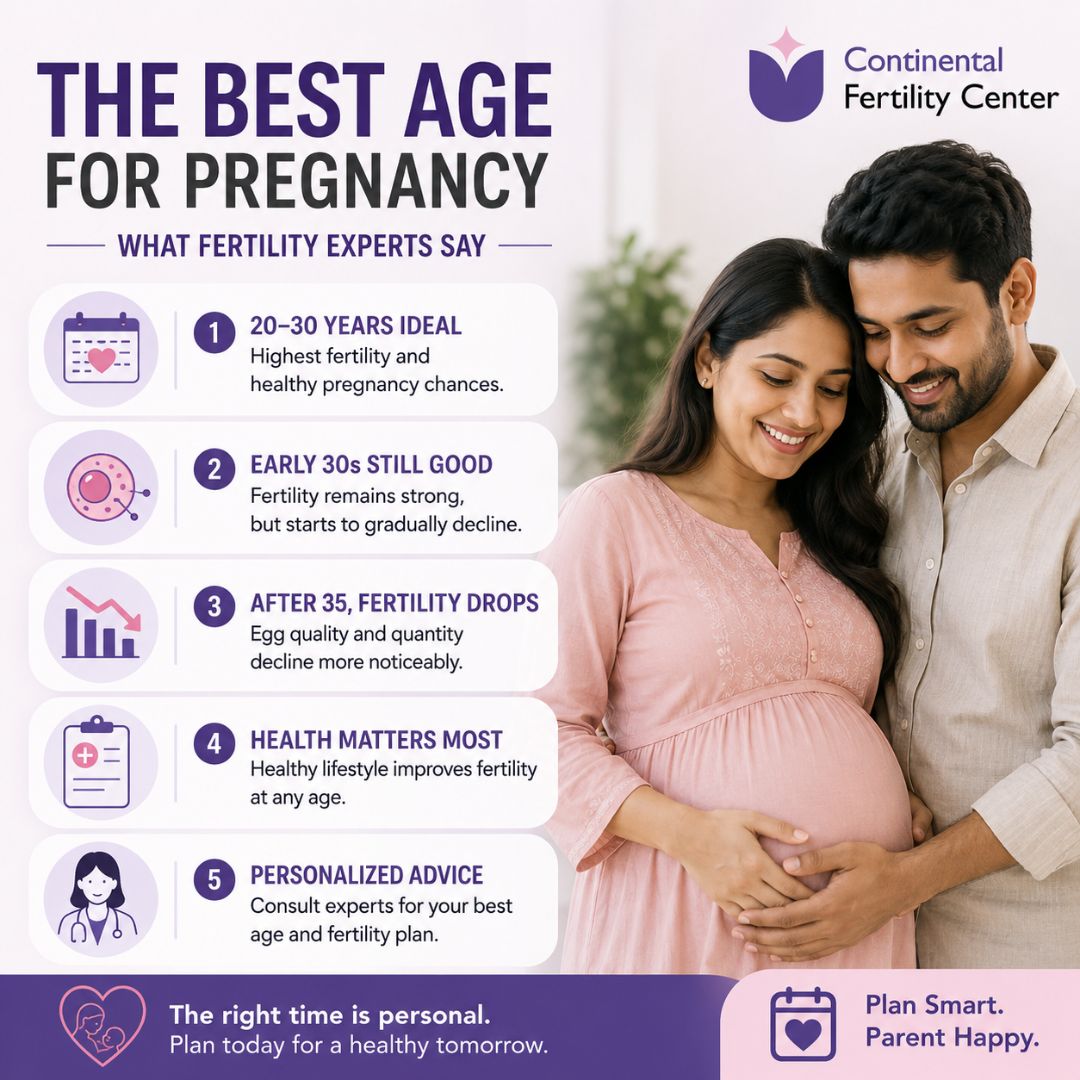
From a purely biological perspective, research indicates that the best age to have a baby is between your late teens and late 20s. During this window, a woman's body has its highest quantity of healthy eggs, and the physical risks associated with gestation and delivery are statistically at their lowest.
As individuals reach their early 30s, a subtle change begins. While fertility remains high during this period, the biological decline becomes more pronounced after passing the 35-year milestone. This transition does not mean conceiving after 35 is impossible, but it does mean that understanding the relationship between pregnancy age and fertility becomes increasingly important for planning families effectively.
How Does Pregnancy Age and Fertility Connect?
To understand how age impacts the timeline, it helps to look at the specific physiological changes that occur across different decades of life:
The 20s: The Peak Fertility and Age Window
Egg Quality and Quantity: Women are born with a fixed number of eggs, roughly one to two million, and this number naturally decreases with time. In your 20s, the reserve is robust, and a high percentage of these eggs are genetically normal.
Conception Success Rates: The natural chance of conceiving during any single menstrual cycle is at its highest, making this the most straightforward time for natural conception.
Pregnancy Health: The likelihood of developing gestational complications, such as high blood pressure or gestational diabetes, is statistically minimal during this decade.
The 30s: Navigating the Reproductive Shift
The Age 35 Milestone: Around age 35, the rate of egg loss accelerates, and the proportion of remaining eggs with chromosomal abnormalities increases.
Decreased Monthly Conception Chances: The natural probability of getting pregnant during a monthly cycle drops gradually throughout your early 30s, requiring more time and patience for many couples.
Evolving Risk Profiles: The incidence of miscarriage and genetic variations in embryos rises during the late 30s, which often calls for more comprehensive prenatal screenings.
The 40s: Advanced Age and Healthy Pregnancy Age Realities
Significant Fertility Decline: By age 40, the natural egg reserve has diminished considerably, making natural conception much more challenging.
Increased Medical Monitoring: Pregnancies in this age group are carefully monitored by medical teams due to an elevated likelihood of preeclampsia, premature birth, and low birth weight.
The Vital Role of Assisted Reproductive Technology: Many women in their 40s achieve successful, beautiful pregnancies by relying on advanced medical support to ensure optimal outcomes.
What Challenges Arise From Delayed Conception?
When family planning is deferred, understanding the primary obstacles helps couples seek timely assistance:
Diminishing Ovarian Reserve: A lower total number of remaining eggs directly decreases the natural mathematical odds of fertilization each month.
Declining Oocyte Quality: Older eggs are more prone to errors during cell division, which can result in chromosomal issues that may prevent implantation or lead to early miscarriage.
Underlying Gynecological Conditions: With advancing age, conditions like uterine fibroids, endometriosis, or pelvic inflammatory disease have had more time to develop, potentially creating physical barriers to conception.
How Can Modern Medical Care Support a Healthy Pregnancy Age?
If you choose to conceive later in life, modern reproductive medicine provides highly reliable techniques to safeguard and support your path to parenthood:
- Advanced Fertility Evaluations: Comprehensive blood panels measuring Anti-Mullerian Hormone (AMH) levels and pelvic ultrasounds allow specialists to assess egg reserves precisely.
- Fertility Preservation: Egg freezing and embryo cryopreservation allow individuals to preserve high-quality genetic material during their peak reproductive years for future use.
- In Vitro Fertilization (IVF): This technique bypasses many natural barriers by fertilizing eggs in a controlled laboratory environment before transferring the healthy embryo back to the uterus.
- Intracytoplasmic Sperm Injection (ICSI): A specialized form of IVF where a single healthy sperm is selected and carefully injected into an egg, optimizing the chances of successful fertilization.
- Preimplantation Genetic Testing (PGT): Advanced screening methods allow embryologists to evaluate embryos for genetic normalcy before implantation, significantly improving success rates for women of advanced reproductive age.
Why Choose Continental Fertility Centre for Your Pregnancy Journey?
When evaluating your reproductive health and timing, receiving support from a premier medical institution is essential. Continental Hospitals is widely recognized as the best hospital in Hyderabad for comprehensive maternal and reproductive healthcare.
The Continental Fertility Center offers a world-class environment designed to provide precise diagnostic testing and highly successful clinical interventions. The facility features state-of-the-art embryology laboratories, advanced imaging technology, and clean-room environments built to global benchmarks.
Continental Hospitals holds prestigious national and international medical distinctions, including the Joint Commission International (JCI) accreditation and the National Accreditation Board for Hospitals & Healthcare Providers (NABH) accreditation. These formal honors guarantee that every patient benefits from international safety protocols, stringent quality control measures, and an exceptional standard of clinical excellence. The specialized team manages every reproductive journey with complete medical transparency, absolute confidentiality, and deep clinical expertise.
Conclusion
Every individual has a unique life path, and the ideal age to get pregnant depends on a careful balance of biological factors and personal readiness. While nature defines specific physiological windows for peak fertility, modern reproductive science has opened new pathways, giving couples more control over their timelines than ever before. Knowing how aging affects your body allows you to make strategic choices, whether that means trying to conceive now or preserving your fertility for the future.
If you suffer from reproductive difficulties, face concerns about a delayed pregnancy, or want to explore your current fertility status, seeking early specialist guidance can transform your outcomes. Understanding your options is the foundation of a successful, stress-free family journey.
Book an appointment with our best fertility specialist in Hyderabad at Continental Fertility Centre today to receive a personalized evaluation and expert guidance for your family planning.
Related Blog Topics:
Frequently Asked Questions
Most fertility experts consider the late 20s to early 30s as the ideal age range for pregnancy. During this period, women generally have the highest fertility rates and the lowest risk of pregnancy-related complications. Egg quality and ovarian reserve are usually at their peak, improving the chances of natural conception. The risk of miscarriage and chromosomal abnormalities is also lower compared to later reproductive years. Additionally, maternal health tends to support a healthier pregnancy and childbirth experience. However, many women successfully conceive and deliver healthy babies in their mid-30s and beyond with proper medical care. Fertility is influenced by several factors including genetics, lifestyle, overall health, and reproductive conditions. Therefore, the best age for pregnancy can vary from person to person. Consulting a fertility specialist can help assess individual fertility potential and guide family planning decisions. Early fertility evaluation is especially helpful for those considering delayed parenthood.
Female fertility naturally declines with age due to a reduction in both the quantity and quality of eggs. Women are born with a fixed number of eggs, and this reserve decreases over time. Fertility remains relatively stable during the 20s but starts to gradually decline after age 30. The decline becomes more significant after age 35 and accelerates after age 40. Older eggs have a higher likelihood of chromosomal abnormalities, which can affect conception and pregnancy outcomes. Men also experience age-related fertility changes, although the decline is usually more gradual. Lifestyle factors such as smoking, obesity, poor nutrition, and chronic health conditions can further impact fertility. Understanding age-related fertility changes can help individuals make informed reproductive decisions. Fertility testing can provide valuable insights into reproductive health. Seeking expert guidance early can improve the chances of achieving pregnancy.
Yes, many women successfully conceive naturally after the age of 35. While fertility declines with age, natural pregnancy is still possible for many healthy women. However, it may take longer to conceive compared to younger age groups. Women over 35 have a higher risk of miscarriage, gestational diabetes, high blood pressure, and chromosomal abnormalities. Regular health checkups and preconception counseling become increasingly important. Maintaining a healthy weight, balanced diet, and active lifestyle can support reproductive health. Fertility assessments can help identify any underlying issues that may affect conception. If pregnancy does not occur after six months of trying, consultation with a fertility specialist is recommended. Early evaluation allows timely diagnosis and treatment of fertility concerns. Advances in reproductive medicine have also improved pregnancy outcomes for women in this age group.
Pregnancy after age 40 is increasingly common but may involve certain medical challenges. Fertility rates decline significantly due to reduced ovarian reserve and egg quality. The risk of miscarriage, ectopic pregnancy, and chromosomal abnormalities increases with maternal age. Older mothers may also be more likely to develop gestational diabetes, hypertension, and pregnancy-related complications. Regular prenatal care is essential to monitor maternal and fetal health. Advanced screening tests can help assess genetic risks during pregnancy. Despite these challenges, many women over 40 have healthy pregnancies and deliveries. Good overall health, proper nutrition, and early medical supervision can improve outcomes. Fertility treatments may also help individuals achieve pregnancy when natural conception is difficult. A personalized approach from fertility and obstetric specialists is important for optimal care.
Yes, male fertility can also decline with age, although the changes are usually more gradual than in women. As men get older, sperm count, motility, and morphology may decrease. The quality of genetic material within sperm can also be affected. Advanced paternal age has been associated with longer time to conception and a higher risk of certain genetic conditions. Lifestyle factors such as smoking, alcohol use, obesity, and chronic illnesses can further impact sperm health. Regular exercise and a balanced diet may help maintain fertility. Men planning fatherhood later in life can benefit from fertility evaluations. Semen analysis is a common test used to assess reproductive potential. Early identification of fertility issues allows timely intervention and treatment. Both partners' ages should be considered when planning a pregnancy.
Consulting a fertility specialist can be beneficial if you are planning to delay pregnancy. Fertility assessments can provide information about ovarian reserve, reproductive health, and future fertility potential. Understanding your fertility status helps in making informed decisions about family planning. Women in their 30s or those with a family history of early menopause may particularly benefit from evaluation. Fertility preservation options such as egg freezing can also be discussed. Lifestyle modifications and reproductive health optimization strategies may be recommended. Early consultation allows individuals to understand age-related fertility changes before they become significant. Men can also benefit from fertility assessments when planning delayed parenthood. A personalized fertility plan can improve future reproductive options. Proactive planning offers greater flexibility and peace of mind.
Yes, fertility treatments can help many older women achieve pregnancy. Treatment options depend on age, ovarian reserve, overall health, and the underlying cause of infertility. Common approaches include ovulation induction, intrauterine insemination (IUI), and in vitro fertilization (IVF). IVF is often recommended for women with age-related fertility decline. In some cases, donor eggs may be considered when egg quality is significantly reduced. Fertility specialists use various diagnostic tests to determine the most appropriate treatment plan. Success rates generally decrease with advancing maternal age but vary among individuals. Early evaluation and timely intervention often improve treatment outcomes. Advances in reproductive technology continue to expand options for older parents. Personalized fertility care can help maximize the chances of a healthy pregnancy.
Improving the chances of a healthy pregnancy starts with maintaining overall health and preparing for conception. Eating a balanced diet rich in essential nutrients supports reproductive wellness. Regular physical activity helps maintain a healthy weight and hormonal balance. Avoiding smoking, excessive alcohol consumption, and recreational drugs is important. Managing chronic medical conditions such as diabetes, thyroid disorders, and hypertension can improve pregnancy outcomes. Taking folic acid supplements before conception helps reduce the risk of certain birth defects. Regular health screenings and preconception consultations can identify potential concerns early. Stress management and adequate sleep also contribute to reproductive health. Fertility evaluations may be useful for individuals experiencing difficulty conceiving. Partner health is equally important, as both maternal and paternal factors influence pregnancy success.