

Thyroid Disorders and Their Impact on Fertility
The human body relies on a delicate balance of hormones to keep everything running smoothly. When couples face difficulties starting a family, they often look closely at reproductive hormones like estrogen or progesterone. However, a small, butterfly-shaped gland located in the neck called the thyroid also plays a massive role in reproduction. This small gland acts as the master controller of human metabolism, influencing almost every cellular process in the body, including ovulation and sperm production.
When the thyroid gland produces too much or too little hormone, it disrupts the entire endocrine system. This disruption can cause subtle or major imbalances that make conceiving a child difficult. Many individuals struggle with unexplained conception issues for months, completely unaware that a minor imbalance in their neck is the root cause of their reproductive delays. For anyone planning a family, understanding how thyroid and fertility relate to each other is an essential step on the path to parenthood.
Addressing thyroid conditions is highly critical because these disorders are common, manageable, and deeply connected to successful conception and healthy pregnancies. The Continental Fertility Centre focuses on providing comprehensive evaluations to ensure that hidden hormonal imbalances do not stand in the way of your family goals. Identifying these subtle thyroid issues early can significantly change your path to building a family.
What Is the Link Between the Thyroid and Fertility?
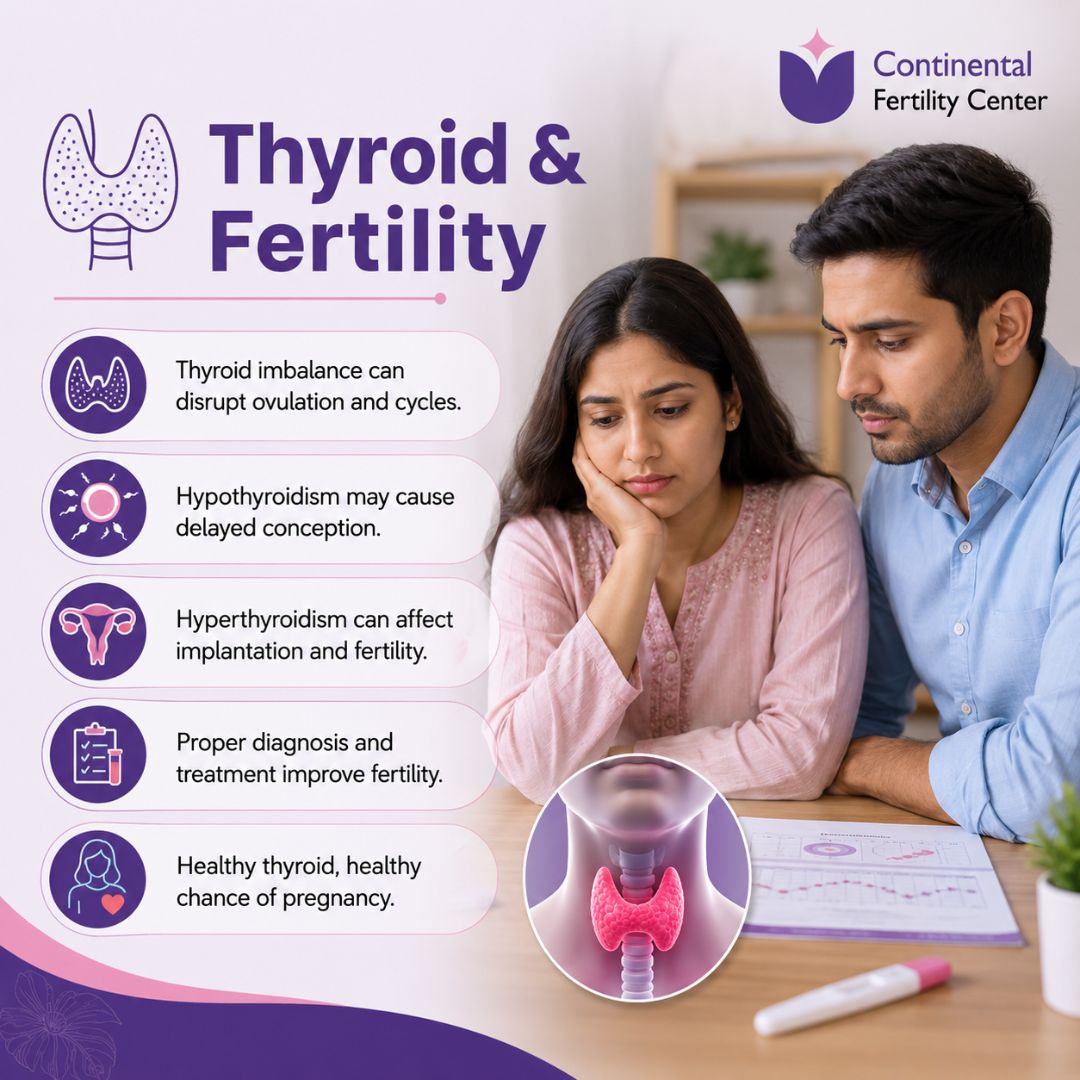
The thyroid gland produces hormones that regulate metabolism, body temperature, and energy levels. When these hormone levels are off balance, they alter the natural rhythm of your reproductive cycle.
In women, improper thyroid function can interfere with the release of an egg from the ovary, which is called ovulation. If ovulation is irregular or stops completely, conceiving becomes much harder.
In men, thyroid health affects the production, quality, and motility of sperm. This means that a thyroid issue in either partner can contribute to the overall challenge of male or female infertility.
How Does Hypothyroidism Affect a Woman's Ability to Conceive?
Hypothyroidism occurs when the thyroid gland is underactive and does not produce enough thyroid hormones. This condition slows down the functions of the body and directly impairs your reproductive potential.
- Disrupted Menstrual Cycles: An underactive thyroid can lead to irregular, heavy, or missed periods, making it very difficult to track your fertile window.
- Anovulation: This is a condition where the ovaries do not release an egg during the monthly cycle, meaning fertilization cannot take place.
- Luteal Phase Defects: A shortage of thyroid hormones can shorten the second half of the menstrual cycle, preventing a fertilized egg from implanting securely in the uterus.
- Elevated Prolactin Levels: Low thyroid hormone levels cause the body to release more prolactin, a hormone that suppresses ovulation and milk production outside of pregnancy.
What Is Hyperthyroidism and Can It Impact Conception?
Hyperthyroidism is the opposite condition, where an overactive thyroid gland produces excessive amounts of thyroid hormones. This accelerates the metabolism of the body and creates a different set of reproductive challenges.
Irregular Menstrual Patterns: Women with an overactive thyroid often experience very light or infrequent periods.
Ovarian Cysts: Hormonal surges from an overactive gland can interfere with normal follicular development in the ovaries.
Increased Risk of Early Pregnancy Loss: Even if conception occurs, unmanaged hyperthyroidism makes it difficult for the body to maintain the pregnancy in the earliest weeks.
Why Is Addressing Hypothyroidism and Pregnancy Vital?
When exploring thyroid and fertility issues, managing your thyroid health remains critical even after a positive pregnancy test. Hypothyroidism and pregnancy require careful medical monitoring to protect both the mother and the developing baby.
During the first trimester of pregnancy, the fetus relies entirely on the thyroid hormones of the mother for brain and nervous system development. If the mother has untreated hypothyroidism, it increases the risk of severe complications. These complications include preeclampsia, premature birth, low birth weight, and miscarriage. Regular blood tests during pregnancy ensure that hormone levels stay within a safe range.
How Are Thyroid Problems Diagnosed During Fertility Evaluations?
Detecting thyroid problems is a straightforward process that forms a fundamental part of any initial infertility assessment. Doctors use simple blood tests to get a clear picture of your hormonal health.
- TSH Test: The Thyroid Stimulating Hormone test measures how hard the pituitary gland is working to stimulate the thyroid.
- Free T3 and Free T4 Tests: These tests measure the actual amount of active thyroid hormones circulating in your bloodstream.
- Thyroid Antibody Test: This specific test checks for autoimmune conditions, such as Hashimoto's thyroiditis or Graves' disease, where the immune system mistakenly attacks the thyroid gland.
What Are the Available Solutions for Thyroid and Fertility Challenges?
The excellent news is that thyroid disorders are highly treatable. Once the hormonal balance is restored, many couples find that their reproductive health improves rapidly.
- Daily Medication for Low Thyroid: Hypothyroidism is treated with a daily synthetic thyroid hormone tablet that safely restores normal hormone levels.
- Anti-Thyroid Medications for High Thyroid: Hyperthyroidism is typically managed with medications that slow down hormone production, or through other targeted therapies recommended by specialists.
- Regular Monitoring: Hormone levels require tracking every few weeks initially to ensure the dosage is perfectly balanced for conception.
Why Choose Continental Hospitals for Fertility and Thyroid Care?
When you are dealing with complex hormonal conditions, choosing the right healthcare facility is vital. Continental Hospitals stands out as the best hospital in Hyderabad for integrating reproductive care with comprehensive endocrine management.
Continental Hospitals is a premier multi-specialty institution known for its clinical precision and advanced patient care. The hospital holds elite national and international accreditations, including the National Accreditation Board for Hospitals & Healthcare Providers (NABH) accreditation. This accreditation guarantees that the hospital adheres to strict international protocols for patient safety, clinical quality, and treatment excellence.
The Continental Fertility Centre provides a holistic approach to reproductive medicine. Because thyroid issues require specialized endocrine knowledge, our fertility experts work directly with in-house endocrinologists. This joint care ensures that your thyroid levels are optimized alongside your fertility treatments, providing you with the highest chances of a safe conception and a healthy pregnancy.
Conclusion
Hormonal harmony is the foundation of a successful fertility journey. Thyroid disorders can create quiet obstacles to conception, but they are easily diagnosed and highly manageable with the right expert care. By testing your thyroid function early, you can resolve underlying issues and clear the path toward a healthy pregnancy.
If you suffer from unexplained infertility, irregular cycles, or known thyroid issues, taking a proactive step is essential. Restoring your hormonal balance can transform your journey to parenthood.
Book a consultation with our best infertility specialist in Hyderabad at Continental Hospitals today to optimize your health for a successful pregnancy.
Related Blog Topics:
Frequently Asked Questions
Thyroid disorders can significantly affect a woman’s fertility by disrupting the hormonal balance required for ovulation and conception. Both hypothyroidism and hyperthyroidism can interfere with the menstrual cycle, leading to irregular periods, absent ovulation, or reduced egg quality. Thyroid hormones play a vital role in regulating reproductive hormones such as estrogen, progesterone, follicle-stimulating hormone (FSH), and luteinizing hormone (LH). When thyroid function is abnormal, the communication between the brain, ovaries, and uterus can be affected. Women may experience difficulty conceiving, recurrent miscarriages, or complications during pregnancy. Untreated thyroid disease can also impact implantation and early fetal development. Proper diagnosis and treatment often help restore fertility and improve the chances of a healthy pregnancy. Regular thyroid screening is recommended for women facing unexplained infertility.
Yes, hypothyroidism is a common endocrine disorder that can contribute to infertility. When the thyroid gland produces insufficient thyroid hormones, several reproductive functions may be disrupted. Women with hypothyroidism often experience irregular menstrual cycles, anovulation, heavy periods, or reduced fertility. Low thyroid hormone levels can increase prolactin production, which may suppress ovulation and make conception difficult. Hypothyroidism may also affect the uterine lining, reducing the chances of successful implantation. Additionally, untreated hypothyroidism increases the risk of miscarriage, pregnancy complications, and developmental issues in the baby. Fortunately, most women can improve their fertility with appropriate thyroid hormone replacement therapy. Early diagnosis and maintaining optimal thyroid hormone levels are essential for reproductive health and successful pregnancy outcomes.
Hyperthyroidism can negatively affect fertility by causing an overproduction of thyroid hormones that disrupt the normal menstrual cycle and ovulation process. Women with hyperthyroidism may experience irregular periods, lighter menstrual flow, or missed cycles. Excess thyroid hormones can alter the balance of reproductive hormones, making it more challenging to conceive naturally. In some cases, hyperthyroidism can also increase the risk of miscarriage, preterm birth, and pregnancy complications if left untreated. Conditions such as Graves’ disease, a common cause of hyperthyroidism, may further complicate reproductive health. Effective treatment and careful monitoring of thyroid hormone levels can help restore normal fertility and improve pregnancy outcomes. Women planning pregnancy should consult their healthcare provider to ensure thyroid function is well controlled before conception.
Thyroid-related fertility problems may present with a variety of symptoms depending on whether the thyroid is underactive or overactive. Common signs include irregular menstrual cycles, absent periods, difficulty conceiving, recurrent miscarriages, and unexplained infertility. Women with hypothyroidism may experience fatigue, weight gain, dry skin, constipation, and sensitivity to cold. Those with hyperthyroidism may notice weight loss, rapid heartbeat, anxiety, excessive sweating, and heat intolerance. Changes in ovulation patterns can occur in both conditions, reducing fertility potential. Since many thyroid symptoms can be subtle or mistaken for other conditions, thyroid function testing is often recommended for women struggling to conceive. Early detection and treatment can help restore hormonal balance and improve reproductive health.
Yes, thyroid function testing is an important part of a comprehensive infertility evaluation. Thyroid hormones play a crucial role in regulating reproductive health, ovulation, menstrual cycles, and pregnancy maintenance. Even mild thyroid dysfunction can affect fertility and increase the risk of pregnancy complications. Blood tests such as Thyroid Stimulating Hormone (TSH), Free T4, and thyroid antibody tests can help identify underlying thyroid conditions. Detecting thyroid abnormalities early allows healthcare providers to initiate appropriate treatment and improve the chances of conception. Women with a history of thyroid disease, irregular periods, recurrent pregnancy loss, or unexplained infertility may particularly benefit from thyroid screening. Proper thyroid management is often a key step in optimizing fertility and supporting a healthy pregnancy.
Yes, effective treatment of thyroid disorders can significantly improve fertility outcomes in many women. Restoring normal thyroid hormone levels helps regulate ovulation, menstrual cycles, and reproductive hormone function. Women with hypothyroidism are commonly treated with thyroid hormone replacement therapy, while those with hyperthyroidism may require medications, radioactive iodine treatment, or other interventions based on their condition. Proper thyroid management can increase the likelihood of natural conception and reduce the risk of miscarriage. In women undergoing fertility treatments such as IVF, maintaining optimal thyroid function is especially important for successful outcomes. Regular monitoring and follow-up with healthcare providers ensure that thyroid hormone levels remain within the target range before and during pregnancy.
Thyroid antibodies may impact fertility and pregnancy even when thyroid hormone levels appear normal. Autoimmune thyroid diseases such as Hashimoto’s thyroiditis and Graves’ disease can lead to the production of thyroid antibodies that may interfere with reproductive health. Studies have shown that women with elevated thyroid antibodies may have a higher risk of infertility, recurrent miscarriage, and adverse pregnancy outcomes. The exact mechanisms are still being studied, but immune system dysfunction may play a role in implantation and fetal development. Healthcare providers may recommend additional monitoring and treatment strategies for women with thyroid autoimmunity who are trying to conceive. Early evaluation and management can help reduce risks and support a healthier pregnancy journey.
For women planning pregnancy, maintaining optimal thyroid hormone levels is important for fertility and fetal development. Most fertility and endocrine specialists recommend keeping Thyroid Stimulating Hormone (TSH) levels within the recommended preconception range, often below 2.5 mIU/L, depending on individual circumstances. Adequate levels of Free T4 and normal thyroid function help support ovulation, implantation, and early pregnancy. Women with existing thyroid disorders may need adjustments to their medication before conception and throughout pregnancy. Regular blood tests allow healthcare providers to monitor thyroid function and make timely treatment changes. Achieving and maintaining optimal thyroid hormone levels before pregnancy can improve conception rates, reduce miscarriage risk, and promote healthy fetal growth and development.