
Managing Anxiety During the IVF Journey
Infertility can be an emotional experience, and starting fertility treatment often brings a mix of hope, excitement, and uncertainty. Many couples dream of becoming parents, but the waiting, medical appointments, and emotional ups and downs can make the process challenging. Anxiety during IVF is common and affects many individuals and couples at different stages of treatment.
Understanding how to cope with anxiety during IVF can make your fertility journey healthier and more manageable. The right medical care, emotional support, and healthy lifestyle habits can reduce stress and help you stay focused on your goal. At Continental Fertility Center, our specialists understand that fertility care is not only about medical treatment but also about supporting your emotional well being throughout the journey.
What Is Anxiety During IVF?
Anxiety during IVF refers to the feelings of worry, fear, nervousness, or emotional stress experienced before, during, or after in vitro fertilization treatment. It is a natural response to an important life event where the outcome cannot always be predicted.
Many people experience different emotions during fertility treatment, including:
- Fear of treatment failure
- Worry about medical procedures
- Stress while waiting for test results
- Concerns about future pregnancy
- Emotional pressure from family or society
- Feeling overwhelmed by repeated appointments
Recognizing these emotions early helps you manage them more effectively.
Why Does IVF Cause Anxiety?
There are several reasons why anxiety during IVF becomes common during fertility treatment.
Emotional uncertainty
Every IVF cycle comes with hope. Waiting for each stage, from egg retrieval to embryo transfer and pregnancy testing, can increase emotional stress.
Physical changes
Hormonal medications may affect mood, making some people feel more emotional, sensitive, or anxious.
Fear of disappointment
Many couples worry about whether the treatment will be successful, leading to constant overthinking.
Social pressure
Questions from relatives or friends about having children may increase emotional pressure during the IVF journey.
Previous fertility struggles
Couples who have experienced miscarriages or unsuccessful treatments often carry emotional stress into future IVF cycles.
What Are the Common Signs of IVF Anxiety?
You may be experiencing IVF anxiety if you notice:
- Constant worrying
- Difficulty sleeping
- Loss of concentration
- Feeling emotionally exhausted
- Irritability
- Frequent crying
- Loss of appetite or overeating
- Feeling isolated
- Negative thoughts about treatment
Seeking support early can help prevent these feelings from becoming overwhelming.
How Can You Manage Anxiety During IVF?
Managing anxiety during IVF requires both emotional care and healthy daily habits.
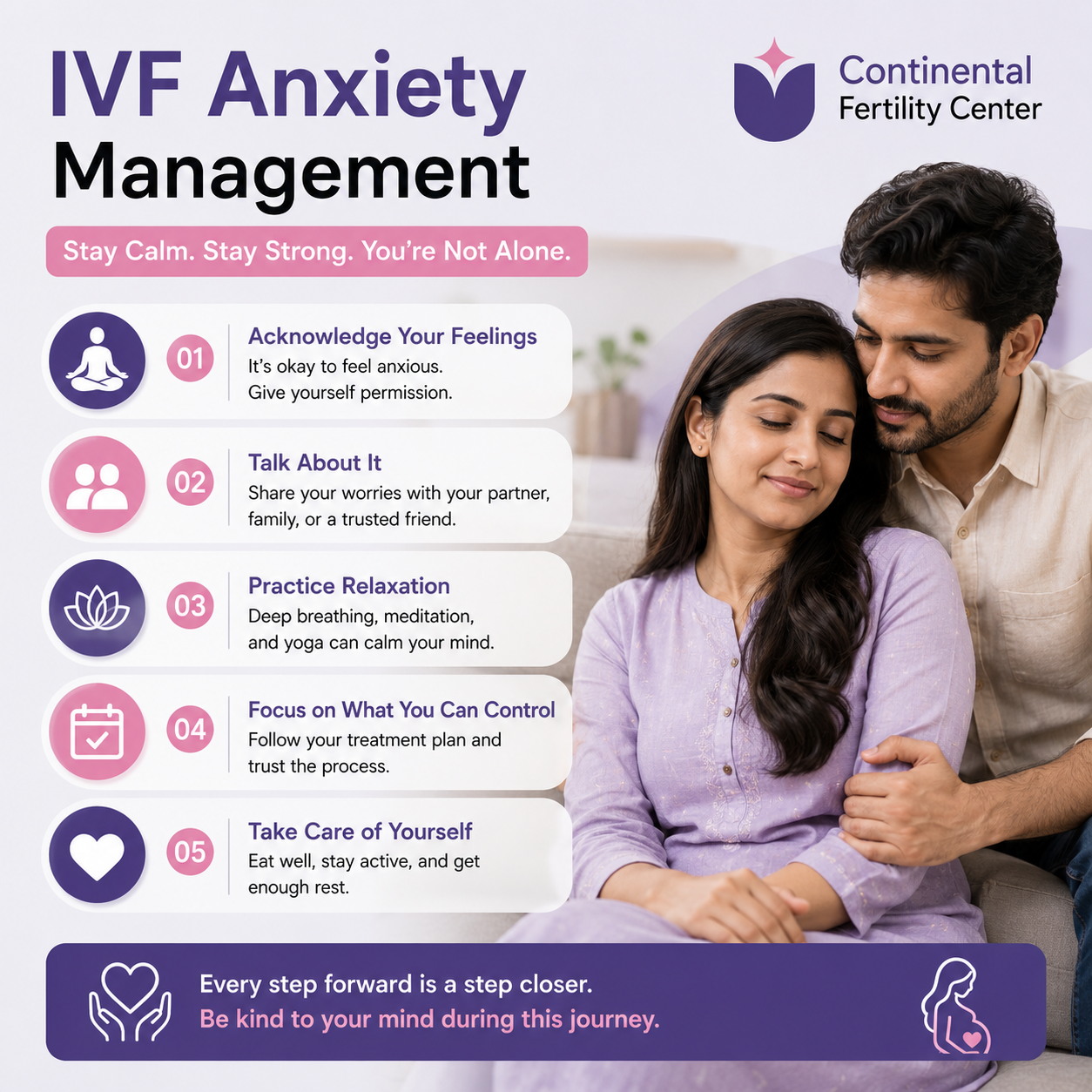
Stay informed
Understanding every stage of IVF helps reduce fear of the unknown. Ask your fertility specialist questions whenever you have concerns.
Focus on one step at a time
Instead of worrying about the final outcome, concentrate on completing each stage of treatment successfully.
Practice relaxation techniques
Simple breathing exercises, meditation, gentle yoga, and mindfulness can calm your mind and reduce stress.
Maintain a healthy routine
Regular sleep, balanced nutrition, hydration, and light physical activity support both emotional and physical health.
Share your feelings
Talk openly with your partner, trusted family members, or close friends. Emotional support during IVF makes a significant difference.
Limit unnecessary online searches
Reading too many personal experiences on the internet may increase anxiety. Rely on guidance from qualified fertility specialists instead.
Can Anxiety Affect IVF Success?
Many patients ask whether anxiety during IVF affects treatment outcomes.
While stress alone does not directly determine IVF success, high levels of ongoing anxiety can affect sleep, appetite, emotional health, and overall quality of life. Feeling emotionally supported helps patients stay positive, follow treatment instructions carefully, and maintain healthier daily routines throughout the IVF journey.
The most important goal is to reduce emotional stress while continuing treatment with confidence.
How Can Your Partner Help During IVF?
IVF is a shared journey. Partners play an important role in providing emotional support.
Helpful ways to support each other include:
- Attend appointments together
- Listen without judging
- Encourage healthy daily habits
- Celebrate small milestones
- Avoid blaming each other
- Stay positive throughout the process
- Make time for relaxing activities together
Strong communication helps couples face fertility treatment as a team.
When Should You Seek Professional Emotional Support?
Sometimes emotional stress becomes difficult to manage alone.
Speak with a fertility counselor or mental health professional if you experience:
- Persistent sadness
- Panic attacks
- Severe anxiety
- Sleep problems lasting several weeks
- Difficulty completing daily activities
- Loss of hope or motivation
Professional counseling provides coping strategies that help patients navigate fertility treatment with greater confidence.
Healthy Habits That Can Reduce IVF Stress
Simple lifestyle changes can improve emotional well being during fertility treatment.
- Follow your doctor's treatment plan carefully.
- Eat a balanced and nutritious diet.
- Stay physically active with light exercise.
- Practice meditation or deep breathing every day.
- Sleep for adequate hours each night.
- Avoid comparing your journey with others.
- Stay connected with supportive family members.
- Keep realistic expectations throughout treatment.
These habits support both your mental health and your overall IVF experience.
Why Choose Continental Fertility Center?
Choosing the continental fertility center is one of the most important decisions during your parenthood journey.
Continental Fertility Center offers:
- Experienced fertility specialists with personalized treatment plans.
- Advanced reproductive technology and modern laboratory facilities.
- Comprehensive fertility evaluation for both men and women.
- Individualized treatment based on each patient's needs.
- Compassionate counseling and emotional support throughout treatment.
- Multidisciplinary care backed by Continental Hospitals.
- International quality standards with JCI-, NABH-, and QAI-accredited healthcare services.
- Patient-centered approach focused on safety, comfort, and successful outcomes.
Our team believes that emotional well being is an important part of fertility care, and we are committed to supporting you through every step of your IVF journey.
Conclusion
Experiencing anxiety during IVF is completely understandable, but you do not have to face it alone. Every fertility journey is unique, and emotional challenges are a natural part of the process. With expert medical guidance, healthy coping strategies, and strong emotional support, you can navigate your IVF journey with greater confidence and hope.
Remember that taking care of your mental health is just as important as following your fertility treatment plan. Staying informed, communicating openly, and trusting your fertility team can make the experience more positive and manageable.
If you are experiencing anxiety during IVF, repeated fertility challenges, or emotional stress during your fertility treatment, do not ignore your feelings. The experienced fertility specialists in Hyderabad at Continental Fertility Center, Hyderabad, provide compassionate fertility care, personalized treatment plans, and continuous emotional support to help you through every stage of your parenthood journey. Book your consultation today and take the next step with confidence toward building your family.
Related Blogs:
Frequently Asked Questions
Yes. Feeling anxious during IVF treatment is completely normal because the process involves emotional, physical, and financial challenges. Many individuals and couples experience stress while waiting for test results, attending appointments, taking medications, and hoping for a successful pregnancy. Hormonal changes can also affect mood and emotions. Anxiety does not mean you are weak or unprepared. Acknowledging your feelings is an important step toward managing them. Open communication with your fertility specialist, partner, family, or counselor can provide emotional support. Practicing relaxation techniques, maintaining a healthy routine, and focusing on one step at a time can help reduce stress throughout the IVF journey.
Several factors can contribute to anxiety during IVF treatment. Concerns about treatment success, fear of failure, uncertainty about embryo development, financial commitments, frequent medical appointments, and waiting for pregnancy test results can all increase stress levels. Hormonal medications may also cause temporary mood changes. Some people feel pressure from family expectations or compare their journey with others. Previous pregnancy loss or unsuccessful fertility treatments can make anxiety even stronger. Understanding that these emotions are common can be reassuring. Speaking openly with your fertility team and building a reliable support system can make the experience feel more manageable.
Current research does not clearly prove that stress alone reduces IVF success rates. However, high levels of anxiety can affect overall well-being, sleep quality, appetite, and the ability to follow treatment instructions consistently. Managing emotional health helps patients feel more comfortable and confident throughout the treatment process. Activities such as mindfulness, meditation, light exercise, counseling, and adequate rest can improve emotional resilience. Fertility specialists encourage patients to focus on healthy habits rather than worrying about every outcome. Taking care of your mental health is an important part of overall fertility care.
Reducing anxiety during IVF begins with understanding your treatment plan and asking questions whenever you have concerns. Following a healthy lifestyle, eating nutritious meals, getting enough sleep, staying physically active with gentle exercise, and practicing breathing exercises can help manage stress. Mindfulness meditation, journaling, listening to calming music, and limiting exposure to negative online stories may also improve emotional balance. Stay connected with supportive family members, friends, or fertility support groups. If anxiety becomes overwhelming, seeking professional counseling or psychological support can provide effective coping strategies throughout the IVF journey.
Yes. Counseling can be highly beneficial during IVF treatment, especially if you feel overwhelmed, emotionally exhausted, or anxious. Fertility counselors understand the unique emotional challenges associated with infertility and assisted reproduction. They can help you develop healthy coping techniques, manage expectations, improve communication with your partner, and reduce emotional distress. Counseling is not only for people experiencing severe anxiety but also for anyone seeking additional emotional support. Many fertility centers encourage psychological counseling as part of comprehensive fertility care because emotional well-being is an important aspect of the overall treatment experience.
Strong emotional support between partners can make the IVF journey easier to navigate. Honest communication, listening without judgment, attending medical appointments together, and sharing treatment responsibilities can strengthen the relationship. Partners should encourage each other to express emotions openly instead of hiding fears or frustrations. Spending quality time together outside of treatment discussions helps maintain emotional balance. Celebrating small milestones and focusing on teamwork rather than outcomes can reduce stress. If communication becomes difficult, couples counseling may help both partners better understand each other's emotional needs throughout the fertility treatment process.
Yes. Relaxation techniques can improve emotional well-being during IVF treatment by reducing stress and promoting a sense of calm. Deep breathing exercises, meditation, progressive muscle relaxation, yoga, mindfulness practices, and guided imagery are commonly recommended. These activities may improve sleep quality, lower stress levels, and help patients remain emotionally balanced during waiting periods. Even spending time outdoors, reading, engaging in hobbies, or listening to soothing music can provide mental relaxation. While relaxation techniques cannot guarantee IVF success, they contribute positively to overall emotional health and quality of life during treatment.
You should speak with your fertility specialist whenever anxiety begins affecting your daily life, sleep, work, relationships, or ability to continue treatment comfortably. Persistent worry, panic attacks, loss of interest in daily activities, or ongoing emotional distress should never be ignored. Fertility specialists understand that emotional health is closely linked with the treatment experience and can recommend counseling, support groups, stress management techniques, or referrals to mental health professionals. Seeking help early allows you to receive appropriate support, making the IVF journey more manageable and helping you feel confident throughout every stage of treatment.