
Papaya During Pregnancy: Is It Safe? Myths, Risks, Benefits & Safe Portions
Expecting mothers often pay close attention to pregnancy nutrition to keep themselves and their developing babies healthy. Choosing the right fruits is a major part of a balanced diet, but certain foods frequently trigger doubts. One common question that arises during prenatal consultations is whether consuming papaya in pregnancy is safe or dangerous.
Papaya is a tropical fruit packed with essential vitamins, minerals, and dietary fiber. However, strong traditional warnings make many women hesitant to eat it. Understanding the difference between ripe and unripe fruit when considering papaya in pregnancy is essential for making safe dietary choices throughout every trimester.
Is Papaya Safe During Pregnancy?
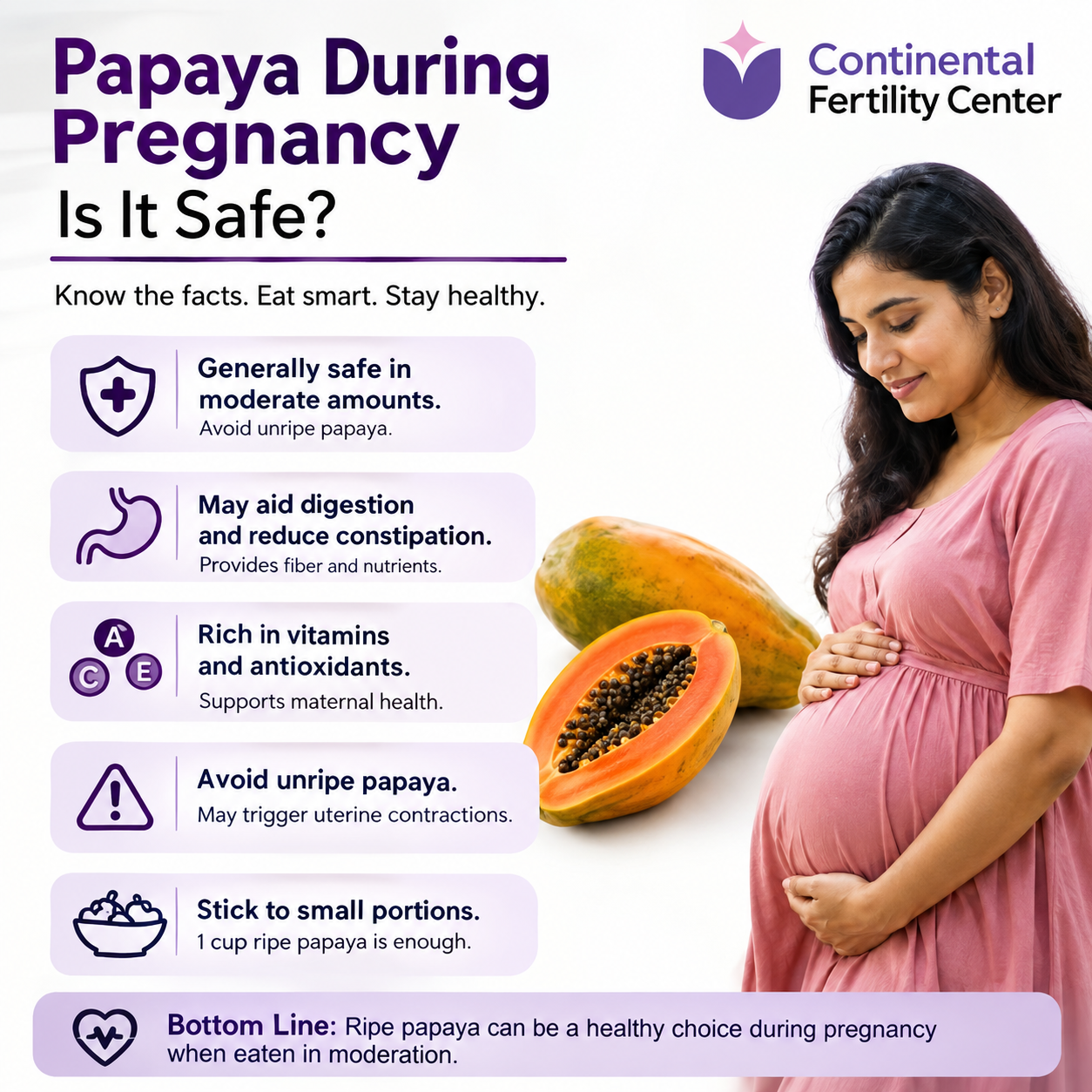
The answer depends entirely on the ripeness of the fruit. Fully ripe papaya is generally considered safe and beneficial during pregnancy when eaten in moderate amounts. Ripe papaya has a yellow or orange skin, soft flesh, and sweet taste. It offers valuable nutrients like vitamin C, folate, and antioxidants that support maternal health.
On the other hand, unripe or semi-ripe papaya is unsafe for pregnant women. Unripe papaya contains a high concentration of latex and papain enzymes. These substance compounds can trigger uterine contractions, which may lead to unwanted complications. Therefore, safety depends on selecting fully ripened fruit and avoiding any green or firm papaya.
What Are the Risks of Unripe Papaya in Pregnancy?
Consuming raw or partially ripe papaya during pregnancy carries specific health risks that every expectant mother should know:
- Triggers Uterine Contractions: Latex found in green papaya mimics the hormone oxytocin, causing the uterus to contract prematurely.
- Weakens Fetal Membranes: Papain enzymes can break down vital membranes supporting the fetus, increasing pregnancy risks.
- Risk of Early Labor: Strong contractions induced by latex can increase the risk of early labor or pregnancy loss.
- Causes Allergic Reactions: Latex in unripe fruit can trigger skin rashes, respiratory discomfort, or digestive upset in sensitive individuals.
What Are the Health Benefits of Ripe Papaya in Pregnancy?
When fully ripe, eating papaya in pregnancy offers several health advantages for women who receive approval from their doctor:
- Eases Morning Sickness: The natural sweetness and soft texture help soothe nausea during early pregnancy.
- Relieves Constipation: High fiber content and papain enzymes promote smooth digestion and prevent bowel sluggishness.
- Boosts Immunity: Rich levels of vitamin C strengthen the immune system and protect against common infections.
- Supports Fetal Development: Folate and vitamin A present in ripe papaya aid overall tissue growth and organ development.
- Maintains Hydration: High water content in ripe papaya helps keep the body hydrated throughout the day.
What Myths Exist About Papaya in Pregnancy?
Misinformation regarding papaya in pregnancy often creates unnecessary fear. Here are the facts behind common myths:
Myth: All papaya causes miscarriage.
Fact: Only unripe or semi-ripe papaya with high latex content poses a risk. Fully ripe papaya does not cause miscarriages when consumed in moderation.
Myth: Ripe papaya increases internal body heat and harms the baby.
Fact: There is no medical evidence proving that ripe papaya causes harmful internal body heat during pregnancy.
Myth: Papaya should be completely avoided for all nine months.
Fact: Many obstetricians permit small servings of fully ripe papaya in a well-balanced pregnancy diet after the first trimester.
What Are Safe Portions and How Should You Consume Papaya?
Moderation is key when adding papaya to your meal plan:
- Choose Fully Ripe Fruit: Ensure the skin is completely yellow or orange with no green patches.
- Limit Portion Sizes: Limit consumption to one small bowl of fresh, ripe papaya slices once or twice a week.
- Peel and Deseed Thoroughly: Remove the outer skin and all black seeds before eating.
- Consult Your Doctor: Always verify with your healthcare provider before adding papaya to your daily pregnancy nutrition routine.
Why Choose Continental Fertility Center for Pregnancy Nutrition and Care?
Navigating diet and medical care during pregnancy requires expert guidance from experienced healthcare professionals. Continental Fertility Center at Continental Hospitals is recognized as a premier destination for maternal care and reproductive health, bringing unmatched clinical expertise to every patient.
Accredited Clinical Excellence: Continental Hospitals holds prestigious JCI and NABH accreditations, reflecting strict adherence to global safety protocols and quality patient care.
State-of-the-Art Infrastructure: Recognized as the best hospital in Hyderabad, Continental Hospitals offers advanced diagnostic facilities, high-risk pregnancy management, and specialized prenatal support.
Comprehensive Care Under One Roof: From fertility treatments to personalized diet plans and delivery care, mothers receive complete medical support tailored to their unique needs.
Conclusion
Understanding the impact of papaya in pregnancy empowers expectant mothers to make confident, healthy decisions. While green and unripe papaya must be strictly avoided due to latex and papain risks, fully ripe papaya can be a safe, delicious source of vital nutrients when eaten in moderation.
If you experience digestive discomfort, pregnancy complications, or need personalized dietary planning, seek expert advice immediately. Consult our best fertility specialist in Hyderabad at Continental Fertility Center to ensure a healthy, safe pregnancy journey.
Frequently Asked Questions
Ripe papaya can generally be included as part of a balanced pregnancy diet.
Ripe papaya is different from unripe or semi-ripe papaya.
Unripe papaya contains higher amounts of latex and papain-related enzymes.
Experimental research has raised concerns about concentrated papaya latex and uterine contractions.
Studies using ripe papaya have not shown the same uterine-contracting effect.
However, strong human pregnancy safety data are still limited.
Pregnant women should therefore choose fully ripe papaya rather than green papaya.
The fruit should be washed properly before cutting and eating.
Fresh papaya can provide fibre, vitamin C, vitamin A precursors and other nutrients.
It may also support regular bowel movements because of its fibre and water content.
Avoid concentrated papaya latex, extracts or supplements unless medically advised.
If your pregnancy is high-risk, ask your obstetrician before adding papaya regularly.
Fully ripe papaya is generally considered different from green or semi-ripe papaya.
As papaya ripens, the amount of latex in the fruit decreases.
Research in pregnant animals found no significant harmful effects from normal ripe papaya consumption.
The same research found that crude papaya latex could cause uterine contractions in laboratory testing.
This does not mean that eating ripe papaya causes miscarriage in humans.
Human evidence directly studying papaya intake during pregnancy remains limited.
For this reason, moderation and food quality are important.
Choose papaya that is fully ripe, soft and orange or reddish-orange inside.
Avoid fruit that is predominantly green, hard or visibly unripe.
Wash the fruit thoroughly before peeling and cutting it.
Eat it as a normal fruit rather than consuming concentrated extracts.
If you have pregnancy complications, discuss your diet with your obstetrician.
Unripe papaya deserves more caution during pregnancy.
Green papaya contains more latex than fully ripe papaya.
The latex contains enzymes including papain and chymopapain.
Laboratory research has shown that concentrated papaya latex can stimulate uterine contractions.
Animal studies have also reported adverse reproductive effects with unripe papaya preparations.
These findings cannot be directly translated into a specific human miscarriage risk.
Still, they provide a reason to avoid unripe and semi-ripe papaya during pregnancy.
Green papaya used in curries, salads or other dishes may therefore be best avoided.
Cooking does not automatically establish that every preparation is safe.
Concentrated latex, extracts and papaya-based supplements should also not be self-used.
Fully ripe papaya is a more appropriate choice when papaya is included in the diet.
When in doubt, ask your pregnancy care provider about your individual situation.
There is no good evidence that eating normal portions of fully ripe papaya causes miscarriage.
The common belief about papaya and miscarriage is often based on concerns about unripe fruit.
Unripe papaya contains considerably more latex than ripe papaya.
Experimental studies have found that concentrated papaya latex can produce uterine contractions.
Some animal studies have also reported reproductive effects from unripe papaya preparations.
These studies do not prove that normal ripe papaya causes miscarriage in pregnant women.
Human clinical evidence on this specific question remains limited.
Therefore, it is not accurate to say that all papaya causes miscarriage.
It is also not appropriate to claim that every form of papaya is completely risk-free.
Pregnant women should preferably choose fully ripe fruit and avoid unripe forms.
Anyone with bleeding, cramping or other pregnancy concerns should seek medical advice promptly.
Your obstetrician can provide advice based on your pregnancy history and current health.
There is no universally established pregnancy-specific safe portion of papaya.
Research has not defined an exact amount that applies to every pregnant woman.
A practical approach is to treat ripe papaya as one component of a varied fruit intake.
A small serving, such as about half a cup, can be a reasonable starting portion.
Another option is a modest serving of fresh ripe papaya alongside other foods.
The key distinction is choosing fully ripe fruit rather than green or semi-ripe papaya.
Eating large quantities is not necessary to obtain papaya's nutritional benefits.
Moderation also helps maintain variety across different fruits and vegetables.
Choose fresh fruit instead of concentrated papaya juice, extracts or supplements.
People with individual dietary restrictions may need different portions.
If your pregnancy is high-risk, ask your obstetrician about the appropriate amount for you.
There is no need to force yourself to eat papaya if you are uncomfortable with it.
Fully ripe papaya can provide several useful nutrients during pregnancy.
It contains vitamin C, which supports normal immune function and collagen formation.
Papaya also provides carotenoids that the body can use in vitamin A-related functions.
Its water content can contribute to overall fluid intake.
The fruit also provides dietary fibre, which may support regular bowel movements.
Fibre can be helpful when constipation becomes a common pregnancy complaint.
Ripe papaya can also add natural sweetness without needing added sugar.
It can be eaten on its own or combined with other pregnancy-friendly foods.
However, papaya is not essential for a healthy pregnancy diet.
Other fruits can provide similar nutrients and can be included regularly.
Pregnant women should focus on overall dietary variety rather than one particular fruit.
For individual nutrition needs, discuss your diet with your doctor or dietitian.
Ripe papaya may be a useful fruit choice when constipation occurs during pregnancy.
It contains dietary fibre that can support normal bowel function.
Its water content can also contribute to daily fluid intake.
However, papaya should not be considered a treatment for severe constipation.
Regular fluids, fibre-rich foods and appropriate physical activity can also help.
Pregnant women should follow their doctor's advice about exercise and diet.
Choose fully ripe papaya rather than unripe green papaya.
Wash the fruit thoroughly before peeling and cutting it.
Start with a moderate portion if your digestive system is sensitive.
Eating too much fruit at once may cause bloating or loose stools in some people.
Persistent or severe constipation should be discussed with a healthcare professional.
Do not use papaya extracts or supplements as a substitute for medical treatment.
Pregnant women should avoid unripe and semi-ripe papaya as a precaution.
These forms contain higher levels of latex than fully ripe papaya.
Concentrated papaya latex has demonstrated uterine-contracting effects in laboratory research.
It is also sensible to avoid papaya extracts or concentrated supplements unless prescribed.
People with a known papaya allergy should avoid the fruit and seek medical advice.
Stop eating papaya if it causes symptoms such as itching, swelling or breathing difficulty.
Pregnant women with specific complications should follow their obstetrician's dietary advice.
Those with pregnancy-related bleeding or significant abdominal pain should seek medical care.
Do not rely on food remedies to prevent or treat pregnancy complications.
Choose thoroughly washed, fully ripe fruit when papaya is permitted in your diet.
There is no need to consume papaya if you are uncertain about eating it.
Your obstetrician can help determine what is appropriate for your individual pregnancy.