
Top 10 Fertility-Boosting Foods for Couples
Are you and your partner preparing to welcome a new member into your family? The journey to parenthood is a beautiful, shared experience, but it often requires mindful preparation. While medical advancements offer incredible support, one of the most powerful tools you have control over right now is your daily diet.
What you put on your plate plays a fundamental role in preparing your body for conception. A well-balanced fertility diet supplies the essential building blocks needed to optimize reproductive health for both partners. It is a shared journey where medical research shows that a couple’s combined nutritional status directly influences their reproductive success.
Adopting healthy lifestyle habits together not only brings you closer but actively prepares both of your bodies for a healthy pregnancy. By focusing on nutrient-dense fertility foods for couples, you can naturally support ovulation, balance hormones, and improve egg and sperm quality. Let us explore how simple dietary changes can make a significant difference in your path to parenthood.
What are the top 10 fertility-boosting foods?
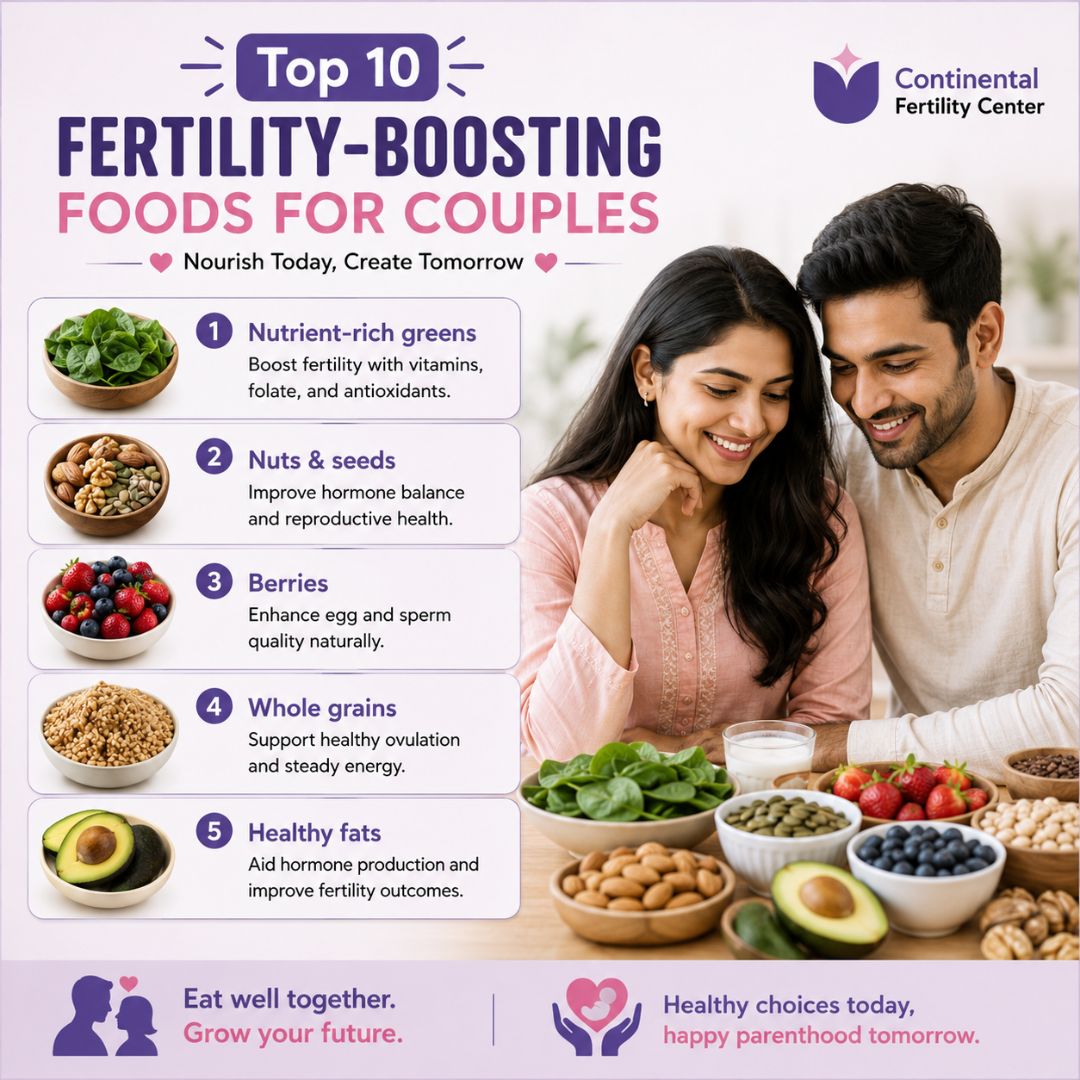
Prioritizing fertility nutrition is an effective way to naturally support your reproductive system. Here are the top 10 fertility-boosting foods that couples can enjoy together:
- Leafy Green Vegetables: Spinach, kale, and broccoli are packed with folate (vitamin B9), which improves egg quality and supports early fetal development.
- Faty Fish: Salmon and sardines are rich in omega-3 fatty acids, which regulate reproductive hormones and increase blood flow to the reproductive organs.
- Berries: Blueberries and raspberries are loaded with antioxidants that shield both eggs and sperm from cellular damage.
- Walnuts: Excellent for both partners, walnuts provide omega-3s and vitamin E, which have been shown to improve sperm count and motility.
- Beans and Lentils: These provide plant-based protein and fiber, helping to reduce the risk of ovulatory issues in women while offering essential iron.
- Eggs: Highly nutritious, egg yolks supply vitamin D, B vitamins, and choline, which are crucial for healthy embryo development.
- Full-Fat Dairy: Consuming whole milk or full-fat yogurt occasionally has been linked to a lower risk of ovulatory infertility.
- Whole Grains: Quinoa, brown rice, and oats keep insulin levels stable, which is essential for consistent ovulation and hormone regulation.
- Citrus Fruits: Oranges and grapefruits provide high doses of vitamin C, which stabilizes hormone production and improves sperm health.
- Tomatoes: Cooked tomatoes are rich in lycopene, a powerful antioxidant that significantly enhances male fertility by improving sperm structure.
What causes fertility challenges in couples?
Infertility is rarely down to just one partner. Statistically, fertility challenges are distributed relatively equally between men and women, often stemming from underlying hormonal imbalances, structural issues, or medical conditions. For women, common causes include ovulation disorders like Polycystic Ovary Syndrome (PCOS), endometriosis, and blocked fallopian tubes.
For men, the causes are frequently linked to poor sperm production, low motility, or abnormal sperm morphology (shape). Lifestyle factors also play a massive role. High stress, lack of sleep, poor nutrition, and environmental toxins can disrupt the delicate hormonal balance required for natural conception.
What are the risk factors and symptoms to watch out for?
For many couples, the primary symptom of a fertility challenge is simply the inability to conceive after 12 months of regular, unprotected intercourse (or 6 months if the woman is over 35 years old). However, certain physical signs can serve as early warnings:
- For Women: Highly irregular periods, severe pelvic pain, or sudden hormonal shifts like unexpected hair growth or severe acne.
- For Men: Changes in sexual desire, pain or swelling in the testicles, or difficulties with ejaculation.
Major risk factors that accelerate these issues include advancing age (particularly over 35 for women and over 40 for men), chronic smoking, regular alcohol consumption, and being significantly underweight or overweight.
How is fertility evaluated and diagnosed?
When you seek medical guidance, diagnostic testing is conducted for both partners to get a complete picture. For women, doctors usually recommend blood tests to evaluate hormone levels (such as AMH, thyroid, and progesterone) alongside pelvic ultrasounds to check the ovarian reserve and uterine health.
For men, a semen analysis is the primary diagnostic tool, assessing sperm count, movement, and shape. Identifying the root cause early allows specialists to create a highly targeted plan rather than relying on guesswork.
What medical treatments and lifestyle prevention tips help?
While medical interventions like ovulation induction, intrauterine insemination (IUI), or in vitro fertilization (IVF) are highly successful, preventive lifestyle modifications form the baseline of any treatment. Incorporating foods that increase fertility into your daily routine helps prime your body for these medical therapies.
- Emphasize Plant Proteins: Swapping some meat for lentils or beans supports healthier ovulation.
- Stay Adequately Hydrated: Drinking enough water ensures optimal cervical mucus production and healthy cellular function.
- Limit Caffeine and Alcohol: High intake of both can significantly lower conception rates for both men and women.
- Maintain a Balanced Weight: Regular, moderate exercise helps keep your Body Mass Index (BMI) in an ideal range, which stabilizes reproductive hormones.
When should you consult a doctor?
It is recommended to schedule a consultation with a reproductive specialist if you are under 35 and have been actively trying to conceive for a year without success. If the female partner is 35 or older, it is best to seek expert guidance after 6 months of trying. Furthermore, if you have a known history of irregular cycles, endometriosis, thyroid disorders, or previous pelvic surgeries, you should consult a doctor before you even begin trying.
Why Choose Continental Fertility Center for Fertility Treatment?
When navigating the complexities of conception, choosing the right healthcare partner is paramount. Continental Fertility Center provides an ecosystem of excellence designed to give you the highest chances of success:
- Expert Specialists: Our team includes internationally trained reproductive endocrinologists, embryologists, and specialized counselors.
Advanced Technology: We house cutting-edge andrology and embryology laboratories utilizing the latest assisted reproductive technologies.
Multidisciplinary Care: Patients benefit from seamless collaboration between fertility experts, endocrinologists, dietitians, and urologists. - Personalized Treatment: We do not believe in one-size-fits-all; every couple receives a customized protocol tailored to their unique diagnostic data.
- JCI and NABH Accreditation: Our facility adheres to strict global safety protocols and the highest standards of clinical quality.
- State-of-the-Art Infrastructure: Designed for patient comfort and clinical precision, our center offers world-class diagnostic and surgical suites.
- 24/7 Emergency & Critical Care Services: Round-the-clock medical availability ensures you are always supported through every stage of your clinical journey.
- High Standards of Patient Care: We emphasize transparent communication, emotional counseling, and empathetic care from your first visit.
Conclusion
Your diet is a foundational cornerstone of your reproductive journey. Embracing a lifestyle rich in fertility foods for women and nutrient-dense options for men can positively influence your path toward building a family. While nutrition is incredibly powerful, it works best alongside professional medical oversight when challenges arise. Take a proactive step today by prioritizing your health together as a couple.
For any queries related to fertility-boosting foods, consult our best fertility specialist in Hyderabad at Continental Fertility Center. Visit Continental Hospitals for expert diagnosis, advanced treatment, and comprehensive care.
Frequently Asked Questions
A fertility-friendly diet can help support reproductive health in both men and women. Some of the best fertility-boosting foods include leafy green vegetables, berries, citrus fruits, eggs, fatty fish, nuts, seeds, whole grains, legumes, and dairy products. These foods are rich in essential nutrients such as folate, omega-3 fatty acids, antioxidants, zinc, iron, and protein, which play important roles in hormone production, egg quality, sperm health, and overall fertility. Including a variety of nutrient-dense foods in daily meals may improve reproductive function and support a healthy pregnancy. Couples should combine a balanced diet with regular exercise, stress management, adequate sleep, and routine fertility evaluations for the best outcomes.
Antioxidants help protect reproductive cells from oxidative stress caused by free radicals. Excessive oxidative stress can negatively affect egg quality, sperm count, sperm motility, and overall reproductive health. Foods rich in antioxidants include berries, citrus fruits, tomatoes, spinach, kale, nuts, seeds, and colorful vegetables. Vitamins C and E, selenium, and beta-carotene are powerful antioxidants that support fertility. Research suggests that consuming antioxidant-rich foods may improve sperm parameters and support healthy ovulation. Including a variety of fruits and vegetables in the diet can help reduce cellular damage and create a healthier environment for conception. A balanced intake of antioxidants is an important part of a fertility-supportive lifestyle.
Omega-3 fatty acids are essential healthy fats that support hormone production, reproductive function, and overall fertility. In women, omega-3s may help improve egg quality, regulate menstrual cycles, and support embryo development. In men, these healthy fats contribute to sperm membrane integrity, motility, and overall sperm health. Foods rich in omega-3 fatty acids include salmon, sardines, mackerel, walnuts, chia seeds, flaxseeds, and hemp seeds. Regular consumption of omega-3-rich foods may also help reduce inflammation, which can affect fertility. Including these foods as part of a balanced diet can support reproductive health and increase the chances of successful conception.
Folate is a vital B vitamin that plays an important role in DNA synthesis, cell division, and fetal development. Adequate folate intake before conception can support healthy ovulation and improve reproductive health in women. It is also essential for reducing the risk of neural tube defects during early pregnancy. Men may benefit from folate as it supports healthy sperm production and DNA integrity. Foods rich in folate include spinach, kale, asparagus, lentils, beans, avocados, and fortified grains. Healthcare professionals often recommend folic acid supplementation when planning a pregnancy. Combining folate-rich foods with a healthy lifestyle can help optimize fertility and support a healthy pregnancy journey.
Several nutrient-rich foods can support sperm count, motility, and overall sperm quality. Zinc-rich foods such as pumpkin seeds, oysters, nuts, and legumes are important for testosterone production and sperm development. Antioxidant-rich fruits and vegetables help protect sperm cells from oxidative damage. Omega-3 fatty acids found in fatty fish and walnuts support sperm membrane health. Eggs provide high-quality protein and essential nutrients that aid reproductive function. Whole grains and healthy fats also contribute to hormonal balance. Maintaining a nutritious diet, staying physically active, managing stress, and avoiding smoking and excessive alcohol consumption can further support male fertility and reproductive health.
Dairy products can be part of a fertility-supportive diet when consumed in moderation. Milk, yogurt, and cheese provide protein, calcium, vitamin D, and other essential nutrients that support reproductive health. Some studies suggest that full-fat dairy products may be associated with improved ovulatory fertility in certain women, although individual nutritional needs may vary. Dairy foods can also contribute to bone health and overall wellness during preconception planning. Choosing minimally processed dairy products and incorporating them into a balanced diet can help meet nutritional requirements. Couples should consult a healthcare professional or fertility specialist to determine the most appropriate dietary choices for their individual needs.
Yes, maintaining a healthy body weight is an important factor in reproductive health. Being overweight or underweight can affect hormone levels, ovulation, menstrual regularity, and sperm quality. A balanced diet rich in fruits, vegetables, lean proteins, whole grains, healthy fats, and fiber can help support healthy weight management. Proper nutrition also helps regulate blood sugar levels and reduce inflammation, both of which influence fertility. Combining healthy eating habits with regular physical activity can improve reproductive outcomes for many couples. Sustainable lifestyle changes often have a positive impact on fertility and overall health. Professional guidance can help create an individualized nutrition plan for conception goals.
Couples trying to conceive should limit highly processed foods, excessive sugar, trans fats, and excessive alcohol consumption. Diets high in processed foods may contribute to inflammation, weight gain, and hormonal imbalances that can affect fertility. Excessive intake of sugary beverages and refined carbohydrates may negatively impact insulin sensitivity and reproductive function. Smoking and excessive caffeine intake may also influence fertility in some individuals. Instead, couples should focus on whole foods, healthy fats, lean proteins, fruits, vegetables, and nutrient-rich snacks. Staying hydrated and maintaining a balanced lifestyle can further support reproductive health. Consulting a fertility specialist can help identify dietary modifications that may improve conception chances.