
Unexplained Infertility: Possible Reasons
Infertility can affect couples who wish to have children emotionally. There are instances where a person has been tested through all available means but still cannot conceive. Such situations lead to what is referred to as unexplained infertility. Couples are often left feeling bewildered and frustrated since no reason can explain why they cannot get pregnant.
Continental Hospitals, along with Continental Fertility Center, recognizes the challenges that come with infertility. Offering state-of-the-art fertility evaluation procedures alongside experienced specialists in an environment of internationally acclaimed standards, the hospital provides comprehensive assistance to couples experiencing infertility problems.
What Is Unexplained Infertility?
Unexplained infertility refers to infertility cases where the patient or his or her partner has undergone fertility tests, and none of the factors examined has been found to be a cause for the inability to conceive. Tests carried out usually include ovulation, sperm quality, fallopian tube function, and the condition of reproductive organs. Should there be no abnormalities in any of these, and the couple is unable to conceive even after regular attempts, then the couple may suffer from unexplained infertility.
Cases of unexplained infertility are more prevalent than most individuals might think.
Why Does Unexplained Infertility Occur?
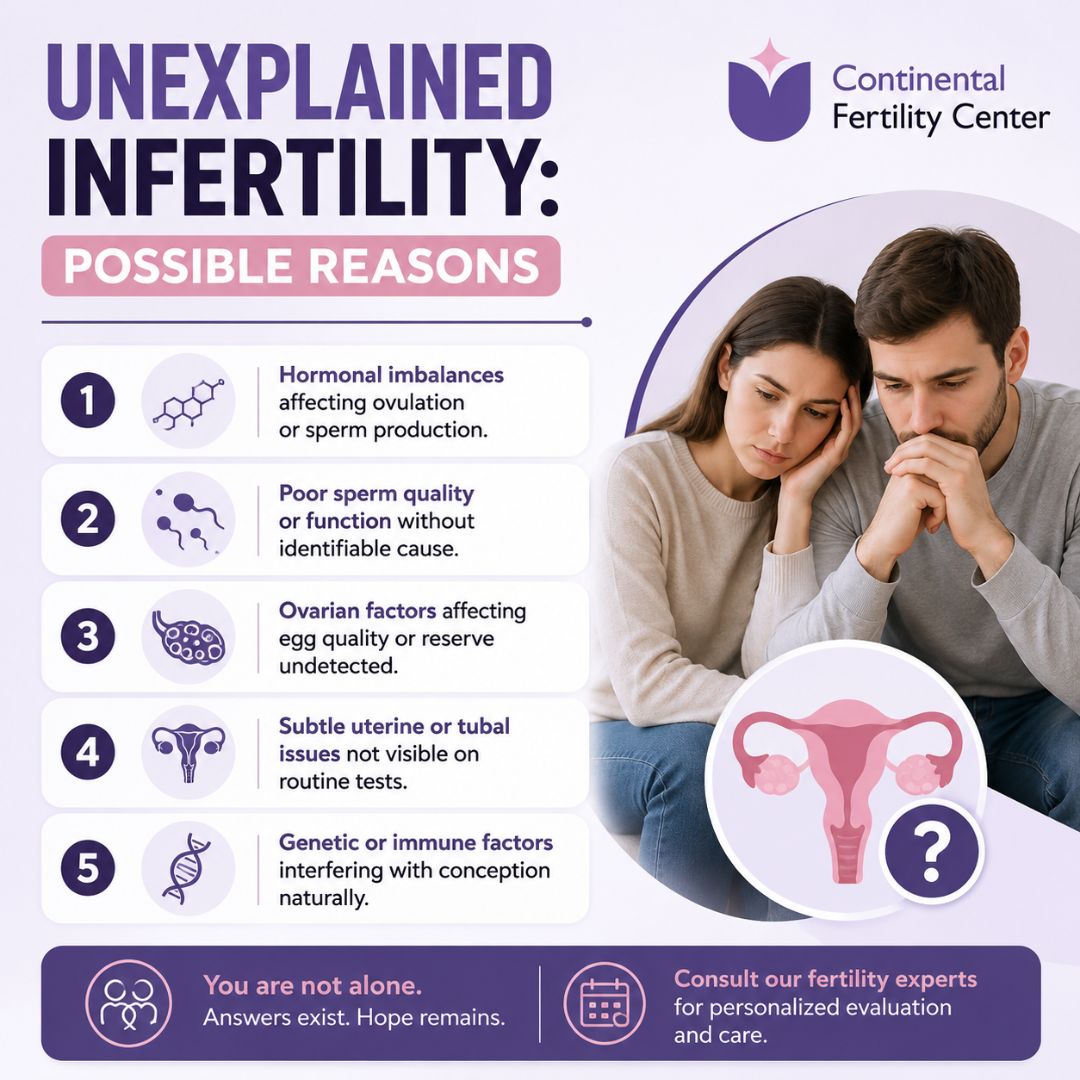
Despite all the modern technologies that doctors use for diagnosing fertility-related problems, there are cases when no diagnosis is found because the condition is just too subtle to identify through standard methods. Several reasons may cause unexplained infertility.
Reasons for Unexplained Infertility
Mild Issues with Ovulation
A woman may seem to be ovulating perfectly, but the eggs she releases may not be the best for a successful pregnancy.
Poor Egg Quality
Older women have poor-quality eggs that reduce the likelihood of conception and embryo development.
Fertilization Issues
The process of fertilization may not occur due to problems related to the male side of reproduction.
Problems with Embryo Implantation
Successful fertilization does not guarantee proper embryo implantation into the uterus lining.
Hidden Endometriosis
This reproductive problem does not always show itself on scans and negatively impacts the possibility of pregnancy.
Issues Related to Cervix or Immune System
Inflammations or other conditions of the cervix and immune system affect successful fertilization and embryo implantation.
Other Health Factors
Bad health habits such as smoking, drinking, obesity, insomnia, or improper nutrition also play their role.
Unexplained Infertility Symptoms
One of the challenges associated with unexplained infertility is the lack of symptoms. Most women continue having their menstrual cycle regularly with no reproductive disorders.
Most couples go to doctors to receive fertility advice after spending quite a long time attempting to conceive.
A visit to the specialist for fertility treatment is necessary if you are:
• Below 35 years of age and unable to get pregnant within one year
• Above 35 years old and unable to conceive after half a year
• Experiencing irregularities in your periods or past reproductive problems
• Repeated miscarriages
• Family history of infertility problems
Diagnosis of Unexplained Infertility
Unexplained infertility can be diagnosed only when thorough testing for fertility has been performed. Specialists conduct multiple examinations in order to rule out typical reasons for being infertile.
Some common fertility tests are as follows:
Tests of Ovulation
Hormone testing helps establish if you ovulate correctly.
Sperm Test
Doctors analyze the number, mobility, and morphology of sperm cells.
Ultrasound Tests
Images help specialists find abnormalities in the uterus and ovaries.
Fallopian Tubes Examination
Special tests are used to ensure that fallopian tubes are open.
Hormone Level Tests
Levels of hormones that influence conception are examined thoroughly.
If everything is found to be normal but pregnancy still fails, you may have unexplained infertility.
Emotional Effects of Unexplained Infertility
It can be quite frustrating for couples experiencing unexplained infertility to deal with their inability to conceive since there is no definite explanation for why this is happening. It is typical to feel anxious, disappointed, confused, and frustrated.
Emotional support is very useful when undergoing infertility treatment. Couples need to communicate openly and consult specialists in order to cope with stress better.
How Can You Treat Unexplained Infertility?
Fortunately, couples with unexplained infertility have chances to conceive with appropriate infertility treatment. The choice of the treatment depends on age, fertility history, and reproductive system condition.
Lifestyle Modification
A doctor can advise making lifestyle modifications to boost your natural fertility.
Effective Lifestyle Modifications
• Having healthy body weight
• Consuming well-balanced foods
• Lowering stress levels
• Giving up smoking and drinking alcohol
• Exercising more often
• Getting enough sleep
Medications for Fertility
There are certain medications used to induce ovulation and boost the egg release process.
Intrauterine Insemination
In intrauterine insemination, prepared sperm is inserted into the uterus at the time of ovulation.
IVF Treatments
IVF is one of the most reliable methods used in the treatment of unexplained infertility. In an IVF procedure, eggs are fused with the sperm in a lab environment to produce an embryo that is then implanted in the womb.
IVF treatment provides the chance to closely follow up on fertilization in order to boost chances of successful implantation.
Advantages of IVF in Treatment of Unexplained Infertility
Better Embryo Development Observation
- It helps doctors to follow up on the fertilization process better.
- Chances of Successful Conception Increase
- It increases chances of successful implantation.
Embryo Selection
Healthy embryos can be selected for implantation.
Tailored Fertility Treatment
Individual cases of fertility are tailored to suit the patient.
Why Continental Fertility Center?
Continental Fertility Centre of Continental Hospital is known to provide top-notch fertility services among hospitals in Hyderabad. This renowned fertility center offers top-quality treatment for infertility in a compassionate manner.
Reputed Fertility Specialists
This fertility center offers expertise in handling fertility issues with a professional team of experts specializing in IVF, gynecology, embryology, and other related fields.
Sophisticated Fertility Technology
This hospital offers the latest fertility technology for accurate diagnostics and treatment procedures.
Individualized Treatment Regimens
Each patient is provided with customized care according to his/her medical conditions and reproductive needs.
International Healthcare Standards and Accreditation
Continental Hospitals is well-known for delivering a high level of healthcare and following internationally approved standards and guidelines in treatment practices.
Complete Reproductive Assistance for Females
Patients will undergo various fertility tests and procedures starting from the initial examination to the application of innovative IVF methods.
Patient-Centric Approach
The staff members at our clinic realize how emotionally difficult it can be to struggle with infertility.
Do Couples Suffering from Unexplained Infertility Have a Chance to Become Parents Naturally?
Some couples with unexplained infertility manage to conceive naturally. However, age and length of time spent trying to conceive play an important role here. Procrastination might significantly decrease the possibility of becoming parents, especially for females aged more than 35 years old.
A consultation at the early stages could give couples an opportunity to explore the best reproductive option available.
Tips on Increasing Chances to Conceive Naturally
Reproductive Health Guidelines
• Follow a balanced diet including nutrient-rich products
• Exercise regularly
• Do not abuse caffeine consumption
• Minimize stress
• Monitor ovulation cycles correctly
• Visit a healthcare provider regularly
Conclusion
The frustration associated with unexplained infertility can be immense since there seems to be no known cause for the problem. Nonetheless, recent advances in fertility treatment have been instrumental in ensuring that most couples suffering from unexplained infertility can bear children.
Knowledge about unexplained infertility as well as understanding the methods that should be used in the treatment of unexplained infertility will go a long way in ensuring that couples are better placed to conceive.
In case you are having problems bearing children and want to get more information about unexplained infertility, do not hesitate to consult our best fertility specialists in Hyderabad at Continental Hospitals.
Frequently Asked Questions
Unexplained infertility is a condition where a couple is unable to conceive despite normal fertility test results for both partners. Ovulation, sperm count, fallopian tubes, and uterus may appear normal, but pregnancy still does not occur.
Possible reasons include poor egg quality, mild endometriosis, sperm function problems, hormonal imbalances, implantation issues, stress, lifestyle factors, or undetected reproductive disorders that standard fertility tests may not identify.
Unexplained infertility affects nearly 10% to 30% of infertile couples worldwide. It is one of the most common fertility diagnoses after routine fertility evaluations.
Chronic stress may affect hormone balance, ovulation, sperm quality, and sexual health, which can indirectly contribute to unexplained infertility in some couples.
Doctors diagnose unexplained infertility after conducting fertility tests such as ovulation tracking, semen analysis, hormone testing, ultrasound scans, and fallopian tube evaluation, with all results appearing normal.
Yes, smoking, alcohol, obesity, poor diet, lack of sleep, excessive caffeine, and sedentary lifestyle habits can affect fertility even if routine fertility tests are normal.
Treatment options may include lifestyle changes, fertility medications, ovulation induction, intrauterine insemination (IUI), or in vitro fertilization (IVF), depending on the couple’s age and fertility history.
Couples should consult a fertility specialist if pregnancy does not occur after one year of regular unprotected intercourse, or after six months if the woman is above 35 years of age.