
Can Irregular Periods Affect Your Chances of Pregnancy?
The journey to motherhood is an exciting phase in a woman's life, but it can also bring up many questions about reproductive health. For many women, tracking their monthly cycle is the first step when planning a family. However, when the monthly cycle does not follow a predictable pattern, it can create anxiety and raise concerns about women's fertility.
A predictable menstrual cycle is an indicator of a well-functioning reproductive system, while an irregular menstrual cycle can indicate that the body is experiencing hormonal or physiological variations. Many women wonder if irregular periods mean they will struggle to conceive or if it is a sign of a deeper reproductive issue. Understanding how irregular periods affect your chances of pregnancy is essential for taking control of your fertility journey.
What Exactly Constitutes an Irregular Menstrual Cycle?
A typical menstrual cycle lasts anywhere from 24 to 38 days, counting from the first day of one period to the first day of the next. An irregular menstrual cycle is defined by variations where the length of the cycle keeps changing.
You might be dealing with irregular periods if you notice the following patterns:
- The time between your periods changes constantly, making it hard to predict when your next period will arrive.
- Your cycle is consistently shorter than 24 days or longer than 38 days.
- The number of days your period lasts varies significantly from month to month.
- You lose more or less blood during your period than what is considered normal for you.
- You completely miss periods for several months in a row without being pregnant.
Can Irregular Periods Affect Pregnancy and Conception?
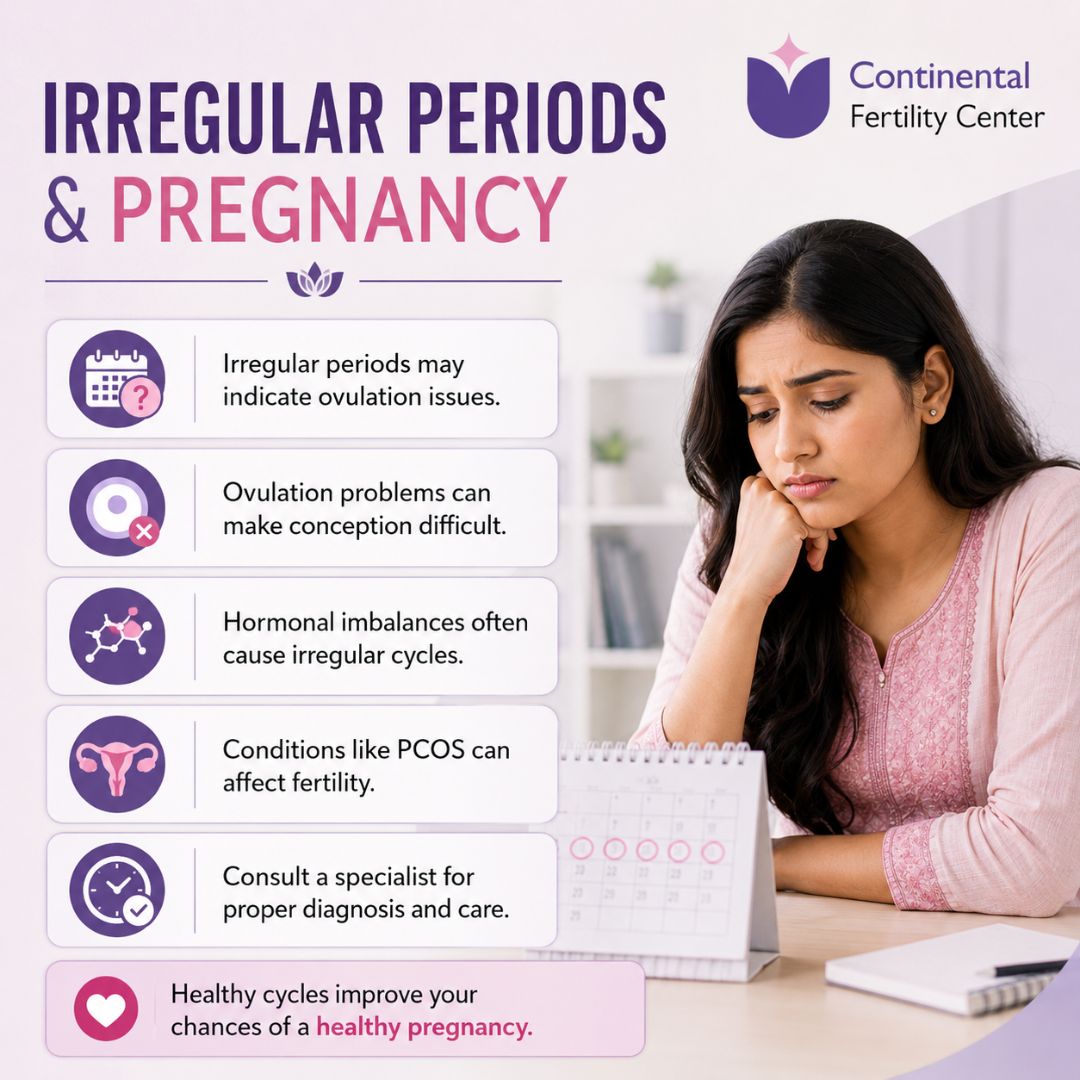
The direct answer is yes, irregular periods can make it more challenging to achieve pregnancy. The primary reason for this link between irregular periods and pregnancy is the unpredictability of ovulation. Ovulation is the process where a mature egg is released from the ovary, making it available for fertilization.
When your cycle is unpredictable, it means your body may not be releasing an egg at a regular time each month. In some cases, irregular periods mean that ovulation is happening at different times every month, making it difficult to time intercourse correctly. In other cases, irregular periods might mean that ovulation is not occurring at all, a condition known medically as anovulation. Without the release of a healthy egg, conception cannot take place.
What Are the Main Causes Behind Irregular Periods?
To manage fertility and irregular periods effectively, it is vital to discover why the cycle is out of sync. Hormones regulate the entire menstrual cycle, and even a minor imbalance can disrupt the rhythm.
The common underlying causes of irregular periods include:
- Polycystic Ovary Syndrome (PCOS): This is a common hormonal disorder where the ovaries produce an excess of male hormones, leading to fluid-filled sacs in the ovaries and irregular ovulation.
- Thyroid Disorders: An underactive or overactive thyroid gland affects the metabolism of the body and disrupts the hormones responsible for menstruation.
- Hyperprolactinemia: This condition occurs when the body produces too much prolactin, the hormone responsible for breast milk production, which can suppress ovulation.
- Primary Ovarian Insufficiency: This occurs when the ovaries stop functioning normally before the age of 40, reducing the availability of healthy eggs.
- Stress and Lifestyle Factors: Excessive psychological stress, extreme weight loss, rapid weight gain, or intense physical exercise can alter hormone production in the brain.
How Do Medical Experts Track and Test Irregular Periods Fertility?
If you are trying to conceive with an irregular cycle, visiting a fertility clinic is an important step. Medical experts use advanced diagnostic testing to understand your unique situation and find out how your irregular periods affect your pregnancy chances.
To evaluate irregular periods' fertility, specialists perform several diagnostic evaluations:
- Hormone Blood Tests: These tests check the levels of key hormones, including thyroid hormones, prolactin, progesterone, and hormones related to ovarian function.
- Pelvic Ultrasound: This imaging test allows specialists to look closely at the uterus and ovaries to check for signs of PCOS, ovarian cysts, or uterine abnormalities.
- Ovulation Tracking: Doctors may use blood tests or serial ultrasound scans to monitor whether your follicles are maturing and releasing eggs properly.
What Are the Available Treatments for Fertility and Irregular Periods?
The ultimate goal of medical intervention for an irregular cycle is to restore regular ovulation, thereby improving women's fertility. Modern reproductive medicine offers several highly successful strategies to regulate cycles and help couples achieve pregnancy.
The treatment options generally include:
- Ovulation Induction Medications: Specialists can prescribe oral or injectable medications that stimulate the ovaries to develop and release mature eggs on a predictable schedule.
- Lifestyle Optimization: For cases linked to weight or stress, working with a specialist to modify diet, safely adjust exercise routines, and manage stress can restore hormonal balance naturally.
- Managing Underlying Health Conditions: Treating thyroid conditions with medication or managing PCOS through targeted therapies can naturally regularize the menstrual cycle.
- Advanced Assisted Reproductive Technology: If ovulation induction alone does not lead to pregnancy, advanced options like In Vitro Fertilization (IVF) provide a controlled environment to ensure successful fertilization.
Why Choose Continental Hospitals for Managing Your Fertility Journey?
When you are looking for guidance on irregular periods and pregnancy, choosing a world-class medical institution is vital. Continental Hospitals is widely recognized as the best hospital in Hyderabad for comprehensive reproductive healthcare and fertility solutions.
Continental Hospitals is a premier multi-specialty institution renowned for its clinical excellence, cutting-edge infrastructure, and patient-first approach. The hospital holds elite national and international accreditations, including the National Accreditation Board for Hospitals & Healthcare Providers (NABH) accreditation. These accreditations prove that the hospital follows the highest guidelines for patient safety, infection control, and clinical protocols.
The Continental Fertility Center provides a holistic environment where advanced diagnostic laboratories, high-resolution ultrasound technology, and sophisticated reproductive services are available under one roof. The expert team collaborates across specialties to offer customized care plans that respect your privacy and address your unique health needs, making your journey toward parenthood smooth and supported.
Conclusion
Experiencing an irregular menstrual cycle can add complexity to your pregnancy plans, but it is a challenge that can be overcome with the right medical guidance. By understanding the causes, undergoing precise diagnostic tests, and following a tailored treatment plan, you can significantly enhance your fertility. Early diagnosis and expert care remain the most powerful tools for turning your dream of parenthood into a reality.
If you suffer from irregular periods or face difficulties in conceiving, do not delay seeking professional assistance. Addressing the issue early can pave the way for a healthy, successful pregnancy.
Book a consultation with our best fertility specialist in Hyderabad at Continental Hospitals today to receive personalized care for your fertility journey.
Related Blog Topics:
Frequently Asked Questions
Yes, irregular periods can affect your chances of getting pregnant because they often indicate irregular ovulation. Ovulation is the release of an egg from the ovary, which is necessary for conception. When menstrual cycles are unpredictable, it becomes difficult to determine the fertile window. Some women may ovulate less frequently, while others may skip ovulation altogether. Conditions such as polycystic ovary syndrome (PCOS), thyroid disorders, hormonal imbalances, and excessive stress can contribute to irregular periods. Although irregular cycles can make conception more challenging, many women with irregular periods successfully become pregnant with appropriate medical guidance. Identifying the underlying cause is important for improving fertility. Early evaluation can help detect and manage any reproductive health issues. Lifestyle modifications, medication, or fertility treatments may be recommended depending on the cause. Consulting a gynecologist can help improve the chances of a healthy pregnancy.
Irregular periods can occur due to a variety of factors affecting hormone levels and ovulation. Common causes include polycystic ovary syndrome, thyroid disorders, obesity, excessive exercise, chronic stress, and significant weight changes. Certain medications and underlying medical conditions can also disrupt menstrual cycles. Hormonal fluctuations during adolescence and perimenopause may lead to irregular bleeding patterns. In some women, irregular periods may result from premature ovarian insufficiency or elevated prolactin levels. Poor sleep, nutritional deficiencies, and lifestyle factors can also contribute. Since regular menstrual cycles depend on a delicate hormonal balance, any disruption can affect cycle timing. Identifying the specific cause is essential for effective treatment. A medical evaluation often includes blood tests, ultrasound scans, and a detailed health history. Proper diagnosis helps improve both menstrual health and fertility outcomes.
Yes, it is possible to get pregnant even if you have irregular periods. Irregular cycles do not always mean that ovulation is absent. Many women with irregular periods still ovulate occasionally and can conceive naturally. However, predicting ovulation becomes more difficult, making it harder to identify the most fertile days. The chances of conception may depend on the frequency and consistency of ovulation. Women with conditions such as PCOS may require medical support to improve ovulation. Tracking ovulation through fertility monitors, ovulation predictor kits, or ultrasound monitoring can be helpful. Maintaining a healthy lifestyle may also support reproductive health. If pregnancy does not occur after several months of trying, medical evaluation is recommended. Fertility treatments can often help women with irregular cycles achieve pregnancy successfully.
Irregular periods often indicate irregular ovulation, which can reduce the likelihood of conception. Ovulation may occur unpredictably, less frequently, or not at all in some cycles. Without regular egg release, the opportunity for fertilization becomes limited. Hormonal imbalances affecting estrogen, progesterone, luteinizing hormone, and follicle stimulating hormone can interfere with ovulation. Women with irregular cycles may experience delayed ovulation or anovulation, which means no ovulation occurs. This makes timing intercourse for conception more challenging. Ovulation tracking methods can help identify fertile periods despite irregular cycles. Medical investigations can determine whether ovulation is occurring consistently. Treatments aimed at restoring regular ovulation often improve fertility outcomes. Understanding ovulation patterns is a key step in fertility planning.
You should consider consulting a doctor if your periods are consistently irregular and you are trying to conceive. Medical attention is especially important if menstrual cycles are shorter than 21 days, longer than 35 days, or frequently skipped. Women under 35 years of age who have not conceived after one year of trying should seek evaluation. Women over 35 should consider an assessment after six months of unsuccessful attempts. Additional symptoms such as excessive hair growth, severe acne, abnormal bleeding, pelvic pain, or sudden weight changes should not be ignored. A fertility evaluation may include hormone testing, ultrasound scans, and ovulation assessments. Early diagnosis can help identify conditions that may affect fertility. Timely treatment often improves the chances of conception. Professional guidance can also help create a personalized fertility plan. Seeking medical advice early can prevent unnecessary delays in achieving pregnancy.
Yes, lifestyle changes can help regulate menstrual cycles in many women, especially when irregular periods are linked to weight, stress, or lifestyle habits. Maintaining a healthy body weight can support hormonal balance and improve ovulation. Regular physical activity promotes overall reproductive health, but excessive exercise should be avoided. Eating a balanced diet rich in nutrients can help support hormone production. Stress management techniques such as meditation, yoga, and adequate sleep may contribute to more regular cycles. Limiting alcohol intake and avoiding smoking can also benefit fertility. Women with PCOS may experience improvements in cycle regularity through lifestyle modifications. While lifestyle changes may not resolve all underlying conditions, they often play an important supportive role. Consistency is important for achieving long term benefits. Consulting a healthcare professional can help create an effective plan tailored to individual needs.
Doctors use several tests to determine the cause of irregular periods and fertility challenges. Blood tests are commonly performed to evaluate hormone levels, including thyroid hormones, prolactin, estrogen, progesterone, and reproductive hormones. Pelvic ultrasound helps assess the ovaries and uterus for conditions such as PCOS, fibroids, or ovarian cysts. Ovulation tracking may be recommended to determine whether regular egg release is occurring. In some cases, additional imaging studies may be required to evaluate reproductive anatomy. Fertility specialists may also recommend tests to assess ovarian reserve. Depending on the situation, the male partner may undergo fertility testing as well. The results help identify factors affecting conception. Accurate diagnosis guides appropriate treatment and fertility planning. Comprehensive evaluation increases the likelihood of successful pregnancy outcomes.
Treatment depends on the underlying cause of irregular periods and fertility concerns. Lifestyle modifications may be recommended for women with weight related or stress related menstrual irregularities. Hormonal therapies can help regulate menstrual cycles and support ovulation. Women with PCOS may benefit from medications that stimulate ovulation. Thyroid disorders and other hormonal conditions require targeted medical treatment. Fertility specialists may recommend ovulation induction, intrauterine insemination, or in vitro fertilization when necessary. Regular monitoring helps assess treatment effectiveness and optimize conception chances. Managing underlying health conditions often improves both menstrual regularity and fertility. Early intervention can increase the likelihood of a successful pregnancy. A personalized treatment plan developed by a fertility expert offers the best approach for achieving reproductive goals.