
The Connection Between Stress and Reproductive Health
Many individuals experience daily pressures from work, family, and social obligations without realizing the silent impact on their physical well-being. When pressure increases, it does not just affect your mood; it creates a powerful shift inside your body that directly impacts your hormonal balance and overall wellness.
What is the true link between stress and reproductive health? This comprehensive guide breaks down the biological pathways, the visible warning signs, and the medical solutions available for individuals navigating fertility challenges. By understanding how mental health influences reproductive health, you can make informed choices to protect your fertility and long-term well-being.
How Does Stress Affect Fertility and Hormonal Health?
When your mind perceives danger or high pressure, it triggers a survival mechanism that alters your entire chemical balance. This internal shift changes how your body prioritizes its daily functions.
- The Brain Signal Shift: Your brain contains a specific command center called the hypothalamus. This area controls both your emotional response and your reproductive hormones. When pressure remains consistently high, the brain focuses entirely on survival rather than reproduction.
- The Cortisol Impact: High pressure forces your body to produce a hormone called cortisol. Elevated cortisol levels can suppress your main reproductive hormones, which directly interferes with regular ovulation in women and lowers sperm quality in men.
- The Disruption of Natural Cycles: For women, ongoing pressure can delay or completely prevent the monthly release of an egg. For men, it can alter testosterone levels, leading to a drop in overall sperm count and motility.
What Are the Main Symptoms of Stress on Reproductive Health?
Many people do not realize that their reproductive struggles are tied to their mental health. The body sends clear physical warning signs when internal pressure becomes too heavy to manage.
- Irregular Monthly Cycles: Changes in the length or predictability of your monthly cycle are often the first signs that pressure is altering your hormonal health.
- Sudden Changes in Libido: High cortisol levels reduce your natural desire for intimacy, which naturally creates a wider gap when trying to plan for pregnancy.
- Unexplained General Fatigue: Feeling constantly exhausted makes it harder for the body to maintain the energy levels required for healthy reproductive functions.
- Difficulties in Conception: Couples tracking their optimal window for months without success often find that unmanaged anxiety or worry is an underlying factor contributing to temporary infertility.
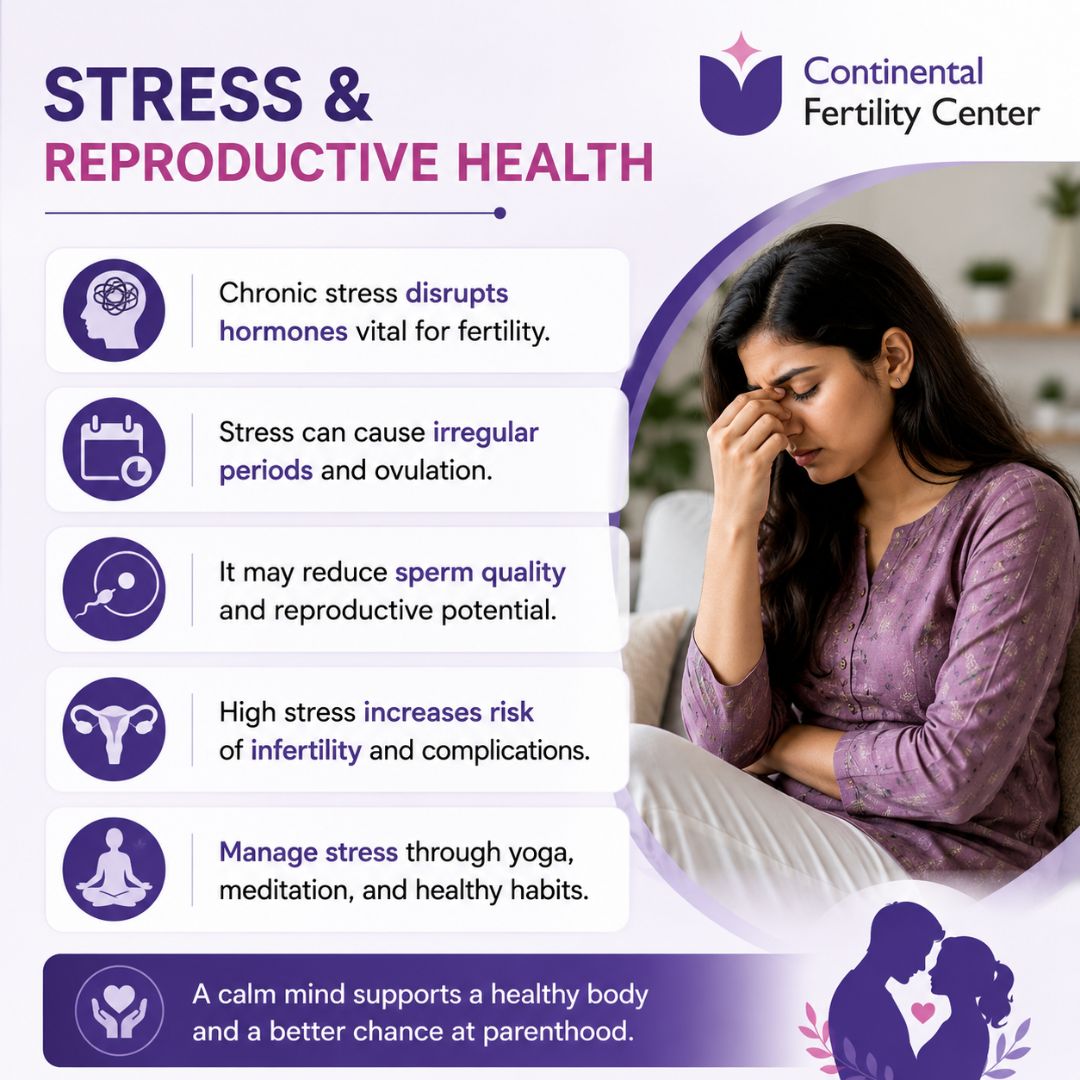
Can Reducing Pressure Reverse Infertility?
Managing your mental health is a foundational step in restoring balance to your body. When you lower internal tension, your hormonal systems can return to their natural state.
- Restoring Hormonal Balance: Lowering your daily pressure allows cortisol levels to drop, which clears the path for your reproductive organs to receive the proper chemical signals again.
- Improving Egg and Sperm Quality: Studies show that a calm nervous system supports better cellular health, directly boosting egg quality and improving sperm health parameters.
- Enhancing Treatment Outcomes: For individuals undergoing specialized medical care, maintaining a calm mind significantly increases the success rates of advanced fertility therapies.
Why Choose Continental Hospitals for Reproductive Health?
When dealing with the complex overlap of mental health, stress, and reproductive health, choosing the right medical institution makes a vital difference. Continental Fertility Center stands out as the best hospital in Hyderabad for comprehensive care.
- Prestigious Global Accreditations: Your safety and care are backed by the highest medical standards. Continental Hospitals is proudly accredited by the National Accreditation Board for Hospitals and Healthcare Providers (NABH) and Joint Commission International (JCI). It is recognized as the first super-specialty hospital in India with oncology to achieve JCI accreditation in less than two years of application, earning the prestigious Gold Seal on the very first attempt.
- Dedicated Continental Fertility Center: Our specialized center combines advanced reproductive technologies with compassionate psychiatric and counseling support to address both the physical and emotional aspects of fertility.
- State-of-the-Art Healing Infrastructure: As India's first LEED-qualified green super-specialty hospital, the entire facility is designed with natural ventilation, optimal privacy, and quiet spaces that actively lower patient anxiety during treatments.
- Comprehensive Multidisciplinary Expert Teams: Patients receive care from a highly synchronized team of gynecologists, embryologists, endocrinologists, and clinical psychologists who work together to build custom wellness paths.
What Steps Can You Take Right Now to Protect Your Fertility?
Balancing your lifestyle does not require complex changes. Small, consistent habits help protect your system from the damaging effects of chronic worry.
- Prioritize Regular Sleep Cycles: Getting seven to eight hours of uninterrupted rest stabilizes your brain chemistry and keeps your daily hormonal release consistent.
- Incorporate Gentle Physical Movement: Moderate exercise lowers circulating adrenaline and boosts circulation to your pelvic organs without overworking your body.
- Practice Structured Relaxation Techniques: Dedicating ten minutes a day to deep breathing exercises or guided meditation keeps your nervous system out of a constant survival state.
- Seek Timely Medical Guidance: If you have been trying to conceive without success, scheduling a professional evaluation can give you clear answers and remove the anxiety of the unknown.
Conclusion
The intricate link between stress and reproductive health shows us that a calm mind is essential for a healthy body. Chronic pressure alters vital communication lines between your brain and your reproductive system, leading to unexpected hurdles with fertility and hormonal health. Recognizing these shifts early allows you to take control of your well-being. You do not have to navigate this complex journey alone. By pairing positive lifestyle modifications with world-class medical expertise, you can restore your body's natural harmony and move forward with confidence.
Are you experiencing irregular cycles, unexplained fertility delays, or severe burnout? Take a proactive step toward your wellness goals today. Schedule a comprehensive consultation at our dedicated Continental Fertility Center, where our expert team provides advanced diagnostics, personalized therapies, and holistic counseling tailored to your needs.
Consult our best fertility specialist in Hyderabad at Continental Hospitals to begin your healing journey.
Related Blog Topics:
Frequently Asked Questions
Stress can significantly influence reproductive health by disrupting the body's hormonal balance. When a person experiences prolonged stress, the body releases stress hormones such as cortisol and adrenaline. Elevated cortisol levels can interfere with the production and regulation of reproductive hormones including estrogen, progesterone, testosterone, luteinizing hormone, and follicle stimulating hormone. These hormonal changes may affect ovulation in women and sperm production in men. Chronic stress can also contribute to irregular menstrual cycles, reduced libido, erectile dysfunction, and fertility challenges. Additionally, stress may impact sleep quality, appetite, and overall health, which further affects reproductive function. Managing stress through exercise, relaxation techniques, adequate sleep, and professional support can help maintain reproductive wellness and improve fertility outcomes.
Yes, stress is a common factor that can contribute to irregular menstrual cycles. High levels of stress can affect the hypothalamus, a region of the brain responsible for regulating hormones that control menstruation. When stress disrupts this hormonal signaling, ovulation may be delayed or temporarily stopped. As a result, menstrual periods may become irregular, lighter, heavier, or even absent for a period of time. Chronic emotional or physical stress can also worsen symptoms such as menstrual cramps, mood changes, and fatigue. While occasional stress-related cycle changes are usually temporary, persistent irregular periods should be evaluated by a healthcare professional to rule out underlying hormonal, reproductive, or medical conditions.
Stress may affect fertility in women by influencing the hormonal pathways involved in ovulation and reproductive function. Prolonged stress can increase cortisol production, which may interfere with the release of reproductive hormones needed for regular ovulation. Women experiencing significant stress may notice changes in their menstrual cycles, reduced fertility potential, or difficulty conceiving. Stress can also affect lifestyle habits such as sleep, nutrition, and physical activity, which play important roles in reproductive health. Although stress alone may not be the sole cause of infertility, it can contribute to fertility challenges when combined with other medical factors. Stress management strategies may support overall reproductive health and improve well being during conception efforts.
Yes, chronic stress can negatively affect male fertility. Stress may alter hormone levels that regulate sperm production and testosterone. Elevated cortisol levels can reduce testosterone levels, potentially impacting sperm count, sperm motility, and sperm quality. Stress may also contribute to sexual health concerns such as decreased libido, erectile dysfunction, and reduced sexual satisfaction. Additionally, individuals experiencing stress may adopt unhealthy habits including smoking, excessive alcohol consumption, poor sleep, or inadequate nutrition, all of which can further impair fertility. While occasional stress is unlikely to have a major impact, long term unmanaged stress can contribute to reproductive difficulties. Addressing stress through healthy lifestyle changes and professional guidance may support reproductive health.
Stress can influence the emotional and physical experience of fertility treatments, although its direct impact on treatment outcomes varies among individuals. Fertility treatments such as IVF can be emotionally demanding and may increase anxiety levels. High stress levels can affect sleep, appetite, medication adherence, and overall well being during treatment cycles. Some studies suggest that excessive stress may influence reproductive hormone balance, while others indicate that treatment success depends primarily on medical and biological factors. Regardless of its direct effect on outcomes, managing stress can improve emotional resilience, treatment experience, and quality of life. Counseling, support groups, mindfulness practices, and relaxation techniques are commonly recommended during fertility treatment journeys.
Several signs may indicate that stress is affecting reproductive health. Women may experience irregular menstrual cycles, missed periods, changes in menstrual flow, worsening premenstrual symptoms, or difficulty conceiving. Men may notice reduced libido, erectile difficulties, or concerns related to sperm quality. Both men and women may experience fatigue, sleep disturbances, anxiety, mood changes, and decreased interest in sexual activity. Chronic stress can also contribute to unhealthy lifestyle habits that further affect reproductive function. While these symptoms may be associated with stress, they can also result from underlying medical conditions. Individuals experiencing persistent reproductive health concerns should seek evaluation from a qualified healthcare professional.
Effective stress management can support reproductive health by helping restore hormonal balance and improving overall well being. Activities such as regular exercise, meditation, yoga, deep breathing exercises, and mindfulness practices can help reduce stress hormone levels. Maintaining healthy sleep patterns and consuming a balanced diet also contribute to hormonal regulation and reproductive function. Emotional support from family, friends, counselors, or support groups can help individuals cope with fertility related challenges and everyday stressors. While stress reduction may not eliminate all reproductive issues, it can create a healthier environment for reproductive processes and improve quality of life. Consistent stress management is an important component of comprehensive reproductive health care.
Medical evaluation is recommended if stress related reproductive symptoms persist or interfere with daily life. Women should seek medical advice for ongoing irregular periods, missed cycles, severe menstrual changes, or difficulty conceiving after trying for an appropriate period. Men should consult a healthcare professional for persistent erectile dysfunction, reduced libido, or fertility concerns. If stress causes significant anxiety, depression, sleep disturbances, or affects relationships and overall well being, professional support may be beneficial. Healthcare providers can assess hormonal health, identify underlying conditions, and recommend appropriate treatment or counseling. Early intervention can help address both stress related symptoms and reproductive health concerns effectively.