
Repeated IVF Failures: What Are the Next Steps?
Embarking on a journey toward parenthood through assisted reproductive technology brings a mix of hope and anticipation. For many couples, IVF treatment serves as a guiding light when natural conception proves difficult. However, the emotional and physical toll can become overwhelming when a cycle does not result in a successful pregnancy. Facing repeated IVF failures can leave you with many questions about what went wrong and how to move forward.
Medical professionals define recurrent IVF failure when a couple undergoes multiple failed IVF cycles despite transferring high-quality embryos. Understanding that a single IVF failure does not mean your dream of having a child is out of reach is essential. By identifying the underlying factors that contribute to repeated IVF failures, specialized fertility experts can adapt your treatment plan to significantly improve future IVF success rates.
What Exactly Defines Repeated IVF Failures?
Before exploring advanced diagnostic testing, it is important to understand what constitutes a pattern of failure. Clinically, repeated IVF failures occur when a woman under forty years of age does not achieve a clinical pregnancy after the transfer of multiple high-quality embryos across three or more IVF treatment cycles.
This condition requires a distinct approach compared to a single failed cycle. When a couple experiences multiple failed IVF cycles, it indicates that specific underlying barriers are preventing proper implantation or embryo development. Recognizing this pattern early allows fertility specialists to shift their focus from standard protocols to highly customized investigative strategies.
What Are the Primary Causes of a Failed IVF Cycle?
To determine the most effective next steps, specialists must investigate the complex variables involved in embryo implantation. The success of any cycle relies heavily on two critical factors: embryo quality and uterine receptivity.
Are genetic abnormalities affecting embryo quality?
Even when an embryo looks visually perfect under a laboratory microscope, it may possess underlying chromosomal issues. Genetic abnormalities are a frequent cause of IVF failure, preventing the embryo from developing further or implanting correctly into the uterine lining.
Is the uterine environment fully receptive?
The lining of the uterus must be optimally prepared to welcome the embryo. Structural abnormalities such as uterine fibroids, polyps, intrauterine scarring, or an abnormally shaped uterus can physically hinder implantation.
Could underlying medical conditions play a role?
Unmanaged hormonal imbalances, thyroid disorders, insulin resistance, and autoimmune conditions can negatively impact the reproductive ecosystem. Immunological factors where the mother's immune system rejects the embryo can also contribute to recurrent IVF failure.
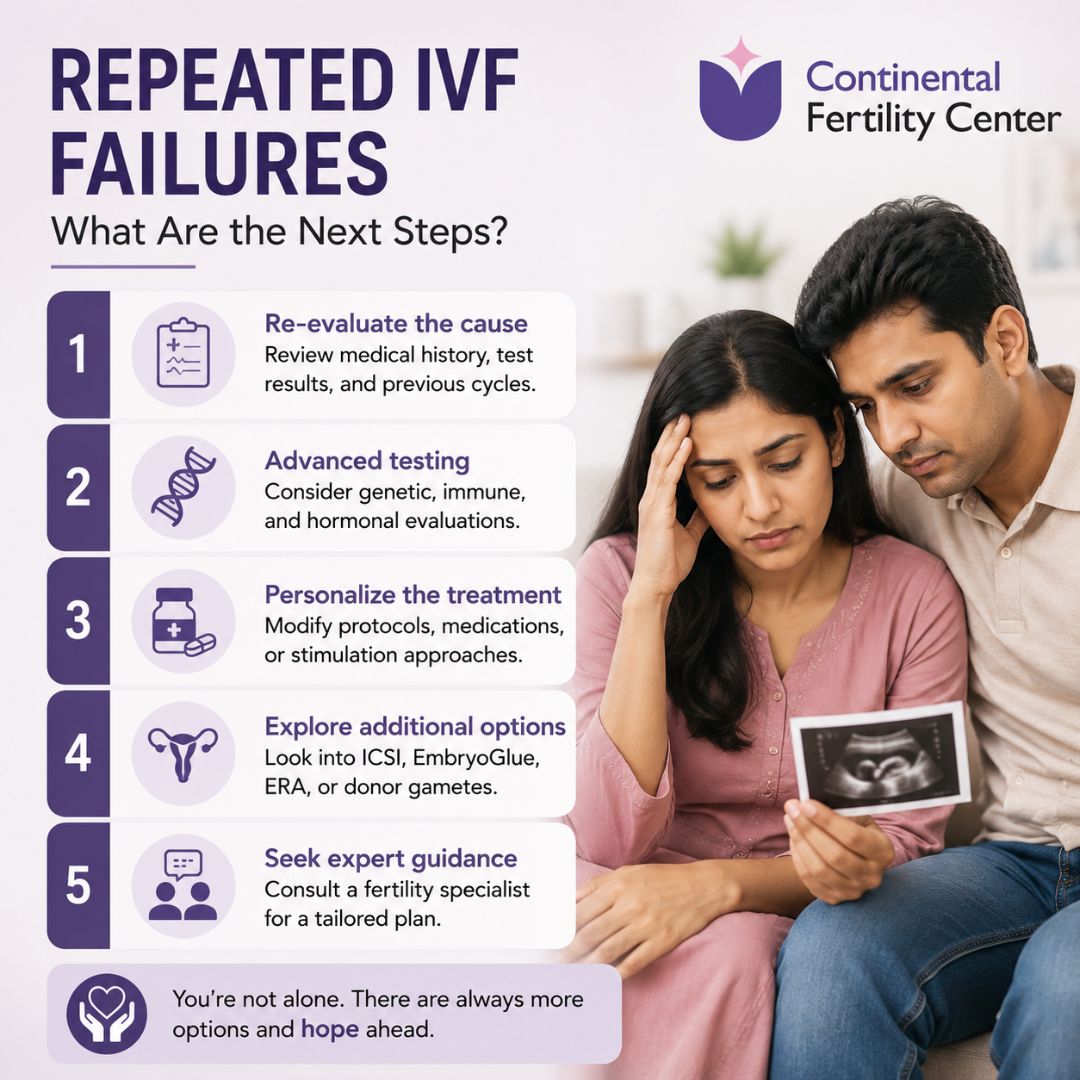
Which Advanced Tests Help Find the Root Cause?
When standard protocols do not yield results, specialized diagnostic procedures become necessary to evaluate the hidden factors of fertility. These advanced tests help design a more targeted approach for your next cycle.
What is Preimplantation Genetic Testing?
This advanced technique evaluates the chromosomal health of embryos before they are transferred to the uterus. By selecting only genetically normal embryos, specialists can reduce the risk of miscarriage and significantly boost IVF success rates.
What does an endometrial receptivity analysis reveal?
This molecular diagnostic test assesses the precise timing of the uterine lining. It determines the exact window of implantation, allowing specialists to perform the embryo transfer at the perfect psychological moment tailored to your body.
How do immunologic and blood clotting panels help?
Advanced blood tests can identify hidden clotting disorders or autoimmune responses that might restrict blood flow to the developing placenta or cause the maternal immune system to attack the embryo.
What Advanced Treatment Options Are Available Next?
Once the diagnostic data is gathered, your medical team will modify the treatment strategy to address the specific causes of your previous failed IVF cycles. Modern reproductive science offers several advanced interventions.
How can laboratory protocols be optimized?
Advanced techniques like Intracytoplasmic Morphologically Selected Sperm Injection can improve fertilization outcomes by selecting the absolute best sperm under high magnification.
Would a frozen embryo transfer be more effective?
Allowing the woman's body to recover from the hormone stimulation used during egg retrieval often creates a more natural and receptive uterine environment for a subsequent transfer.
Are alternative options worth considering?
In cases where egg or sperm quality is severely compromised due to advanced maternal age or genetic factors, utilizing donor gametes can dramatically increase the likelihood of a successful outcome.
Why Choose Continental Fertility Centre for Overcoming Recurrent IVF Failure?
Navigating the complexities of recurrent IVF failure requires extraordinary clinical precision and compassionate care. Continental Hospitals is widely recognized as the best hospital in Hyderabad for advanced reproductive medicine and complex fertility treatments.
As a premier multi-specialty healthcare institution, Continental Hospitals holds prestigious national and international accreditations, including Joint Commission International and National Accreditation Board for Hospitals and Healthcare Providers certifications. These strict accreditations ensure that patients receive international standards of clinical safety, laboratory quality, and medical excellence.
The Continental Fertility Center features an advanced embryology laboratory equipped with cutting-edge technology for genetic testing and precise embryo selection. A highly experienced multidisciplinary team of clinicians collaborates closely to design personalized, evidence-based treatment strategies that maximize IVF success rates for every couple.
Conclusion
Experiencing repeated IVF failures is an emotionally demanding challenge, but it does not represent the end of your fertility journey. Advanced diagnostic tools and customized treatment modifications open new pathways to success, allowing specialists to overcome the specific hurdles that caused previous cycles to fail.
If you suffer from repeated IVF failures or have faced multiple unsuccessful fertility treatments, taking a comprehensive and diagnostic approach is the best way forward. Dedicated medical expertise can help you uncover the necessary answers and redefine your strategy.
Book a consultation with our best fertility specialist in Hyderabad at Continental Fertility Centre today to explore advanced diagnostic options and plan your next steps toward a successful pregnancy.
Related Blog Topics:
Frequently Asked Questions
Repeated IVF failure generally refers to the inability to achieve a successful pregnancy after multiple well performed IVF cycles despite the transfer of good quality embryos. While there is no universal definition, many fertility specialists consider two or more unsuccessful IVF attempts as repeated IVF failure. Several factors can contribute to these outcomes, including embryo quality issues, uterine abnormalities, hormonal imbalances, genetic factors, immune related conditions, or underlying health concerns. A thorough evaluation is important to identify possible causes and improve future treatment strategies. Every couple's situation is unique, and a personalized assessment can help determine the most appropriate next steps. Advances in fertility medicine now offer additional diagnostic tests and treatment options that may increase the chances of success in future IVF cycles.
Even when high quality embryos are transferred, successful implantation depends on many factors beyond embryo appearance. The uterine lining must be receptive at the right time, hormonal levels should be properly balanced, and there should be no structural abnormalities within the uterus. Genetic abnormalities that are not visible under a microscope may also affect embryo development and implantation. Conditions such as chronic endometritis, fibroids, polyps, adenomyosis, or immune related issues can interfere with pregnancy success. Lifestyle factors including obesity, smoking, excessive stress, and poor nutrition may also play a role. A detailed fertility workup can help identify hidden factors and guide treatment modifications for future IVF attempts.
After repeated IVF failures, fertility specialists may recommend a comprehensive evaluation to identify underlying causes. Common investigations include hysteroscopy to assess the uterine cavity, hormonal testing, thyroid function assessment, and evaluation for metabolic disorders. Genetic testing for both partners may be advised to detect chromosomal abnormalities that could affect embryo development. Advanced testing may include endometrial receptivity assessment, screening for chronic uterine inflammation, and evaluation of blood clotting disorders. Semen analysis with advanced sperm testing may also be considered. These investigations help create a personalized treatment plan aimed at addressing specific factors that may be preventing successful implantation and pregnancy.
Genetic testing can be a valuable tool for couples who have experienced repeated IVF failures. Preimplantation Genetic Testing helps identify embryos with the correct number of chromosomes before transfer. This can reduce the likelihood of transferring embryos with genetic abnormalities that may fail to implant or result in miscarriage. Genetic screening may be particularly beneficial for women of advanced maternal age, couples with recurrent pregnancy loss, or those with known genetic conditions. While genetic testing does not guarantee pregnancy, it can improve embryo selection and increase the likelihood of a successful outcome. A fertility specialist can determine whether genetic testing is appropriate based on individual circumstances.
Healthy lifestyle choices can positively influence fertility and IVF outcomes. Maintaining a healthy body weight, following a balanced diet rich in nutrients, engaging in regular physical activity, and getting adequate sleep are important steps. Avoiding smoking, excessive alcohol consumption, and recreational drug use is strongly recommended. Managing stress through relaxation techniques, counseling, yoga, or meditation may also be beneficial. Certain medical conditions such as diabetes, thyroid disorders, and hypertension should be well controlled before starting another IVF cycle. While lifestyle changes alone may not overcome all fertility challenges, they can improve overall reproductive health and support better treatment outcomes.
The treatment approach after repeated IVF failures depends on the identified cause. Fertility specialists may modify ovarian stimulation protocols, recommend frozen embryo transfer cycles, or perform additional uterine evaluations before another transfer. Advanced options may include Preimplantation Genetic Testing, hysteroscopic correction of uterine abnormalities, treatment of chronic endometrial inflammation, or specialized embryo culture techniques. In some cases, donor eggs, donor sperm, or donor embryos may be considered. Personalized treatment strategies based on detailed investigations can significantly improve the chances of success. Continuous monitoring and close collaboration with a fertility specialist are essential for optimizing future IVF outcomes.
Seeking a second opinion can be beneficial after multiple unsuccessful IVF attempts. Another fertility specialist may review previous treatment records, laboratory results, embryo development patterns, and uterine evaluations from a fresh perspective. Additional diagnostic tests or alternative treatment approaches may be recommended based on new findings. A second opinion can provide reassurance, identify overlooked factors, and help couples make informed decisions about future fertility treatments. It can also offer access to advanced reproductive technologies or specialized expertise. Open discussions with fertility experts can help determine the most suitable path forward and improve confidence in the treatment plan.
Alternative family building options may be considered when repeated IVF attempts have been unsuccessful despite comprehensive evaluation and treatment. Depending on individual circumstances, options may include donor eggs, donor sperm, donor embryos, gestational surrogacy, or adoption. These choices are highly personal and often require careful emotional, medical, legal, and financial consideration. Fertility specialists and counselors can help couples understand the benefits, limitations, and implications of each option. Exploring alternative pathways does not mean giving up on parenthood. Instead, it provides additional opportunities to build a family while ensuring that decisions align with the couple's goals, values, and long term expectations.