
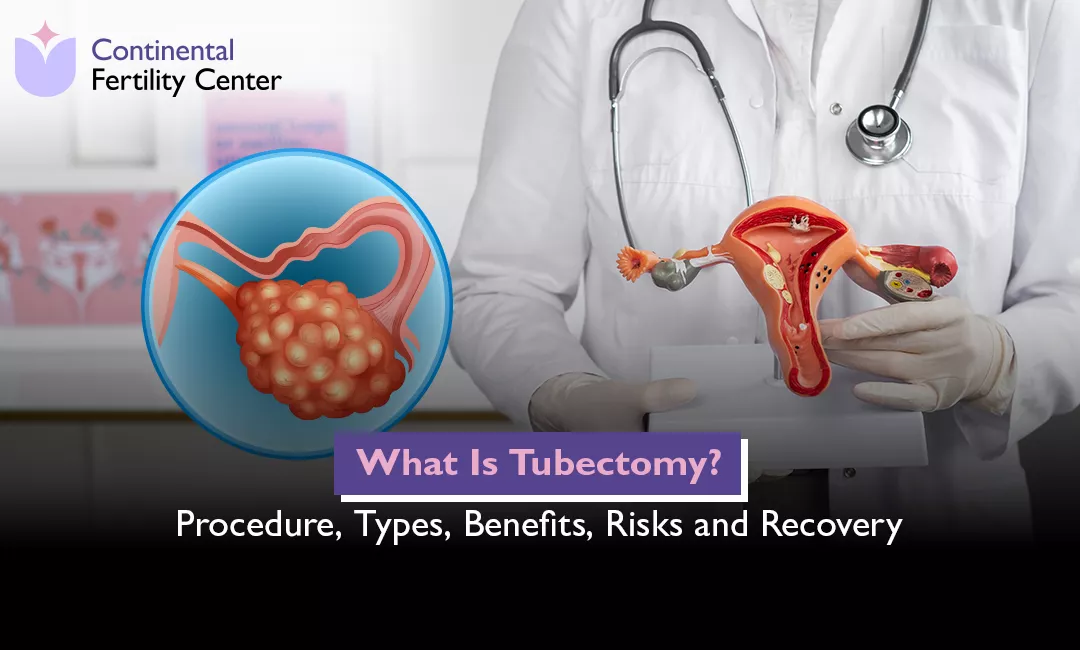
What Is Tubectomy? Procedure, Types, Benefits, Risks and Recovery
Tubectomy is a permanent method of birth control for women who have decided that they do not want to become pregnant in the future. Also called tubal ligation or female sterilization, the procedure works by blocking, cutting, sealing, or removing the fallopian tubes so that the egg and sperm cannot meet. Understanding the tubectomy procedure, its benefits, risks, and recovery can help women make an informed decision with their gynecologist.
But what exactly happens during tubectomy surgery? Is tubectomy suitable for everyone? How long does recovery take? This guide explains the important aspects of tubectomy in simple language, including the different types, possible benefits, risks, and aftercare.
What Is Tubectomy?
Tubectomy is a surgical procedure used for permanent birth control. During the procedure, the fallopian tubes are blocked, cut, sealed, or removed. This prevents sperm from reaching an egg and helps prevent pregnancy.
Tubectomy does not usually affect a woman's menstrual cycle or cause menopause because the ovaries continue to produce hormones and release eggs. However, because tubectomy is considered permanent, women should discuss their future pregnancy plans carefully with a gynecologist before choosing the procedure.
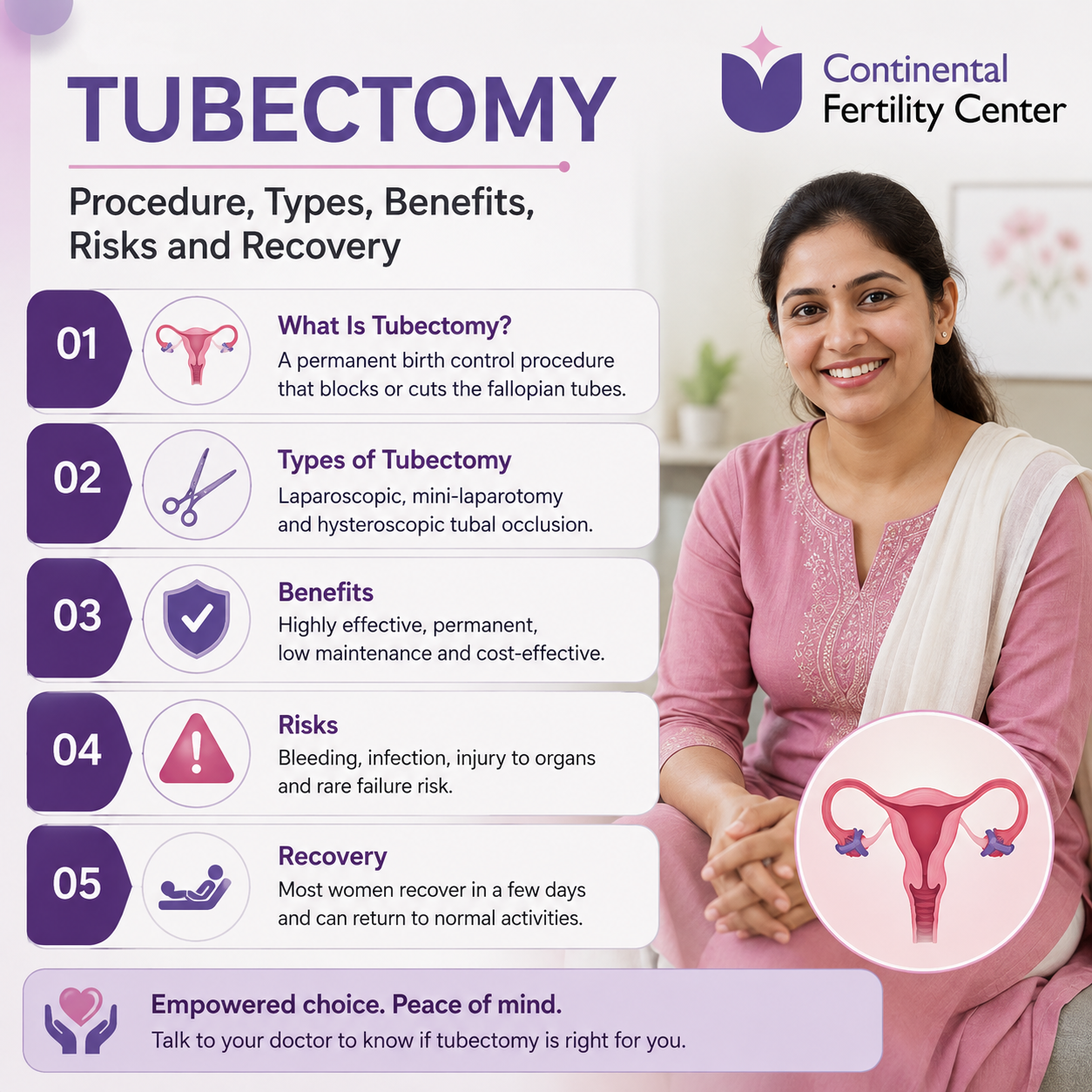
Why Is Tubectomy Considered Permanent Birth Control?
Why is tubectomy called permanent birth control? The main reason is that the procedure is intended to provide long-term contraception without requiring daily pills, injections, devices, or other ongoing methods.
Although tubectomy reversal surgery may sometimes be possible, it is not guaranteed to restore fertility. Therefore, women should consider their personal, medical, and family planning goals before undergoing tubectomy surgery.
What Are the Different Types of Tubectomy?
The procedure may be performed using different techniques depending on the patient's health, medical history, and the surgeon's recommendation.
Laparoscopic tubectomy: Small abdominal incisions are used to access and block or seal the fallopian tubes.
Mini-laparotomy: A small abdominal incision is made to reach the fallopian tubes and close them.
Tubal removal: In some cases, part or all of both fallopian tubes may be removed.
Tubectomy during childbirth: Tubectomy may sometimes be performed after a cesarean delivery when permanent contraception has already been planned and consented to.
The most suitable method is decided by the gynecologist after evaluating the patient's individual needs.
How Is the Tubectomy Procedure Performed?
What happens during a tubectomy procedure?
Tubectomy is usually performed in a hospital or surgical setting under appropriate anesthesia. The surgeon makes small or carefully placed incisions, identifies the fallopian tubes, and blocks, seals, cuts, or removes them according to the planned technique.
Before surgery, the doctor may review the patient's medical history and perform necessary examinations or tests. After the procedure, the patient is monitored until she is sufficiently recovered from anesthesia.
What Are the Benefits of Tubectomy?
- Provides long-term, permanent contraception
- Does not require daily contraceptive use
- Does not interfere with sexual activity
- Usually does not affect menstrual periods
- Eliminates the need for repeated contraceptive injections or pills
- Can be performed along with certain childbirth procedures when medically appropriate
Tubectomy can be a suitable option for women who are confident that they do not want future pregnancies.
What Are the Possible Tubectomy Risks?
Like any surgical procedure, tubectomy can have potential risks. These may include infection, bleeding, pain, reactions to anesthesia, injury to nearby organs, or complications related to surgery.
Pregnancy after tubectomy is uncommon but can occur. If pregnancy occurs after tubal sterilization, there may be a risk of ectopic pregnancy. Therefore, unusual abdominal pain, missed periods, dizziness, or abnormal bleeding after a positive pregnancy test should be evaluated promptly by a doctor.
What Is Tubectomy Recovery Like?
Recovery depends on the surgical technique and the individual's overall health. Mild abdominal discomfort, tiredness, or soreness may occur during the early recovery period. The doctor may recommend avoiding strenuous activity and following specific wound-care instructions for a short period.
Patients should take prescribed medicines as advised and attend follow-up appointments when recommended. Severe pain, heavy bleeding, fever, wound discharge, breathing difficulty, or other unusual symptoms should receive prompt medical attention.
Who Should Consider Tubectomy?
Tubectomy may be considered by women who have completed their family or are certain that they do not want future pregnancies. The decision should be voluntary and made after discussing permanent contraception options, alternatives, benefits, and possible risks with a qualified gynecologist.
Why Choose Continental Fertility Center?
Continental Fertility Center at Continental Hospitals, Hyderabad, provides fertility and women's reproductive healthcare supported by experienced specialists, advanced infrastructure, and a patient-centered approach. Continental Hospitals is a JCI and NABH accredited facility offering tertiary and quaternary healthcare services. The hospital also highlights advanced surgical facilities and multidisciplinary medical support.
Continental Hospitals' commitment to quality is supported by national and international accreditations and certifications, including JCI, NABH, NABH Nursing, NABL, QAI, CAHO, and other recognitions listed by the hospital.
For women considering tubectomy, specialist consultation can help explain the procedure, alternatives, expected recovery, and whether permanent contraception is appropriate for their individual situation.
Conclusion
Tubectomy is a permanent female sterilization method that can provide reliable long-term contraception for women who do not wish to have future pregnancies. Understanding the tubectomy procedure, types, tubectomy benefits, tubectomy risks, and tubectomy recovery is important before making a decision.
If you are considering a tubectomy or have questions about permanent birth control, consult our best fertility specialist in Hyderabad at Continental Fertility Center, Continental Hospitals, Hyderabad, for personalized medical guidance and appropriate care.