
What to Expect During the First 12 Weeks After IVF
The First 12 Weeks After IVF are one of the most exciting and emotional phases of the fertility journey. After completing the IVF procedure and receiving a positive pregnancy test, many parents feel a mix of happiness, hope, and anxiety. Every small symptom, scan, and doctor's appointment becomes important because this period plays a major role in supporting a healthy pregnancy.
Understanding the First 12 Weeks After IVF can help you stay informed, reduce unnecessary stress, and know what is considered normal after IVF. This guide explains what happens during each stage, what precautions to follow, when to contact your doctor, and why expert fertility care makes all the difference.
Why Are the First 12 Weeks After IVF So Important?
The first trimester is when your baby's major organs begin to develop. During this time, your fertility specialist closely monitors the pregnancy to ensure everything is progressing normally.
The first 12 weeks after IVF usually include the following:
- Blood tests to monitor pregnancy hormones
- Early ultrasound scans
- Regular follow-up appointments
- Medication support for pregnancy
- Lifestyle guidance for mother and baby
Proper monitoring during this stage improves confidence and helps detect any concerns early.
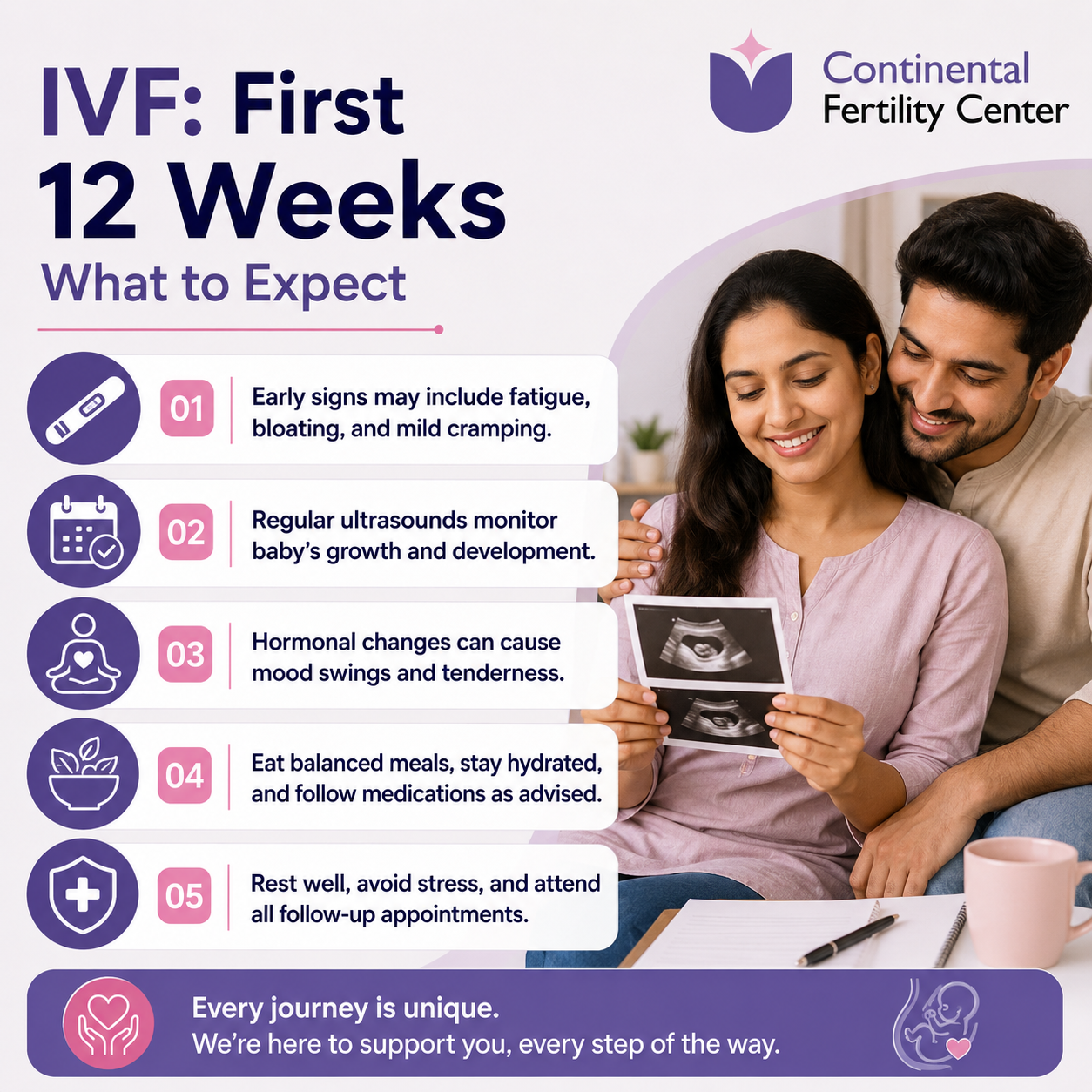
What Happens During Pregnancy Week by Week After IVF?
Weeks 4 to 5: Confirming Pregnancy
The journey begins with a blood test that measures hCG hormone levels. Rising hormone levels usually indicate that the embryo has successfully implanted.
During this stage you may notice the following:
- Mild cramping
- Light spotting
- Breast tenderness
- Fatigue
- Frequent urination
These symptoms are often normal, but always report heavy bleeding or severe pain to your fertility specialist.
Weeks 6 to 7: The First Ultrasound
One of the most memorable moments in the IVF process is the first ultrasound.
During this visit your doctor checks the following:
- Gestational sac
- Yolk sac
- Embryo growth
- Fetal heartbeat
- Pregnancy location
Hearing your baby's heartbeat is an exciting milestone that provides reassurance about the pregnancy.
Weeks 8 to 9: Baby's Development Continues
During these weeks, your baby's brain, heart, arms, legs, and internal organs continue developing rapidly.
Many women experience:
- Morning sickness
- Increased tiredness
- Mood changes
- Food cravings
- Heightened sense of smell
Continue taking all prescribed medications exactly as advised.
Weeks 10 to 12: Preparing for the Next Stage
As the pregnancy becomes more stable, the placenta gradually starts taking over hormone production.
Your doctor may recommend:
- Routine blood investigations
- Genetic screening if required
- Continued prenatal vitamins
- Nutrition counselling
- Regular pregnancy monitoring
By the end of week 12, the risk of early pregnancy loss decreases significantly for many pregnancies.
What Symptoms Are Normal During the First 12 Weeks After IVF?
Every pregnancy is different. Some women experience several symptoms, while others experience very few.
Common symptoms include:
- Mild nausea
- Breast tenderness
- Tiredness
- Bloating
- Constipation
- Frequent urination
- Mood swings
- Mild pelvic discomfort
Not experiencing symptoms does not necessarily indicate a problem. Always discuss any concerns with your fertility doctor.
What Precautions Should You Follow?
Following healthy habits can support your pregnancy.
Important precautions include:
- Take all medications exactly as prescribed.
- Eat nutritious, balanced meals.
- Drink enough water throughout the day.
- Get adequate sleep and rest.
- Avoid smoking and alcohol.
- Limit caffeine intake.
- Avoid lifting heavy objects.
- Attend every scheduled appointment.
- Continue prenatal supplements.
- Practice gentle walking only after medical advice.
When Should You Contact Your Doctor?
Seek immediate medical attention if you experience:
- Heavy vaginal bleeding
- Severe abdominal pain
- Persistent vomiting
- High fever
- Severe dizziness
- Fluid leakage
- Sudden swelling
- Difficulty breathing
Early medical evaluation helps protect both mother and baby.
How Does the IVF Process Differ From Natural Pregnancy?
Once implantation is successful, an IVF pregnancy develops similarly to a natural pregnancy. The main difference is that women who undergo in vitro fertilization receive closer monitoring during the first 12 weeks after IVF.
Regular ultrasounds, blood tests, and medication support provide reassurance while ensuring healthy fetal development.
How Can You Support a Healthy Pregnancy?
Simple daily habits can make a positive difference.
Healthy pregnancy tips include:
- Eat protein-rich foods.
- Include fruits and vegetables daily.
- Stay physically active with medical guidance.
- Manage stress through relaxation techniques.
- Sleep for adequate hours every night.
- Avoid self-medication.
- Never skip follow-up appointments.
- Stay positive and communicate openly with your healthcare team.
Why Choose Continental Fertility Center?
Choosing the right fertility center is one of the most important decisions in your parenthood journey.
At Continental Fertility Center, patients receive comprehensive fertility care supported by experienced fertility specialists, advanced reproductive technology, and personalized treatment plans. As part of Continental Hospitals, one of the best hospitals in Hyderabad, patients benefit from internationally recognized standards of care. Continental Hospitals is accredited by JCI and NABH, reflecting its commitment to patient safety, clinical excellence, quality healthcare, and world-class medical services.
Whether you are beginning your IVF journey or entering the First 12 Weeks After IVF, our dedicated team provides continuous guidance, compassionate support, advanced diagnostics, and expert pregnancy monitoring to help you achieve the best possible outcome.
Conclusion
The first 12 weeks after IVF are filled with important milestones that lay the foundation for a healthy pregnancy. Understanding each stage helps reduce anxiety and allows you to focus on caring for yourself and your growing baby. Regular follow-up visits, healthy lifestyle choices, and expert medical supervision are essential throughout this period.
If you have recently undergone the IVF procedure, are planning in vitro fertilization, or have questions about your pregnancy week by week, consult the best IVF doctor at Continental Fertility Center. Consult our best fertility specialists in Hyderabad, who provide expert care, advanced treatment, and personalized support to help you confidently navigate every stage of your pregnancy.
Related Blogs:
Frequently Asked Questions
The first 12 weeks after IVF are an important stage of early pregnancy. During this period, the embryo implants into the uterus and begins to grow rapidly. Your fertility specialist will schedule regular blood tests and ultrasound scans to monitor the pregnancy. Hormonal medications are usually continued to support the uterine lining. Mild cramping, bloating, fatigue, and breast tenderness are common and are usually caused by pregnancy hormones. Every pregnancy develops differently, so symptoms may vary from person to person. Eating a healthy diet, staying hydrated, and getting adequate rest are essential. Avoid smoking, alcohol, and strenuous physical activities unless advised otherwise by your doctor. Attend every follow-up appointment to ensure healthy fetal development. Contact your fertility specialist immediately if you experience severe pain, heavy bleeding, or other unusual symptoms.
Many women experience symptoms similar to a naturally conceived pregnancy after IVF. Common symptoms include mild abdominal cramping, light spotting, breast tenderness, nausea, fatigue, bloating, and mood changes. These symptoms are often caused by rising pregnancy hormones and fertility medications. Some women experience very few symptoms while others notice several changes. The absence of symptoms does not necessarily indicate a problem with the pregnancy. Adequate hydration, nutritious meals, and sufficient sleep can help manage these symptoms. Avoid comparing your pregnancy with others because every pregnancy is unique. Report severe abdominal pain, heavy bleeding, dizziness, or persistent vomiting to your doctor immediately. Regular monitoring helps ensure the pregnancy is progressing normally.
Light physical activity is generally considered safe during the first trimester after IVF unless your fertility specialist advises otherwise. Gentle walking, stretching, and prenatal yoga may improve circulation, reduce stress, and support overall well-being. High-impact exercises, heavy weightlifting, running, contact sports, and activities with a high risk of falling should be avoided. Listen to your body and stop exercising if you experience pain, bleeding, dizziness, or shortness of breath. Women with multiple pregnancies or specific pregnancy complications may require additional precautions. Always discuss your exercise routine with your fertility specialist before beginning or continuing any physical activity. Personalized guidance ensures both maternal and fetal safety throughout early pregnancy.
A balanced and nutritious diet plays an important role in supporting early pregnancy after IVF. Include fresh fruits, vegetables, whole grains, lean proteins, dairy products, healthy fats, nuts, and legumes in your daily meals. Foods rich in folic acid, iron, calcium, vitamin D, and omega-3 fatty acids help support fetal development. Drink plenty of water to stay hydrated throughout the day. Limit processed foods, sugary beverages, and excessive caffeine intake. Avoid raw seafood, undercooked meat, unpasteurized dairy products, and alcohol because they may increase health risks during pregnancy. Continue taking prenatal vitamins exactly as prescribed by your doctor. Speak with a nutritionist or fertility specialist if you have dietary restrictions or experience severe nausea.
Regular monitoring is essential during the first trimester after IVF because it helps confirm that the pregnancy is progressing normally. Blood tests measure hormone levels such as beta hCG and progesterone to evaluate pregnancy development. Ultrasound scans confirm embryo implantation, detect the fetal heartbeat, estimate gestational age, and identify the number of embryos developing. These appointments also help detect complications such as ectopic pregnancy or miscarriage at an early stage. Timely diagnosis allows doctors to provide appropriate treatment when necessary. Continue attending every scheduled appointment even if you feel well. Consistent monitoring offers reassurance and supports the healthiest possible pregnancy outcome.
Although mild discomfort is common, certain symptoms require immediate medical attention during early pregnancy after IVF. Contact your fertility specialist if you experience heavy vaginal bleeding, severe abdominal pain, persistent cramping, fever, fainting, chest pain, severe headaches, difficulty breathing, or continuous vomiting. Sudden swelling, reduced urine output, or signs of infection should also be reported promptly. Early medical evaluation helps identify potential complications before they become serious. Never stop prescribed medications without consulting your doctor. If you are uncertain whether a symptom is normal, it is always safer to seek medical advice. Prompt communication with your healthcare team helps protect both mother and baby.
Feeling anxious during the first trimester after IVF is common because many couples have experienced infertility challenges before achieving pregnancy. While everyday stress does not usually harm the pregnancy, excessive stress can affect emotional well-being and overall health. Practice relaxation techniques such as deep breathing, meditation, gentle yoga, or listening to calming music. Spend time with supportive family members and discuss concerns with your fertility specialist. Maintain a healthy sleep schedule and eat balanced meals regularly. Avoid searching for unreliable medical information online, which can increase anxiety. Professional counseling may also help if emotional stress becomes overwhelming. Caring for your mental health is an important part of a healthy pregnancy.
The first 12 weeks are considered the most critical stage of pregnancy because the baby's major organs are developing and the placenta is forming. Once the pregnancy progresses beyond the first trimester, the risk of miscarriage generally decreases significantly. However, every pregnancy is unique, and regular prenatal care remains important throughout all three trimesters. Continue taking prescribed medications until your doctor advises otherwise. Attend all scheduled check-ups, maintain a healthy lifestyle, and follow medical recommendations carefully. Do not ignore unusual symptoms even after the first trimester. Consistent medical care and healthy habits provide the best support for both maternal health and fetal development.