
When Is the First Ultrasound After IVF?
Starting an IVF journey is filled with hope, excitement, and many questions. One of the most common questions couples ask is, "When is the first ultrasound after IVF?" After receiving a positive pregnancy test, the next important milestone is the first ultrasound. This scan helps confirm that the pregnancy is progressing as expected and provides reassurance during the early stages.
The first ultrasound after IVF is an important step because every stage of an IVF pregnancy is carefully monitored. Whether you have been trying to conceive for years or have recently undergone in vitro fertilization, understanding the purpose of the first ultrasound, what to expect, and when it is performed can help you feel more confident throughout your pregnancy journey.
What Is the First Ultrasound After IVF?
The first ultrasound after IVF is the first pregnancy scan performed after successful embryo transfer and a positive blood pregnancy test. This pregnancy ultrasound confirms that the embryo has implanted inside the uterus and checks whether the pregnancy is developing normally.
Unlike routine pregnancies, an ultrasound after IVF is closely monitored because fertility specialists want to ensure everything is progressing safely from the very beginning.
When Is the First Ultrasound After IVF?
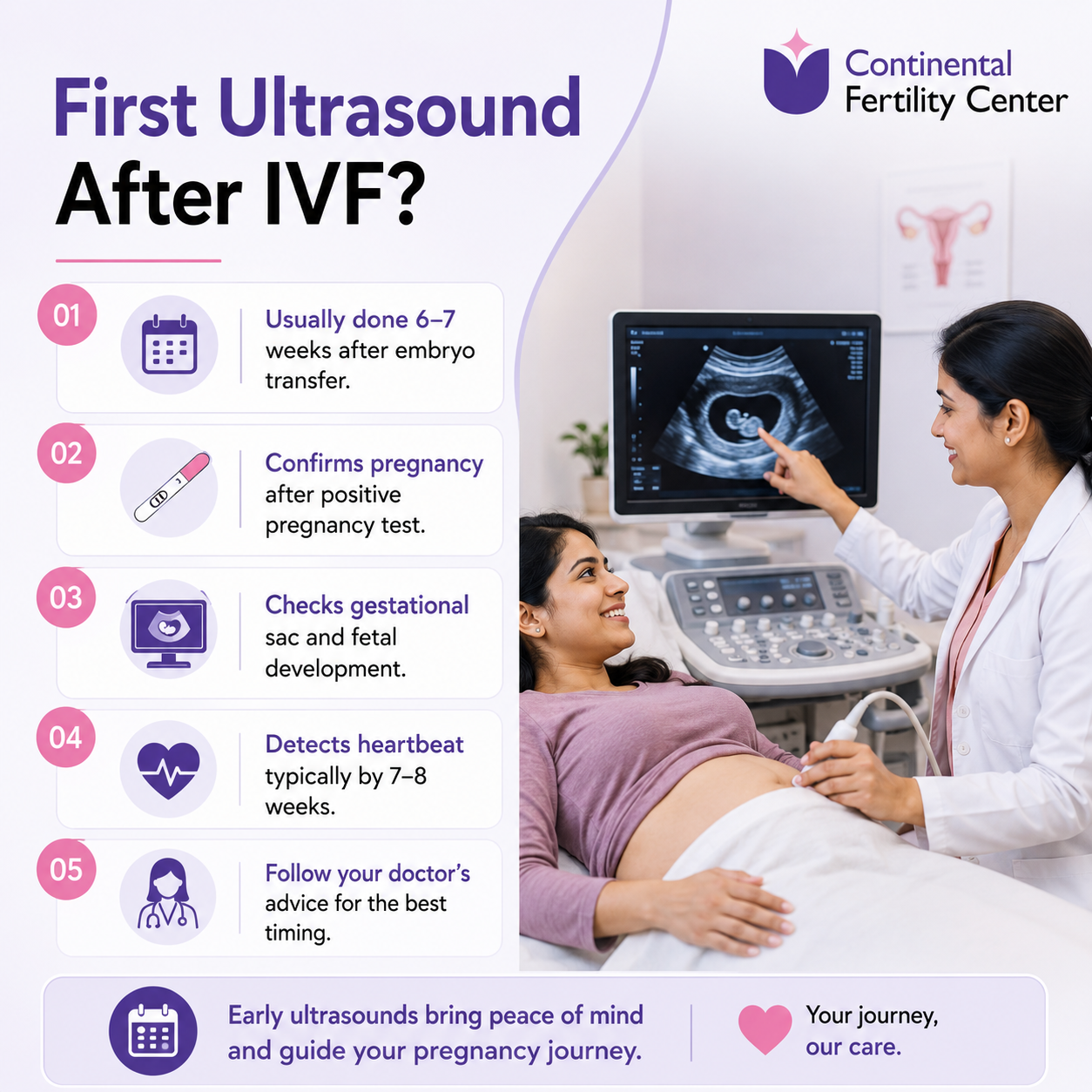
The first ultrasound after IVF is usually scheduled around 6 to 7 weeks of pregnancy. This timing is based on the embryo transfer date rather than the last menstrual period.
During this visit, your fertility specialist performs a pregnancy ultrasound to confirm several important milestones.
The first ultrasound helps check:
- The pregnancy is inside the uterus.
- The gestational sac is visible.
- The yolk sac has formed.
- The embryo is developing normally.
- The baby's heartbeat can be detected.
- The number of embryos that have implanted.
This first scan after IVF provides valuable information and gives both patients and doctors confidence about the pregnancy.
Why Is the First Ultrasound So Important?
The first ultrasound is much more than simply seeing the pregnancy on a screen. It helps doctors monitor your health and your baby's development during the earliest weeks.
It helps your fertility specialist:
- Confirm a healthy pregnancy.
- Rule out ectopic pregnancy.
- Detect multiple pregnancies.
- Measure embryo growth.
- Confirm fetal heartbeat.
- Plan the next stage of prenatal care.
For couples who have experienced infertility, this first ultrasound after IVF pregnancy is often one of the most emotional and reassuring moments of the entire journey.
What Can You Expect During the First Ultrasound?
Most first ultrasound after IVF appointments are performed using a transvaginal ultrasound because it provides a clearer view during early pregnancy.
During the appointment, the fertility specialist will:
- Check the gestational sac.
- Look for the yolk sac.
- Measure the embryo.
- Detect the baby's heartbeat.
- Estimate the pregnancy age.
- Answer your questions about the pregnancy.
The scan usually takes only a short time and is generally comfortable for most women.
Can the Heartbeat Be Seen During the First Ultrasound?
Yes. In many cases, the baby's heartbeat can be detected during the first ultrasound after IVF, especially between 6 and 7 weeks of pregnancy.
However, every pregnancy develops at its own pace. If the heartbeat is not clearly visible during the first ultrasound, your doctor may recommend another pregnancy ultrasound after a few days to monitor normal development.
What Happens After the First Ultrasound?
Once the first ultrasound confirms a healthy pregnancy, your fertility specialist will continue monitoring your progress.
The next steps usually include:
- Follow up on pregnancy ultrasounds.
- Regular blood tests if required.
- Pregnancy medications as advised.
- Routine prenatal checkups.
- Transition to your obstetrician after the fertility treatment is complete.
Regular follow-up ensures both mother and baby remain healthy throughout the pregnancy.
Are There Any Risks During the First Ultrasound?
A pregnancy ultrasound is considered safe for both mother and baby. Ultrasound uses sound waves instead of radiation and has been safely used in pregnancy for many years.
If you experience symptoms such as severe abdominal pain, heavy bleeding, dizziness, or unusual discomfort before or after your first ultrasound after IVF, contact your fertility specialist immediately.
How Can You Prepare for the First Ultrasound?
Preparing for your first scan after IVF is simple and can help you feel more relaxed.
Helpful preparation tips
- Continue taking prescribed medications.
- Arrive on time for your appointment.
- Carry your previous IVF reports.
- Wear comfortable clothing.
- Write down any questions you want to ask your doctor.
- Stay calm and positive throughout the visit.
Being prepared allows you to make the most of your appointment and better understand your pregnancy progress.
Why Choose Continental Fertility Center?
Choosing the right fertility center is one of the most important decisions in your parenthood journey. At Continental Fertility Center, every patient receives compassionate, personalized care supported by advanced reproductive technology and experienced fertility specialists.
Patients benefit from:
- Comprehensive fertility evaluation and treatment.
- Advanced IVF and fertility services.
- Modern ultrasound and diagnostic facilities.
- Individualized treatment plans.
- Highly experienced fertility specialists.
- Patient-centered care with emotional support.
- International quality standards within Continental Hospitals.
Continental Hospitals is recognized for its commitment to clinical excellence with JCI accreditation, NABH accreditation, and QAI accreditation, reflecting globally recognized standards for patient safety, quality healthcare, and compassionate medical care.
Conclusion
The first ultrasound after IVF is one of the most exciting milestones in your fertility journey. It confirms that your pregnancy is developing inside the uterus, checks your baby's growth, and offers reassurance after weeks of anticipation. Knowing when the first ultrasound is performed and understanding what to expect can help reduce anxiety and make the experience more meaningful. With expert monitoring and personalized care, you can move forward with confidence as your pregnancy progresses.
If you are trying to conceive, planning IVF, or have questions about your first ultrasound after IVF, consult our best fertility specialist in Hyderabad at Continental Fertility Center. Early guidance, advanced fertility care, and timely pregnancy monitoring can help support a healthy pregnancy and improve your journey toward parenthood.
Related Blogs:
Frequently Asked Questions
The first ultrasound after IVF is usually performed around 6 to 7 weeks of pregnancy, approximately 2 to 3 weeks after a positive pregnancy test. This scan helps confirm that the embryo has implanted correctly inside the uterus. It also allows your fertility specialist to check for the presence of a gestational sac, yolk sac, and fetal pole. In many cases, the baby's heartbeat can also be detected during this visit. The timing may vary slightly depending on your IVF treatment plan and your hCG levels. Your doctor will recommend the most appropriate schedule based on your individual pregnancy progress. Attending this scan is an important milestone because it provides reassurance that the pregnancy is developing as expected. If there are any concerns, early detection allows timely medical care and guidance.
The first ultrasound is one of the most significant appointments after IVF because it confirms that the pregnancy is progressing normally. It verifies that the embryo has implanted within the uterus rather than outside it. The scan also helps determine whether there is a single pregnancy or multiple pregnancies. Your doctor checks the gestational sac, fetal pole, and yolk sac for healthy development. If the pregnancy has reached the appropriate stage, the fetal heartbeat can often be seen. This ultrasound provides valuable information about early pregnancy health and reduces uncertainty for hopeful parents. It also helps identify any complications that may require close monitoring. Early assessment ensures you receive the right care throughout your pregnancy journey.
Yes, in many pregnancies the baby's heartbeat can be detected during the first IVF ultrasound, especially when the scan is performed between 6 and 7 weeks of pregnancy. The visibility of the heartbeat depends on the exact stage of pregnancy and embryo development. Sometimes the embryo may still be too small if the scan is done very early. In such cases, your doctor may schedule another ultrasound after a few days. This is a common situation and does not always indicate a problem. Detecting a heartbeat is an encouraging sign that the pregnancy is developing well. However, every pregnancy progresses at its own pace. Your fertility specialist will carefully interpret the scan findings before drawing conclusions.
The first ultrasound after IVF is usually a transvaginal ultrasound because it provides clear images during early pregnancy. During the scan, the doctor checks the uterus to confirm the location of the pregnancy. The gestational sac, yolk sac, and fetal pole are carefully evaluated. If the pregnancy has advanced sufficiently, the baby's heartbeat may also be seen. The doctor measures the embryo to estimate gestational age and ensure appropriate growth. The procedure is generally painless, although mild discomfort may occur. The scan usually takes only a few minutes to complete. Your doctor will explain the findings and discuss the next steps in your pregnancy care.
Not seeing a heartbeat during the first ultrasound does not always mean that the pregnancy is not viable. Sometimes the scan is performed earlier than expected, and the embryo has not yet developed enough for cardiac activity to be visible. Small differences in implantation timing can also affect ultrasound findings. Your fertility specialist will usually recommend a repeat ultrasound after 5 to 7 days. During this time, healthy pregnancies often continue to develop normally. It is important not to panic or assume the worst based on a single scan. Your doctor will evaluate ultrasound findings together with pregnancy hormone levels and your symptoms. Follow-up monitoring provides a more accurate assessment of pregnancy progress.
Yes, the first ultrasound after IVF can often identify twins or higher-order multiple pregnancies. The doctor looks for the number of gestational sacs and developing embryos inside the uterus. If more than one embryo has implanted successfully, multiple sacs may be visible during the scan. Identifying multiple pregnancies early helps doctors plan appropriate prenatal care and monitoring. Twin pregnancies usually require more frequent follow-up visits and ultrasounds. Early diagnosis also helps assess whether each baby is developing normally. Your fertility specialist will explain the findings and discuss any additional care that may be needed. Regular monitoring helps support a healthy pregnancy for both the mother and babies.
Preparation for the first IVF ultrasound is usually simple because most early pregnancy scans are performed transvaginally. You may be asked to empty your bladder before the examination for better image quality. Continue taking all medications prescribed by your fertility specialist unless instructed otherwise. Wear comfortable clothing and arrive on time for your appointment. Bring any previous test reports if requested by your clinic. Try to remain calm, as this appointment is an important milestone in your IVF journey. Your healthcare team will explain each step of the procedure and answer your questions. Following your doctor's instructions helps ensure accurate ultrasound results.
Once the first ultrasound confirms a healthy pregnancy, your fertility specialist will continue monitoring your progress with additional appointments. Depending on your pregnancy, another ultrasound may be scheduled to assess ongoing fetal growth and development. You will usually continue your prescribed IVF medications for the recommended duration. Your doctor may gradually transition your care from the fertility clinic to an obstetrician for routine prenatal care. Regular prenatal visits, healthy nutrition, and following medical advice become essential for supporting your pregnancy. If you experience pain, bleeding, or unusual symptoms, contact your healthcare provider immediately. Every pregnancy is unique, so personalized follow-up care is important. Consistent monitoring helps promote the best possible outcomes for both mother and baby.